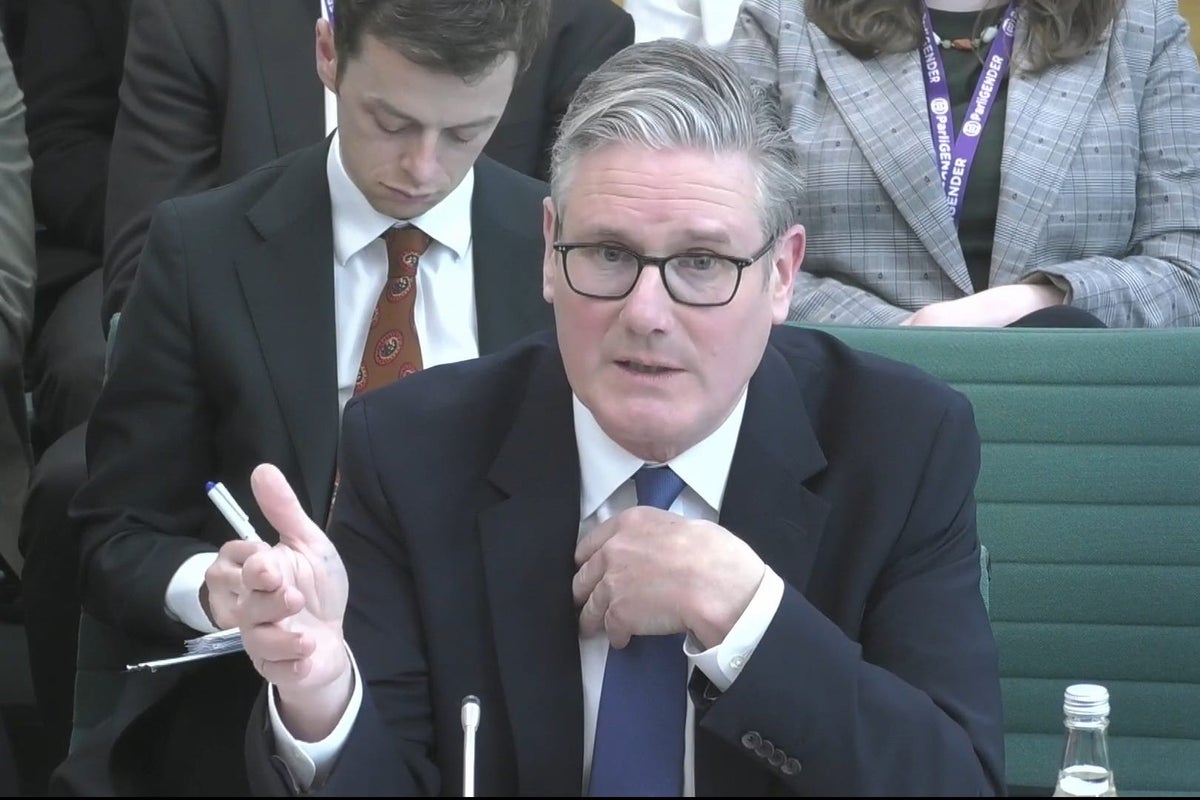
Sir Keir Starmer has been accused of “complacency” by senior MPs as he faced a grilling over the UK’s lack of preparedness for the war in the Middle East.
The prime minister clashed with both Labour and Tory MPs as he appeared before the Commons liaison committee – made up of the chairs of parliamentary select committees – where he was challenged with claims that the UK “is at war”.
The appearance came ahead of the prime minister’s chairing of an emergency Cobra meeting on Monday afternoon to prepare for the war’s impact on the cost of living, and he admitted to MPs he was unable to give a timetable for the end of the conflict despite Donald Trump’s declaration of a ceasefire.
But the concerns expressed forcefully by MPs on the liaison committee are reflected in polling by Ipsos, released on Monday just ahead of Sir Keir’s appearance, revealing that public concern about defence issues has more than doubled since last month.
Ipsos found that those worried about the UK’s defence increased from 16 per cent to 31 per cent, putting it up three places to third behind immigration and the economy in priority.
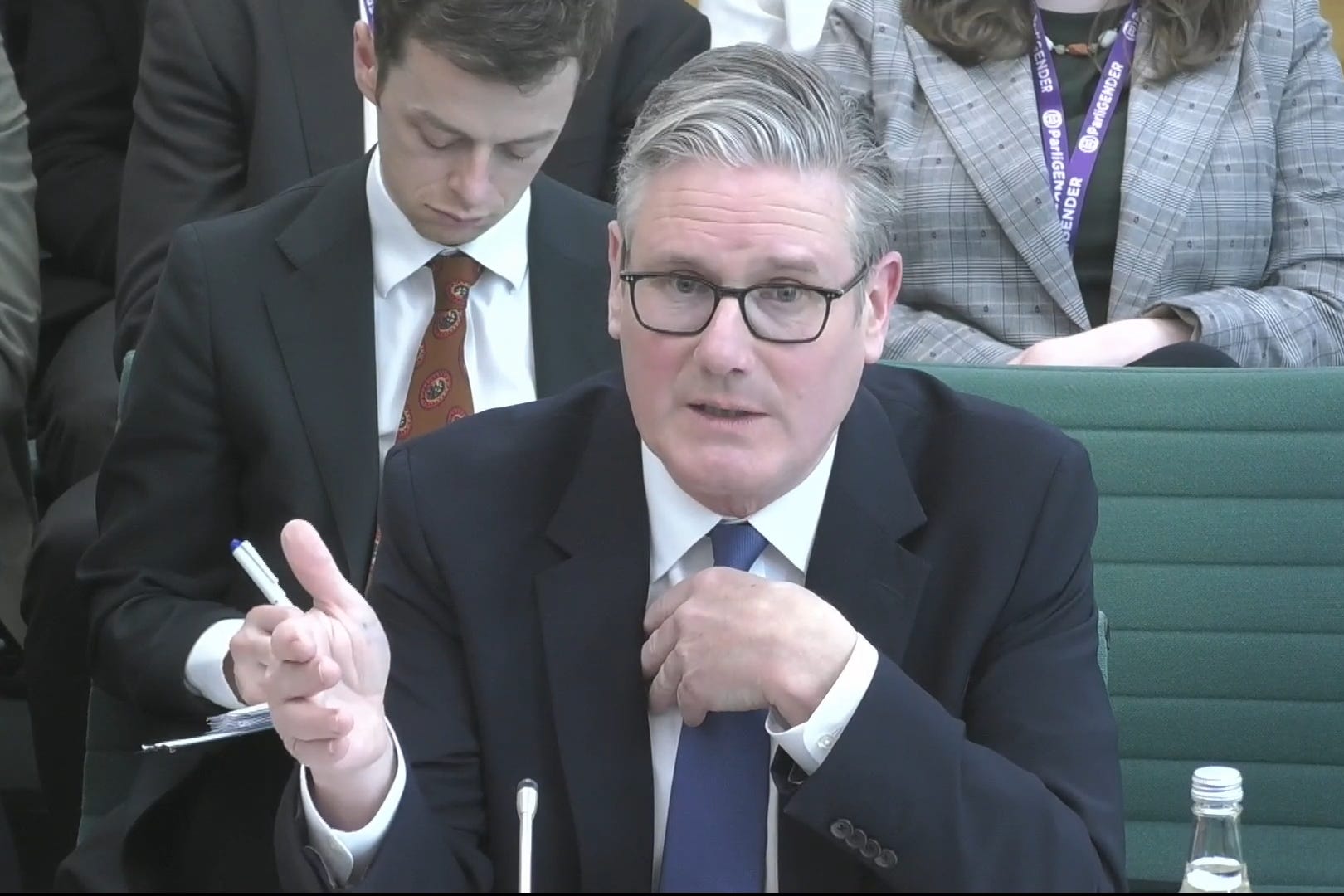
During a difficult committee hearing, a flustered-looking Sir Keir was asked how long he expected the conflict to continue. He said: “It’s hard to answer that question, if I’m honest about it.
“I think all our focus and energy has to be in the swift de-escalation, but we’ve got to plan on the basis that it could go on for some time, and that’s the way in which we’ll plan this afternoon.”
At one point, he got visibly angry as he was reminded that Winston Churchill had not needed a defence review to carry out Britain’s defence in the Second World War.
The subject is a sensitive one for the prime minister, who was described as “no Winston Churchill” by Donald Trump.
When then asked about “quite rude” comments made by Mr Trump, Sir Keir said: “A lot of what is said or done is undoubtedly said and done to put pressure on me, I have no doubt about that. I understand what is going on. But I am not going to waver on this. I am the British prime minister and my job is to be absolutely focused on what is in the British national interest.”
He was also challenged over the lack of Royal Navy ships in the Mediterranean when President Trump launched his war on Iran, amid questions about why the UK was so ill-prepared to protect its crucial bases in Cyprus.
In a particularly tetchy exchange, veteran Tory MP Sir Bernard Jenkin suggested the government had a “lack of war-fighting mentality” and claimed defence decision-making “smacks of enormous complacency”.
He argued that the UK “is at war” and asked why “the government is not just getting on with it”.
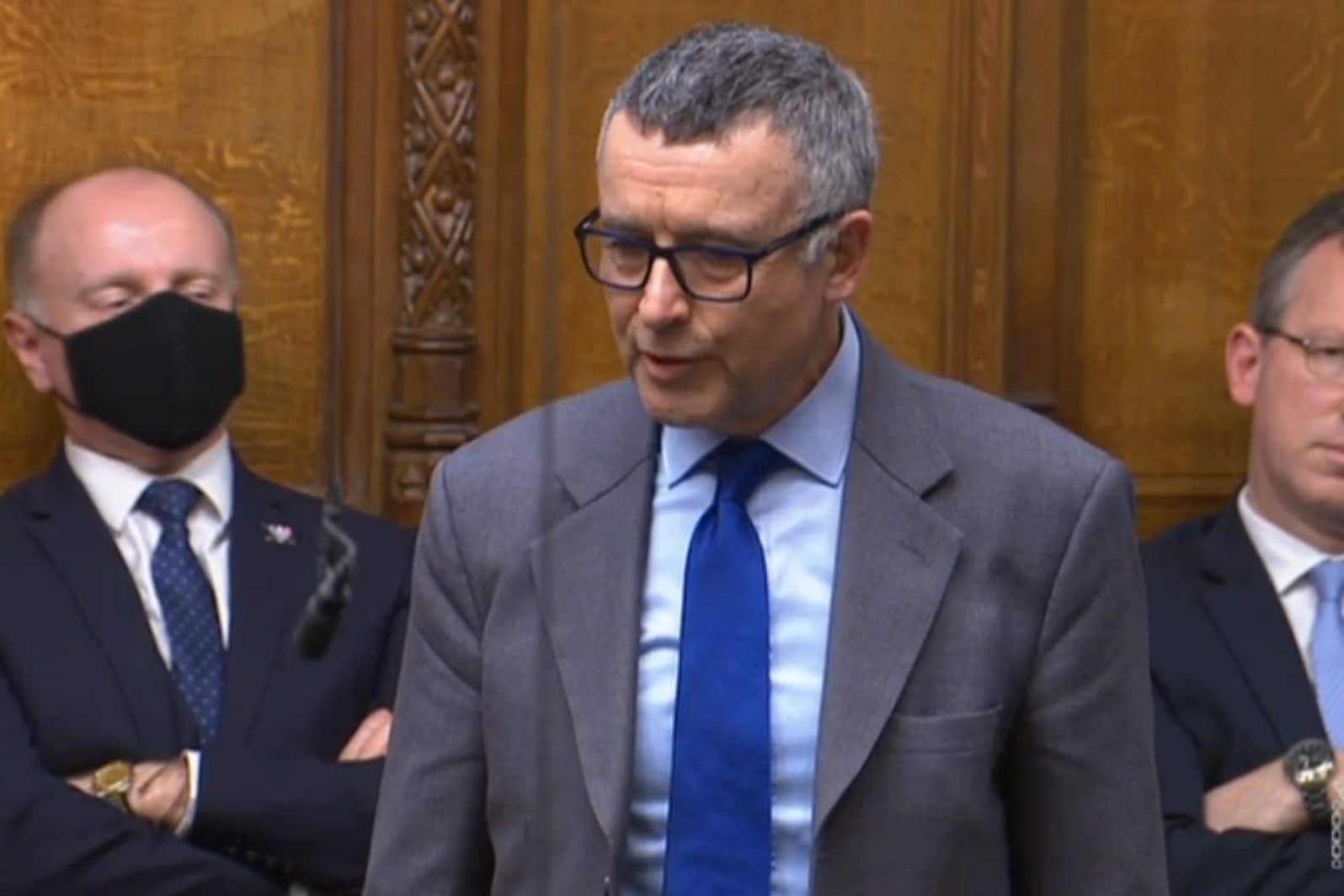
Sir Keir responded: “Because the strategic review commits us to a war footing, and we now need to put the funding in place to increase defence spending to 2.5 per cent, something that didn’t happen under the last government, and where at the election a credible proposition wasn’t put forward by your party.”
Sir Bernard, however, argued that every government has to pick up problems from its predecessors.
The prime minister responded: “Well, this smacks of the fact that for years there was under-investment by the last government and the ‘hollowing out of our armed forces’, copyright Ben Wallace.”
The former Conservative defence secretary Sir Ben once claimed, while he was in government, that the armed forces had been “hollowed out and underfunded”.
Earlier, the current chair of the defence select committee, Labour MP Tanmanjeet Singh Dhesi, was also scathing about the lack of preparedness of the government for the Middle East crisis.
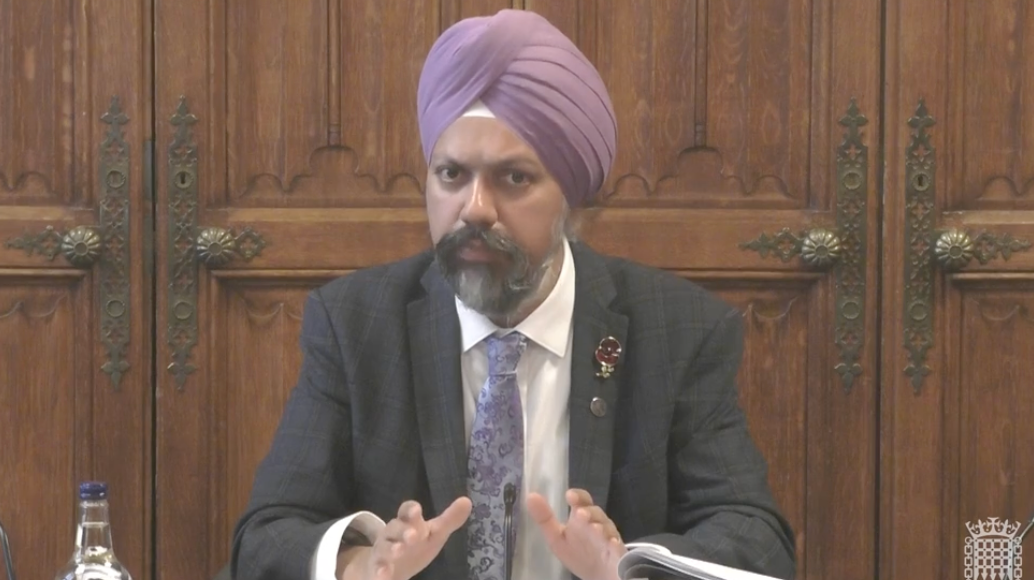
He said: “We were seeing reports of the US significantly ramping up its forces around Iran in preparation for attack, but when they started the war it was embarrassing that we couldn’t even muster one single naval asset around the region.”
The questions have been mounting since Iran launched drone attacks on Cyprus, with one hitting the UK base RAF Akrotiri at the start of the conflict.
While the destroyer HMS Dragon was deployed, it has only just arrived in the Mediterranean and needed six days’ hurried preparations before it could set sail. There were no other ships in the region.
The issue has been embarrassing for the UK after the Greek and French governments were able to deploy naval assets to defend Cyprus before the UK.
Mr Dhesi also raised questions about in-year savings to the defence budget and wanted assurances that the UK is on schedule to meet its commitment of 5 per cent of GDP spent on defence and security by 2034.
He joined Sir Bernard in pressing for when the crucial Defence Investment Strategy is set to be published, with the prime minister appearing to admit that there is a stand-off between the MoD and Treasury, adding: “It is my job to resolve this.”
Regarding the defence of the Cyprus bases, Sir Keir said: “We constantly assess this, and we do have very effective ways of defending ourselves.
“I don’t want to raise levels of public anxiety. They are anxious about what they’re already seeing on their television screens. They’re anxious about the impact it will have on them, particularly economically, in their households. And I don’t want to raise their levels of anxiety.
“I can tell you our military personnel, our security and intelligence services, are working literally 24/7 to keep us safe and doing a very good job in that regard.”
Sir Keir also told the committee that Britain had “embedded the UK airspace battle management specialists into military commands” in the Middle East to defend against Iranian missile attacks, adding: “We are working with industry to distribute air defence missiles to Gulf partners. We’re deploying short-range air defence systems to Bahrain at speed. This was an issue that came up as a matter of some urgency over the course of this weekend, and we are doing the same with Kuwait and Saudi Arabia.”