

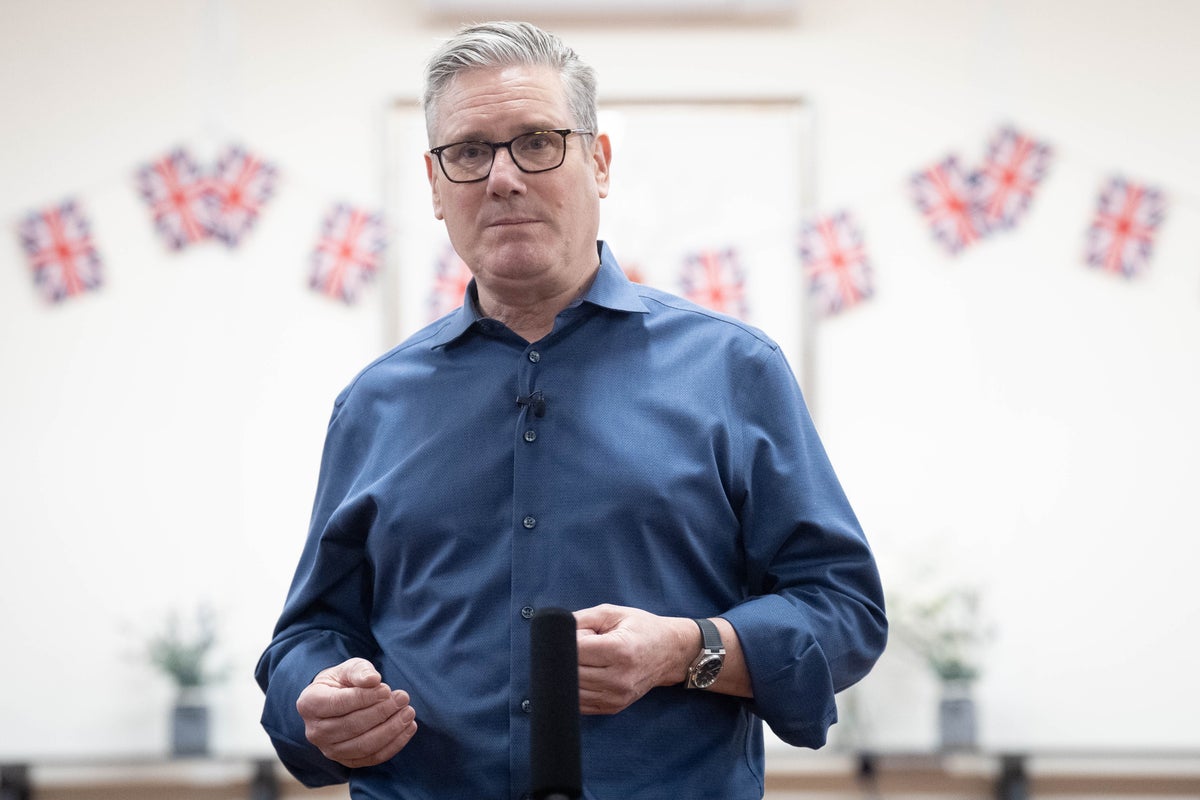
The decision to bar the mayor of Greater Manchester and former MP Andy Burnham from standing for the now vacant parliamentary seat of Gorton and Denton raises a host of questions, both about Sir Keir Starmer himself, as party leader and prime minister, and about the governance of the Labour Party.
In his 18 months as prime minister, Sir Keir has often appeared a weak and indecisive leader, with policy U-turns and prevarications under pressure more in evidence than any determined pursuit of the objectives set out in the manifesto on which he led Labour to its landslide election victory.
There is, however, another side to that picture. Where party and government discipline is concerned, and – it might be added – his own survival as leader, he has shown a determination little short of ruthlessness. This was fully on display in the way he ejected Jeremy Corbyn from the party and his attempt to do the same to Diane Abbott. He was both unhesitant and unrepentant in removing the whip from MPs who rebelled against proposed government welfare reforms (only to yield on the policy issues later), and he demonstrated a similar resolution in effectively sacking both his deputy, Angela Rayner, and his hand-picked ambassador in Washington, Peter Mandelson, when their missteps threatened to harm his own position.
Sir Keir’s role – as a member of the NEC standing committee – in the decision to block Mr Burnham’s possible return to the House of Commons at the very first opportunity shows a similar steel, and a similar regard for his job as prime minister. While the reason given for the NEC opposing his candidacy has a point – a desire to keep Greater Manchester under Mr Burnham’s and Labour’s control until the next mayoral election – it is hard not to see also a more immediate consideration: Sir Keir’s fear of a leadership challenge, and his supporters’ desire to keep out a potential new source of instability at the top of government.
The decision is not without risk. Some influential Labour voices, including the deputy leader, Lucy Powell, opposed the decision to keep Mr Burnham out of the by-election, with Angela Rayner, now a backbencher, backing his possible return to the Commons. Neither could exactly be described as a shrinking violet, and they are unlikely to remain silent. Sir Keir could thus have created a new rod for his own back, in the shape of resentment in party ranks, and given new impetus to others with leadership ambitions, such as the health secretary, Wes Streeting.
For Mr Burnham and his supporters – and perhaps not only for them – the decision cannot but call into question party procedures. Mr Burnham had little more than a day to decide whether to put his name forward. The decision to block him was taken by an 11-member group from the national executive committee, which was strong on Starmer-ites. How come a sub-group of the NEC has the power to take such decisions, and how come a would-be parliamentary candidate can be blocked by any mechanism other than the relevant constituency party?
It is possible, of course, that Andy Burnham may have been saved from himself and an ill-judged decision to try to return to the Commons at this point. The mood of the country is such that he could have been defeated at the ballot box, and another Labour candidate could yet lose the seat. But Mr Burnham might well have offered the best prospect of a Labour victory, and a stronger leader than Sir Keir could have chosen to test Mr Burnham’s advance pledge of loyalty, while utilising his undoubted strengths. Rejecting the return of Mr Burnham at this stage risks looking more like weakness than strength – and is an accusation that Sir Keir will have to deal with in the coming days and weeks.
The decision came at the end of what was probably the most convincing week of Sir Keir’s time at No 10. He judiciously stayed away from the diplomatic circus at Davos. He took a strong public stance on the status of Greenland as part of the Kingdom of Denmark, rebuffing the US president’s claims, and he concluded the week with a forceful objection to Donald Trump’s denigration of the contribution of non-US troops to the conflict in Afghanistan, which elicited something very much like an apology from the second-term US president in the form of a tribute to the courage and sacrifice of UK troops.
For Sir Keir, these undoubted positives could now be negated by the backlash that has already begun against his part in preventing the return to the Commons of a popular politician. They also highlight the contrast, once again, between Sir Keir’s strength when it comes to talking to foreign leaders, controlling his MPs and saving his own skin, and his evident weakness when it comes to communicating the policies he campaigned on and steering them successfully through parliament. One way he might yet be able to quieten, if not actually silence, his critics would be for him to set about remedying that disparity in the coming months.