
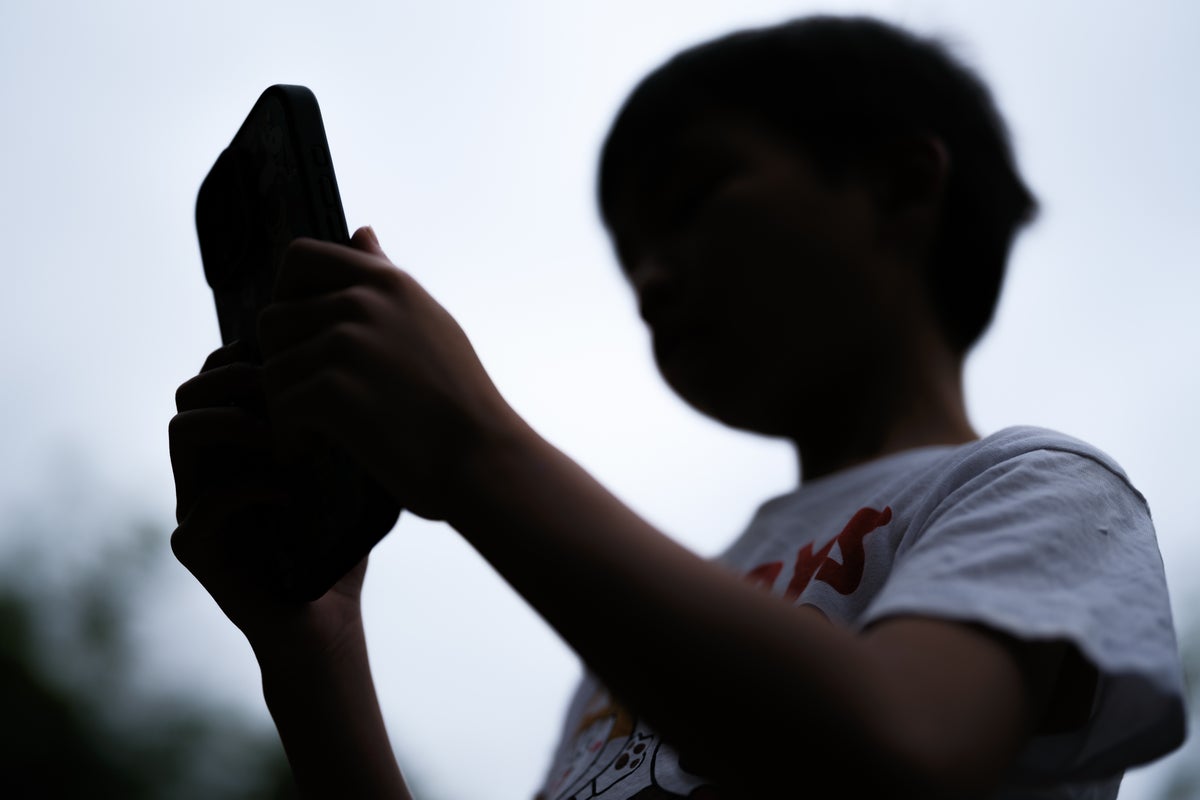
The government has announced plans for a consultation on social media restrictions for under-16s amid growing calls for an Australian-style ban.
The consultation will look at all options for reform, including a blanket ban, limits on app time, raising the digital age of consent, and restricting potentially addictive app features such as “streaks” and “infinite scrolling”.
It comes after dozens of Labour MPs signed an open letter urging prime minister Sir Keir Starmer to back a ban, and to “protect young people from the consequences of unregulated, addictive social media platforms”.
Another letter, written by the mother of murdered teenager Brianna Ghey and signed by eight sets of bereaved parents, urged Sir Keir to back an amendment to stop children under 16 from using social media platforms.
The Department for Science, Innovation and Technology (DSIT) said it will also be taking immediate action on children’s social media use, including by directing Ofsted to examine schools’ mobile phone policies and whether they are effectively implemented.
The government will produce screen time guidance for parents of children aged five to 16, before guidance for parents of under-fives will be published in April.
Ministers will visit Australia as part of its consultation, where a social media ban for under-16s came into force in December.

The Lords is set to vote on an amendment to the Children’s Wellbeing and Schools Bill, which if passed would require social media platforms to stop children under16 from using their platforms within a year of the Bill passing.
The amendment, tabled by former schools minister Lord Nash, is supported by the National Education Union (NEU) and the 61 Labour MPs who signed the open letter to Sir Keir.
Lord Nash said the consultation will only produce more delay. “This announcement offers nothing for the hundreds of thousands of parents, teachers, medical professionals, senior police officers, national security experts and parliamentarians of all parties who have been calling for a raising of the age limit for social media,” the Conservative peer said.
“The prime minister must be in no doubt about the strength of feeling on this. The longer we delay, the more children we fail. I continue to urge all peers to back my amendment on Wednesday which would begin to end the catastrophic harm being done to a generation.”
In her joint letter from the Bereaved Families for Online Safety on Monday, Esther Ghey described how her daughter had a social media addiction and was “exacerbated by the harmful content she was consuming online”.
“I speak not only as Brianna’s mother, but alongside many other bereaved parents who have lost their children to harms that began or were amplified online,” the letter, signed by a number of bereaved parents, reads.
“Some have lost children after they were groomed by online predators, others through dangerous online challenges, and others following prolonged exposure to self-harm and suicide content.”
It adds: “The online world our children are living in, and the harms that come with it, are vast. We need a multi-pronged approach to address this crisis properly, one that includes legislation, regulation, education, and societal change.”
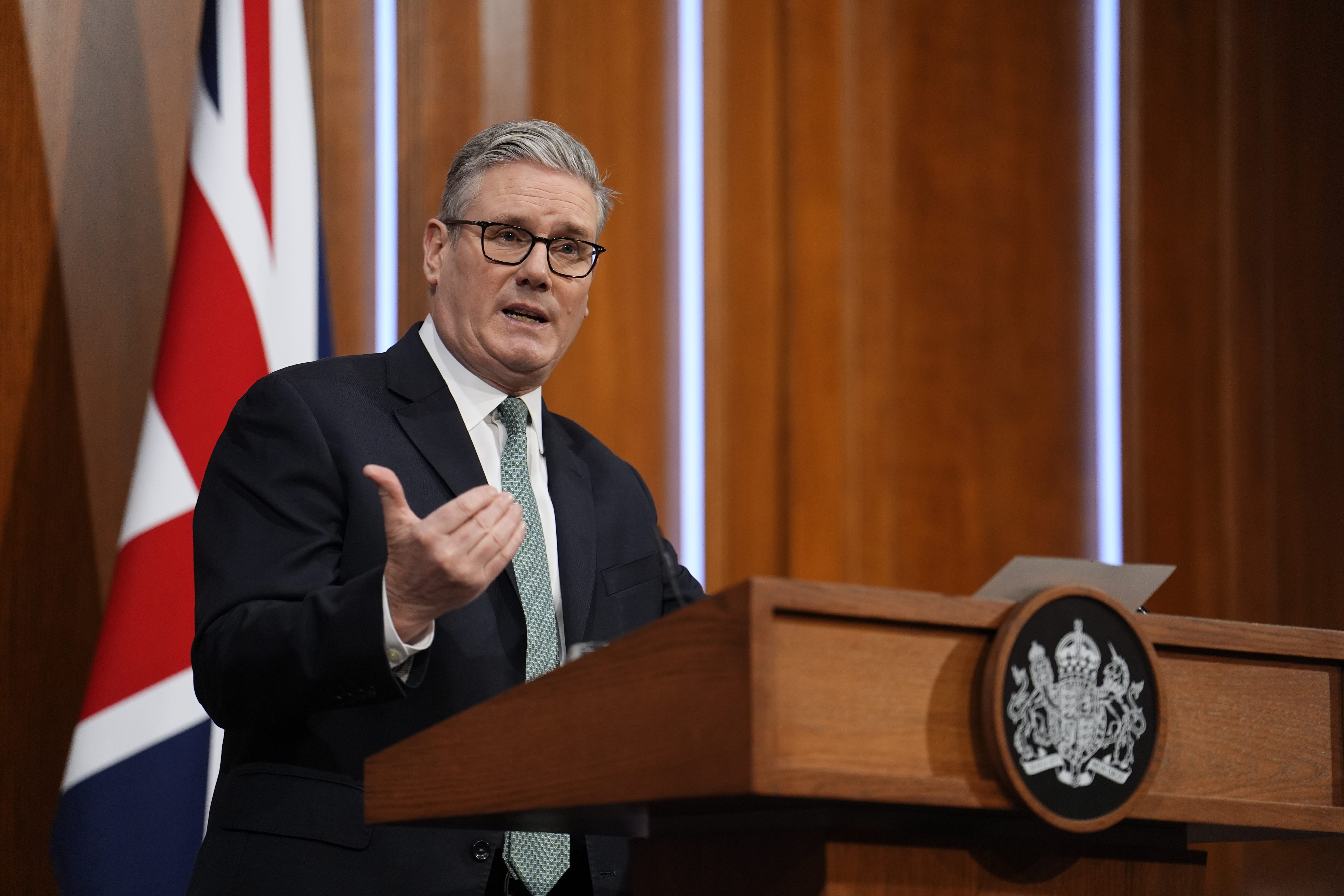
On Monday, Sir Keir said that “no options are off the table” when it comes to changes to the use of social media for children.
“We are obviously looking at what’s happened in Australia, something I’ve discussed with the Australian prime minister,” he added.
“I don’t think it’s just a question of social media and children under 16. I think we have got to look at a range of measures.”
The open letter from 61 Labour MPs read: “Across our constituencies, we hear the same message: children are anxious, unhappy and unable to focus on learning. They are not building the social skills needed to thrive, nor having the experience that will prepare them for adulthood.”
The letter, signed by dozens of backbenchers as well as education select committee chair Helen Hayes, former whip Vicky Foxcroft, and former education minister Catherine McKinnell, says Britain risks being “left behind” if it does not act.
The UK’s largest teaching union has also said the prime minister should fully support an amendment for an outright ban.
National Education Union (NEU) general secretary Daniel Kebede said No 10 signalling it is open to raising the age limit for social media “was a welcome shift”.
Mr Kebede said: “The additional pressure from Labour backbench MPs needs to move Keir Starmer to full support of this amendment to ban social media for under-16s. This cannot be a moment for passivity – it demands leadership.
“Every day, parents and teachers see how social media shapes children’s identities and attention long before they sit their GCSEs, pulling them into isolating, endless loops of content.”
However, at the weekend, 42 child protection charities and online safety groups issued a joint statement warning a blanket social media ban would not deliver the improvement in child safety and wellbeing needed, and would treat “the symptoms, not the problem”.
Instead, the government should strengthen the Online Safety Act to require platforms to robustly enforce risk-based age limits, the organisations said.