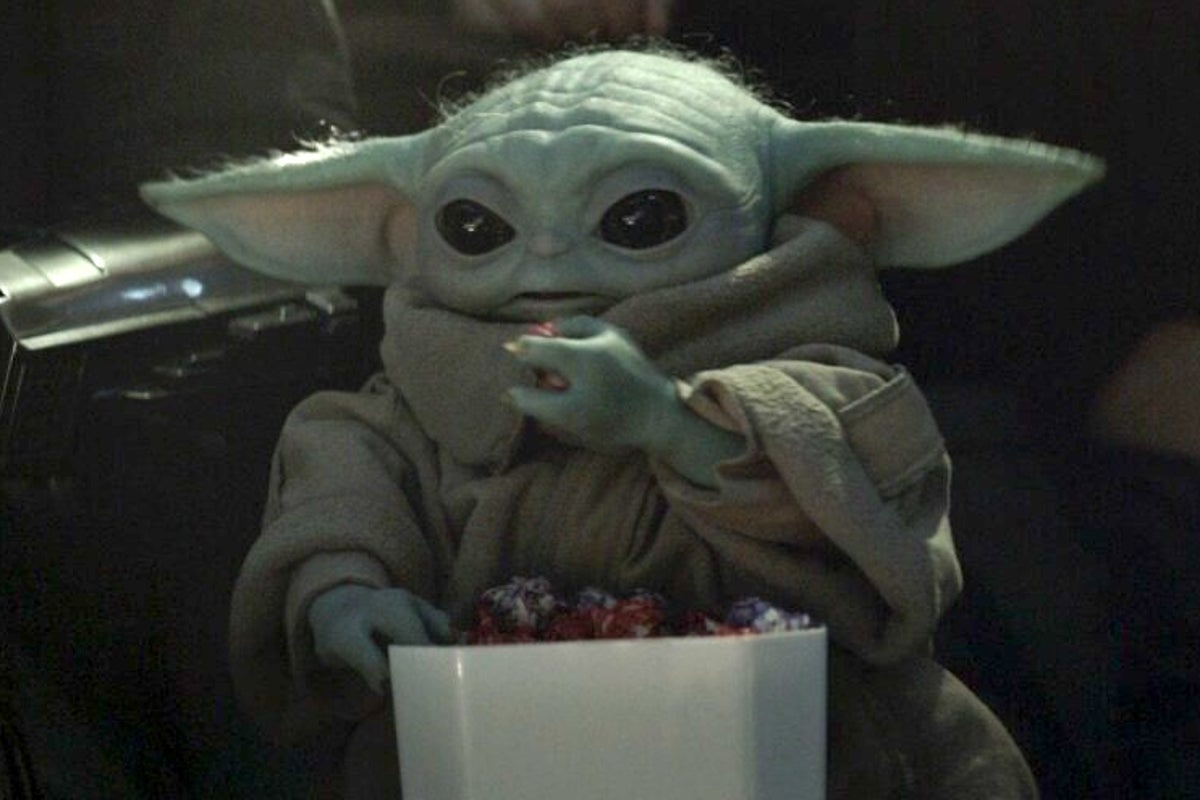
Somebody come and collect Baby Yoda: he needs changing. This was, in so many words, the prevailing sentiment when Star Wars: The Mandalorian and Grogu entered the world last week, to an audience of unmoved critics and (seemingly) reluctant audiences. Adapted from the Disney+ series The Mandalorian – in which a helmet-fixated Pedro Pascal speedruns fatherhood with the world’s most adorable puppet – Grogu is the first Star Wars film in seven years. Over its opening weekend, it made $165m (£122m) globally, an all-time low for a live-action Star Wars film (though only fractionally behind 2018’s far costlier Solo: A Star Wars Story). It’s barely been a decade since The Force Awakens became the biggest North American film ever; what a long, long time ago that now seems.
Critiques of Grogu have largely taken the same lines of attack – the same trench runs, as it were. “It feels uncinematic.” “There’s no story arc.” “What the hell is Jeremy Allen White doing?” Clarisse Loughrey, awarding it two stars for The Independent, called it “the dullest and most inconsequential Star Wars film ever made”, noting that it felt like three episodes of The Mandalorian “stitched together”. (Officially, this wasn’t the case, with writers Jon Favreau and Dave Filoni claiming that they came up with a bespoke story for the film after initial plans for The Mandalorian season four were shelved.) All these complaints are reasonable – Grogu is a profoundly flawed film. (And White’s character, the angsty, musclebound son of Jabba the Hutt, is truly the pits.) But make no mistake, when it comes to Star Wars, The Mandalorian and Grogu is not the problem.
It’s widely agreed at this point that Star Wars is a franchise in crisis. This is true of many ongoing pop-culture goliaths, from Marvel to Doctor Who, but Star Wars – too big to fail, like a multinational bank – has been particularly conspicuous in its floundering. Since 2019’s Rise of Skywalker (a haphazardly crap blockbuster that was mostly disliked but nonetheless made a billion dollars), Disney have made a habit of announcing Star Wars films that never come to fruition: Grogu stands atop the rubble of more than half a dozen discarded attempts to carry on the Star Wars legacy. A mooted trilogy by the showrunners of Game of Thrones, focusing on the origin of the Jedi? Announced in 2018; nixed by 2019. A nebulous Star Wars project film spearheaded by JoJo Rabbit mirthmaker Taika Waititi? Announced in 2020; seemingly still in the script-writing stage. An actually-quite-intriguing Adam Driver spinoff directed by Stephen Soderbergh? Greenlit by Lucasfilm then reportedly vetoed by Disney last year.
On Disney+, at least, there’s been no such logjam: straight-to-streaming series have been coming thick, fast, and forgettable. (The sole exception to this being the beguilingly good Andor, which in any sane world would be the blueprint for Star Wars going forward. Grogu, therefore, arrives in cinemas with a disproportionate burden of expectation. Its poor reviews and commercial slump are not just a predictable response to a sub-par blockbuster, but, we are told, a death knell for a cinema giant. But the reality is more complicated. In many ways, Grogu is a success. Ever since Disney took over the reins of Star Wars from George Lucas in 2012, the biggest question mark has been: how will the series endure without the involvement of its creator? In the years since, this birthed smaller, similar questions: how will it cope if you remove its original stars (Hamill/Ford/Fisher)? What about John Williams, the now-94-year-old composer whose music is as fundamental to Star Wars’s success as anything? On this last point, Grogu unreservedly triumphs: Ludwig Göransson’s score is a lush, expressive throwback to a mode of film composition that has gone entirely out of vogue – if you go and see 100 blockbusters this year, nothing else will sound like this.
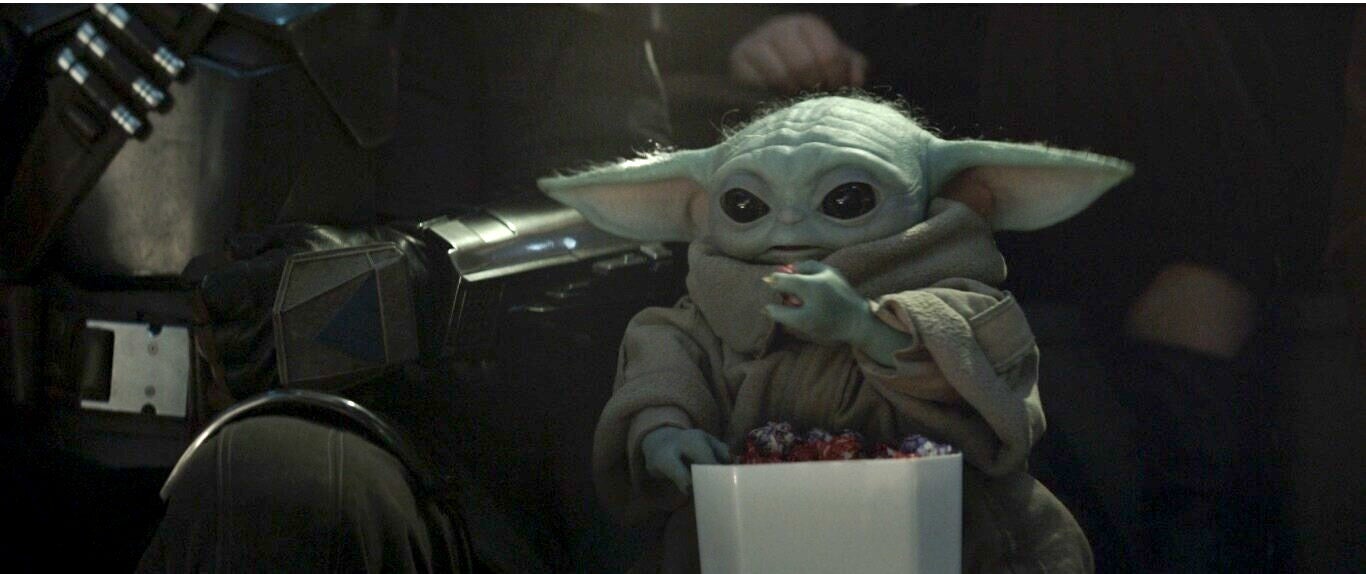
There is also, in Grogu’s linear, low-stakes plot, an instructive paring-back of scale. Part of what made Rise of Skywalker such a tough act to follow was its steroidic maximalism. (Where once a single planet-killing weapon was enough to anchor the peril of a Star Wars film, Rise of Skywalker ended with thousands of them flying through the air at once, a danger so absurdly vast it never felt real.) Grogu is obstinate in its refusal to even side-eye the bigger picture. There is almost no lore knowledge required, and certainly none dispensed. While there is probably a swath of healthy middle ground, it’s better for Star Wars to underestimate its own gravitas than overstate it.
In the most prosaic bean-counting terms, there is also no real risk of Grogu being a financial misstep: even leaving aside its budget – more modest by far than any recent Star Wars entry – this is a film that primarily serves to keep Grogu, one of the most ferociously merchandisable characters in modern fiction, in the public consciousness. Good brand management and good filmmaking are by no means one and the same, but let’s not pretend to misunderstand what Disney were actually hoping to achieve with this.
The real test may well be in a year’s time, when the next Star Wars film, the Ryan Gosling-led Star Wars: Starfighter, will – allegedly – be out in cinemas. The pressure for it to succeed will be crushing. And Gosling is no Grogu: if this is a failure, it will have a face. For now, you can sit back and watch The Mandalorian and Grogu outlive its haters, who seem to have forgotten just how bad things can get.
‘Star Wars: The Mandalorian and Grogu’ is in cinemas