
Spectacular new archaeological discoveries across Turkey are casting significant new light on the nascent stages of Christianity, including the best-preserved early image of Christ ever unearthed.
These remarkable finds also encompass ancient Christian tombs and inscriptions. Over the past two years, archaeologists in Anatolia – modern-day Turkey – have uncovered at least a dozen previously unknown churches, dating from the 4th and 5th centuries AD. Furthermore, excavations in the historic city of Pergamon have revealed one of the earliest depictions of Saint George, England’s future patron saint.
The sheer volume of these recent discoveries underscores Anatolia’s pivotal role in the early expansion of Christianity. They provide crucial insights into how Roman Anatolia rapidly became a cradle of the faith, mere decades after Christ’s crucifixion in Jerusalem in the early 30s AD.
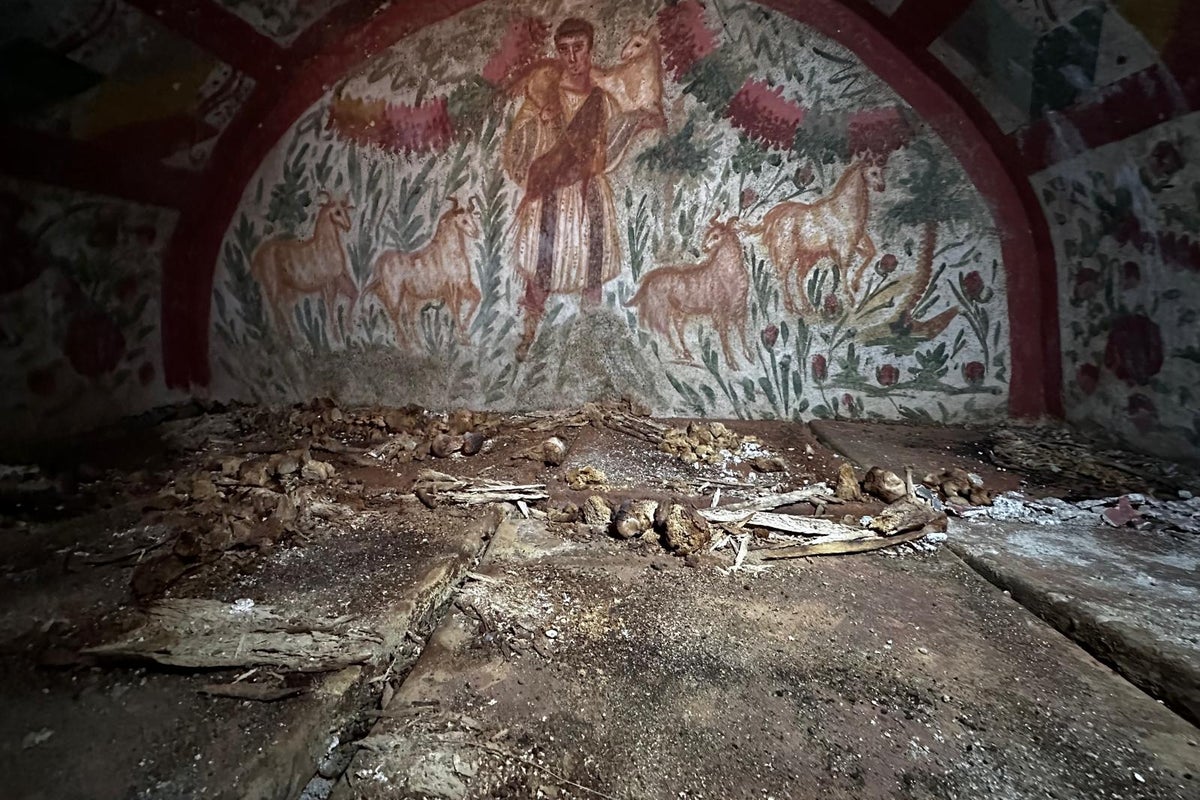
The image of Christ, portrayed as the Good Shepherd, was discovered last year in the Turkish city of Iznik – and is among the five oldest proper images of Christ, as an adult, ever found anywhere in the world. It dates from the early to mid 3rd century AD and is the best preserved very early image of Jesus ever found.
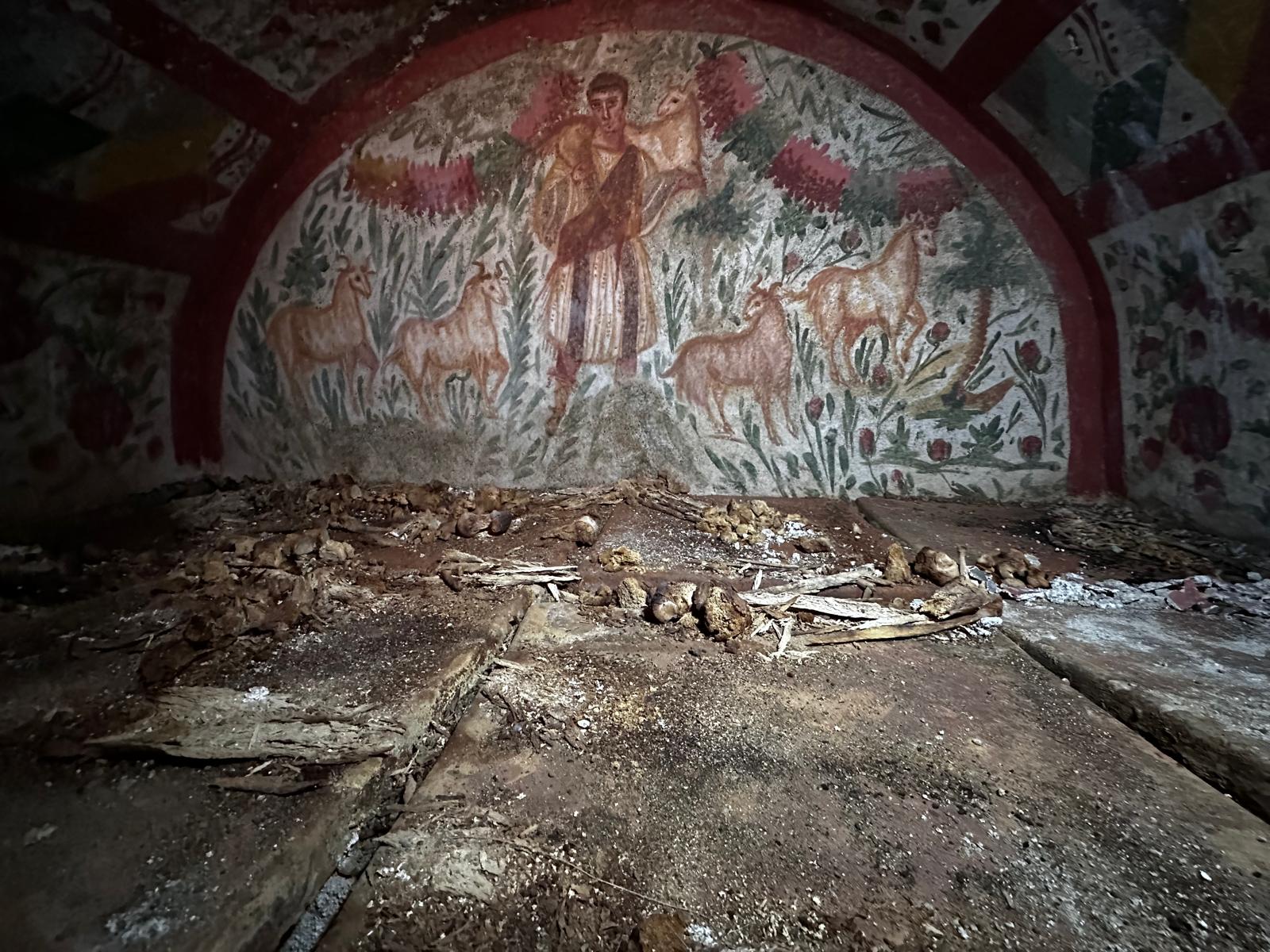
Because it was discovered sealed inside an exceptionally well-preserved oxygen-depleted underground family tomb, the fresco’s pigments are in virtually perfect, condition – exactly as they were painted some 1800 years ago. The image is so complete that Christ’s facial features, the individual folds of his tunic, his hands, and the distinct outline of the ram across his shoulders remain clearly visible and sharp. The newly discovered painting gives historians a detailed understanding of how early Christians perceived Jesus – beardless, short-cropped hair and dressed in posh upper-class Roman clothes.
Quite apart from the large number of recent archaeological discoveries, new historical research is also enhancing our understanding of how and why, in just three centuries, Christianity expanded from being a tiny persecuted religious sect to being the official religion of the Roman Empire.
New research projects, carried out at multiple universities in the UK and around the world over the past few years, have analysed how, counterintuitively, persecution and Christian martyrdom (albeit probably on a much smaller scale that usually thought) actually helped Christian expansion – and how that growth was also partly driven by potentially lower illness-related early death rates than those endured by pagan communities. Other key recent research has shed new light on how early Christian social care systems seem to have very substantially increased conversion rates and how the Roman empire’s political and economic problems were also major factors driving Christian expansion.
One recent piece of research has even re-examined the possibility that low levels of female infanticide in Pagan society created, over many generations, demographic imbalances which Christian communities, which almost certainly did not practise infanticide, would have demographically benefited from.
What’s more, archaeologists have discovered impressive new evidence about the spread of emperor worship in what is now Turkey – and it is that expansion in the imperial cult that helped give early Christianity an opportunity to evolve from solely being a Jesus movement to also being an anti-imperial one, capable of attracting a broad spectrum of dissident social and political support.
Over just the past three years alone, traces of a 3.5 metre tall statue of the 2nd century AD emperor, Marcus Aurelius, have been found in the ancient port city of Syedra (in southern Turkey), while the almost complete remains of a 2.1 metre tall Aurelius statue from the inland ancient city of Bubon has also been identified.
And back in 2021, the head of a 2.5 metre tall statue of the emperor Hadrian was unearthed in the notoriously decadent ancient city of Alabanda (in western Anatolia), while in 2007 and 2008 huge 4.5 metre tall sculptures of Hadrian and Marcus Aurelius were unearthed in the spectacularly-located ruined city of Sagalassos (in southern Turkey).
The growth of the imperial cult is also of great importance from a Biblical perspective. It helps to explain some of the content of a key part of the New Testament – namely the Book of Revelation.
That book – written by a late 1st century Christian prophet, called John of Patmos, in around 90 AD – promoted the idea that the Roman Empire (code-named by him “The Beast”) was controlled by the Devil (code-named “The Dragon”).
The book (and seven letters contained in it – purportedly dictated to John by Christ in Paradise) was sent to seven specific Christian communities in seven cities in what is now western Turkey – and over very recent years archaeological excavations, in some of those seven cities, have yielded extraordinary evidence of early Christian life, including an ancient house church (the type of Christian place of worship which existed prior to the first purpose-built churches).
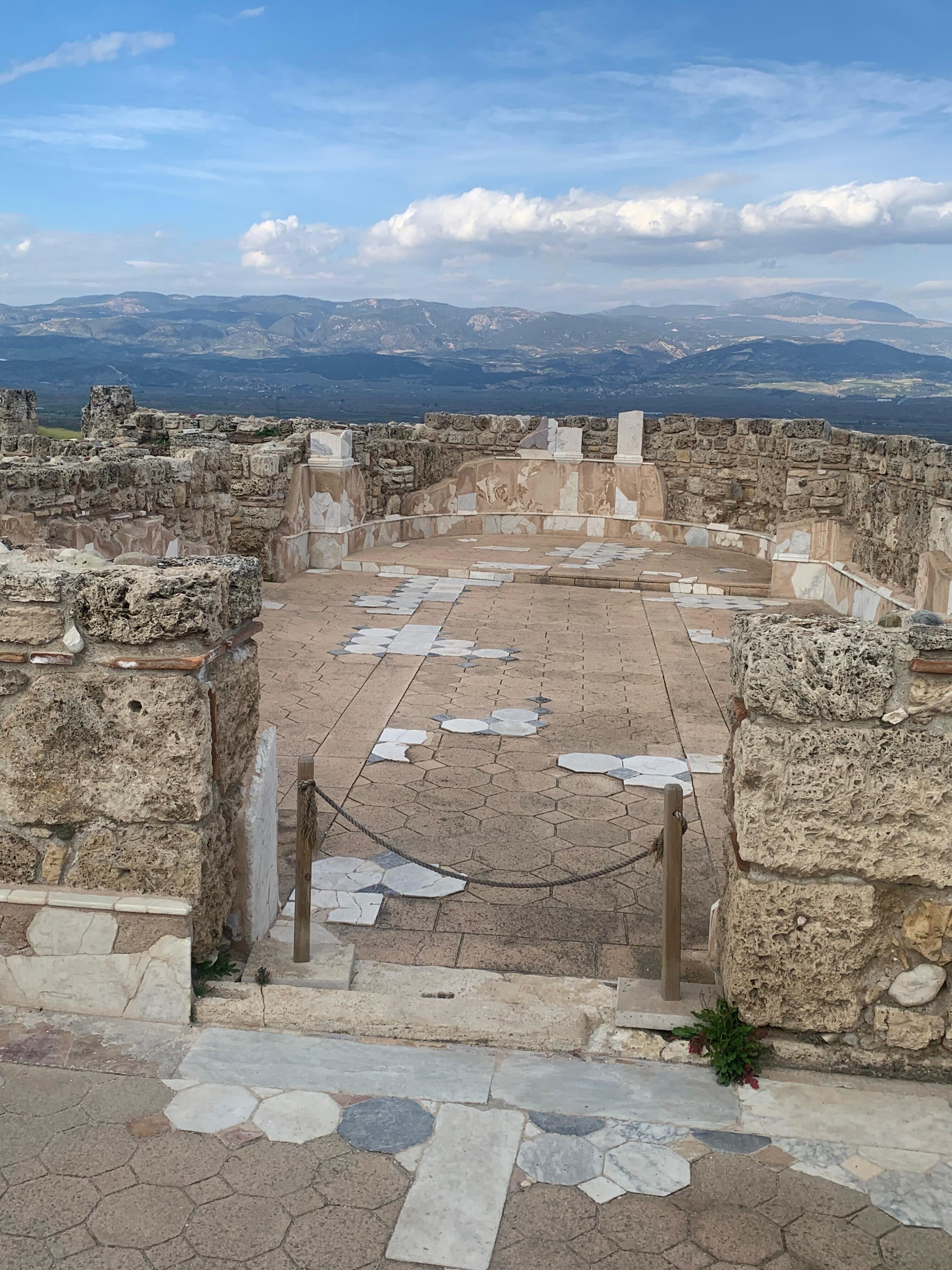
The 4th century house church – unearthed in the beautiful ancient city of Laodicea in western Turkey – is one of only half a dozen early house churches ever discovered anywhere in the world.
But in nearby Sardis, another ancient city mentioned in Revelation, researchers have carried out investigations into a probable early 6th century major church (possibly a cathedral). It was originally a massively-constructed 45 metre long double-domed building, built at the very heart of the still today impressive ruined city – and may have acted as a prototype for the architectural tradition associated with one the world’s greatest ancient churches – Hagia Sophia in Constantinople (modern Istanbul).
And in three other ancient cities, specifically mentioned in Revelation, archaeologists have recently unearthed yet more early Christian material.
In Smyrna (modern Izmir) experts have been studying mid 2nd century coded Christian messages, written as graffiti on the walls of a Roman shopping mall. They are, arguably, the earliest Christian inscriptions ever found, and possibly the very earliest original Christian writing. One – designed like a crossword – is the word ‘Logos’ (one of Christ’s titles, meaning ‘The Word’). Indeed the very first line of St John’s Gospel, referring to Jesus/God says “In the beginning there was the Word”. Another coded message (a numerical one) consists of just three numerical characters – 800 – meaning that ‘Faith’ is the way to ‘the Lord’ (ie., Christ). And an uncoded inscription – based on key passages in four books of the New Testament – clearly refers to Jesus with the words “The one who has given [us] the [Holy] Spirit”.
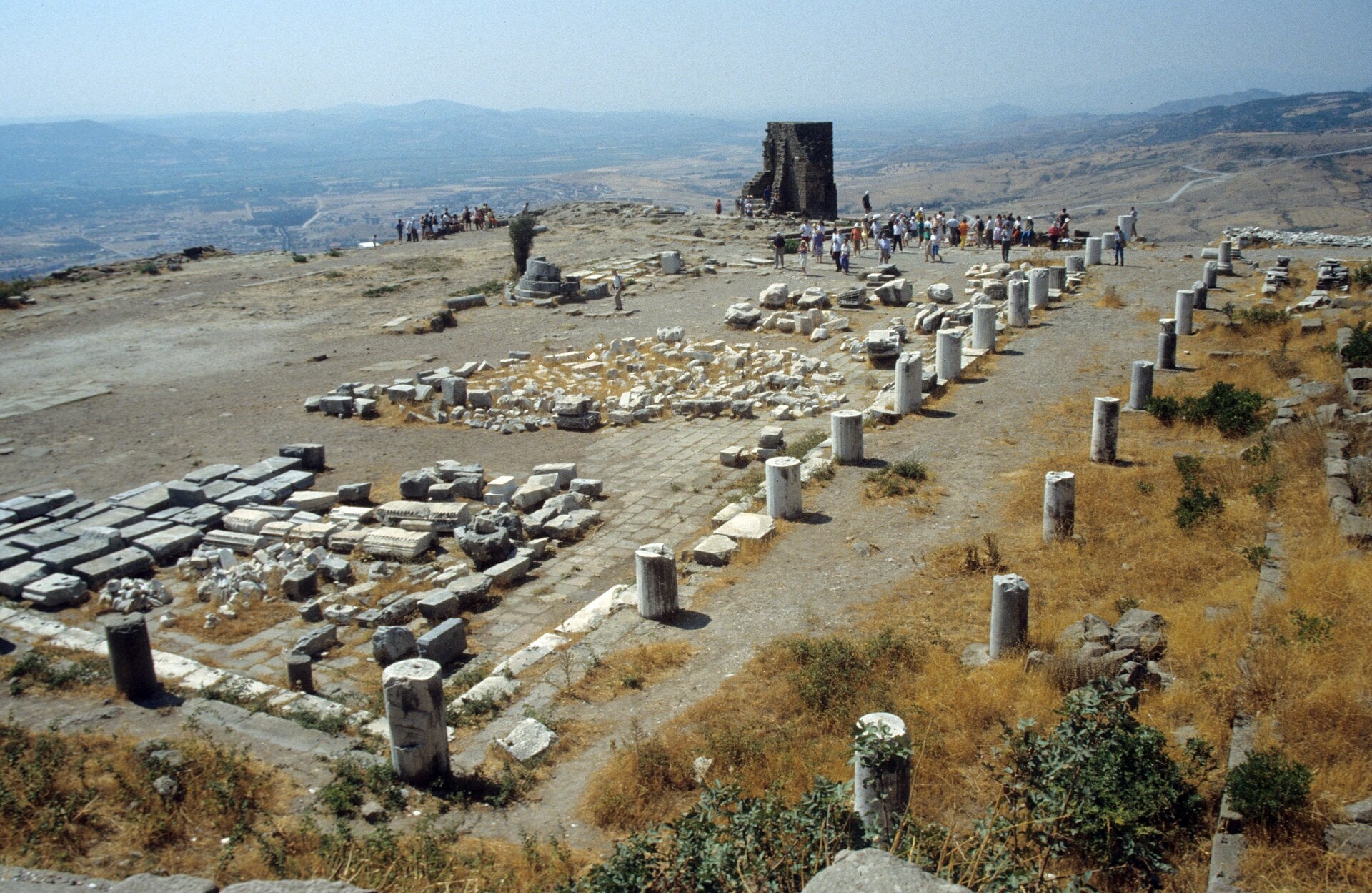
Sixty miles north of Smyrna, in the spectacular ancient city of Pergamon (near modern Bergama), archaeologists have found one of the world’s oldest pieces of archaeological evidence of the cult of Saint George – an early 5th century ceramic pilgrim flask bearing what appears to be him, slaying a dragon.
Additionally, in Pergamon, archaeologists have just investigated a key site of early Christian martyrdom – the city’s amphitheatre where at least three Christians are believed to have been burned alive in the late 2nd century AD. The investigation allowed archaeologist to calculate that the amphitheatre, where these gruesome executions took place, was capable of accommodating no less than 25,000 spectators.
_(2).jpeg)
And last but not least, in the vast ancient metropolis of Ephesus – one of the five largest cities of the Roman world – archaeologists have recently unearthed a Pompeii-style quarter buried under ash from a huge urban fire caused by Persian invaders. While the ash of Pompeii preserved a lost Pagan world, the ash layer in Ephesus has frozen in time the early Byzantine Christian world of the 6th and early 7th centuries.
Archaeologists have been able to unearth literally thousands of pottery vessels (including amphorae, filled with salted mackerel) and the charred remains of almonds, peaches and seafood. They even found a shop dedicated to selling souvenirs to Christian pilgrims – including hundreds of tiny pendant-style pilgrim flasks which would have contained sacred oil or holy water.
But equally fascinating is remarkable ongoing research that sheds new light on a famous passage in the New Testament. When praising an early Christian martyr, the Book of Revelation has Christ speaking from heaven, accusing the Romans of having set up ‘Satan’s throne’ in the great metropolis of Pergamon. That city was, in 29 BC, the very first place in the Roman Empire where the very first emperor – Augustus – authorised the construction of a temple where people could worship him as a living God.
As Christianity developed in the 1st century AD, it robustly opposed emperor worship. Archaeologists have been digitally mapping the Pergamum temple where Roman emperor worship first took place and are therefore only now beginning to understand how it aligns with the broader Pagan religious complex it formed part of. Christian opposition to emperor worship and to Roman imperial ideology in general was clearly extremely subversive – and early Christians used a numerical code as a way of politically and ideologically attacking emperors. The (now globally famous) code for hated imperial rulers was 666 (or sometimes 616) and was known as ‘the Number of the Beast’ – the beast being none other than the emperor himself.
The scale of recent archaeological research, by Turkish, British, German, Austrian, American and other investigators, into the early centuries of Christianity – particularly in Turkey – has been massively increasing our understanding of a key era of human history.
“The large number of recent early Christian archaeological discoveries in Turkey are of very substantial significance,” said a leading authority on early Christianity, Professor Candida Moss of the University of Birmingham.
“Anatolia – what is now Turkey – was in many ways the cradle of early Christianity,” she explained.
“The region – visited by the apostles Peter and Paul and other very early missionaries – is of huge importance in the religion’s early history”.
“And, of course, when Christianity became the official religion of the empire, the Romans moved their capital from Rome to what is now Istanbul,” explained Professor Moss.