


UK TimesUK Times
  • Home
  • News
  • TV & Showbiz
  • Money
  • Health
  • Science
  • Sports
  • Travel
  • More
    • Web Stories
    • Trending
    • Press Release
What's Hot

A184 westbound exit for A194(M) | Westbound | Congestion

1 April 2026
Who has qualified for World Cup 2026? – UK Times

Who has qualified for World Cup 2026? – UK Times

1 April 2026

connector at M60 J24/M67 | Anti-Clockwise | Congestion

1 April 2026
Facebook X (Twitter) Instagram
UK TimesUK Times
Subscribe
  • Home
  • News
  • TV & Showbiz
  • Money
  • Health
  • Science
  • Sports
  • Travel
  • More
    • Web Stories
    • Trending
    • Press Release
UK TimesUK Times
Home » Shroud of Turin may have Indian origin, DNA analysis suggests – UK Times
News

Shroud of Turin may have Indian origin, DNA analysis suggests – UK Times

By uk-times.com1 April 2026No Comments3 Mins Read
Facebook Twitter LinkedIn Telegram Pinterest Tumblr Reddit WhatsApp Email
Shroud of Turin may have Indian origin, DNA analysis suggests – UK Times
Share
Facebook Twitter LinkedIn Pinterest Email

Sign up for our free Health Check email to receive exclusive analysis on the week in health

Get our free Health Check email

Get our free Health Check email

Health Check

Yarn used to make the Shroud of Turin may have likely come from ancient India’s Indus Valley region, according to a new DNA analysis of samples from the linen fabric believed to have been used to wrap Jesus’s crucified body.

The shroud, measuring about 4.4m long and 1.1m wide, remains one of the world’s most controversial Christian artefacts, first documented in France in 1354.

Currently housed in the Cathedral of Saint John the Baptist in Turin, Italy, scientists continue to study the linen fabric to determine its origin.

Now, DNA analysis of material collected from the relic in 1978 suggests the cloth used to make the fabric may have originated in India.

Researchers, including Gianni Barcaccia at the University of Padova, also identified a range of different animal, plant and human material contaminating the shroud over several years.

“Analysis of the DNA traces found on the Shroud of Turin suggests the potentially extensive exposure of the cloth in the Mediterranean region and the possibility that the yarn was produced in India,” they wrote in the new yet-to-be peer-reviewed study posted in Bioarxiv.

Genetic material found on the shroud includes those of domestic dogs, cats, chickens, cattle, goats, sheep, pigs and horses, as well as wild animals such as deer and rabbits.

DNA from carrots, peppers, tomatoes, potatoes, and some wheat species were also found on samples from the shroud.

Since the shroud appears to have come into contact with multiple individuals, it challenges the possibility of identifying its “original DNA”, researchers say.
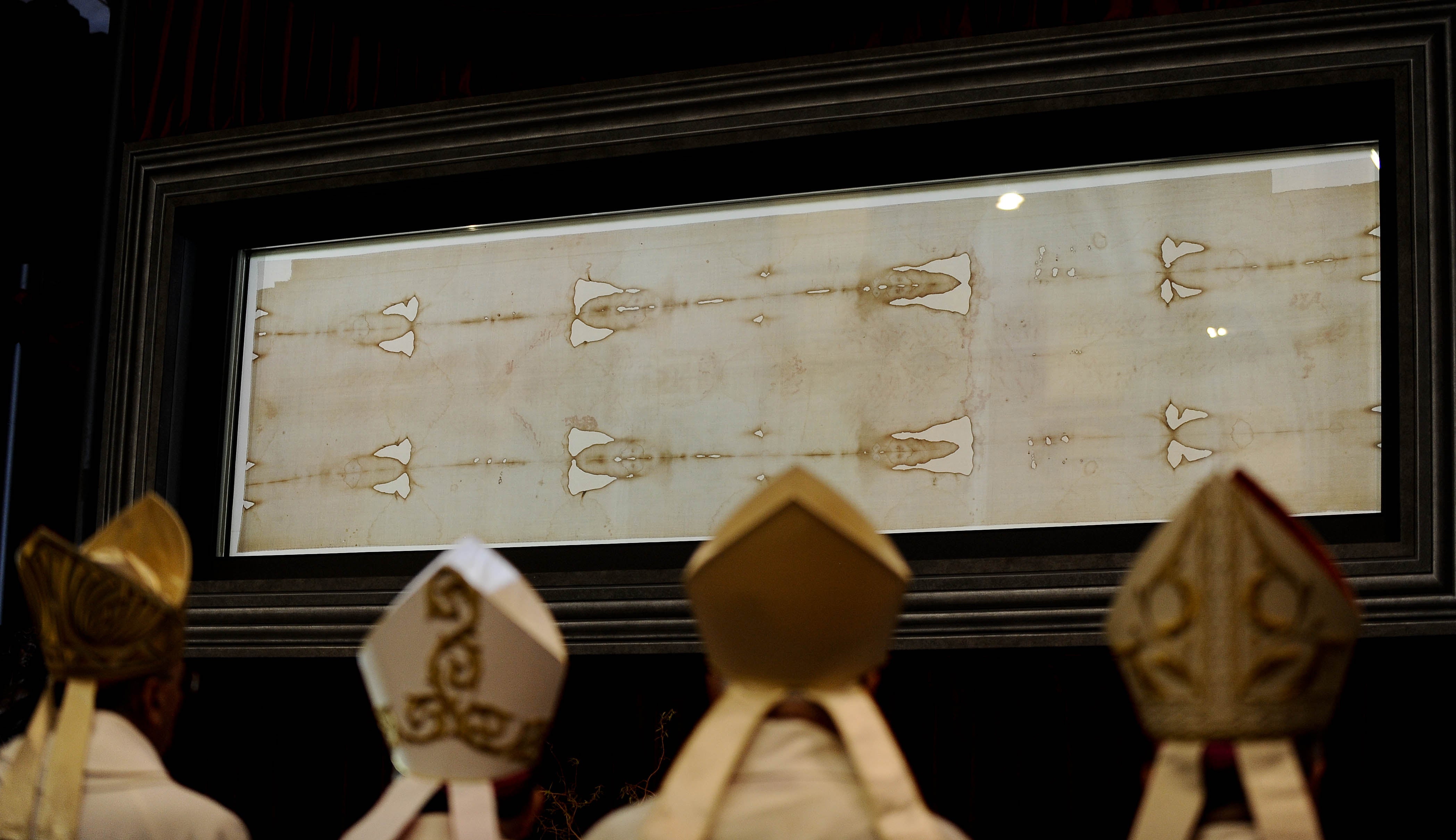
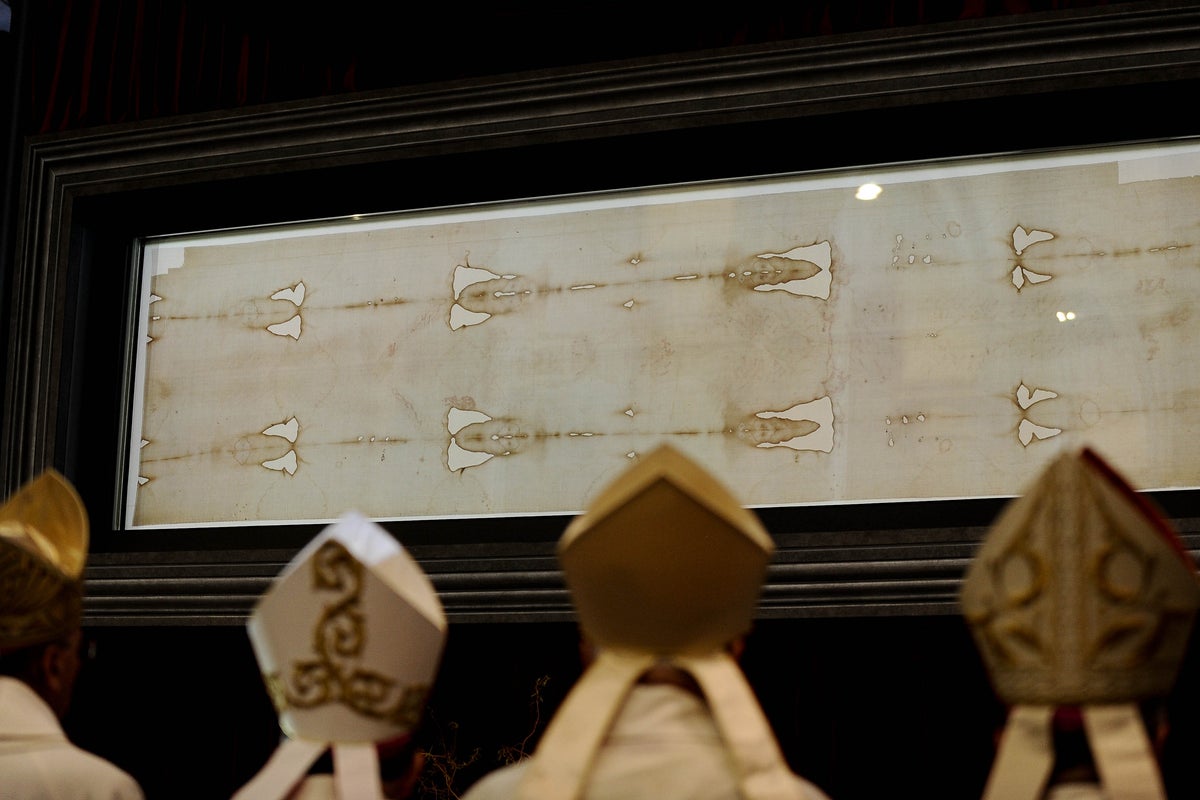
Bishops pray in front of the Shroud of Turin
Bishops pray in front of the Shroud of Turin (AFP via Getty Images)

The latest study found that about 40 per cent of the human DNA found on the shroud is from Indian lineages.

“The presence of 38.7 per cent of the overall human genomic data from Indian lineages is unexpected and is potentially linked to historical interactions associated with importing linen or yarn from regions near the Indus Valley,” researchers wrote.

This result could likely be due to historical interactions with the relic, or the Romans importing linen from regions near the Indus Valley, according to the study.

Intense handling of the shroud by humans over the years, is also confirmed by the presence of skin bacteria on samples, including Cutibacterium and Staphylococcus.

“Overall, our prior and present findings provide valuable insights into the geographic origins of individuals who interacted with the Shroud throughout its historical journey across various regions, populations, and eras,” scientists wrote.

“Genetic and microbial evidence discloses a complex history of the Turin Shroud, reflecting interactions with a diverse array of individuals,” they wrote.

However, the latest analysis could not help date the age of the shroud.

“Nevertheless, our findings constitute a novel and significant contribution to the field, thoroughly elucidating the biological traces left by centuries of social, cultural, and ecological engagement,” scientists concluded.

Share. Facebook Twitter Pinterest LinkedIn Tumblr Telegram Email

Related News

A184 westbound exit for A194(M) | Westbound | Congestion

1 April 2026
Who has qualified for World Cup 2026? – UK Times

Who has qualified for World Cup 2026? – UK Times

1 April 2026

connector at M60 J24/M67 | Anti-Clockwise | Congestion

1 April 2026

M1 J15A northbound access | Northbound | Road Works

1 April 2026
Carol Kirkwood’s last forecast live: BBC Weather legend retires after almost 30 years years – UK Times

Carol Kirkwood’s last forecast live: BBC Weather legend retires after almost 30 years years – UK Times

1 April 2026

A47 eastbound between A1064 and A149 | Eastbound | Accident

1 April 2026
Top News

A184 westbound exit for A194(M) | Westbound | Congestion

1 April 2026
Who has qualified for World Cup 2026? – UK Times

Who has qualified for World Cup 2026? – UK Times

1 April 2026

connector at M60 J24/M67 | Anti-Clockwise | Congestion

1 April 2026

Subscribe to Updates

Get the latest UK news and updates directly to your inbox.

Recent Posts

  • A184 westbound exit for A194(M) | Westbound | Congestion
  • Who has qualified for World Cup 2026? – UK Times
  • connector at M60 J24/M67 | Anti-Clockwise | Congestion
  • Why game theory falls short in AI-driven trading market
  • Formula One should not be pandering to Verstappen … if he wants to quit then let him!

Recent Comments

No comments to show.
© 2026 UK Times. All Rights Reserved.
  • Privacy Policy
  • Terms of use
  • Advertise
  • Contact Us

Type above and press Enter to search. Press Esc to cancel.

Go to mobile version