

From gingerbread houses to frosted sugar cookies, sweets are everywhere you turn with the holiday season in full swing. If you have a big sweet tooth, you may be looking at healthier options, like sugar-free cookies or low-carb treats. But the truth is that they might not be better for you after all.
Many Americans were worried about their sugar consumption this year and considered alternatives. The International Food Information Council’s 2025 Food & Health survey found that 75 percent of Americans were trying to reduce or avoid having sugar this year, with 22 percent opting for a “sugar-free” option when available. In addition, the global sugar-free confectionery market is estimated to grow from $42.5 billion in 2023 to $84.3 billion by 2032, according to Dataintelo, a market research and consulting firm.
Dietitians believe that the rise in sugar-free options is a result of fear-based messaging about actual sugar. “Myths like sugar being addictive or causing diseases like diabetes or cancer have been circulating in the wellness space for ages, and they just can’t seem to die. Sugar has a place in a well-balanced diet,” Alison Swiggard, a Registered Dietitian Nutritionist in Portland, Maine, told The Independent.
Health risks have also been linked to sugar substitutes. Researchers from the American Academy of Neurology recently found that people who, on average, ate more than 190 milligrams of sweeteners each day for a year had 62 percent faster declines in cognitive and memory skills than those who consumed 20 milligrams.
So, should you be calling sugar-free desserts the healthier option when compared to your usual sweet treats? Here’s what experts have to say.

Artificial sweeteners can hurt your gut
Having too much of one thing is never good — including sugar-free desserts. While they are aimed to fulfill sugar cravings without the extra calories, they often have artificial sweeteners, like sucralose, aspartame, or stevia, that can actually increase the desire for other foods.
According to Avery Zenker, a Registered Dietitian in Ontario, Canada, artificial sweeteners have been linked to an altered appetite, increased inflammation, and gut microbiome disruption, which is “an imbalance in the types of microorganisms in your body” that can make you more vulnerable to infections, according to the Cleveland Clinic.
“There’s decent evidence they alter the gut microbiome, and disrupt gut barrier function (i.e., contribute to ‘leaky gut’),” she told The Independent, referring to a condition where the intestinal lining is damaged, leading to bloating or food sensitivities. “Some people experience headaches or digestive symptoms from artificial sweeteners,” Zenker continued. “On their own, artificial sweeteners don’t have strong health benefits and may harm health.”
Sugar alcohols in sugar-free treats can cause digestive discomfort
Swiggard reiterated her concern about the ingredients in sugar-free drinks and foods. While sugar alcohols, like erythritol, xylitol, sorbitol, and maltitol, make these items taste sweet, they can also irritate the gut when consumed in large quantities.
“Sugar alcohols are not fully absorbed in the digestive tract, meaning they travel to the large intestine where bacteria ferment them, which can lead to more gas production, bloating, cramping, and loose stools,” she explained.
Sugar-free treats can be high in saturated fats
Sugar-free foods have butter and palm oil to maintain flavor, moisture, and structure. However, these ingredients are saturated fats, which have their own downsides.
“Excessive intakes of saturated fat are linked to increased health risks, including cardiovascular disease and high cholesterol. Replacing saturated fats with unsaturated fats significantly reduces mortality and cardiovascular events in research,” Zenker explained.
Sugar-free desserts use refined carbohydrates
Some sugar-free desserts have a significant amount of refined carbohydrates, like wheat flour and starches. Zenker warned that consuming too many refined carbs can result in weight gain and systemic inflammation, and worsen insulin sensitivity, which is what keeps blood sugar levels stable.
“The glucose from refined carbs is rapidly absorbed into the bloodstream, increasing blood sugar levels. Excessive intake of refined carbs can still worsen insulin sensitivity, blood sugar regulation, and type 2 diabetes risk,” she said.
“Replacing added sugar with refined carbohydrates in sugar-free desserts has minimal benefit and may worsen certain health risk markers, especially when the refined carbohydrates are high-glycemic index foods like rapidly digestible starches,” she added.
Should you be having sugar-free desserts at all?
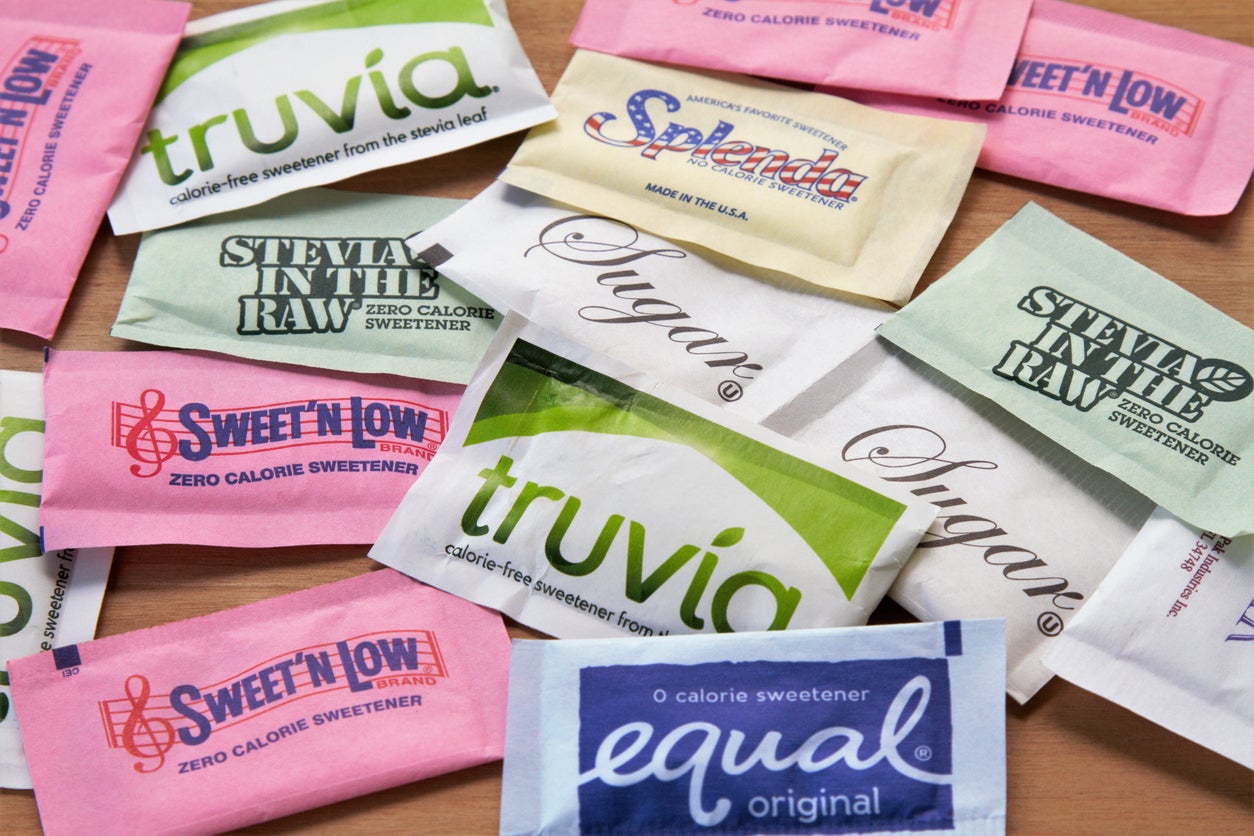
Of course, there are benefits to replacing sugar with artificial sweeteners, like lessening the risk of tooth decay and cavities, according to the Mayo Clinic. For some people, artificial sweeteners can be a short-term way to help lose or manage weight and are consumed for medical reasons, like diabetes.
Still, Swiggard recommended reading the ingredients labels on sugar-free desserts. She also encouraged people to reflect on why they’re eating these foods to begin with.
“If sugar-free options feel genuinely satisfying and supportive, they can absolutely be part of holiday eating. If they feel like a rule that doesn’t actually satisfy, it may be more nourishing (physically and emotionally) to enjoy traditional desserts in a relaxed way,” she explained.
For those looking to make a dessert without added sugar or artificial sweeteners, Zenker recommended using natural sweeteners.
“Using whole food sweeteners like dates, bananas, and applesauce can be nutrient-dense alternatives to sugar,” she said. “They still contain sugar, but it’s not linked as strongly to the health risks of refined sugar.”