


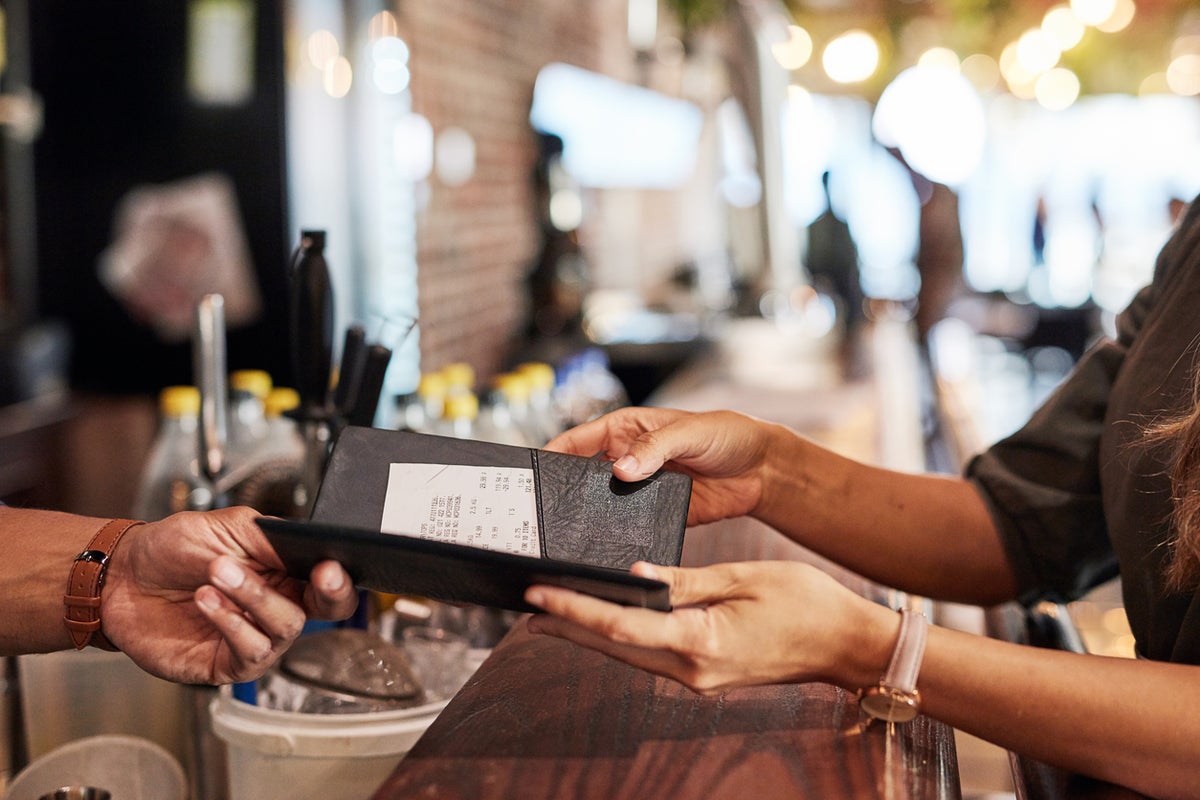
When an outing calls for upfront payment, such as admission to the cinema, a play or a theme park, the question of who covers it can shape the tone before the fun even begins.
Navigating payment with others – whether colleagues, close friends or new acquaintances – can be tricky and interrupt the social dynamic that makes shared experiences so valuable.
Our new research, published in Psychology and Marketing, suggests the way you approach splitting upfront costs could have some surprising impacts.
In some cases, despite the dent in your bank account, covering the full cost of an experience for yourself and someone else could actually make you happier.
But this won’t always be the case. And it likely comes down to the different norms and expectations we have for different kinds of relationships.
The experience economy
When times are tough financially, psychology suggests people would prefer to spend their money on material goods rather than experiences.
Yet despite ongoing cost-of-living pressures, there’s evidence to suggest many Australians are prioritising experiences.
Experiences are not just services, but rather about creating memorable events. Compared with material goods, experiences are consistently linked to improved happiness.

A big part of the benefit we derive from such experiences hinges on the fact that we share them with other people. Putting money towards experiences lets us spend time with other people and relate to them in ways that just buying “stuff” often can’t match.
So much so, that factors like who we go with, the quality of conversations an experience leads to, or the clarity we have about the other person’s interests can have as much of an effect on happiness as the experience content itself.
In shared experiences, where money is unavoidable, how does “who pays” affect their well-being benefits? This is the question we posed in our latest research, coauthored with Belinda Barton and Natalina Zlatevska.
Going to the movies
We conducted three experiments with 2,640 people and presented them with a common scenario: they would be going to the cinema with either their best friend or a casual acquaintance.
We told half of the participants they would split the cost (that is, pay only for their own admission). The other half were told they would cover the whole cost for both themselves and the other person. We then asked them how happy they would be with this purchase.
Across the three studies, when participants were with their best friend, they reported they would be happier paying the full amount than they would be splitting the cost. In contrast, when participants were with an acquaintance, we found that how the cost was split had no effect on happiness.
The ‘close friends’ effect
With closer friends, unlike acquaintances and strangers, we often have a different set of norms and expectations – especially surrounding reciprocity.
Interactions with close friends usually follow “communal norms”. This is where people help each other based on care and need, without expecting something in return.

On the other hand, interactions with strangers and acquaintances are more likely to follow “exchange norms”, which prioritise balance and direct repayment.
In line with this, we found when participants were with their best friends, their expectations of repayment were lower than with acquaintances when they paid for them. Where participants had higher expectations of repayment, they noted they would be less happy.
Other possibilities
We also tested other ideas, such as whether who pays would affect how smooth the conversation felt or whether it created awkwardness in the dynamic.
We also examined whether the payment felt like an investment in the relationship, or whether it made the other person think more positively of the participant.
We found that none of these really changed depending on who paid and how close the two people were, so they didn’t seem to explain why paying for a close friend felt better.
Instead, norms around reciprocity in different types of relationships can make paying feel more transactional than a kind gesture. This, in turn, affects how happy it makes us feel.
So, should I spend all my money on my friends?
While our research suggests paying for others can make you happier, we don’t recommend budgeting your life savings for this cause.
We limited our experiments to inexpensive experiences (that is, the cinema). So, it’s unlikely paying for your friend’s 2026 Europe trip will bring you ultimate happiness.
Also, if your friend already owes you money, you might expect them to pay you back sooner, and footing the bill again could start to wear thin on your happiness.
Aimee E. Smith is a Postdoctoral Research Fellow in the Net Zero Observatory at The University of Queensland.
This article is republished from The Conversation under a Creative Commons license. Read the original article.