.png?width=1200&height=800&crop=1200:800 "Emmerdale’s Danny Miller opens up on dad’s ‘awful’ dementia in emotional interview – UK Times")


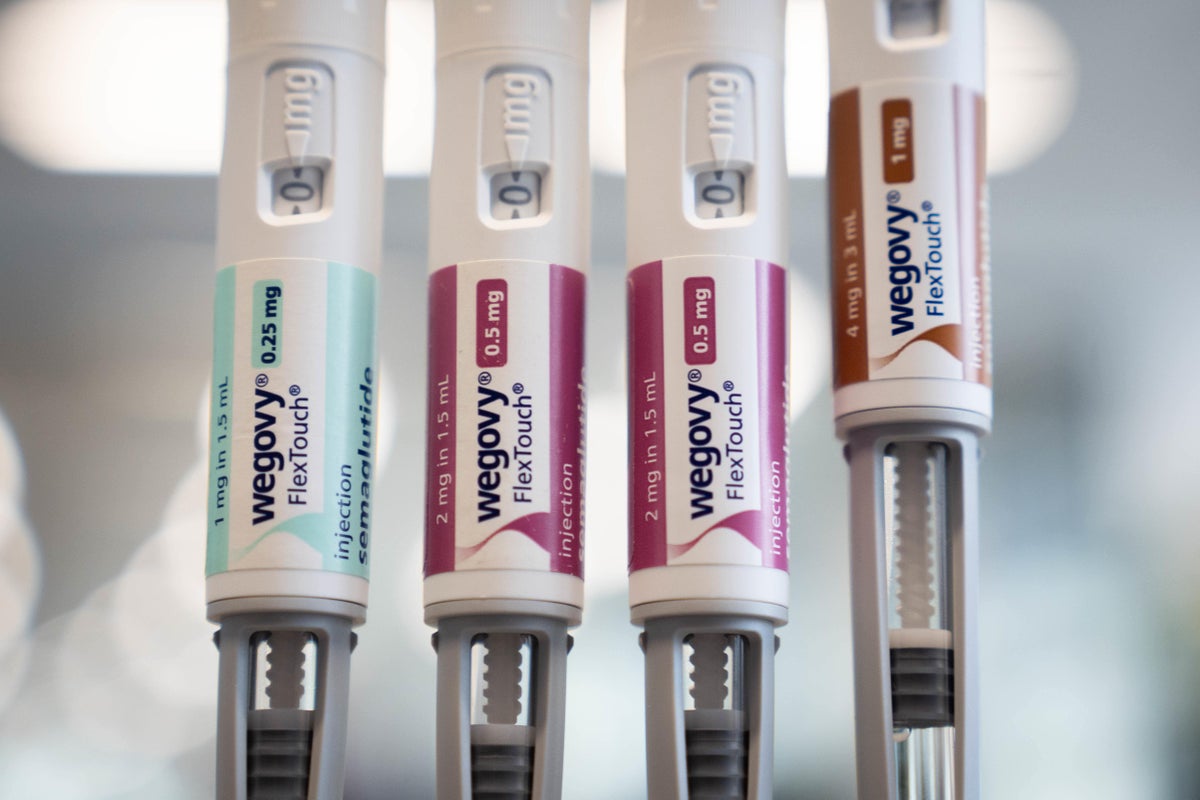
People on fat loss jabs need ongoing support, researchers have said, after a major study found they put all the weight back on much faster than traditional dieters.
Researchers from the University of Oxford discovered that people on drugs including semaglutide (Wegovy) and tirzepatide (Mounjaro) lose weight during treatment but, on average, regain it within 20 months of stopping the jabs.
Improvements to blood sugar levels, cholesterol and blood pressure are also lost when people stop the drugs, with patients ending up back where they were at the start of their diet journey.
In contrast, people who are supported to lose weight through healthier diets and exercise keep the weight off for far longer – just under four years – though they do, on average, also regain it eventually.
The study comes as separate research from University College London (UCL) and the University of Cambridge found that people prescribed the new generation of weight loss drugs may be vulnerable to nutritional deficiencies and muscle loss.
At present, Wegovy can only be prescribed on the NHS for a maximum of two years. There is no limit on Mounjaro.
The vast majority of people taking Wegovy and Mounjaro pay privately owing to restrictions on who can access the medicines via the NHS.
However, studies suggest half of people come off their weight loss medication, with reasons including no longer being able to afford jabs privately, side-effects or because they have reached a goal weight.
The Oxford research, published in the British Medical Journal (BMJ), included 37 studies involving more than 9,000 people.
They had an average treatment time of 10 months, and average follow-up of eight months.
People on any type of weight loss medication lost an average of 8.3kg during treatment, but regained 4.8kg within the first year and were back to their original weight within 1.7 years of stopping the drugs.
Those specifically on Wegovy and Mounjaro lost just under 15kg but regained 10kg within the first year of stopping treatment.
They regained all their weight within 1.5 years, according to projections in the study based on one year of data.
All cardiometabolic markers – such as blood glucose and cholesterol – also return to baseline 1.4 years after stopping medication.
Susan Jebb, professor of diet and population health at the University of Oxford and adviser to ministers and the NHS on obesity, said: “In summary, what we’ve shown in this particular piece of analysis is that weight regain after medication is common and is rapid.
“The cardiometabolic benefits essentially parallel weight – and so as weight is regained, the cardiometabolic benefits are lost.
“It’s important to note that the rate of weight regain is almost four times faster than after behavioural programmes, and that’s regardless of the amount of weight loss during treatment.”
She suggested people may need a lifetime solution – such as obesity jabs or behaviour change support or both – to tackle obesity in the long-term.
She said: “Obesity is a chronic relapsing condition, and I think one would expect that these treatments need to be continued for life, just in the same way as blood pressure medication….
“We should see this as a chronic treatment for a chronic condition.”
Prof Jebb said that when people are offered behavioural programmes focused on diet and exercise alongside drug treatment, this increases the amount of weight people lose.
“However, when the drug stops and appetite returns, it seems that those strategies are not sufficient to enable people to continue to manage their weight,” she said.
“In contrast, in behavioural programmes where people haven’t had the extra assistance of drugs, they probably have to practice those strategies more, and maybe they therefore are more persistent over time.”
She said “it’s very clear that some type of treatment, some sort of intervention, needs to continue” if the benefits of drugs for obesity are to last long-term.
The expert added that some people do try intermittent treatment or tapering off to keep the weight off, while others try behaviour support – but “the jury is out” on which strategy really works.
Prof Jebb added that people paying privately for the drugs “need to be aware of the very high risk of rapid weight regain when treatment ends” so they can make decisions about long-term treatment “aware of the financial consequences”.
Sam West, author on the study and postdoctoral researcher at the University of Oxford, said: “People taking medication lose more weight compared with behaviour programmes, but they regain the weight four times faster.”
In the paper, the team questioned the cost-effectiveness to the NHS of drug treatment.
They also concluded: “As obesity is a chronic and relapsing condition, prolonged treatment with weight management medications may be required to sustain the health benefits.
“Further research is needed to study how to support people to use these drugs effectively, either through prolonged adherence or, possibly, through intermittent periods of treatment.”
Dr Adam Collins, associate professor of nutrition at the University of Surrey, said the study showed “weight regain is amplified when you cease taking these drugs”.
He added: “There are plausible explanations for why. The first relates to how these drugs (GLP-1 agonists) work.
“Artificially providing GLP-1 levels several times higher than normal over a long period may cause you to produce less of your own natural GLP-1, and may also make you less sensitive to its effects.
“No problem when taking the drugs, but as soon as you withdraw this GLP-1 ‘fix’, appetite is no longer kept in check, and overeating is far more likely. Like any addict, going cold turkey is a real challenge.”
Separate research published in Obesity Reviews found a lack of robust evidence surrounding nutritional advice and support for people on semaglutide and tirzepatide.
Dr Marie Spreckley, from the University of Cambridge, said: “Many people receive little or no structured guidance on diet quality, protein intake, or micronutrient adequacy while experiencing marked appetite suppression.
“If nutritional care is not integrated alongside treatment, there’s a risk of replacing one set of health problems with another, through preventable nutritional deficiencies and largely avoidable loss of muscle mass.”
An NHS spokesman said: “While these new treatments are an important new tool for supporting weight loss, they’re not a magic fix and must be paired with behavioural and lifestyle wraparound support including advice on healthier diets and physical activity to keep the weight off in the long term.
“That’s why the NHS continues to implement innovative ways to support people to lose weight safely and sustainably as well as offering a range of weight management services, including the NHS Digital Weight Management Programme, which will be expanded to 125,000 more people per year as part of the 10-year health plan.”