


The Department of Defense can ban recruits living with HIV from joining all branches of the U.S. military after a conservative federal appeals court struck down a decision that removed barriers that disqualified people living with HIV.
Wednesday’s ruling follows a years-long legal battle sparked by three people living with HIV who were barred from joining or rejoining the military due to their diagnoses.
In 2024, a federal judge ruled that the military cannot block recruits solely because of their HIV diagnosis, finding “asymptomatic HIV-positive service members with undetectable viral loads … are capable of performing all of their military duties, including worldwide deployment,” thanks to modern medicine that has “transformed” treatment.
But a three-judge panel of conservative judges — including two appointed by Donald Trump and another appointed by George H.W. Bush — said the Pentagon has a “rational basis” to deny those recruits, even those with undetectable viral loads with no transmission risk.
“In this case, the military has articulated its need to have fit service members who can fulfill its military mission without complications from medical conditions that could compromise deployment functions, contribute to conflicts with foreign nations during deployment, and add costs over those generally necessary to maintain fit service members,” they wrote.

Plaintiffs said the Fourth Circuit Court of Appeals “disregards real-world evidence and returns to outdated policies rooted in stigma rather than science.”
“We are deeply disappointed that the Fourth Circuit has chosen to uphold discrimination over medical reality,” said Gregory Nevins, senior counsel and Employment Fairness Project director for Lambda Legal, which represents plaintiffs in the case.
“Modern science has unequivocally shown that HIV is a chronic, treatable condition,” Nevins added. “People with undetectable viral loads can deploy anywhere, perform all duties without limitation, and pose no transmission risk to others. This ruling ignores decades of medical advancement and the proven ability of people living with HIV to serve with distinction.”
In December, the appeals court had paused the lower-court ruling from taking effect while the legal battle continued.
Military branches had successfully accepted recruits with HIV within the year leading up to the pause.
“Today, service members living with HIV are performing all kinds of roles in the military and are fully deployable into combat,” said attorney Scott Schoettes. “Denying others the opportunity to join their ranks is just as irrational as the military’s former refusal to deploy service members living with HIV.”
Medication can suppress HIV to undetectable levels, and people who are virally suppressed or undetectable are not at risk of transmitting the virus, according to the Centers for Disease Control and Prevention.
People living with HIV who achieve viral suppression also have a 1 percent or less chance of transmitting the virus through pregnancy and childbirth, according to the CDC.
A series of court rulings in 2019, 2020 and 2022 blocked the Pentagon from discriminating against current service members living with HIV and to allow them to be deployed and commissioned as officers.
In 2022, then-Defense Secretary Lloyd Austin issued a new policy that reversed earlier rules designed to kick out people living with HIV from the ranks.
But that policy did not change existing rules preventing people with HIV from joining.
More than 11,000 service members among active-duty, National Guard and reserve forces were diagnosed with HIV between 1990 and 2024, according to a recent study published by the Military Health System.
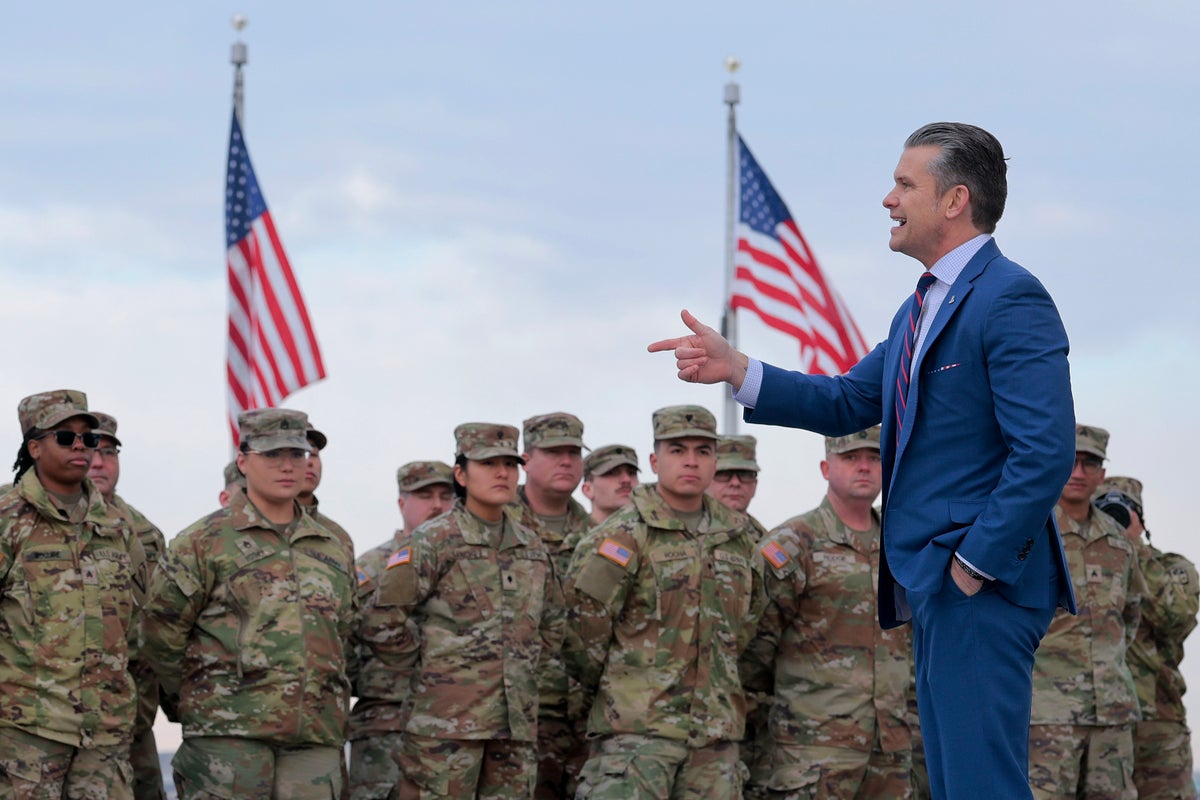
Trump’s administration and his Defense Secretary Pete Hegseth have implemented sweeping bans and restrictions for military service members and potential recruits.
Last year, the president directed the Pentagon to remove transgender people from the armed forces, igniting several ongoing legal battles waged by trans service members and veterans whose service and benefits are at stake.
A lawsuit from a group of 20 active-duty trans service members argues that the Pentagon’s policy is plainly discriminatory and fueled by animus towards trans people in violation of their 14th Amendment right to equal protection under the law.