


Pope Leo XIV had tried during his first year as pontiff to insist that his essential role was that of a pastor accompanying his flock. President Donald Trump’s continuing criticisms – and Leo’s increasingly bold retorts – complicated the effort and overshadowed Friday’s anniversary of Leo’s election.
Leo spent the eve of the 1-year mark meeting with U.S. Secretary of State Marco Rubio, who had come to the Vatican on a fence-mending visit. Trump’s repeated broadsides against history’s first U.S. pope created an unprecedented back-and-forth on issues of the Iran war and peace that strained U.S.-Holy See relations.
By the end of the visit, both the Vatican and the State Department stressed their strong bilateral ties. But the episode nevertheless pushed Leo out of his comfort zone and onto the global stage to make zingers like the one this week, after Trump’s latest misrepresentation of his views. “If someone wants to criticize me for announcing the Gospel, let him do it with the truth,” Leo said.
Unlike Pope Francis, who shook things up early on with a flurry of reforms, appointments and new structures, Pope Leo XIV has sought to find his footing and take a longer view of his pontificate.
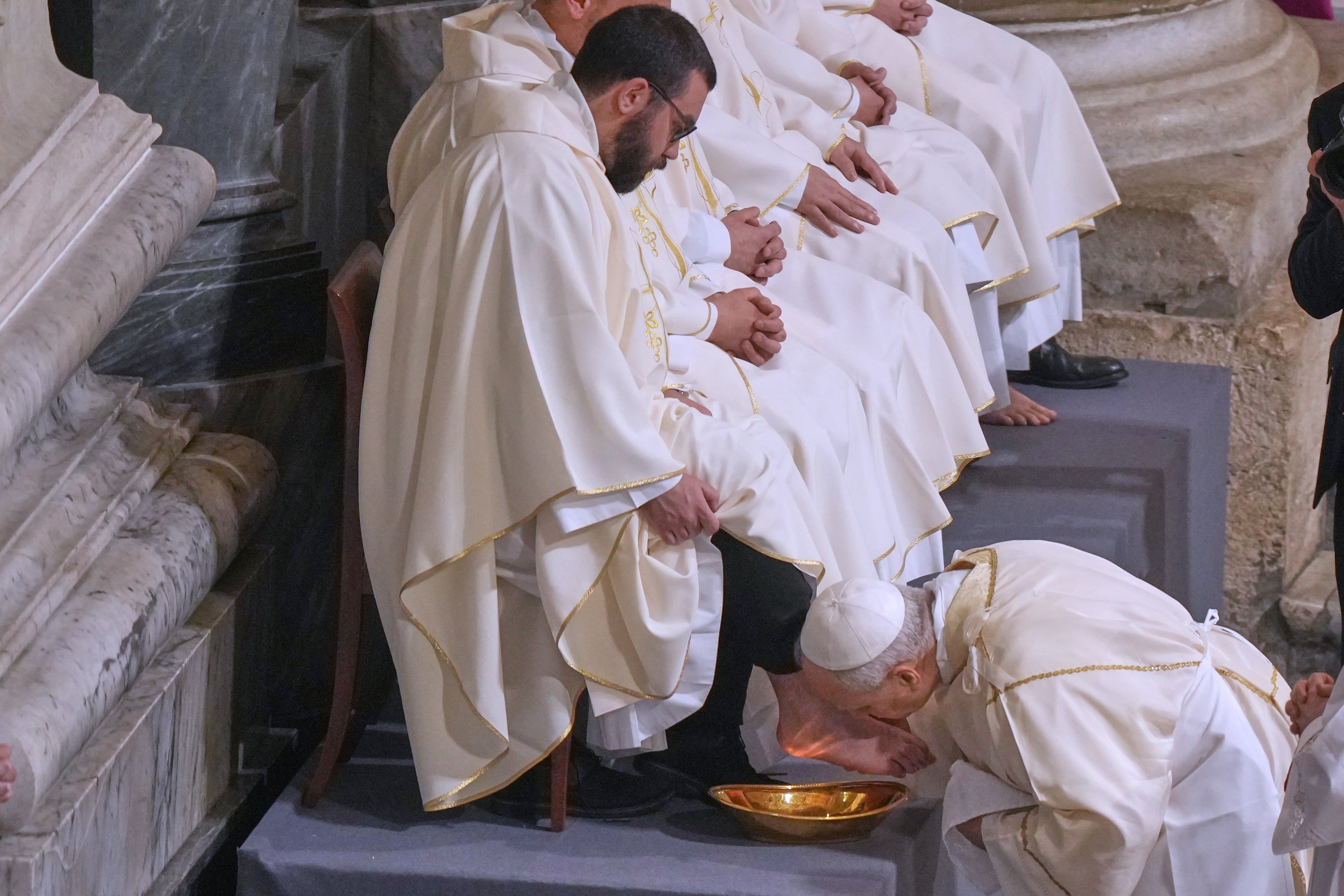
Leo has made some significant decisions so far, and has several challenges looming.
5) Key appointments
Several upcoming appointments in the U.S. and at the Vatican will give Leo an opportunity to shape the church’s hierarchy and central governance more to his liking and priorities.
Chicago Cardinal Blase Cupich turned 77 in March, two years over the normal retirement age for bishops, meaning Leo could soon name an archbishop for his hometown.
In December, Los Angeles Archbishop José Gomez turns 75, giving Leo a chance to name a new leader for the largest U.S. archdiocese.
He already has named Archbishop Ronald Hicks to replace retiring Cardinal Timothy Dolan of New York, but that appointment “didn’t ideologically code dramatically one way or the other … in keeping with Leo’s overall kind of approach to a lot of these decisions,” said Michael Moreland, professor of law and religion at Leo’s alma mater, Villanova University.
At the Vatican, British Cardinal Arthur Roche turned 76 and heads the liturgy office, which was responsible for enforcing Francis’ controversial crackdown on the old Latin Mass. Roche’s eventual successor will be scrutinized to see how Leo might address the divisive issue.
Another Vatican heavyweight is American Cardinal Kevin Farrell, who at 78 is well beyond retirement age but still heads its family and laity office. He also serves as the camerlengo, who oversaw the conclave that elected Leo, and the most sensitive Holy See committees that are responsible for financial investments and the city state’s highest court of appeal.
Canadian Cardinal Michael Czerny’s 80th birthday in July will not only make him the oldest Vatican prefect -– he heads the Vatican’s office for migrants, the environment and development — but also will exclude him from voting in the next conclave.
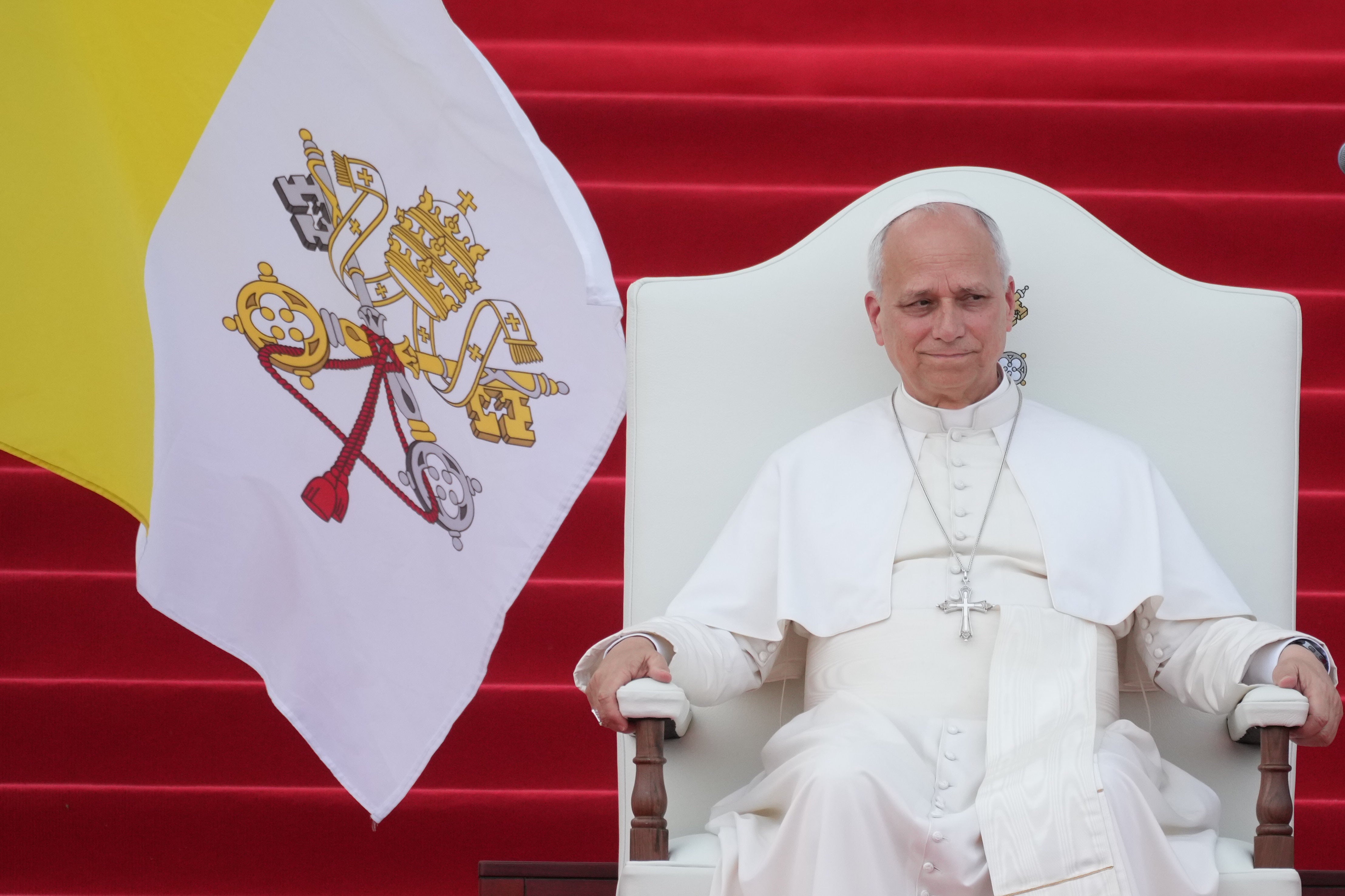
That will reduce the number of voting-age cardinals to 117, below the threshold of 120 that is the usual cap for the number of cardinals under 80 who can vote. That suggests Leo could in the next year announce his first class of new cardinals to choose his successor.
4) Ways Leo has changed Francis’ policies
At the start of his pontificate, Francis called for young people to shake things up in their dioceses and “make a mess.” Leo already has sought to clean up some of these messes.
In April, the Vatican canceled a Francis initiative, the World Day of Children, which had raised questions about what it aimed to accomplish and why. The cancellation followed Leo’s formal suppression of the ad hoc pontifical commission that Francis had created for the event in 2024.
In December, Leo dissolved a Holy See fundraising commission that was created under questionable circumstances in 2025 while Francis was hospitalized in his final weeks of life. The commission included only Italians with no professional fundraising experience. Its president was the assessor of the Secretariat of State, the same Vatican office that Francis had previously stripped of its ability to manage assets after it lost tens of millions of euros in a scandalous London property deal.
Leo then announced a new committee to develop fundraising proposals and structures.
“The Holy Father was clearly paying attention,” said Ward Fitzgerald, president of The Papal Foundation, a group of wealthy U.S. donors who fund papal charity projects in the developing world. “He realized that it was not going to be highly functional.”
Leo also abrogated a 2022 law issued by Francis that concentrated financial power in the Vatican bank. Leo issued his own law allowing the Holy See’s investment committee to use banks outside the Vatican, if it made better financial sense.
Leo also met with activist survivors of clergy sexual abuse, who said he promised to engage in dialogue as they press the Vatican to adopt a worldwide policy of zero-tolerance for abuse. Francis had met regularly with individual abuse survivors, but kept advocacy and activist groups at arm’s length.
3) Key audiences with Leo
Leo’s private audiences have provided clues into areas of interest and concern, suggesting he’s open to hearing a variety of views even if he betrays little of his own opinions.
That was he case when he met March 16 with Gareth Gore, author of “Opus: The Cult of Dark Money, Human Trafficking and Right-Wing Conspiracy Inside the Catholic Church,” about alleged abuses in the powerful Opus Dei movement.
On Feb. 6, Leo met privately with a delegation from Courage International, a church-run organization that says it helps people with same-sex attraction live chastely. Critics have accused Courage of being anti-gay and promoting conversion therapy, something it denies.
Leo met March 5 with Stephen Bullivant and Stephen Cranney, authors of “Trads. Latin Mass Catholics in the United States.” They had conducted a survey about Catholics who attend the traditional Latin Mass.
Leo is well aware of the controversy surrounding Francis’ crackdown on the Latin Mass and has expressed an eagerness to speak with traditionalists to understand their views as he weighs how to heal the divisions over the old liturgy.
2) Looming problems
The Latin Mass dispute could come to a head July 1 when four new traditionalist Catholic bishops are consecrated in a ceremony without Leo’s consent. The bishops belong to the breakaway traditionalist group, the Society of St. Pius X, and their consecration will pose the biggest challenge to Leo’s authority to date. If performed, it would amount to a schismatic act all but ensuring their automatic excommunication.
The SSPX is a fringe group within the overall traditionalist Catholic family. But traditionalist Catholics in full communion with the Holy See are watching what Leo will do.
On the opposite side of the spectrum, the Vatican faces the prospect of a major break with the German Catholic Church over its long-term reform process known as the Synodal Path. That has led to the proposed creation of a permanent mixed body of German bishops and lay Catholics who would jointly make decisions, in a major break with Catholic ecclesiology that puts governing power in the hands of bishops alone.
The Vatican has already made clear it opposes such a joint structure, and has also voiced disagreement with German proposals to formalize blessings for same-sex couples, which Francis had allowed but only on an informal, spontaneous basis.
There could be a confrontation when the German proposals are submitted to Rome for final approval.
1) big issue to come
While some would say the top issue facing Leo is his relationship with President Donald Trump and a possible trip to the U.S. — none is planned this year — Leo would probably point to his long-awaited first encyclical. Expected in the next few weeks, it deals with artificial intelligence and other peace and justice issues.
Leo already has said he considers the AI revolution to be similar in existential scope to the concerns over workers’ rights at the turn of the century confronted by the previous Pope Leo XIII, in his landmark encyclical “Rerum Novarum” (“Of New Things”).
“Like his namesake Leo XIII with the Industrial Revolution, Leo clearly sees the church as having something important to offer in an era of what may turn out to be epochal technological change,” said Dan Rober, associate professor of Catholic studies at Sacred Heart University.