



Nationwide Building Society is rolling out defibrillators and bleed control kits across its entire network of 605 branches.
This initiative, a partnership with Visa, will see the vital equipment installed by the end of the year.
Complementing the rollout, St John Ambulance will provide life-saving training to 4,000 Nationwide staff members and local communities.
This commitment to public safety aligns with Nationwide’s pledge to keep all its branches open until at least 2030.
Amanda Beech, Nationwide’s director of retail services, said: “By transforming our branches into visible, emergency hubs, we’re making it easier to access help when every second counts.
“Crucially we’re also offering training to all our branch colleagues, before extending that training into the communities we serve.
“We want more people to feel prepared, confident and ready to act when it matters most.”
St John Ambulance chief medical officer Professor Andrew Hartle said: “We’re so pleased to work with Nationwide and Visa on this project, which so perfectly meets St John Ambulance’s mission to put the power of first aid into everyone’s hands.
“With hundreds more public access defibrillators and bleed control kits across the UK, and thousands more people confident to use them, I am confident many more lives will be saved in our communities.”
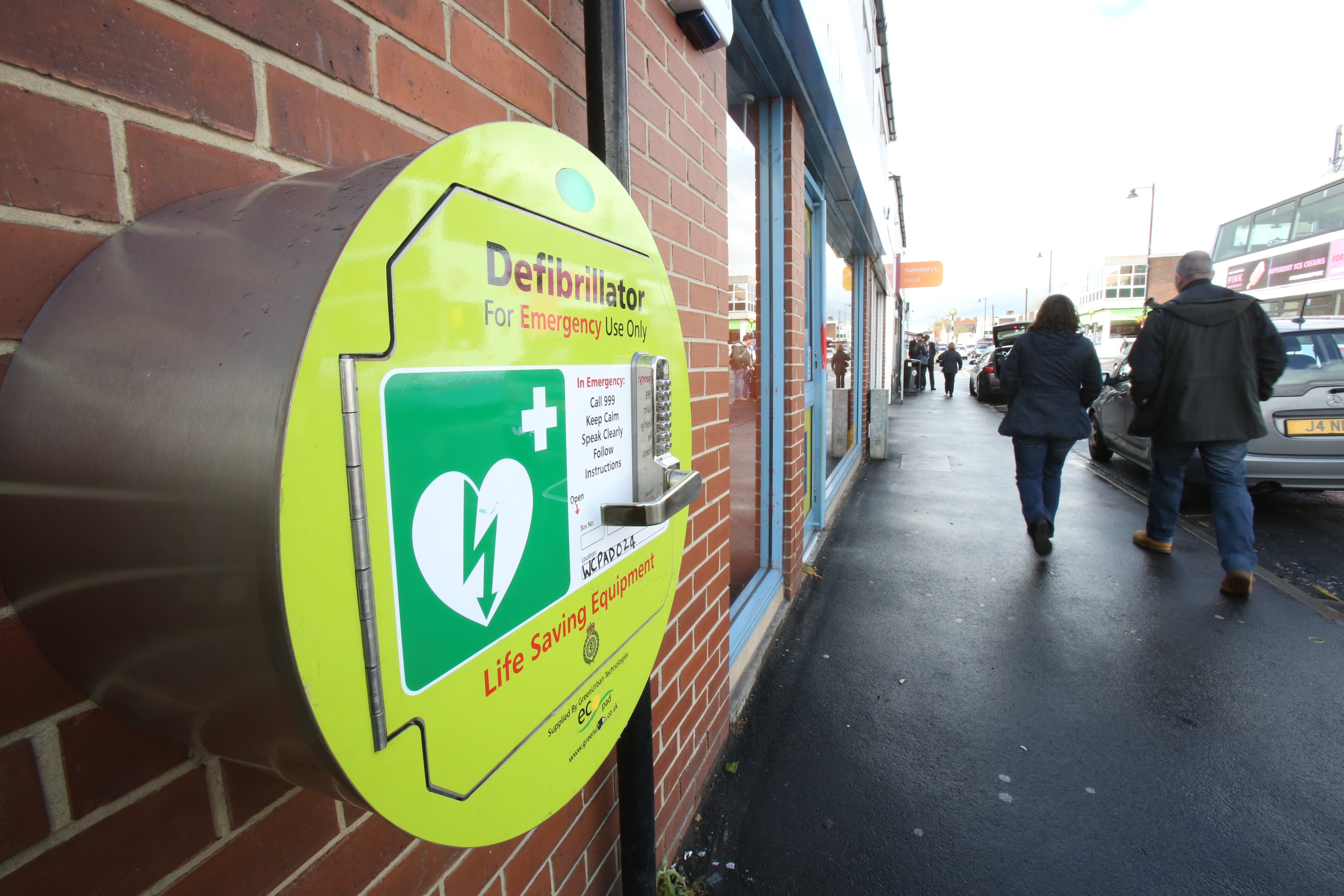
What is a defibrillator and when should you use one?
“A defibrillator is an electrical device that provides a shot across the heart to help bring people out of cardiac arrest,” explains James McNulty-Ackroyd, head of clinical projects and paramedic at St John Ambulance.
They are often labelled as an AED which is “an automated external defibrillator, and it recognises when using one would be beneficial for the patient. When we talk about cardiac arrests, we talk about shockable and non-shockable, and an AED is useful when the heart is in particular shockable rhythms”, he says.
When used, the electrical shock stuns the heart to send it back to its normal function “from the right shoulder down to the left armpit”.
The AED knows when it should work after the pads have been applied, because it “recognises the rhythm like an ECG automatically, and it will not shock if the heart is not in one of the relevant rhythms”.
You only need a defibrillator in an incident of cardiac arrest.
“They should only be used when the patient is not breathing normally, or the heart has stopped,” explains McNulty-Ackroyd. “Their breathing may be like a fish out of water, there is no rhythm to it, there is no real air entry, or non-purposeful gasping.
“The heart is not pumping in that situation – it is not working, but there is some movement. They need a defibrillator and high-quality CPR (cardiopulmonary resuscitation).”