



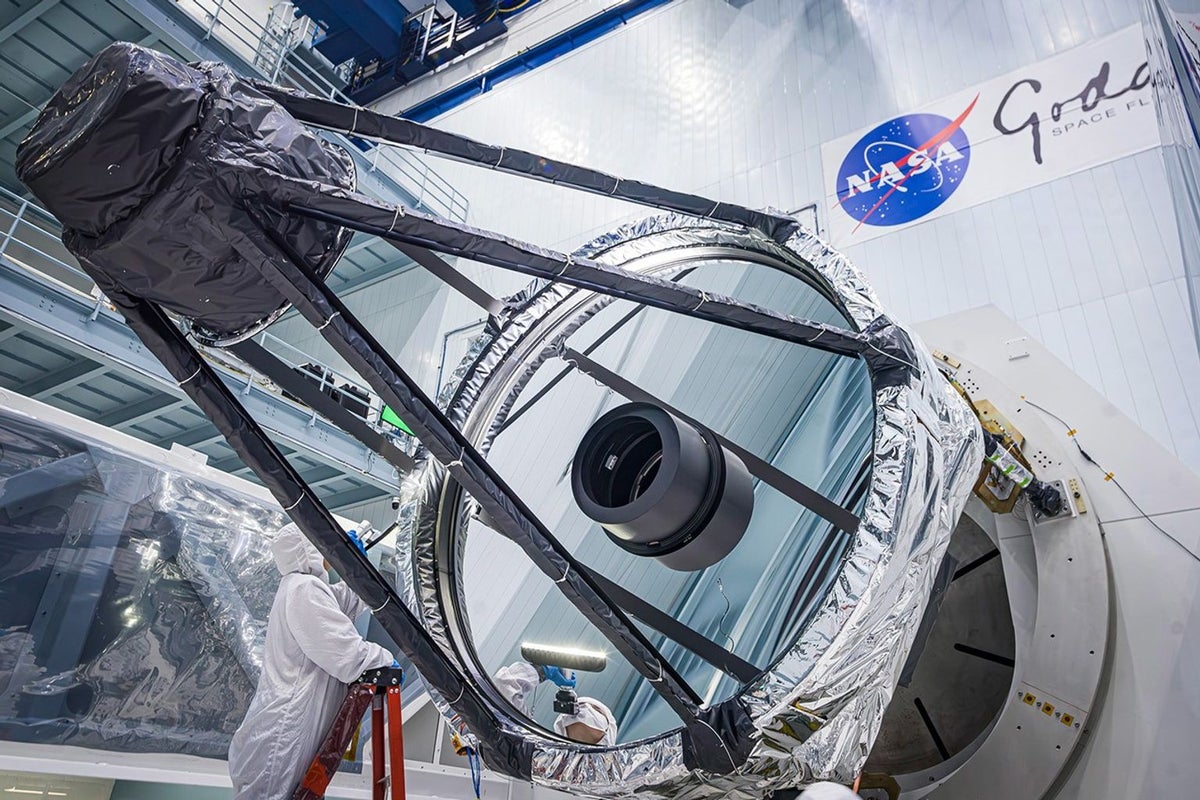
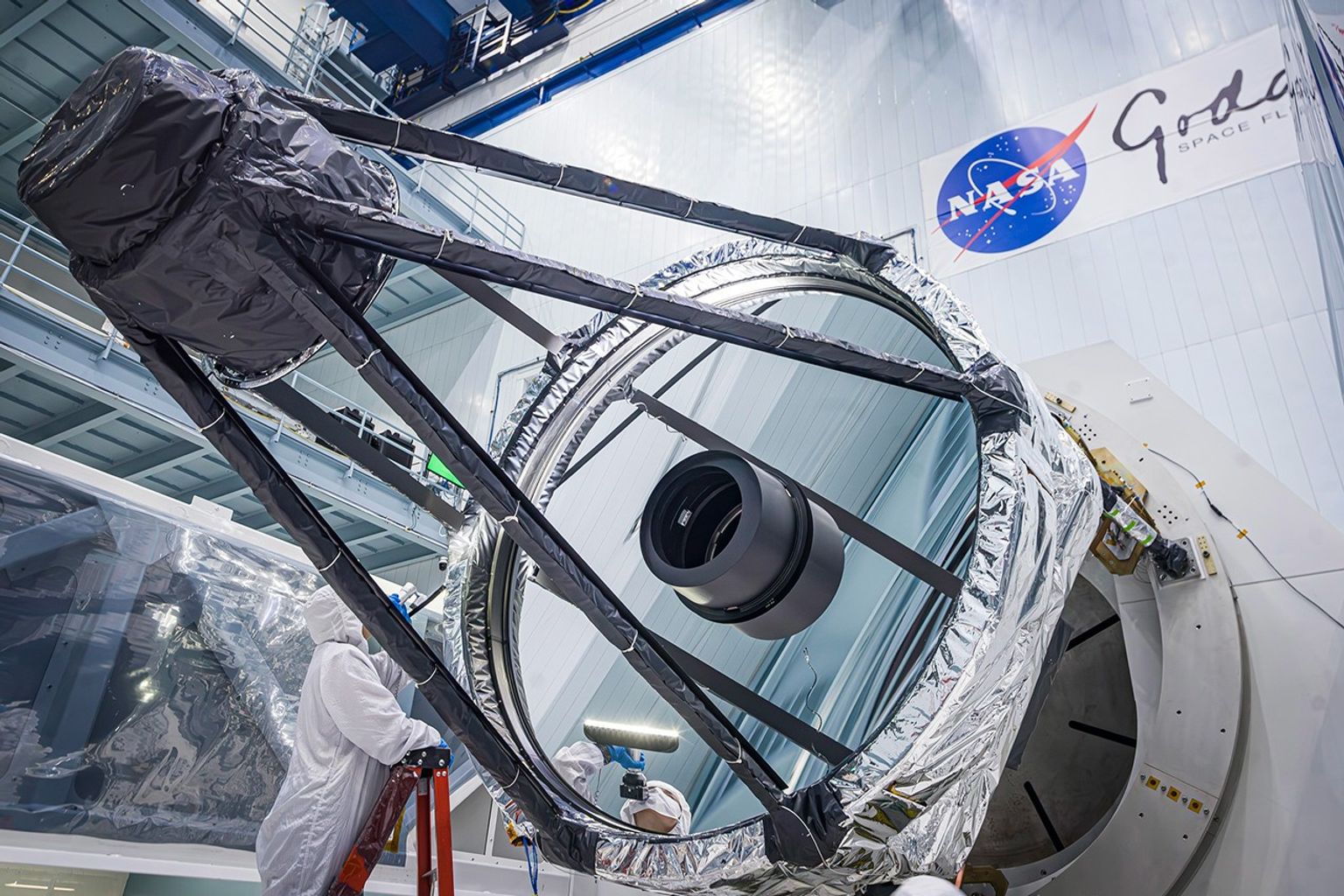
A stunning new telescope will help NASA scientists study and identify 100,000 exoplanets, hundreds of millions of galaxies, billions of stars and rare objects and phenomena that astronomers have never seen before.
But the Trump administration’s newly proposed budget cuts threaten to extinguish the science behind the Nancy Grace Roman Space Telescope before it even launches, as well as future missions to solve the mystery of the cosmos.
The Trump administration is proposing to slash NASA’s science budget nearly in half, down 46 percent from 2026, according to The Planetary Society. The move would cancel more than 50 science missions, including a dozen from its astrophysics team, the non-profit said.
The budget was released shortly before the space agency announced that the telescope has been completed, boasting astonishing capabilities: a field of view that at least 100 times larger than the 1990 Hubble Space Telescope, the ability to block out starlight to more clearly see exoplanets that could sustain life and the ability to collect data that will help answer some of the biggest questions about our universe, as it operates 930,000 miles from Earth.
The instrument, which will capture images so large and detailed that there isn’t a screen in existence big enough to display them, could launch into orbit as soon as September, months ahead of the May 2027 schedule and under its $4.3 billion budget.
However, it’s not just the agency’s science operations that are on the chopping block.
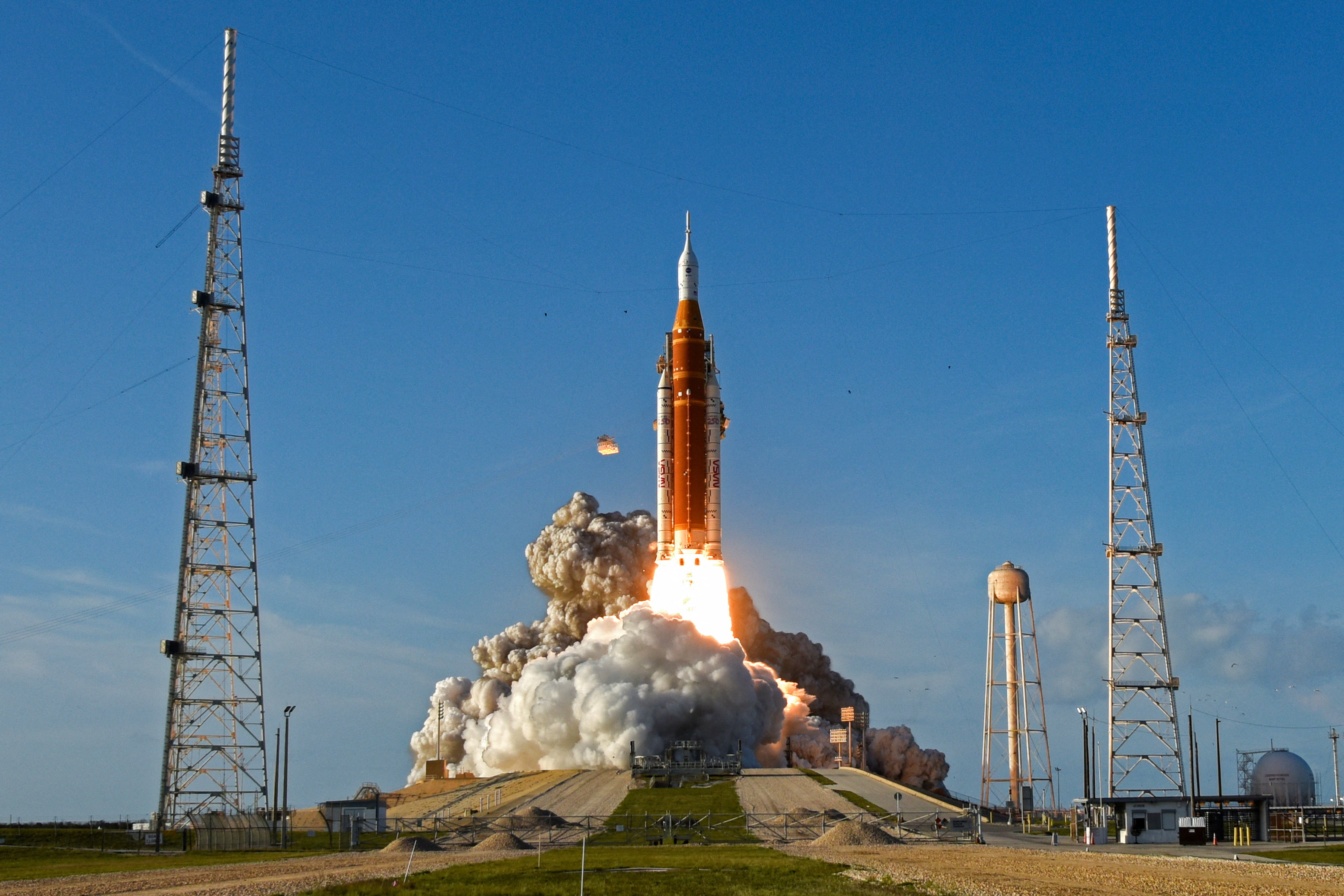
Overall, the White House budget request would cut agency funding by 23 percent, investing more heavily in the Artemis space race and landing astronauts on the moon by 2028.
It’s understandable. The Artemis II lunar flyby was a resounding success – at home and abroad – and President Donald Trump has made the Artemis program a part of his pledge to “ensure space superiority” amid the new space race to the moon’s surface.
A recent report from NASA’s regulatory Office of Inspector General put NASA’s proposed Artemis timeline into question this week. Although NASA says it’s confident the timeline remains on track.
Strangely, the new cuts also include the Mars Sample Return mission, which was already canceled in 2026. It’s unclear why and if it was just copied and pasted from the previous request.
Regardless of the cause, the mission is critical in the search for life off Earth. It would bring rock samples collected from the Red Planet back to Earth, some of which contain the clearest signs of life found there.
The science behind the mission would also help with future Artemis missions, which aim to go to Mars after the moon. It would identify and characterize risks and opportunities, NASA says.
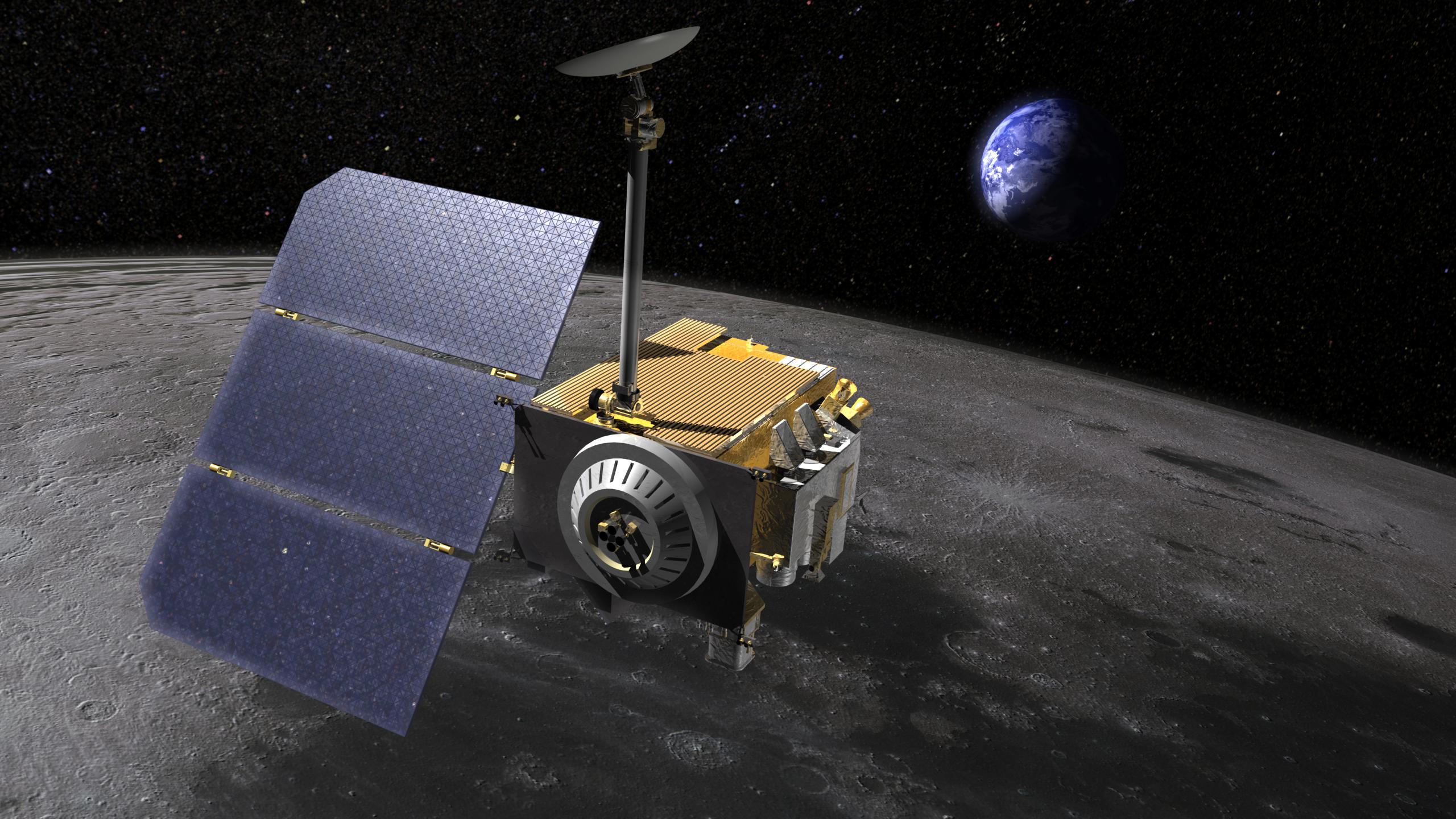
A lot of NASA’s science missions have helped prepare for Artemis. For example, the Lunar Reconnaissance Orbiter has mapped the moon’s surface and measured its environment since 2009, allowing NASA to select landing spots.
That’s why scientists say these cuts make no sense.
“You can’t have a mission that goes to Mars without robotics and machine learning and all those software tools to help keep the mission on track,” Dr. Barrett Caldwell, the Director of the NASA Indiana Space Grant Consortium, told NewsNation. “So, to say, well, that’s not human space flight, it’s all connected.”
Planetary Society Chief of Space Policy Casey Dreier even said the cuts could amount to an “extinction level event” for NASA science.
“An extinction-level event can be thought of as a sudden, external calamity wiping out a given species. For the dinosaurs, it was the Chicxulub impactor. For NASA’s science program, it very well may be the FY 2027 Presidential Budget Request,” he wrote Thursday.
Since the budget request was unveiled earlier this month, NASA Administrator Jared Isaacman has fielded questions about impacts to his agency — and sought to allay concerns.
He told reporters at a press conference on Tuesday that plans for the Dragonfly mission to Saturn’s moon Titan and the Habitable Worlds Observatory – the first telescope designed specifically to search for signs of life on planets orbiting other stars – were underway.
“Science is incredibly important to what we do here,” Isaacman assured. “Going out and trying to unlock the secrets of the universe is fundamental to NASA’s mission. I expect there will be plenty of flagship missions in the future.”
While testifying on Capitol Hill on Wednesday, Isaacman said he had confidence in the agency’s ability to function despite proposed cuts.
“My commitment is to maximize the value of every dollar; we can do more with less,” he told Virginia Democratic Rep. Suhas Subramanyam.

Yet, nearly identical cuts – which included canceling the Nancy Grace Roman Space Telescope – were rejected for the fiscal year 2026 budget in Congress and lawmakers say that new cuts will face similar hurdles.
Last month, more than 100 members of Congress signed a letter calling for renewed investment in NASA science to the tune of $1.75 billion, including California Democratic Rep. George Whitsides.
Whitsides recently called the budget request “dead on arrival,” according to Aerospace America.
Even if these cuts meet the same level of resistance this time around, however, science has been under siege with Trump as president. This is just the latest time the Nancy Grace Roman Space Telescope has been threatened over the course of a decade and his first term.
The nation’s scientists have taken note.

Since the Department of Government Efficiency’s firings last spring, more than 10,000 science, technology, engineering and math doctoral-trained experts have left the U.S., according to a report in Science.
The U.S. was once the world leader in science — but that ranking has dropped in recent years.
NASA is one of the last federal agencies that hasn’t seen its science funding ravaged, although its workforce has been greatly depleted.
And some of the most exciting work at NASA over the next decade is in NASA’s science missions, like the asteroid-hunting NEO Surveyor project.
That’s why I agree with Bill Nye, “The Science Guy.”
The TV host and chief ambassador of The Planetary Society told NBC News this week that the cuts are “just a mistake.”
“You cannot be a leader in space without being a leader in science,” he said.

