A painting previously doubted has been definitively authenticated as a genuine Rembrandt, marking its first public display in decades at the Netherlands’ Rijksmuseum.
Following a meticulous two-year investigation, researchers at the prestigious museum confirmed “Vision of Zacharias in the Temple” was indeed painted by the Dutch master. The work, on long-term loan from an anonymous private collector, was rigorously compared with other Rembrandt pieces from the same period.
Experts concluded that Rembrandt van Rijn created the artwork in 1633, during his late twenties. It depicts the biblical moment when the high priest Zacharias, startled, receives news from the archangel Gabriel that he and his elderly wife will conceive a son, John the Baptist. Notably, Rembrandt chose not to paint Gabriel directly, instead signalling his divine presence through a striking beam of light entering from the upper right corner.
Painting conservator Petria Noble highlighted the characteristic use of thick paint layers, known as impasto, to render this light, a technique prevalent in both this work and Rembrandt’s later oeuvre.
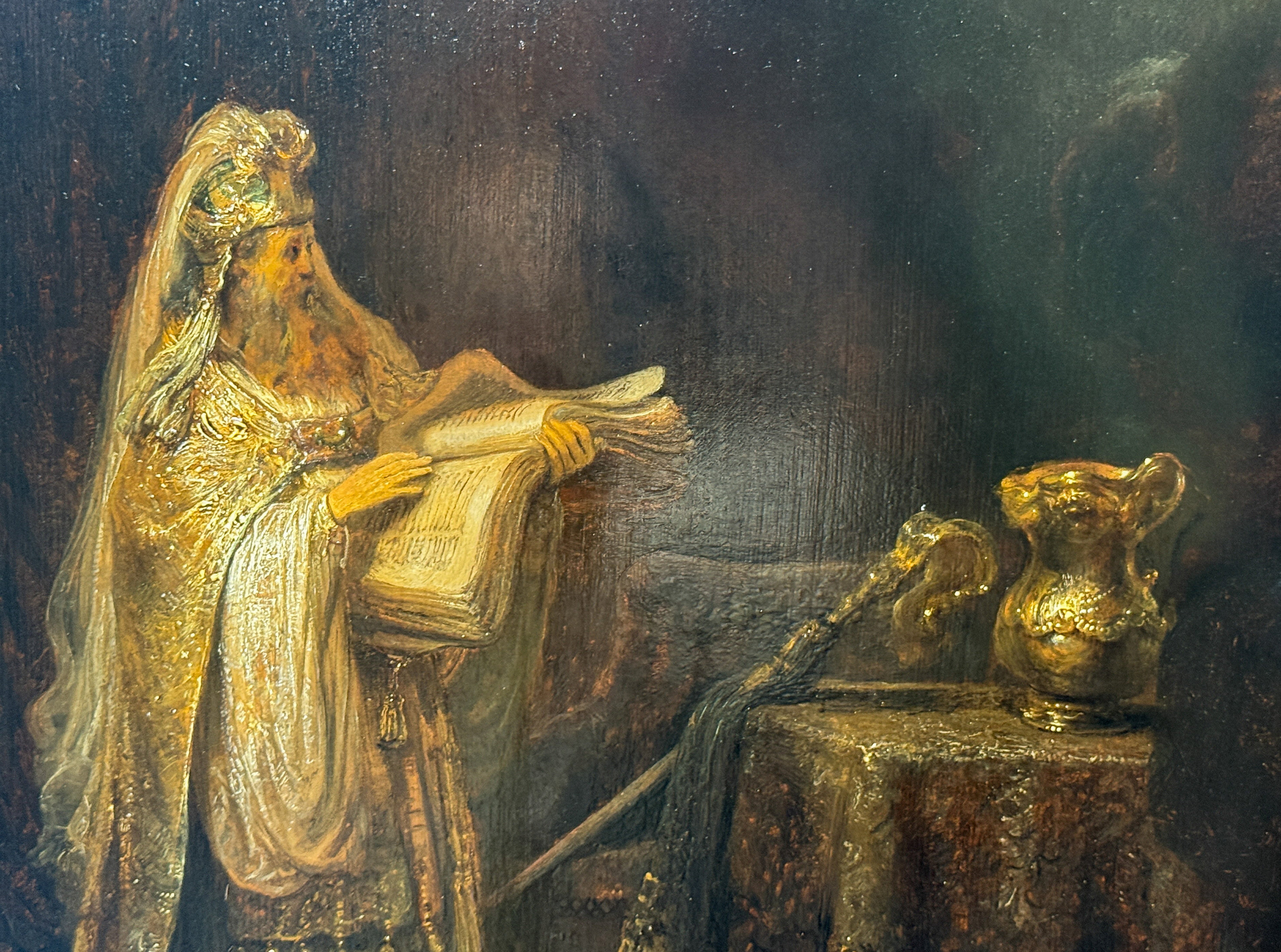
Although considered a Rembrandt until 1960, the painting was subsequently removed from his attributed works, a decision now understood to have been based on less advanced analytical techniques than those available today.
The current owner inherited the painting from his father who bought it in 1961 when it disappeared from public view.
Apart from carrying out analysis of materials and assessments of the work’s overall quality, the museum’s researchers confirmed the signature on the painting was original, and dendrochronological tests, used to date wood, verified that the 1633 date is accurate.
Jonathan Bikker, curator at the Rijksmuseum, said the insurance policy will definitely increase now the painting is confirmed to be a Rembrandt, but did not specify how much it was worth.
“It’s wonderful that people can now learn more about the young Rembrandt – he created this very poignant work shortly after moving from Leiden to Amsterdam. It is a beautiful example of the unique way Rembrandt depicts stories,” Taco Dibbits, director of the Rijksmuseum, said.