



More than 280,000 people have been forced to flee their homes as devastating wildfires rage across central Spain and southwestern France.
High winds have left firefighters struggling to battle flames as Spain declared a national emergency, with multiple fires merging outside Madrid.
French officials deployed the army, with hundreds of soldiers joining efforts to contain the inferno, which has ripped through a record 98,000 hectares since January.
On Saturday authorities ordered the evacuation of large parts of Bordeaux’s suburbs, including the areas of Le Haillan, Eysines and Merignac.
“The fires which are hitting our country have reached a level that has never been seen before,” French prime minister Sebastien Lecornu wrote on X on Saturday.
Madrid’s regional president Isabel Díaz Ayuso said that the crisis was the “worst fire in the history of the region” and that conditions had been made worse by a combination of high temperatures, wind and the merging of blazes.
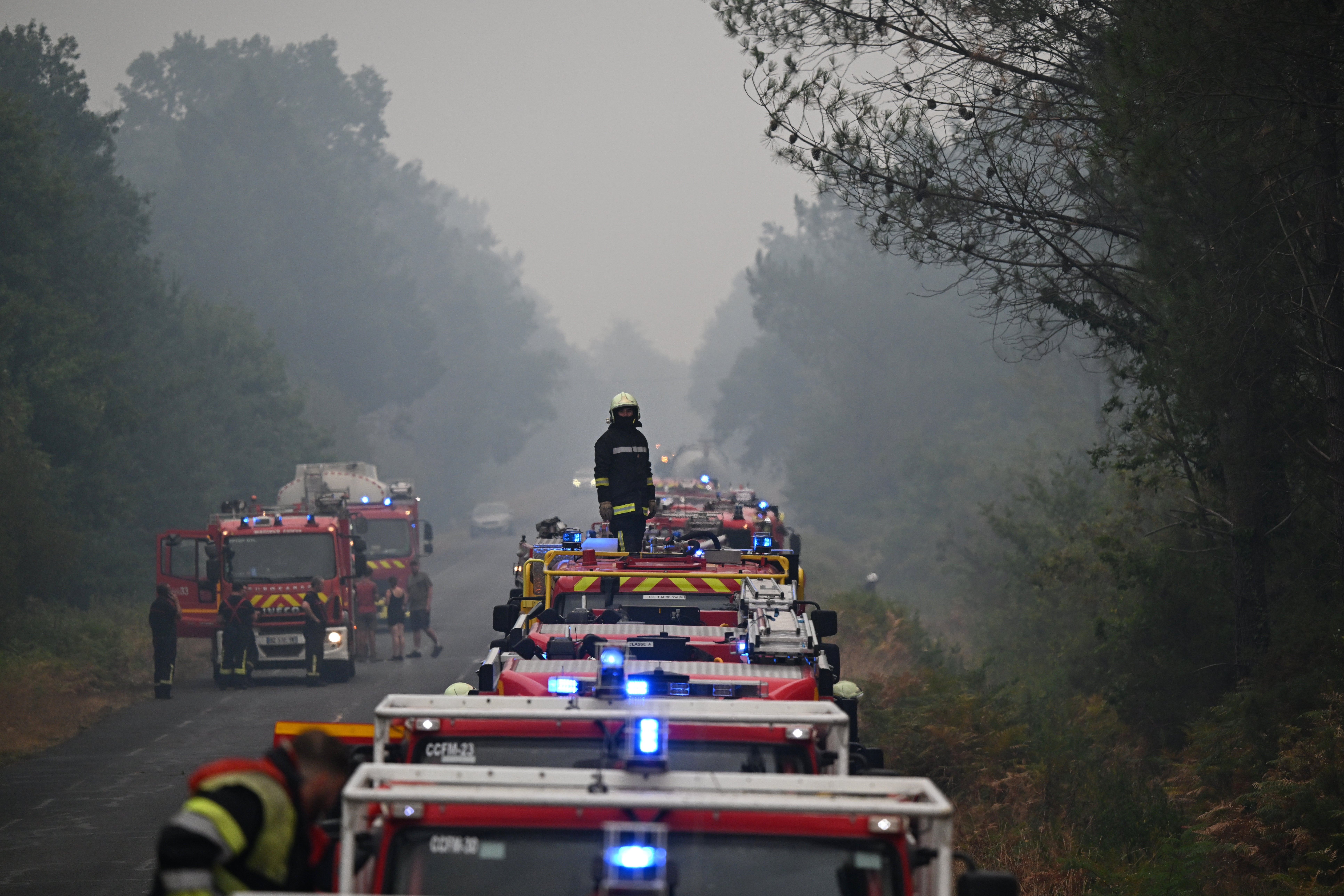
European Union countries have sent helicopters, planes and ground teams including 40 personnel from a Romanian forest fire team, two Portuguese and two Swedish Air Tractor planes, two German and one Czech and one Slovakian helicopter as well as four Swiss light helicopters and 30 ground personnel.
“Europe stands alongside France and Spain in the face of the devastating wildfires ravaging them,” European Commission president Ursula von Der Leyen wrote in a post on X.
Residents forced to evacuate have described apocalyptic scenes as they were forced to leave their homes behind.
Marion Girault-Rime, like her neighbours, was awoken at around 4am on Friday morning by an emergency alert on her phone that instructed every citizen the wealthy resort town of Lège-Cap Ferret to evacuate immediately.
She grabbed underwear and toothbrushes and, along with her daughter Mahau and boyfriend Tony, rushed to the car. “Luckily, my husband and son were not at home.”

It was not long until they were overwhelmed by the smell of smoke as they joined hundreds of other cars fleeing the area.
She was left speechless as cinders blew across the windscreen like “raining ash”, with bright-red flames erupting and a towering pillar of black smoke billowing 20km in the distance. The scene was “frightening and spectacular”, the 53-year-old told The Independent.
Colonel Romain Moutard, the deputy director of the Landes fire and rescue service, said the fire was “apocalyptic” and described the situation as “Dantesque” as flames spread.
France cut the length of the Tour de France’s final stage on Saturday to redeploy officers to battle raging wildfires, while the race’s last stage on Sunday will be reduced in length by a third, the Paris police department said, in an extraordinary measure that underscored the gravity of the fires.
The UK government is advising people in Spain to avoid travelling through affected areas of Madrid and Avila, while in France, people are being advised to follow the advice of local authorities and check with their accommodation or travel provider before travelling.
A French foreign minister urged tourists not to cancel their travel plans.
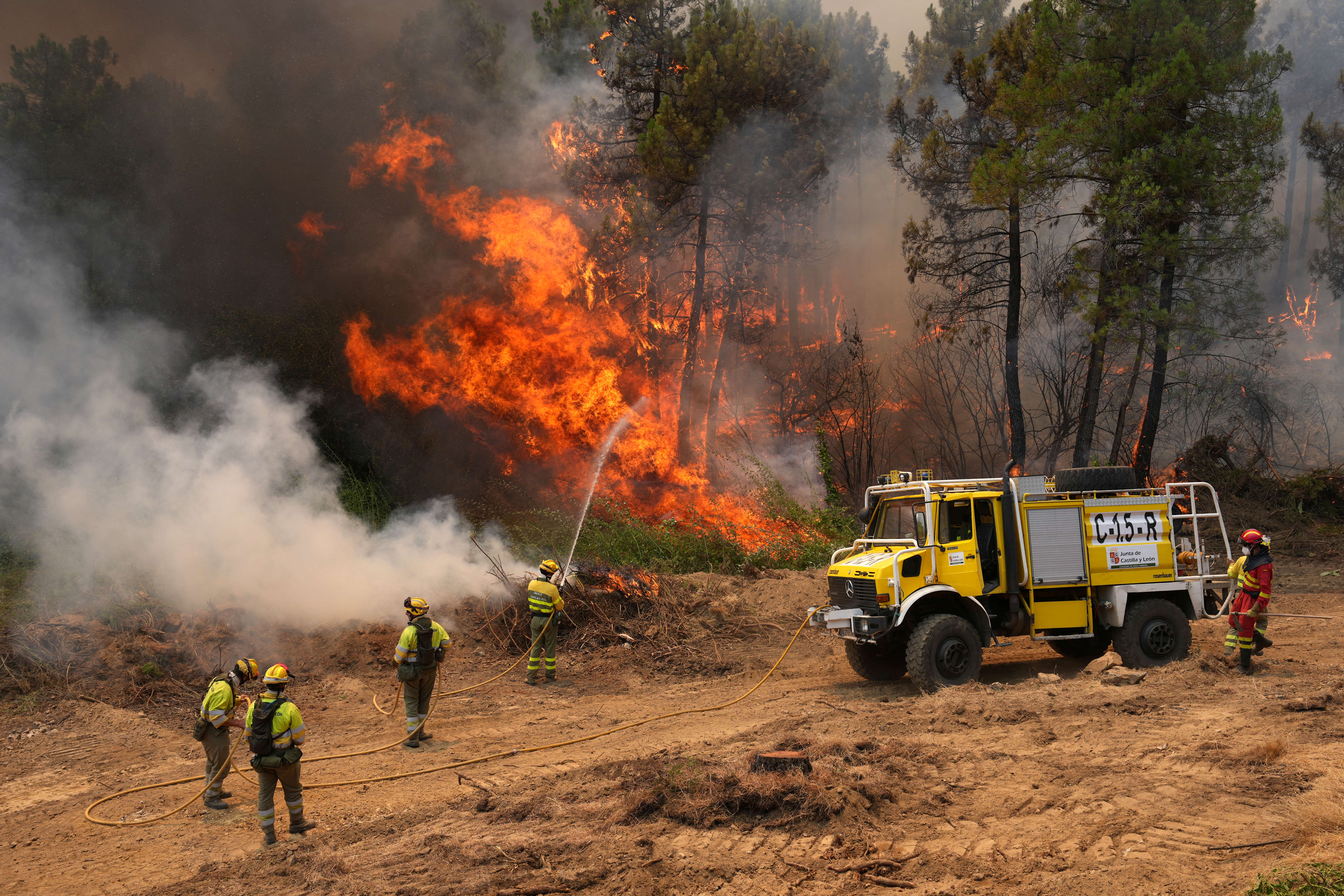
Wildfires are also affecting parts of Scotland with a major incident declared in Cairngorms National Park.
More than 500 firefighters have been tackling the blaze which has raged for the past 10 days and forced locals from their homes in the remote region.
Residents of Nethy Bridge, a Scottish village facing evacuation, are “upset, angry and frustrated” that fire has not yet been brought under control.
“A lot of people are upset, angry and frustrated at the ongoing situation because the Scottish Government said a week ago [on Wednesday] that they had enough resources to deal with it, and they said on Thursday that the fire was contained,” Sandy McCook, chairman of the Nethy Bridge and Vicinity Community Council said.
“My argument with that is, if you said the fire was contained and you had enough resources last Wednesday and Thursday, why are we still fighting it 10 days later and it’s still running out of control? It is still not controlled in any way shape or form.”
He said residents of the Cairngorms village could see large plumes of smoke from the wildfire on Friday before they were evacuated, adding: “Apocalyptic is the word for the pall of smoke that was on the go yesterday.”
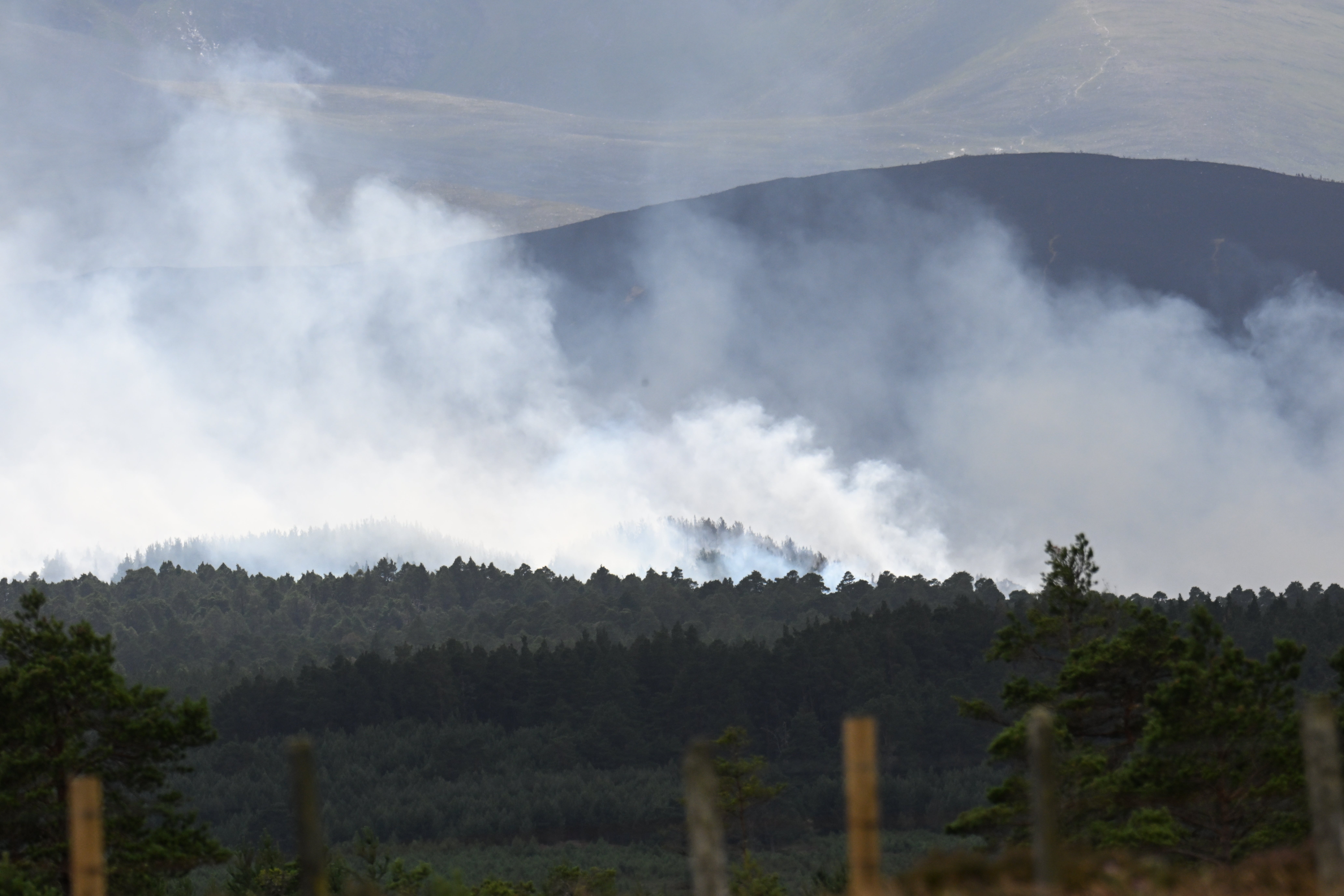
Scotland’s first Minister John Swinney has said the Cairngorms National Park wildfire is still a “very serious situation”.
“Residents, businesses and people staying in the affected areas will understandably be very worried,” he added. “My thoughts are with them and I thank them for their understanding.
“With the fire changing to be in the direction of Nethy Bridge yesterday afternoon, a precautionary evacuation was put in place and a fire break was successfully established overnight to protect the village.
“Police officers visited all properties in Nethy Bridge and officers are in the village today to support residents.
“The wind has changed direction overnight, which means the track of the fire has altered once again and the threat to Nethy Bridge has reduced, for the moment at least.
“Ground and helicopter resources are being focused on the current path of the fire and new fire breaks constructed.”
The First Minister said such situations can change “very quickly and dramatically”, reflecting the challenges faced by the Scottish Fire and Rescue Services and the other responders.