

Professor Sir Chris Whitty has condemned the practice of allowing children to become obese only to then prescribe them weight-loss injections as adults, labelling it “morally unreasonable”.
England’s chief medical officer warned that the nation risks being perceived as having “failed catastrophically” on childhood obesity, an issue he believes is “storing up so much trouble for the future”.
Speaking on the Prevention is the New Cure podcast with former health ministers Steve Brine and Lord Bethell, Sir Chris drew a stark contrast with other public health efforts.
“I think we’ll be judged as having done a good job on smoking, and hopefully vaping, and I think a moderately good job on air pollution – I think there’s certainly more we could do,” he stated.
“I think we’ll be seen to have failed, and if we are not careful, fail catastrophically… about childhood obesity, and that is storing up so much trouble for the future.”
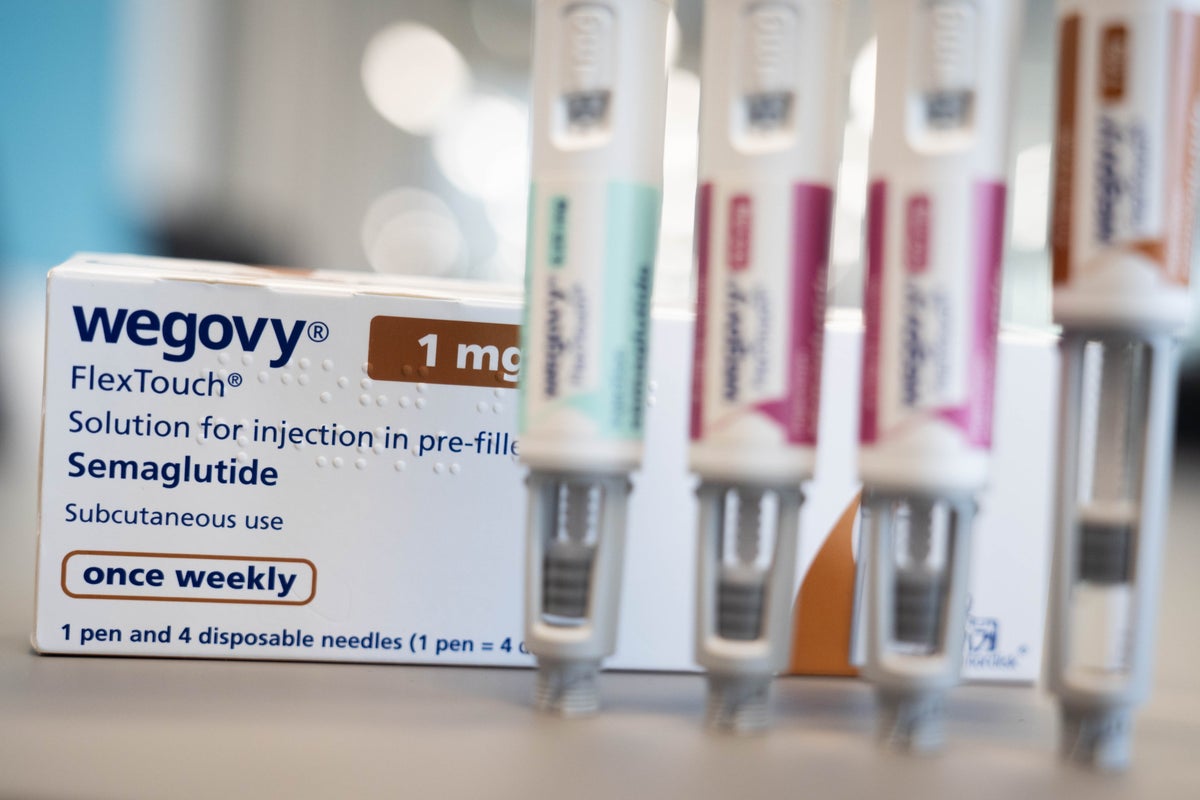
He further elaborated on his strong stance, asserting that to “allow childhood obesity in areas of deprivation in this country, and then stick people on GLP-1 agonists for the rest of their life at 18, is morally unreasonable and medically unreasonable”.
The stark reality of the challenge was highlighted by the 2024 Health Survey for England, which revealed that 15 per cent of children aged two to 15 are currently living with obesity.
This included 10 per cent of children aged two to four, rising to 17 per cent of 13 to 15-year-olds.
In the wealthiest parts of England, 8 per cent of children aged 11 to 15 were living with obesity compared with 30 per cent in the most deprived areas.
Sir Chris said childhood obesity figures are “backsliding”.
He went on: “If people think that, because of personalised medicine, we no longer need to worry about the fact that obesity is rising in children, I think that is mad.”
He was asked about the UK National Screening Committee’s recommendation on prostate cancer, which will result in only a few thousand high-risk men with a gene mutation being screened for the disease.
Sir Chris said the “numbers don’t stack up” for the general population.
“I think people think it’s kind of immediate improvement – it’s actually quite a delayed improvement, and a relatively modest one, but it’s a real one.
“Set against that for people who are treated for prostate cancer with current treatments – maybe take the prostate out or radical radiotherapy, where you irradiate it.
“Taking radical prostatectomy, about 20 per cent of people from the day after their treatment will get significant urinary incontinence and up to 60 per cent will get lifelong erectile dysfunction, so they’ll never be able to have erection from then on.
“And if it’s radical radiotherapy, much lower urinary problems, but they do get a higher rate of faecal incontinence, and again a significant rate of erectile dysfunction – a bit lower than the radical prostatectomy, and potentially reversible after a few years.
“Now, for some men, they would say, ‘That is a risk I’m prepared to take, because the thing that really matters to me is seeing my grandchildren through university’, or whatever it may be.
“For other men, they would say, ‘Actually, for that size of benefit of mortality, these really quite significant risks of something which is going to have a big impact on my ability to have an enjoyable life by my own reckoning is too high a price to pay’.
“And so the point about this, the screening committee’s view was for the Government to advise that people have this test and go down this path. The numbers just didn’t stack up for the general population.”