Vladimir Putin wrapped up his short trip to India on Friday night after offering prime minister Narendra Modi “uninterrupted shipments” of fuel amid mounting pressure from the US for New Delhi to revise its decades-old partnership with Russia.
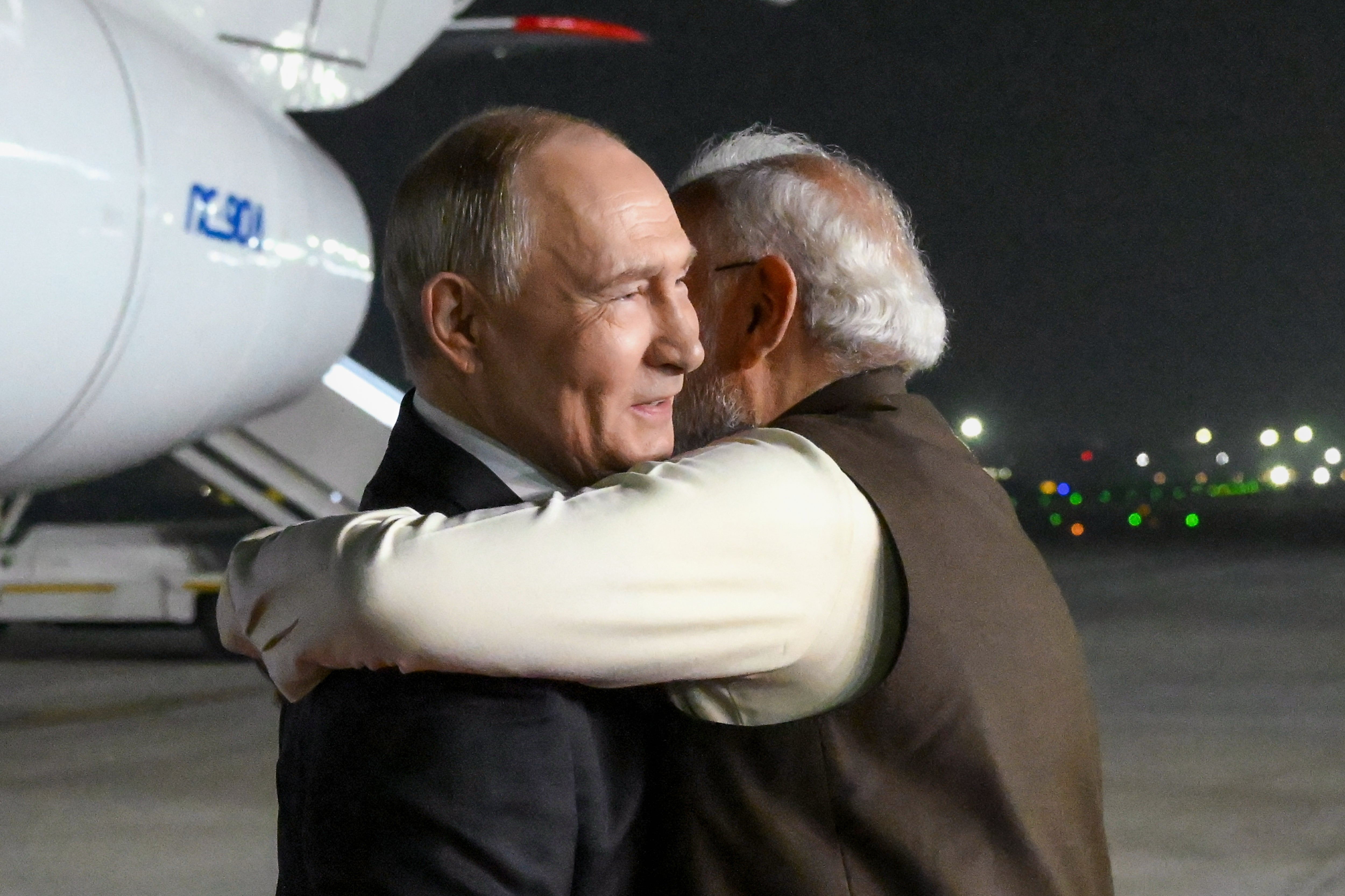
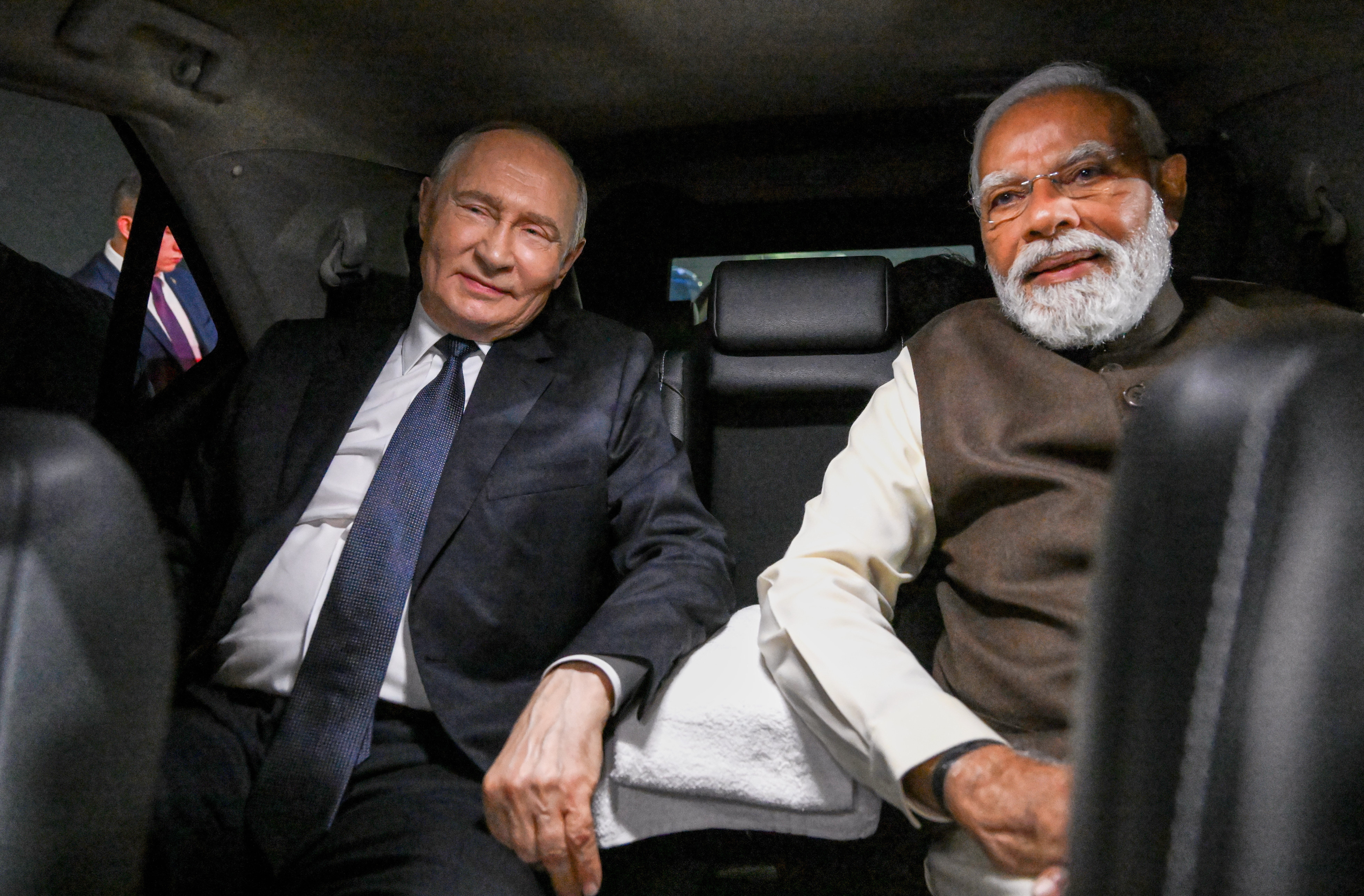
Modi broke protocol on Thursday to receive Putin at the airport, greeting him with a bear hug and a firm handshake, before the two settled into the back seat of the same car for the drive to the prime minister’s residence for dinner.
The gesture was a clear signal to the West that its efforts to isolate Putin can only go so far, with the Modi government intent on showing it can maintain what it refers to as “strategic autonomy”, walking a tightrope between Moscow and Washington.
During his 30-hour visit to the world’s most polluted capital city, Putin held talks with Modi, attended a private and a state dinner, a business forum and announced the launch of an India service from the Kremlin-funded Russia Today.
However, beyond the displays of bonhomie, Putin’s visit produced little in terms of substantive deals between India and Russia.
Both leaders announced that India and Russia have finalised an economic cooperation programme running until 2030, which will help diversify their business and boost annual trade to $100bn by that year.
The two countries enjoyed robust bilateral trade of $68.7bn in the last fiscal year. But that trade is concentrated in just a few sectors and heavily skewed in favour of Russia, with India keen to bridge the gap by pushing up exports.
“To achieve this significant goal, a program for the development of Russian-Indian economic cooperation until 2030 has been agreed upon,” Putin said.
He said work is underway on an agreement for India to establish a free trade zone with the Eurasian Economic Union, a Moscow-dominated economic grouping of several ex-Soviet nations, adding that it could help increase trade.

“Russia is a reliable supplier of energy resources and everything necessary for the development of India’s energy sector,” Putin said. “We are ready to continue ensuring the uninterrupted supply of fuel for the rapidly growing Indian economy.”
Critics say Putin’s visit could strain India’s relations with the EU and the US and might jeopardise negotiations on major trade agreements, despite New Delhi maintaining historic ties with Moscow that date back to the Cold War era.
President Donald Trump raised tariffs on Indian goods to 50 per cent in August, saying half of that total represented “punitive” sanctions for New Delhi’s continued purchases of discounted Russian oil. India has gone from importing negligible amounts of Russian oil before the Ukraine war to being the second biggest importer of Russian crude after China.
The US says purchases of Russian oil help finance Moscow’s war machine and recently sanctioned two of Moscow’s biggest oil producers in a bid to force third parties like India to cut down on imports. Indian officials have said New Delhi has always abided by international sanctions and would do so in the case of Russian oil purchases as well.
India was careful to play down Putin’s offer of “uninterrupted” oil supplies without rejecting it outright. India’s foreign secretary Vikram Misri told reporters that the recent sanctions imposed on Russian oil were discussed by Modi and Putin, but did not give more details.
Before the summit talks on Friday, the Russian leader said the two countries “have a very trusting relationship when it comes to military-technical cooperation”. Yet for India, Putin’s visit granted no major defence announcements, even after their defence ministers met on Thursday.
Indian officials earlier said that Modi, in the meeting with Putin, would push for faster delivery of two more Russian S-400 surface-to-air missile systems. It has already received three under a 2018 deal worth about $5.4bn.
The two sides signed a pact in February to improve military cooperation, exercises, port calls, disaster relief assistance and logistics support, and that agreement was ratified by Moscow’s State Duma ahead of Putin’s India visit.
Talks were also expected on upgrading India’s Russian-made Su-30MKI fighter jets and accelerating deliveries of critical military hardware.
There were no new agreements to be signed in the end, just a joint statement saying both sides agreed to encourage joint manufacturing in India of spare parts and components for the maintenance of Russian-origin arms and defence equipment. This would be done through the transfer of technology and the setting up of joint ventures.
Prime minister Modi said after the talks that India would soon start issuing free electronic visas for Russian tourists and groups visiting the country. And a key area where the two countries hope to finalise an agreement is the safety and regulation of skilled Indian migrant workers to Russia.
Business aside, Putin’s foreign policy aide Yuri Ushakov said that the “informal dinner” between Putin and Modi was “one of the key points of the visit”.
Ushakov told state-run Rossiyskaya Gazeta that “during such confidential face-to-face contacts, the most urgent, most sensitive and most important issues of both bilateral relations and the international situation are discussed”.
“Politics is made at these kind of meetings.”