

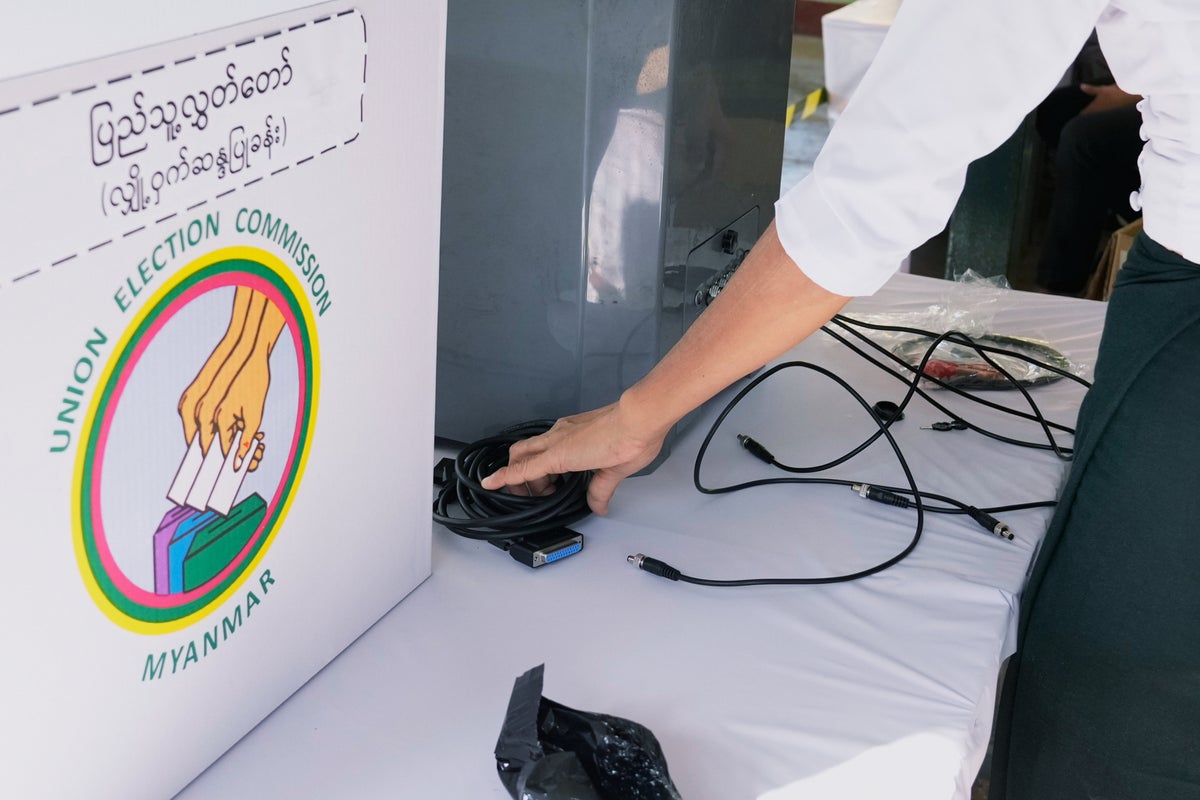
A military-backed party was expected to form Myanmar’s new government as the final of the three phases of the general election concluded on Sunday.
The election, held by the ruling military junta amid a civil war and widespread ethnic violence, has been described by critics as neither free nor fair.
This is the first general election since the military ousted the elected government of Aung San Suu Kyi in a February 2021 coup.
Ms Suu Kyi, 80, remains imprisoned and her party is banned from contesting elections.
Min Aung Hlaing, the junta leader, insisted the election was “free and fair” and said it offered the country a chance to return to democracy and stability.
The military-backed Union Solidarity and Development Party is already on its way to command a parliamentary majority after winning most of the seats over the first two rounds of voting.
General Hlaing is expected to assume the presidency when the new parliament meets. At least 25 per cent of the seats in both houses of the parliament are reserved for the military, assuring it and its allies of control of the legislature.
The junta leader has pushed back against critics of the election saying that “the people who live in Myanmar are the ones who vote, not those outside”, in an apparent rebuke of neighbouring Malaysia’s condemnation.
Earlier this week, Malaysian foreign minister Mohamad Hasan said the Association of Southeast Asian Nations, of which Myanmar is a member, would not send observers or certify the election given the concerns about its lack of inclusive and free participation.
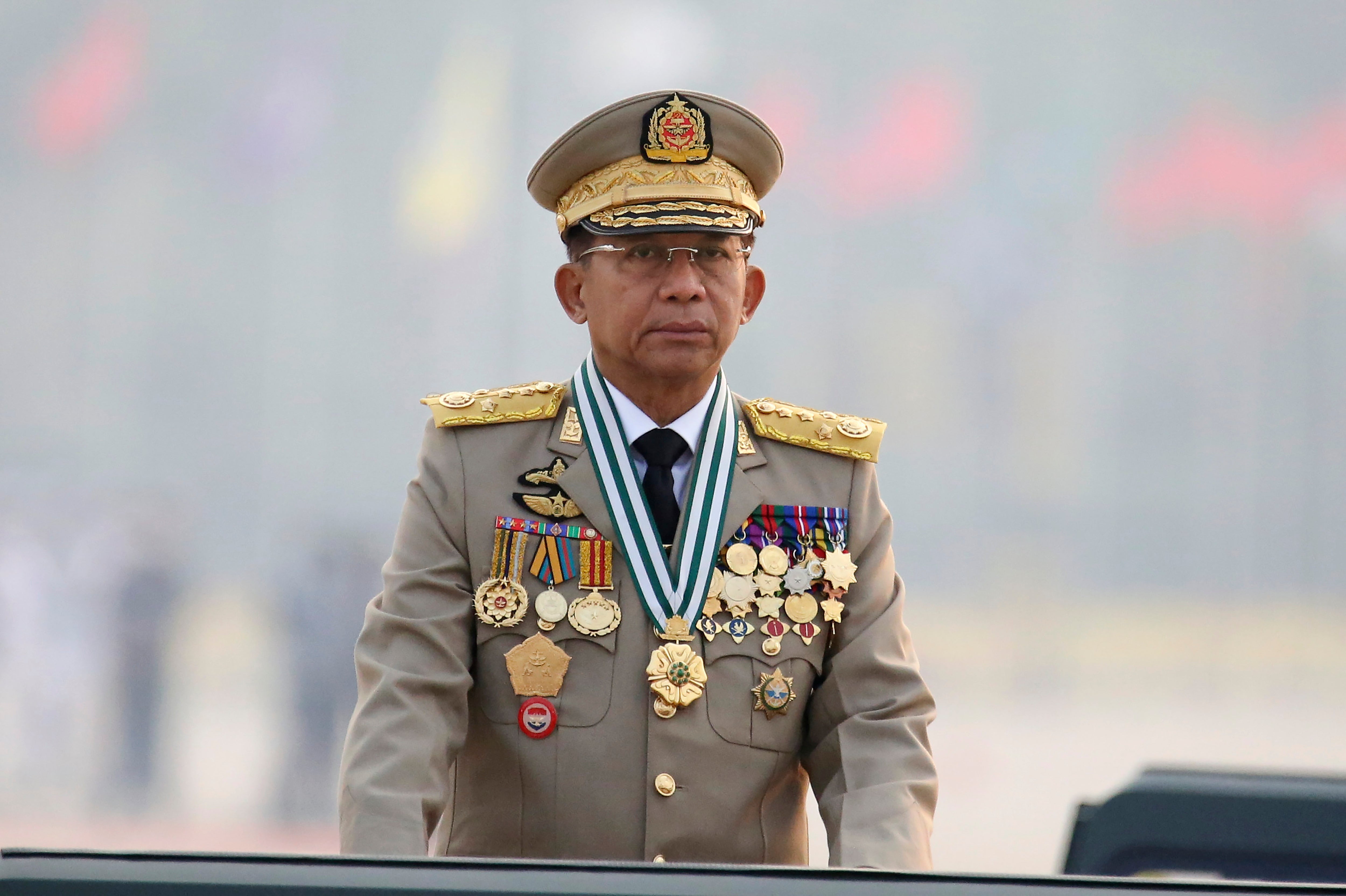
“We are not concerned whether this is recognised by foreign countries or not. We recognise the people’s vote. It should be like that,” the Junta leader responded while speaking with reporters after inspecting a polling station in Mandalay, the country’s second-largest city.
Though 57 parties were registered for the election, only six were marked as an option nationwide and none of them campaigned on anti-military sentiment.
More than half of the parties from the previous general election in 2020 no longer exist, the election monitoring group Anfrel said.
Ms Suu Kyi’s National League for Democracy won landslide victories in the 2020 and 2015, but was forced to dissolve in 2023 after refusing to register under new military rules.
Several other opposition parties also refused to register or declined to run under conditions imposed by the junta they called unfair. Some groups called for a voter boycott as well.
The army’s 2021 takeover triggered widespread opposition that dragged Myanmar into a civil war. Security concerns engendered by the fighting meant voting was not held in more than a fifth of the country’s 330 townships, another reason the process was described by some critics as a “sham”.
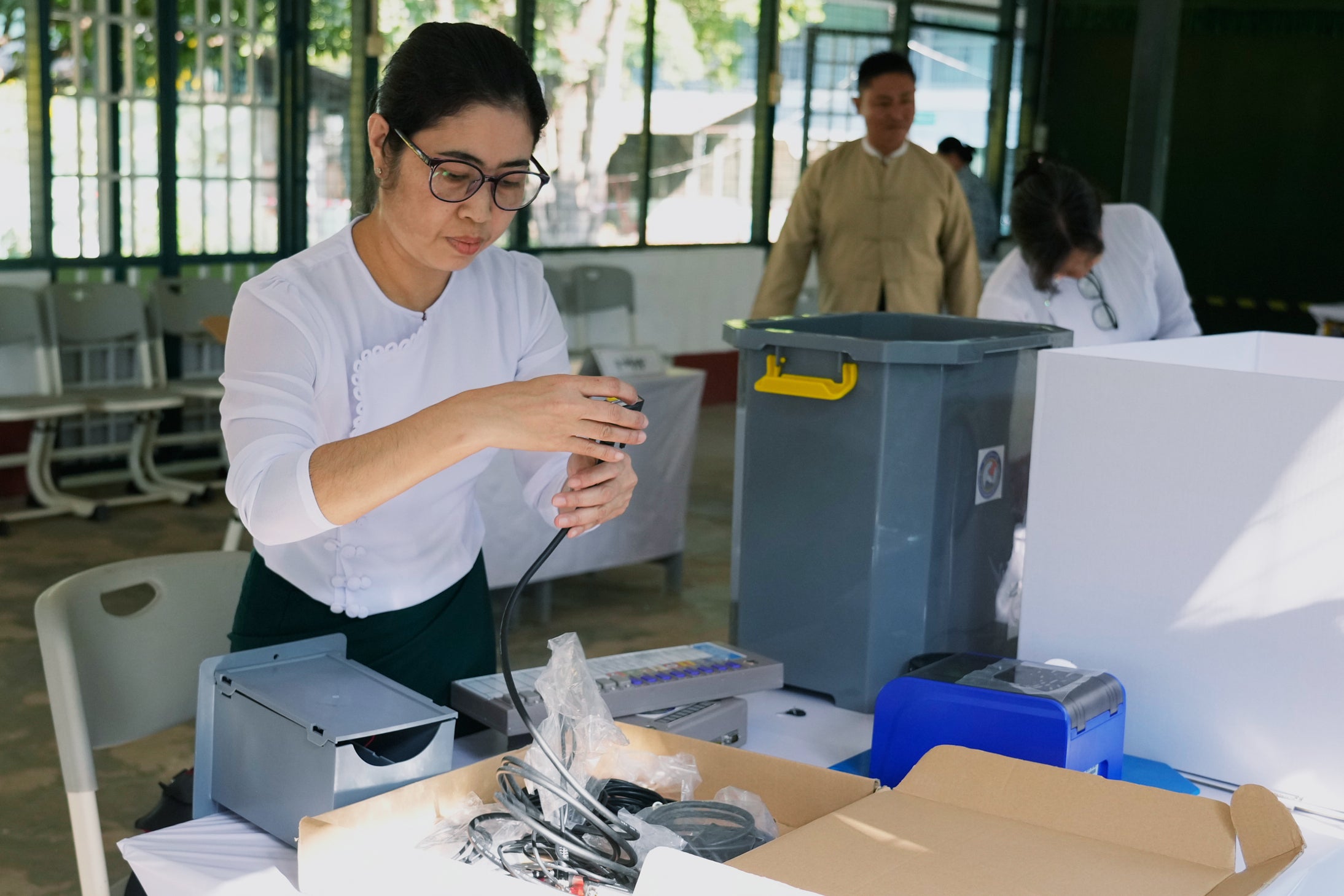
As the polling got underway at 6am in 61 townships, some voters expressed apathy while others said peace was a concern.
Soe Tint, 86, in Yangon said he cast his ballot because he wanted the country to be peaceful and develop “in all sectors, including education”.
Lae Lae Yi, 62, was less hopeful. “I’m not expecting anything at all, because there is no motivation,” she said.
The previous two rounds of voting were disrupted by armed groups opposed to military rule carrying out attacks on polling stations and government buildings in several townships, killing at least two officials, according to the government.
The first rounds took place on 28 December and 11 January in 202 of the country’s 330 townships. A total of 67 townships – mostly areas controlled by armed opposing groups – did not participate, reducing the seat tally in the national parliament from 664 to 586.
Final results for all seats are expected to be announced later this week. The military government has said the parliament will convene in March and the new government will take up its duties in April.