




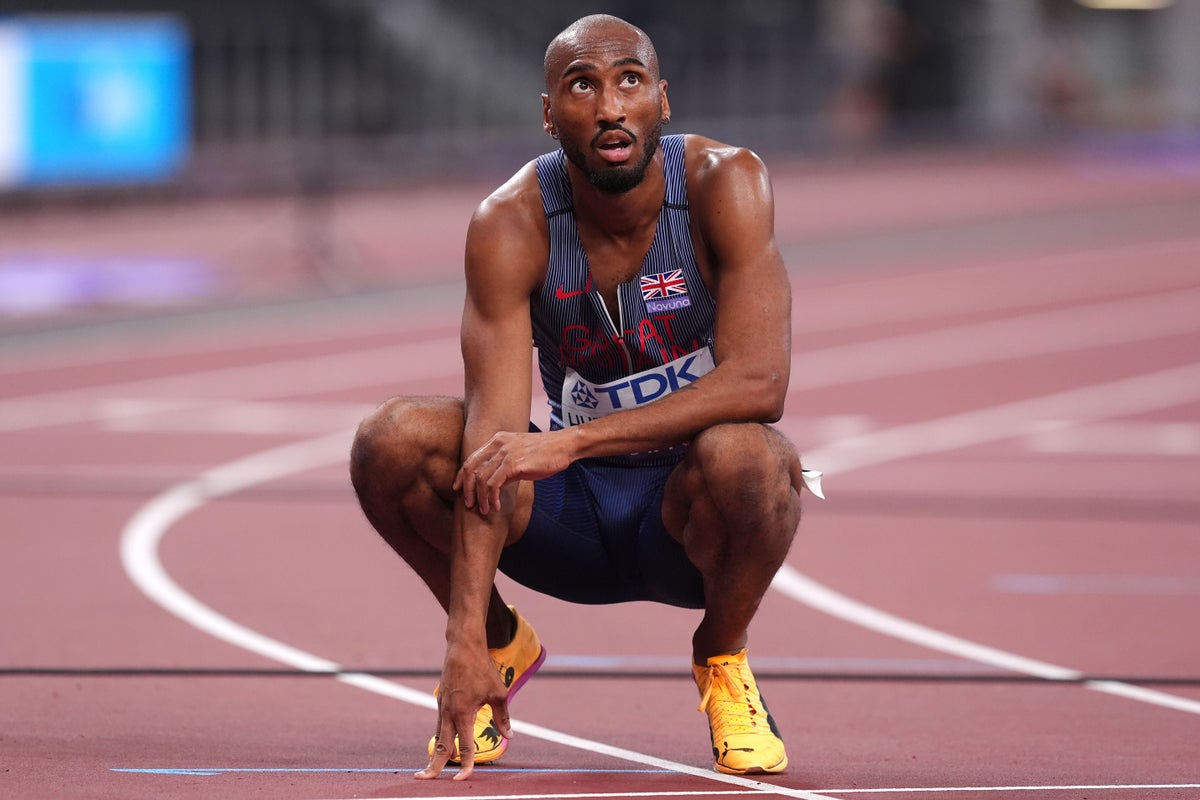
Olympic silver medallist Matthew Hudson-Smith is ready to open up.
The 400m specialist was adamant there were “no excuses” after his semi-final exit at last year’s world championships in Tokyo, but the resilient 31-year-old has had more time to reflect on another challenging behind-the-scenes chapter of a career that has featured no shortage of them.
The Wolverhampton sprinter became a first-time dad to daughter Eden just weeks before he flew to Japan, not “the easiest of births”, he reveals, and one that came earlier than Hudson-Smith and his wife Antonia expected.
“I was running back and forth,” he said. “I missed trials because of it, I was sleeping in a hospital bed, and going from that whole stressful environment, literally three days later having to jump on a plane, picking up niggles whilst there, and I’m missing a good month of Eden’s life.
“I’ve literally got no paternity leave. She was born, get on the plane. It used to be a lot easier just being away for months, but now it’s getting a little bit harder. You feel a bit guilty, but I’ve got a job to do, providing now for the family.”
Everyone is doing much better now. Eden is “strong, walking around and talking”, and her dad is in good form too, “putting a lot of people back on notice” with a second-place finish in the 400m, in 44.25 seconds, at the Rabat Diamond League meeting.
The European 400m record-holder is now targeting a hat-trick of individual continental conquests, prioritising next month’s European championships in Birmingham, where the north stand at the Alexander Stadium has been named in the United States-based local’s honour for the duration of the event.
In his darkest period, Hudson-Smith found himself plunged into medical debt as a result of a perfect storm of circumstances – losing his sponsors, and getting stuck in America without health insurance during the pandemic.


He is one of the athletes still owed a large sum – 172,500 US dollars (£128,770) according to a Delaware bankruptcy court claim – by Michael Johnson’s failed Grand Slam Track project.
Hudson-Smith is generous for a man whose own mental health was once significantly affected by financial insecurity.
He appreciates what Johnson was trying to accomplish, innovating at a time Hudson-Smith felt the sport “needed a reinvent”.
He said: “It was fun, they did treat you well, but at the same time, you didn’t go to your end of the bargain, which was paying the athletes, especially in a sport where big paydays are very few and far between.
“I’m very lucky in a sense that I had a couple good years where I didn’t spend recklessly, but at the same time there are athletes who banked on Grand Slam paying them.”
Hudson-Smith also now has a higher purpose.
“Now it’s not just myself,” he added. “You have children in the mix, so you want to give a little bit of grace, but at the same time you’d be like, ‘sort it out’.”

