




France’s far-right leader, Marine Le Pen, appeared in court on Tuesday to appeal an embezzlement conviction, a case whose outcome could significantly impact her 2027 presidential ambitions.
The 57-year-old is challenging a March ruling that found her guilty of misusing European Parliament funds.
That verdict imposed a five-year ban from elected office, two years of house arrest with an electronic tag, an additional two-year suspended sentence, and a €100,000 (£87,000) fine.
Ms Le Pen remained silent upon her arrival at the courthouse. As the trial began, she stood quietly before the three-judge panel while the court president read out the reasons for the proceedings. The courtroom was reportedly packed with dozens of journalists and members of the public.
“I hope I’ll be able to convince the judges of my innocence,” Le Pen told reporters on Monday. “It’s a new court with new judges. The case will be reset, so to speak.”

Le Pen was seen as the potential front-runner to succeed President Emmanuel Macron in the 2027 election until last year’s ruling, which sent shock waves through French politics. She denounced it as “a democratic scandal”.
Her National Rally party has been coming out on top in opinion polls, and Le Pen alleged that the judicial system brought out “the nuclear bomb” to prevent her from becoming France’s president.
Anti-corruption campaigners argue that Le Pen’s conviction was proof that French democracy works, and that no one is above the law. Advocacy group Transparency France noted that her conviction came after years of investigation and a lengthy trial in which Le Pen and other party members were able to freely defend their positions.
The appeal trial, involving Le Pen, 10 other defendants and the National Rally party as a legal entity, is scheduled to last for five weeks. The panel is expected to announce its verdict later, possibly before summer.
Several scenarios are possible, from acquittal to another conviction that may bar her from running in 2027. She also could face an even tougher punishment if convicted anew — up to 10 years in prison and a €1m fine.
In March, Le Pen and other party officials were convicted of using money intended for EU parliamentary assistants who instead had other duties between 2004 and 2016, in violation of EU rules. Some did work for the party – known as the National Front at the time – in French domestic politics, the court said.
In handing down the sentence, the judge said Le Pen was at the heart of a “system” set up to siphon off EU parliament funds — including to pay for her bodyguard and her chief of staff.
All defendants denied wrongdoing, and Le Pen argued the money was used in a legitimate way. The judge said Le Pen and the others did not enrich themselves personally.
The legal proceedings initially stemmed from a 2015 alert raised by Martin Schulz, then-president of the European Parliament, to French authorities.
The case and its fallout weigh heavily on Le Pen’s political future after more than a decade spent trying to bring the far right into France’s political mainstream. Since taking over the party from her late father, Jean-Marie Le Pen, in 2011, she has sought to shed its reputation for racism and antisemitism, changing its name, expelling her father in 2015 and softening the party’s platform and her own public image.
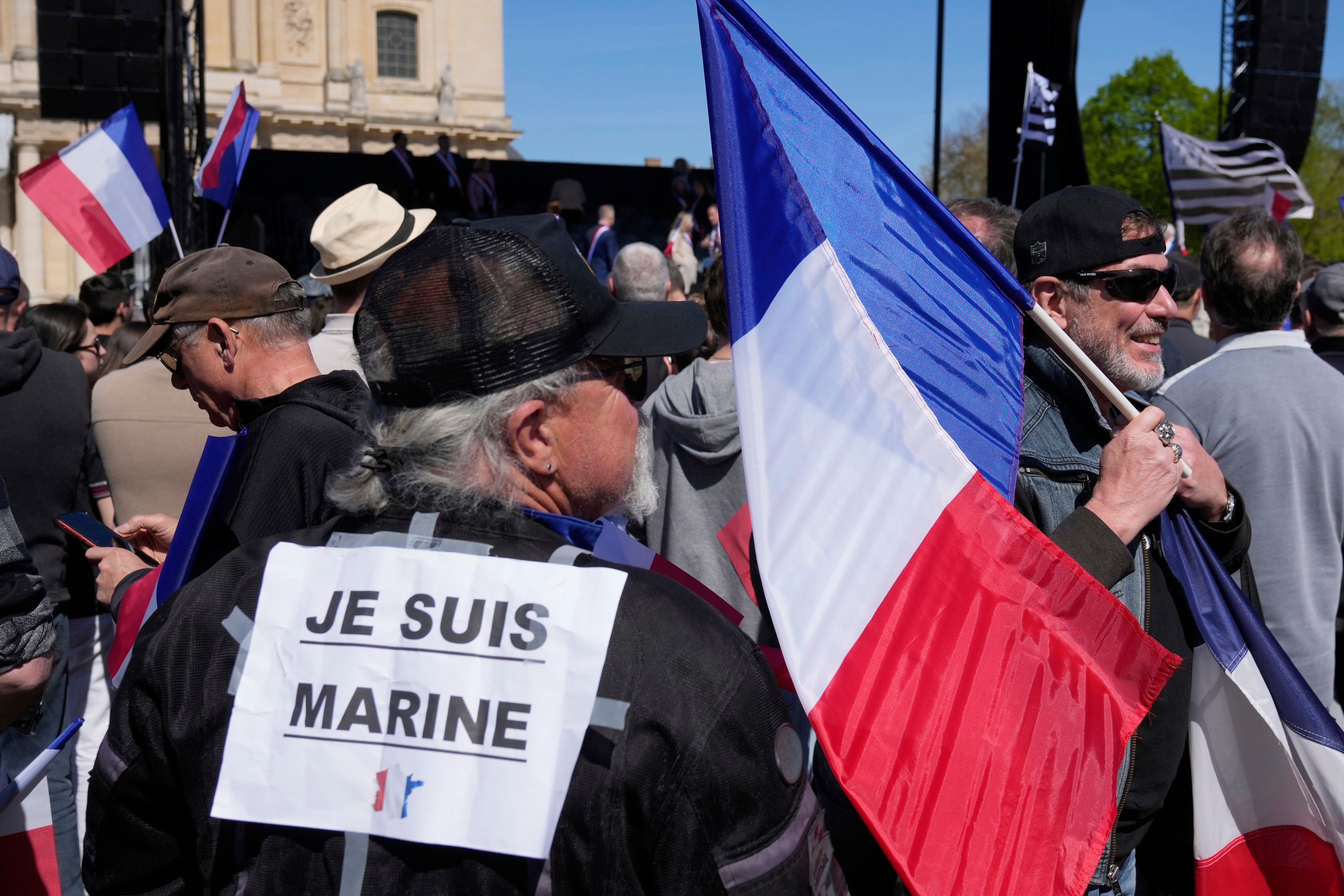
That strategy has paid dividends. The National Rally is now the largest single political group in France’s lower house of parliament and has built a broad network of elected officials across the country.
The National Rally is most well-known for its anti-immigration, nationalist stance, and its rhetoric often targeting Muslims. Le Pen and other party members also have long criticised the EU and its rules and campaigned for more national sovereignty, even while serving in the EU Parliament.
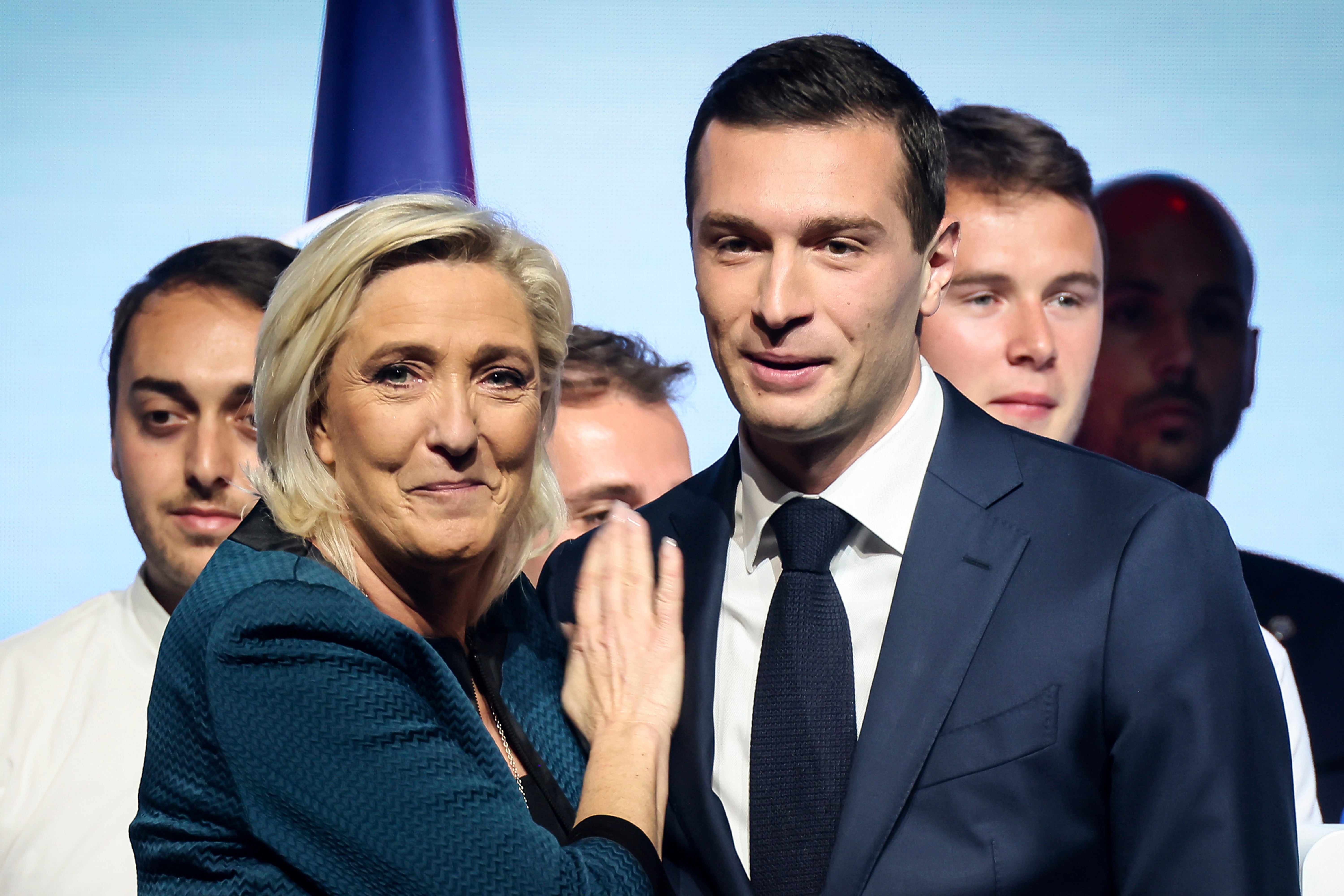
Le Pen stepped down as party president in 2021 to focus on the presidential race, handing the role to Jordan Bardella, now 30.
If Le Pen is ultimately prevented from running in 2027, Bardella is widely expected to be her successor. His popularity has surged, particularly among younger voters, though some within the party have questioned his leadership.
LePen’s potential conviction would be “deeply worrying for (France’s) democracy”, Bardella said on Monday in a new year address.

.png?width=1200&height=800&crop=1200:800 "Strictly Come Dancing: The 11 presenters who could replace Tess Daly and Claudia Winkleman – UK Times")