

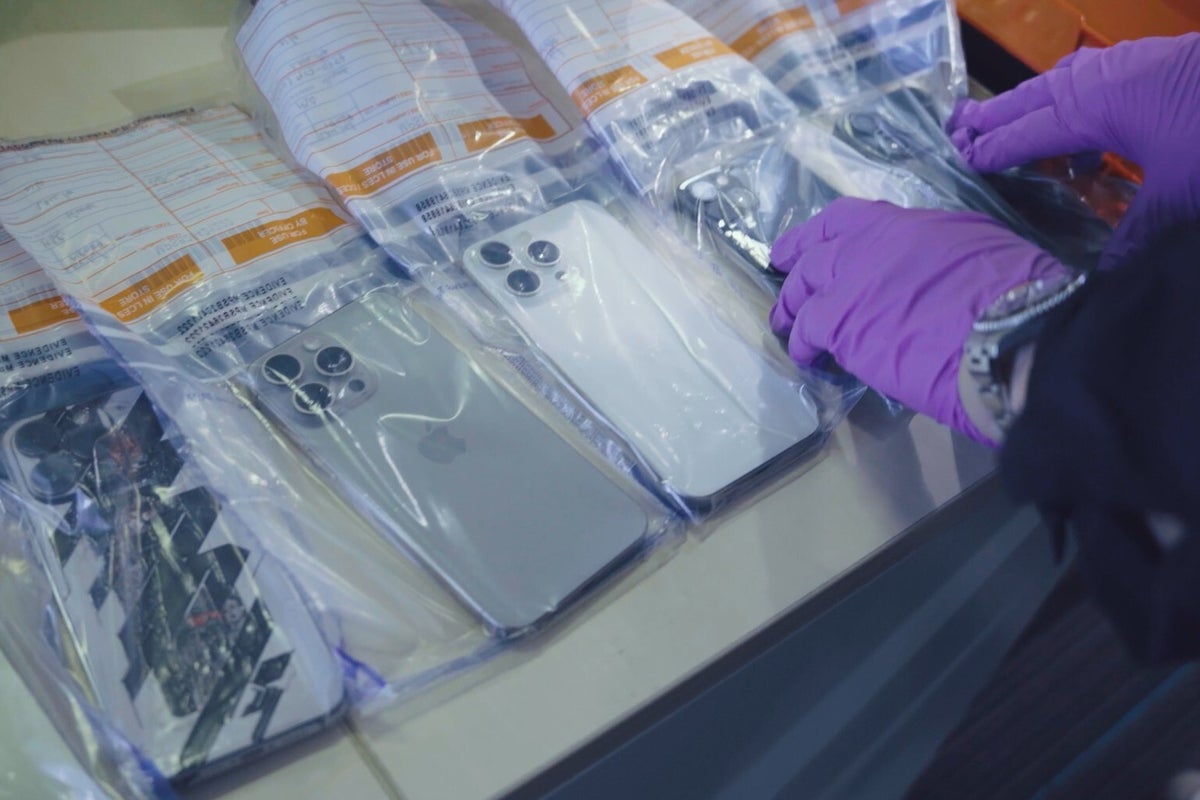
Fewer than one per cent of mobile phone thefts result in a charge, damning police data has revealed.
A freedom of information request has shown that nearly nine in 10 cases were closed without a suspect being identified, with the Met Police closing 95 per cent of their investigations.
In the year 2024-25, 86,000 phone thefts were reported to the Met, which is the UK’s largest police force.
The issue has come under increased scrutiny since Sir Keir Starmer’s chief of staff Morgan McSweeney had his government phone, which contained messages to Lord Peter Mandelson, stolen last October.
The Met Police closed the case after the call handler recorded the address of the incident as being in east London, instead of Westminster.
They are now revisiting the investigation, after Mr McSweeney was asked to hand over his texts and messages to the former US ambassador as part of the government’s investigation into his friendship with Jeffrey Epstein.
Of the 17 police forces that responded, the request revealed that just 0.3 per cent of thefts reported to the Met result in a charge.
Max Wilkinson, the Lib Dems’ home affairs spokesperson, said: “Morgan McSweeney having his phone stolen was just the tip of the iceberg. People could be forgiven for concluding phone theft has been effectively decriminalised.
“Criminal gangs are feeling emboldened to strike in broad daylight, safe in the knowledge they have a less than 1 per cent chance of ever being caught.
“A stolen phone isn’t just an expensive item; it holds your entire digital life, from bank accounts to private messages. The fact that thousands of these cases are closed without a suspect even being named is a slap in the face to victims.
“The Liberal Democrats are calling time on this phone snatching epidemic. It’s time for a dedicated National Crime Agency unit to track down the professional gangs behind these thefts and end the era of daylight robbery.”
The Lib Dems have called on the government to tighten up regulations to ensure phone providers disable stolen phones immediately, which would impact the criminal market for reselling the devices.
Sir Keir said it is “a little bit far-fetched” to suggest the theft of Mr McSweeney’s phone was in any way linked to the release of files on Lord Mandelson.
Speaking to broadcasters in Helsinki last week, the prime minister insisted the phone had been stolen, and brushed off suggestions the claim was an attempt to obfuscate.
He said: “The phone was stolen. It was reported to the police. There’s a transcript of the call in which Morgan McSweeney gives his name, his date of birth, the details of the phone, and the police confirm that it was reported.
“Unfortunately, there are thefts like this. It was stolen. It was reported at the time, the police have acknowledged and confirmed that. That is what happened.”
He added: “The idea that somehow everybody could have seen that sometime in the future there’d be a request over the phone is, to my mind, a little bit far-fetched.”
A Met spokesperson said: “We are relentlessly cracking down on phone thieves and dismantling organised criminal networks at every level – from the pickpockets and phone snatchers operating on our streets, to the handlers who profit from their crimes, right through to the international networks exporting stolen phones overseas.
“Over the past year, we’ve made hundreds of arrests and recovered tens of thousands of stolen devices. That work has meant 10,000 fewer people facing the stress, cost and disruption that comes with having their phone stolen. It is this work that is making London an even safer city.
“But policing alone cannot solve this problem. Manufacturers and tech companies must do more to stop criminals being able to reset, reuse or resell stolen phones.
“We also need the courts to play their part by preventing repeat offenders being bailed only to go out and offend again, undermining the hard work officers are doing to keep communities safe.”