.png?trim=0,0,0,0&width=1200&height=800&crop=1200:800 "CBS News to shutter radio network after 99 years and cut 6 percent of staff in latest controversial move by Bari Weiss – UK Times")



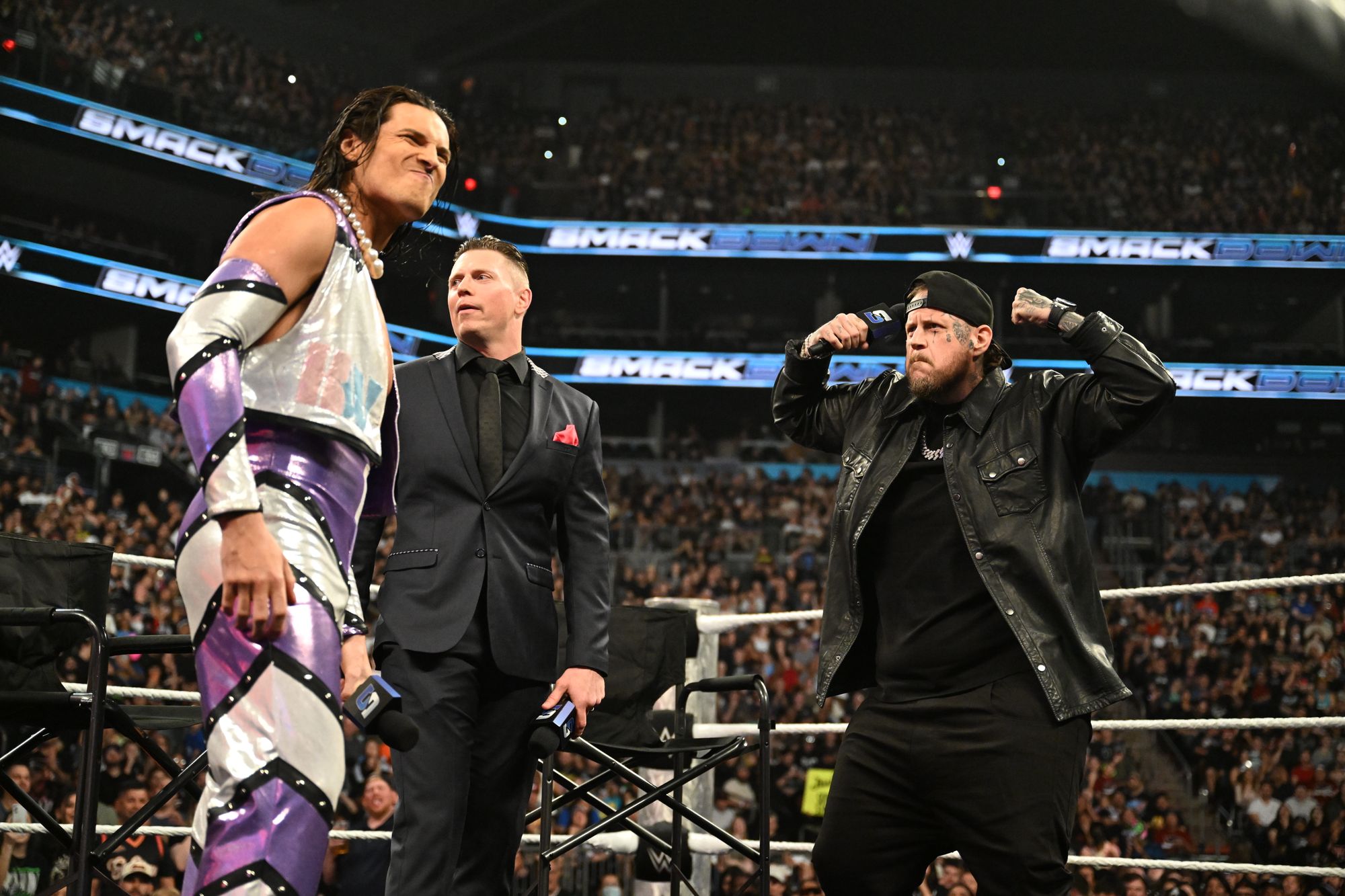
“You… are… toxic!”, Kit Wilson spat at Jelly Roll last Friday, as more than 1m viewers watched WWE SmackDown live. You may know Jelly Roll – a US music star with 21m monthly Spotify listeners at the time of writing, and the latest in a long line of celebrities to cross the divide into professional wrestling. Pertinently, though, he is also the latest perceived offender in Wilson’s crusade on toxic masculinity.
Wilson is a layered personality. One moment, he’s all gyrating hips, flexed biceps, and sparkly, sleeveless jacket, while his Charli XCX-inspired theme music plays; the next, he’s accusing his WWE colleagues of embodying a problematic hyper-masculinity.
The 31-year-old from Buckinghamshire (real name Samuel Stoker) has emerged as a captivating character in recent months, with fans frequently crediting him as one of the most entertaining parts of SmackDown. And Wilson is keen to stress that he is playing a character, to which he brings a quintessentially British satire, yet woven within these satirical strands are important issues.
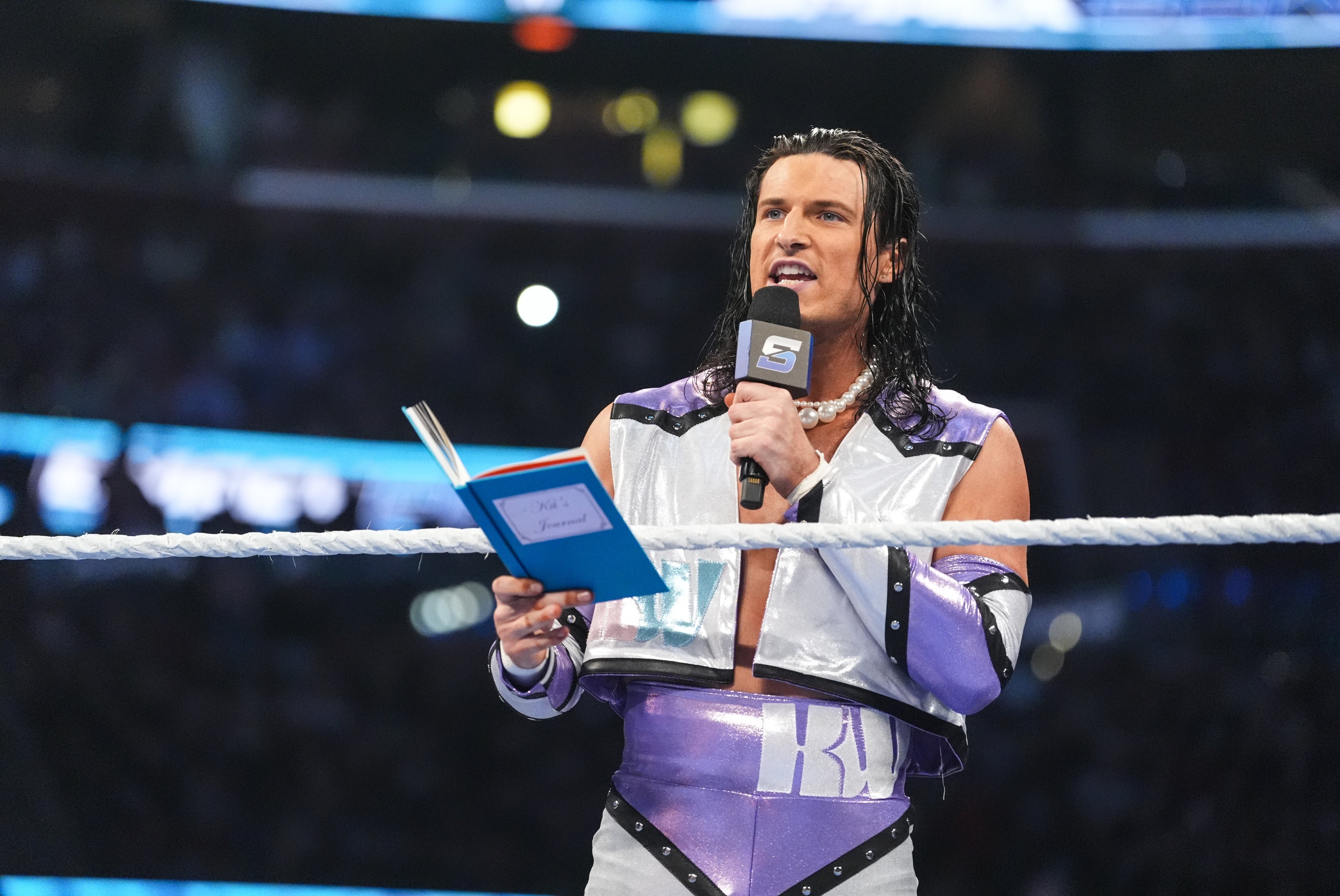
While Wilson has been received by his fellow wrestlers as a kind of villain, his character would no doubt suggest he is a role model – the hero of the piece, perhaps, if only such self-aggrandising was not an example of “TOXIC!!!” masculinity.
As we chat, though, he gets into the intricacies of his stance. “This is a TV show, it’s an exaggeration of who I am,” he tells The Independent over Zoom, seated in the middle of a room but leaning right up against the metaphorical fourth wall. “So, I do want to be a role model, but I’m not gonna be a martyr in saying: ‘You should follow everything I do.’
“However, I do want men to rise up together,” he continues, before adding three more “however”s: “Sometimes I’m gonna have some beef with Jelly Roll, and I’m gonna talk some trash.”
As he speaks, he’s sporting a pearl necklace, a short-sleeved blue shirt over a white vest, and his hair is slicked back into a ponytail. “Even with pearl necklaces,” he says, “you see a lot of hyper-masculine wrestlers wearing gold chains, and I think that can be attributed to bravado. A pearl necklace leans slightly more feminine, but I’m gonna do it in my own, powerful, masculine way.
“I hope it can send a message. If there’s a boy or girl in the audience who wants to wear a pearl necklace and express themself… If I have a small part in someone feeling okay with expressing themselves, that’s what I’m here for.”
Our conversation feels especially timely given this month’s release of Inside The Manosphere, a Louis Theroux documentary on Netflix, which also streams various WWE shows.
The documentary has sparked ubiquitous debate, opening the eyes of some viewers and confirming what others already knew: there are countless disillusioned, angry young men worldwide. Some of these males are being manipulated by opportunistic members of their own sex, who push the narrative that women are to blame for their struggles.
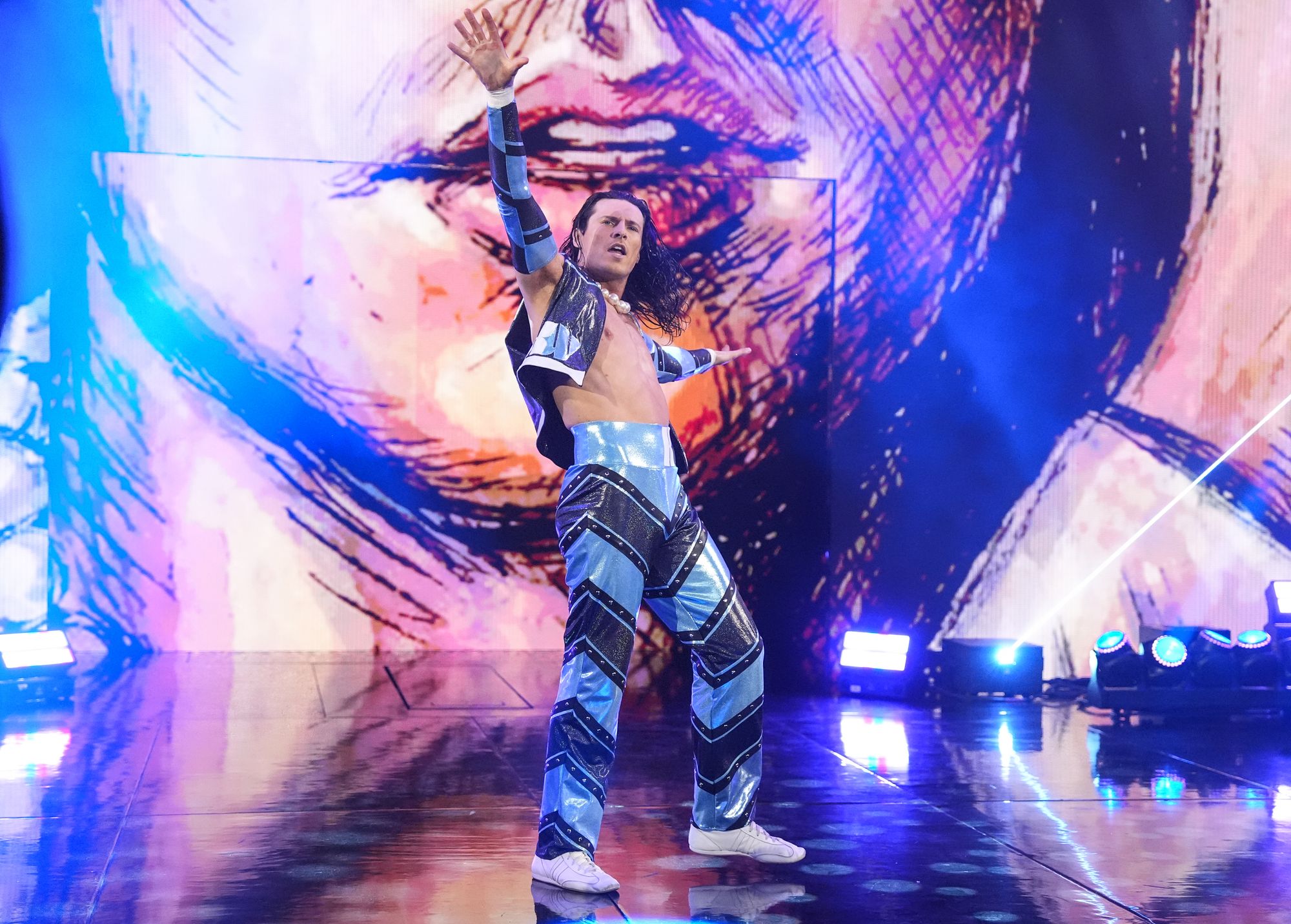
“I really enjoyed the documentary,” Wilson starts, “and it kind of rings true to something I’m diving into, when it comes to my character in the WWE. I talk a lot about toxic masculinity, and I have a lot of problems with my fellow roster members because they are…” – he suddenly emphasises the final word – “toxic!”
“Now, I don’t have a problem with masculinity and men in general,” he clarifies. “I think we should all rise up, but I do think there’s a certain problem that Louis highlighted massively. It could be due to a lack of education on the subject matter, naivety, maybe past trauma, but these men often enhance masculine personality traits.
“I don’t know if it was in this documentary or an article I read, but Louis said their projected strengths are just compensations for their weaknesses. I think he expertly showed that in the documentary. He interviews these guys, they have an answer for his initial question – it’s a very bravado-driven answer – but in classic Louis style, he leaves a pause and it creates an awkward bit of tension… and they often answer to relieve that tension. In that second answer, you get a much more honest, vulnerable answer.
“I view myself and the character I portray as very open to all aspects of personality – masculinity, femininity, vulnerability – and I think that openness makes us stronger as men. I think that’s true masculinity. The classic thing of ‘boys don’t cry’… You should cry; we should let these emotions out. These are healthy things. It’s like anger: I support anger, that’s a natural emotion; it’s aggression that I have a problem with.
“These men are a negative influence, but I don’t think they realise it.” Perhaps they could take a few tips from Wilson when it comes to figuring out who they are.
He has built his in-ring character with a meticulous approach, and in honing a catchphrase (“TOXIC!”), pose and look, he has ticked key boxes that make for a memorable wrestler. He also had granular input into his theme music, which charted on iTunes earlier this year, sending WWE’s production team not only songs but specific production elements as references.
“I’m trying to make every single aspect as big as possible, but I’m only one half of the decision-making process,” Wilson explains. “The company’s got so much input as well, but I think you see how much of an effect it has when it all comes together.
“I’m still trying to create a massive entity,” he concludes. Either way, this entity is a layered one.
Netflix UK & Ireland subscribers can watch Raw, SmackDown, NXT and all WWE Premium Live events as part of their subscription, including WrestleMania live from Las Vegas on 18 and 19 April. Tickets for the WWE European Summer Tour are available now from wwe.com/events.