Kim Jong Un has confirmed for the first time that North Korean soldiers follow a policy of killing themselves on the battlefield to avoid capture while fighting in Russia’s war against Ukraine.
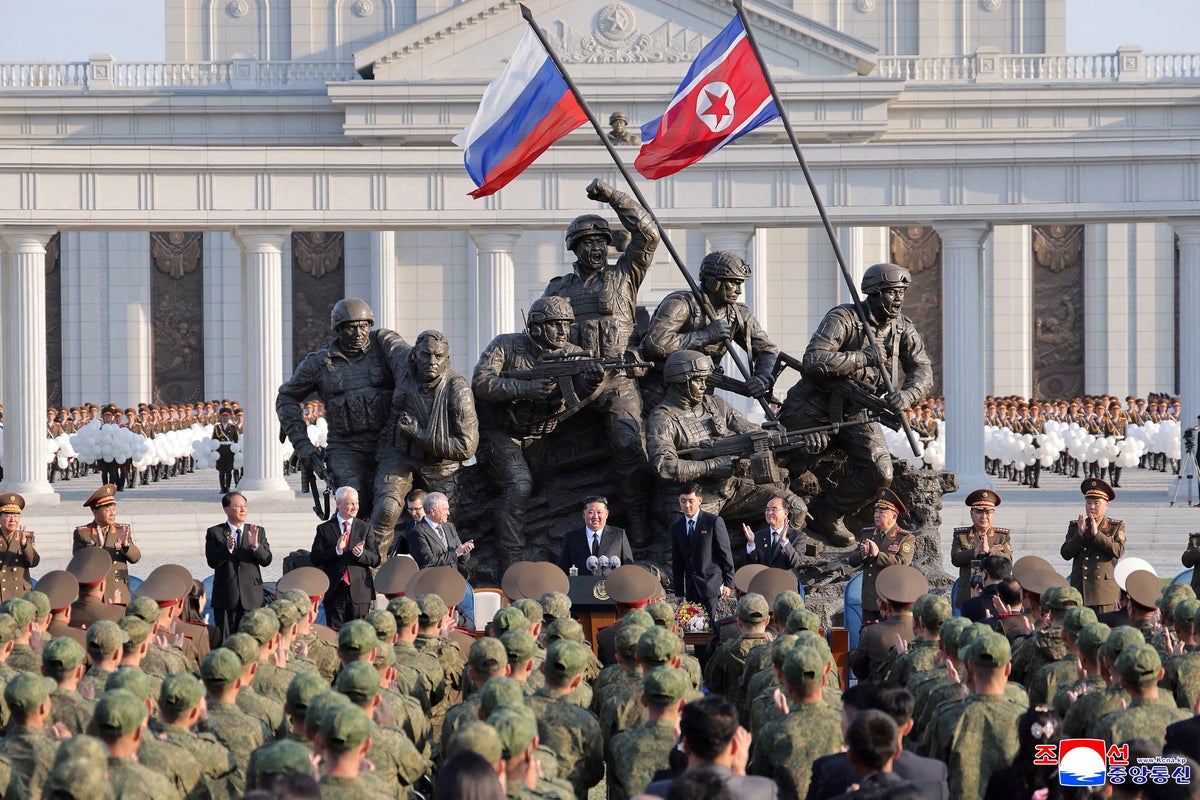
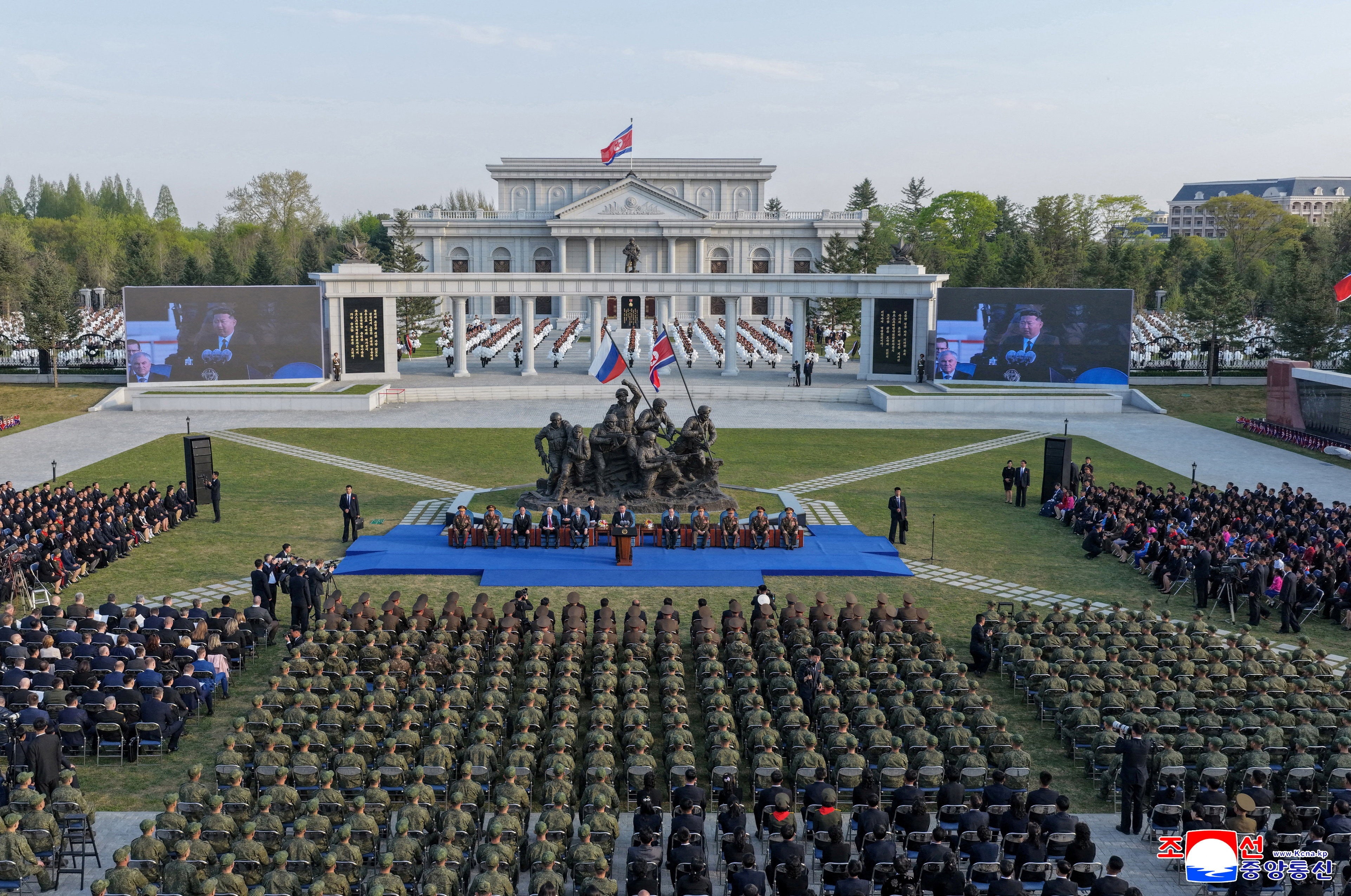
Speaking at the inauguration of a memorial museum dedicated to North Korean soldiers killed in the conflict, the North Korean dictator praised what he described as the “extraordinary heroism” of troops who “unhesitatingly opted for self-blasting, suicide attack”, according to the state-run Korean Central News Agency.
North Korea remains the only third party to deploy troops directly to the frontlines of the Russia-Ukraine conflict, as part of a deal that cemented the axis between Vladimir Putin’s invading forces and the east Asian hermit kingdom.
An estimated 15,000 North Korean soldiers have been deployed to Russia to support combat operations, including efforts to recapture parts of the western Kursk region, according to South Korean intelligence. The exact number remains unclear, but nearly 2,000 are believed to have died while serving alongside Russian forces.
The memorial to these soldiers was unveiled on Sunday in Pyongyang, with Mr Kim joined by visiting Russian defence minister Andrey Belousov, KCNA reported on Monday.
The Independent first reported in January 2025 the lengths to which North Korean troops were expected to go to prevent being caught as prisoners of war. Since news of their presence in Russia emerged in October 2024, just two North Korean soldiers have been captured alive amid varying claims from Ukraine of heavy losses among their ranks.
A Ukrainian military source with direct knowledge of these troops disclosed to The Independent’s Sam Kiley that one of those soldiers was so determined not to be held as a prisoner of war that he tried to bite his own wrists after being wounded in the Kursk region.
Mr Kim twice mentioned soldiers who killed themselves on the battlefield, both times saying it was done to defend the country’s honour. He said the soldiers did not expect any compensation or reward for their “self-sacrifice through self-blasting”.
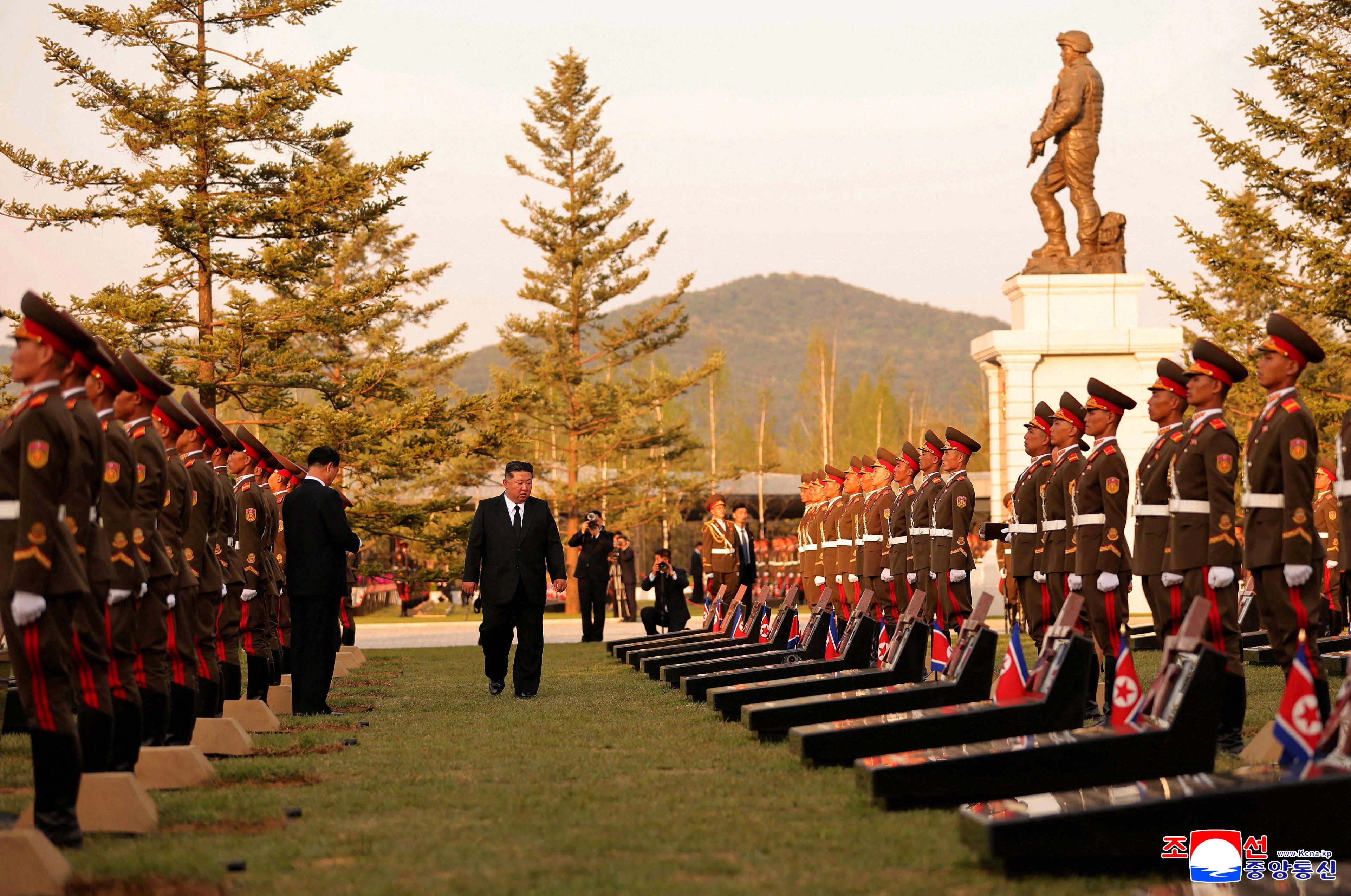
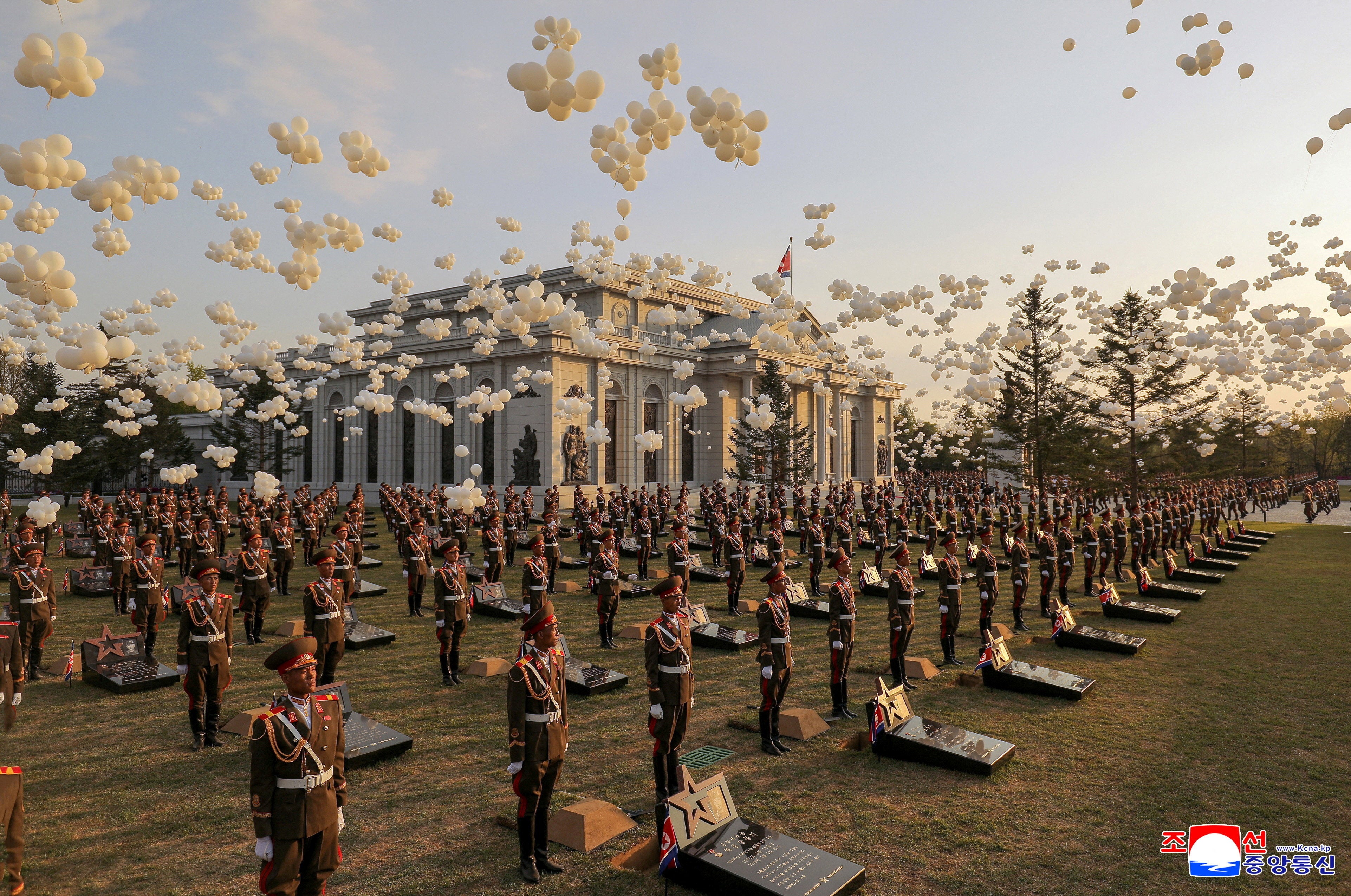
The ceremony featured rows of soldiers standing behind the graves of fallen comrades as balloons floated overhead.
It marked the first anniversary of Russia’s recapture of the Kursk region, part of which had been seized by Ukrainian forces in 2024.
Mr Kim described the military campaign as “a new history of friendship with Russia written in blood” and a “sacred war to wipe out the Ukrainian armed invaders”.
He and Mr Belousov also discussed plans to sign a military cooperation agreement later this year covering the period from 2027 to 2031, aimed at placing bilateral defence ties on a more sustained, long-term footing.
The two countries had already signed a Comprehensive Strategic Partnership Treaty in 2024, which includes a mutual defence clause committing both sides to provide immediate military assistance in the event of armed aggression.
Pyongyang has taken advantage of the European conflict to conduct live tests of its own weaponry, alongside a broader programme of missile testing. In 2026 alone, North Korea has conducted at least seven documented ballistic missile test launches. North Korean forces conducted a test of a Hwasong-11 missile, a short-range missile also known as KN-23 or KN-24, which Ukraine said Pyongyang also supplied to Moscow for use in the war.
Meanwhile, International Atomic Energy Agency director general Rafael Grossi said last week that his agency has confirmed “a rapid increase” in activities at nuclear facilities in North Korea.