



The betting website Kalshi is offering a colossal $1 billion prize for correctly predicting the winner of every single March Madness basketball game — a feat that is mathematically almost impossible.
Each year, tens of millions of people make their bets about who will triumph at every stage of the NCAA Division I men’s basketball tournament, known as March Madness.
But with 64 teams competing in 63 famously unpredictable knockout games, the odds of calling every single result correctly are potentially as low as 9.2 quintillion to 1, and it has never happened in history (as far as we know).
“You probably won’t win this contest,” Kalshi said in a blog post on Monday, claiming that it wanted to give the world “a lesson in probability”.
“To put this into perspective, you are more likely to be struck by lightning than create the perfect bracket. Your odds are roughly equivalent to searching for one grain of sand from all of Earth’s beaches and deserts, and getting it right on the first try.”
There is, however, a silver lining: if nobody makes a perfect bet, Kalshi will pay out $1m to the best-scoring entrant, while giving $500,000 each to two education non-profits.
Kalshi, much like its rival Polymarket, is a controversial ‘prediction market’ service that lets users bet against each other on whether certain events will come to pass.
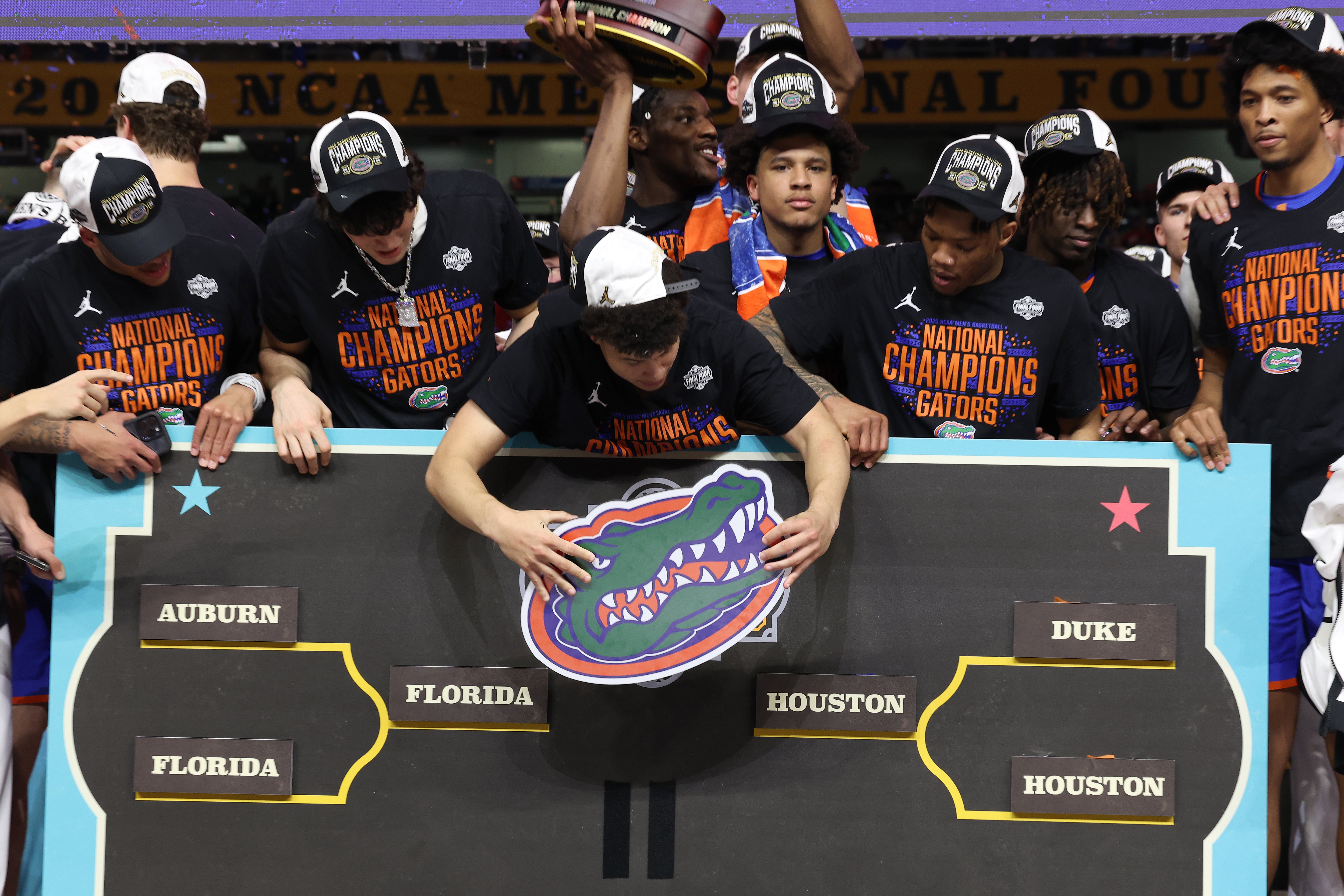
Courts are still deciding whether or not this counts as gambling, with some states suing the company for operating unlicensed betting operations, while the companies and the Trump administration insist that it‘s merely financial trading. Trump’s family has ties to both companies.
This year, U.S. sports bettors are expected to wager more than $3.3 billion on men’s and women’s NCAA basketball games, according to the American Gaming Association.
The March Madness pools are particularly popular, with up to 100 million people every year attempting to file the perfect “bracket” — that is, a correct prediction for each of the 63 knockout games.
The reason why this is almost impossible comes down to simple mathematics. Since March Madness is a knockout tournament, only the winning team in each game will progress to the next round.

Hence, the outcome of each game after the first round depends on the outcome of every previous game that led to it, meaning that the number of possible combinations multiplies exponentially as you add more games.
With 63 games, there are 9.2 quintillion possible ways the tournament can play out (a quintillion is a thousand thousand trillion). For context, scientists estimate that there are around 7.5 quintillion grains of sand on Earth, and perhaps 10 quintillion insects alive at any one time.
Of course, if you’re a basketball expert, your odds of calling each game correctly are probably better than 50/50. But even then, March Madness games often deliver surprising results, so the NCAA estimates your likelihood of getting a perfect bracket at only one in 120 billion.
On its web page for the giveaway, Kalshi offers a few comparisons for this number. It’s equivalent to one grain in 80 truckloads of rice, one sheet in a stack of paper 27,000 times taller than the Empire State Building, or one pixel in a solid wall of 14,500 4K television screens.