A federal judge in Washington has rejected a preservation group’s lawsuit to block President Donald Trump’s White House ballroom project but left room for the group to revive its bid under a different legal theory.
U.S. District Judge Richard Leon on Thursday issued an opinion denying the National Trust for Historic Preservation’s request for an injunction to stop construction of the White House ballroom, which is currently being built with private funds sans congressional approval on the site where the East Wing stood until it was demolished on Trump’s orders this past October.
Leon wrote that the group had incorrectly based their lawsuit on what he called “a ragtag group of theories under the Administrative Procedure Act” as well as the U.S. Constitution and said the request for an injunction had to be denied because the White House Office of the Executive Residence was not an “agency” for the purposes of the APA.
He also said the National Trust had incorrectly failed to allege in its complaint that the entire ballroom project — including its use of private donations and shirking of Congressional oversight — was ultra vires, a Latin legal term meaning beyond one’s authority.
“Unless and until Plaintiff amends its existing complaint to include the necessary ultra vires claim, the Court cannot address the merits of the novel and weighty issues raised by this statutory challenge, and Plaintiff’s motion for a preliminary injunction must therefore be denied,” he said.
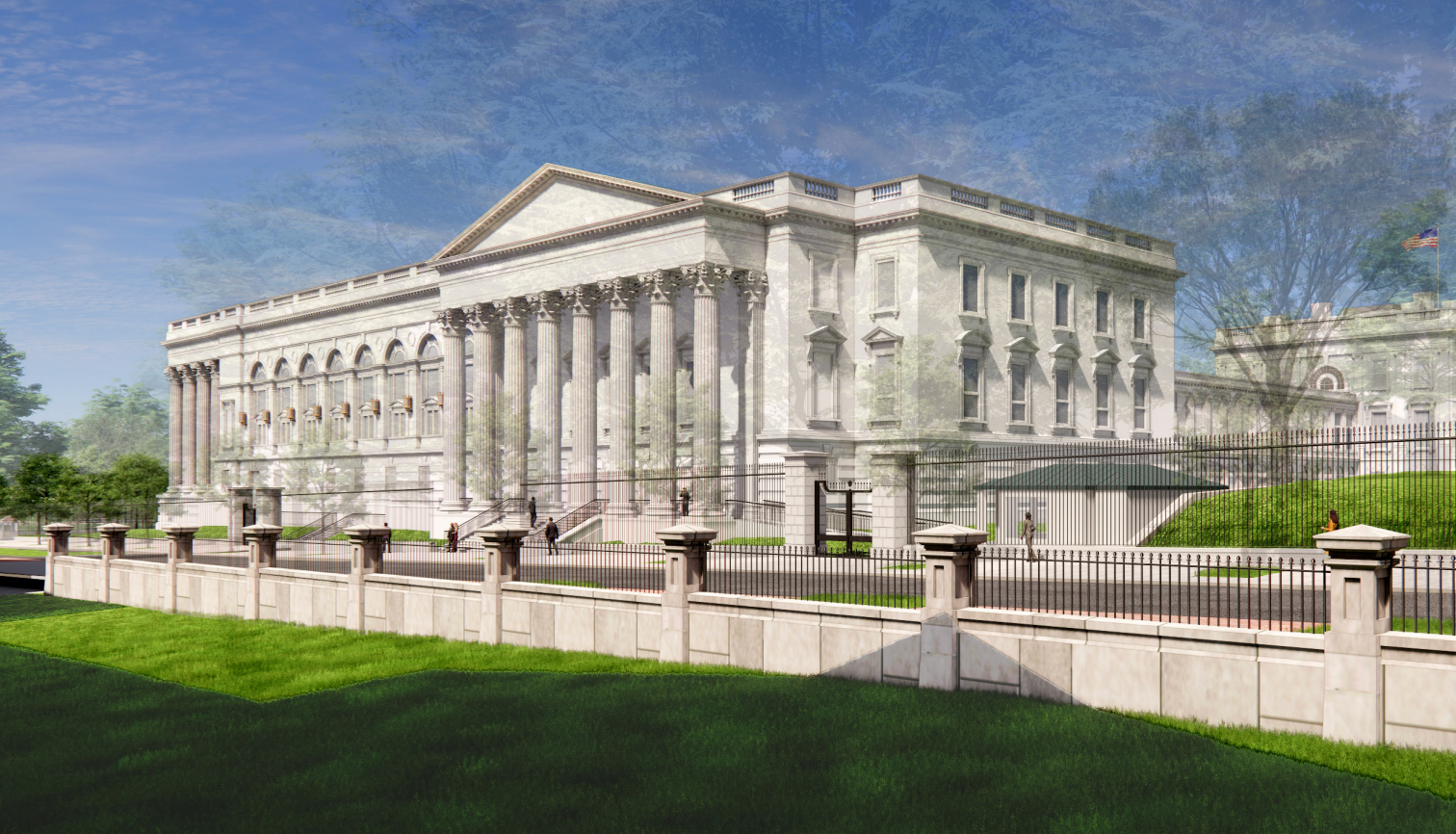
The judge added that the National Trust had mischaracterized the dispute over the ballroom as a constitutional claim rather than one over whether statutes cited by the White House to justify the ballroom project gave Trump the authority to demolish the East Wing and build an entirely new structure without input from Congress.
He also left room for the lawsuit to be revived if the Trust makes the proper legal claims going forward.
“If Plaintiff is inclined to amend its complaint with the necessary ultra vires cause of action to test the President’s statutory authority, the Court will expeditiously consider it and, if viable, address the merits of the novel and weighty issues presented,” he said.
“Until then, however, I have no choice but to deny Plaintiff’s motion for a preliminary injunction for lack of likelihood of success on the merits.”
In a post on Truth Social, Trump hailed the ruling as “great news for America and our wonderful White House” and boasted that the project was being completed only with donations from “patriot donors and contributors.”
“The Ballroom construction, which is anticipated to also handle future Inaugurations and large State Visits, is ahead of schedule, and under budget. It will stand long into the future as a symbol to the Greatness of America,” he added.
The new White House ballroom is expected to be a massive addition to the People’s House, capable of holding up to 1,000 guests for state dinners and other large events. Trump has said the space is necessary for hosting large events.
But the project has been heavily scrutinized for its quick implementation and high costs – jumping from an initial $200 million estimate to $400 million. The administration has been tight-lipped about the list of individual and commercial donors who are helping the president pay for the new space.
Ariana Baio contributed reporting