

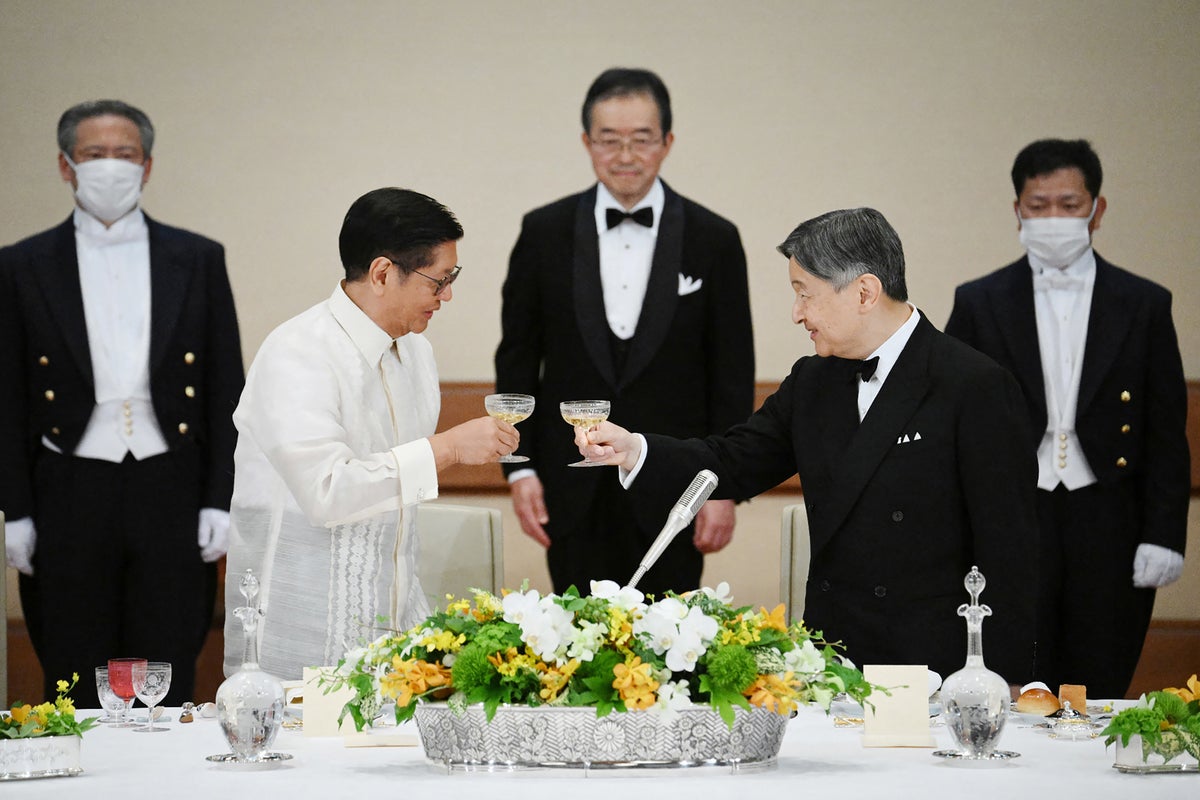
Visiting Philippine president Ferdinand Marcos Jr is receiving an “exceptional level of hospitality” as Japan seeks to upgrade ties with a nation that it sees as a crucial defence partner and potential arms customer.
The deepening relationship is largely underpinned by shared anxieties about China’s rise and military activities in Asia.
Mr Marcos’s four-day state visit saw him greeted by Emperor Naruhito, who bestowed upon him the prestigious Grand Cordon of the Supreme Order of the Chrysanthemum.
On Thursday, Mr Marcos was scheduled to hold talks with prime minister Sanae Takaichi amid expectations that they would further strengthen defence and weapons cooperation.
Addressing Japanese lawmakers on Wednesday, the president stated that the emphasis on elevating ties reflected an “exceptional level of trust” between the two nations.
Both countries are acutely aware of China’s regional ambitions as they solidify a military relationship that the US hopes will serve as a bulwark against Beijing’s claims in the East and South China Seas, as well as its designs on Taiwan, the self-governing island China asserts as its own territory.
Mr Marcos represents the first potential major customer for Japanese arms since Ms Takaichi’s government lifted a ban on lethal weapons exports in April. This policy shift marks a significant departure from Japan’s postwar pacifist stance as the nation accelerates its military and arms industry development.
Negotiations are underway for the sale of multiple Abukuma-class destroyers and TC-90 naval training aircraft. Philippine defence minister Gilberto Teodoro Jr previously also expressed interest in Japanese Type-88 surface-to-ship missiles.
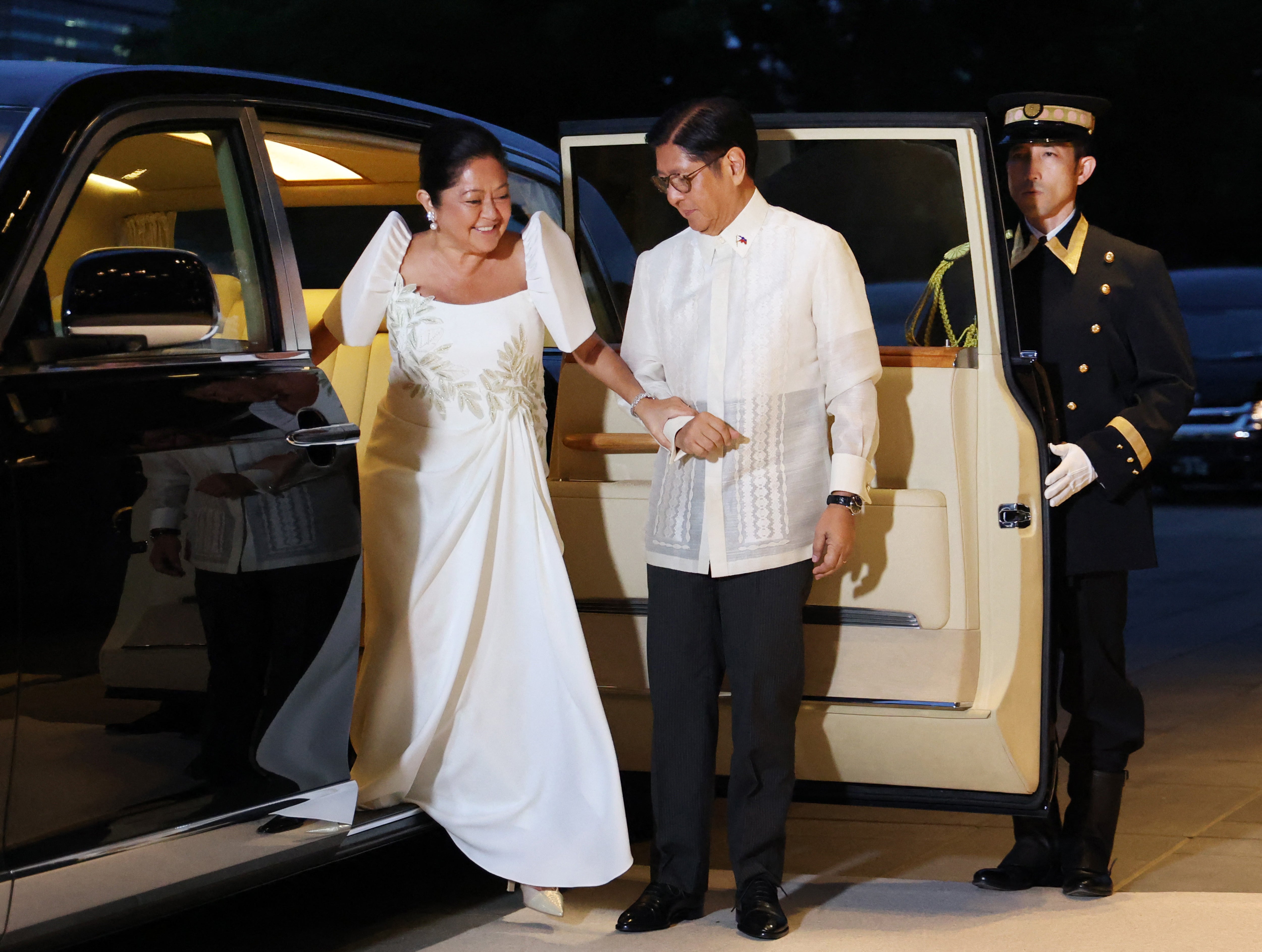
Japanese officials indicate that Mr Marcos’s state visit also commemorates the 70th anniversary of diplomatic relations and coincides with the Philippines holding the rotating presidency of the Asean regional bloc this year.
Further talks between Mr Marcos and Ms Takaichi are expected to formalise a military intelligence sharing pact. Such an agreement would facilitate closer communication and enhance trilateral military cooperation with their mutual ally, the US, according to Japanese officials.
Japan has already provided the Philippines with five coastal surveillance radars as part of its official security assistance, with intelligence sharing poised to bolster reconnaissance efforts.
Japan aims to cultivate a robust partnership with the Philippines that extends beyond Mr Marcos’s term, which concludes in 2028.
This strategy seeks to mitigate potential shifts in the nation’s China policy under a future Philippine administration.
Mr Marcos has adopted a firm stance against China regarding maritime disputes in the South China Sea, leading to a rapid bolstering of security ties with Japan, bilaterally as well as trilaterally with the US.
In 2024, Japan and the Philippines signed a pact enabling their forces to conduct joint military drills more smoothly, paving the way for Japan to deploy 1,400 military personnel as regular participants.
A separate defence agreement signed this year allows for the tax-free provision of ammunition, fuel, food, and other necessities during joint training exercises.
Energy security is also on the agenda, with Mr Marcos and Ms Takaichi set to discuss cooperation and a multinational funding framework initiated by Japan and announced in April. The framework is designed to assist Southeast Asian nations, including the Philippines, in stabilising oil reserves through financial aid for infrastructure development, particularly in light of disruptions to oil transports via the Strait of Hormuz caused by the US-Israeli war against Iran.