For weeks, Americans have looked to Washington for an answer to one very simple question about the war in Iran as gas prices soar across the nation: When will it be over?
President Donald Trump made it clear Monday, however, that he still has absolutely no idea.
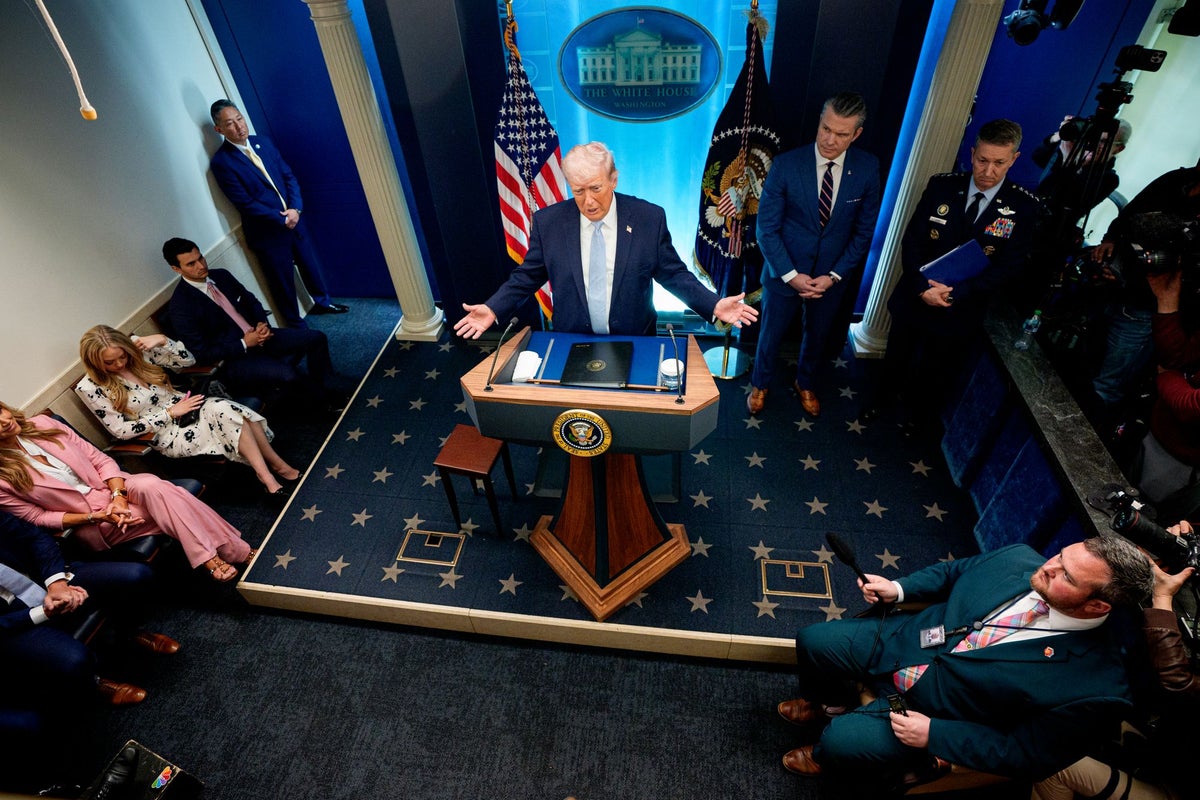
The president gathered with his top defense chiefs including Pete Hegseth and CIA Director John Ratcliffe in a rare visit to a packed White House briefing room. There, 24 hours after making an expletive-laden Easter morning threat to Iran’s government, he doubled down on his vow that American troops would soon expand their targeting of civil infrastructure including bridges and power plants.
But when asked whether the war he’d declared over and over was already won would continue ratcheting up or begin to draw down, the president admitted he wasn’t sure.
Asked simply by a reporter, “So, which is it, are you winding down the Iran war, or are you escalating it?” Trump responded: “I can’t tell you. I can’t tell you. I don’t know.”
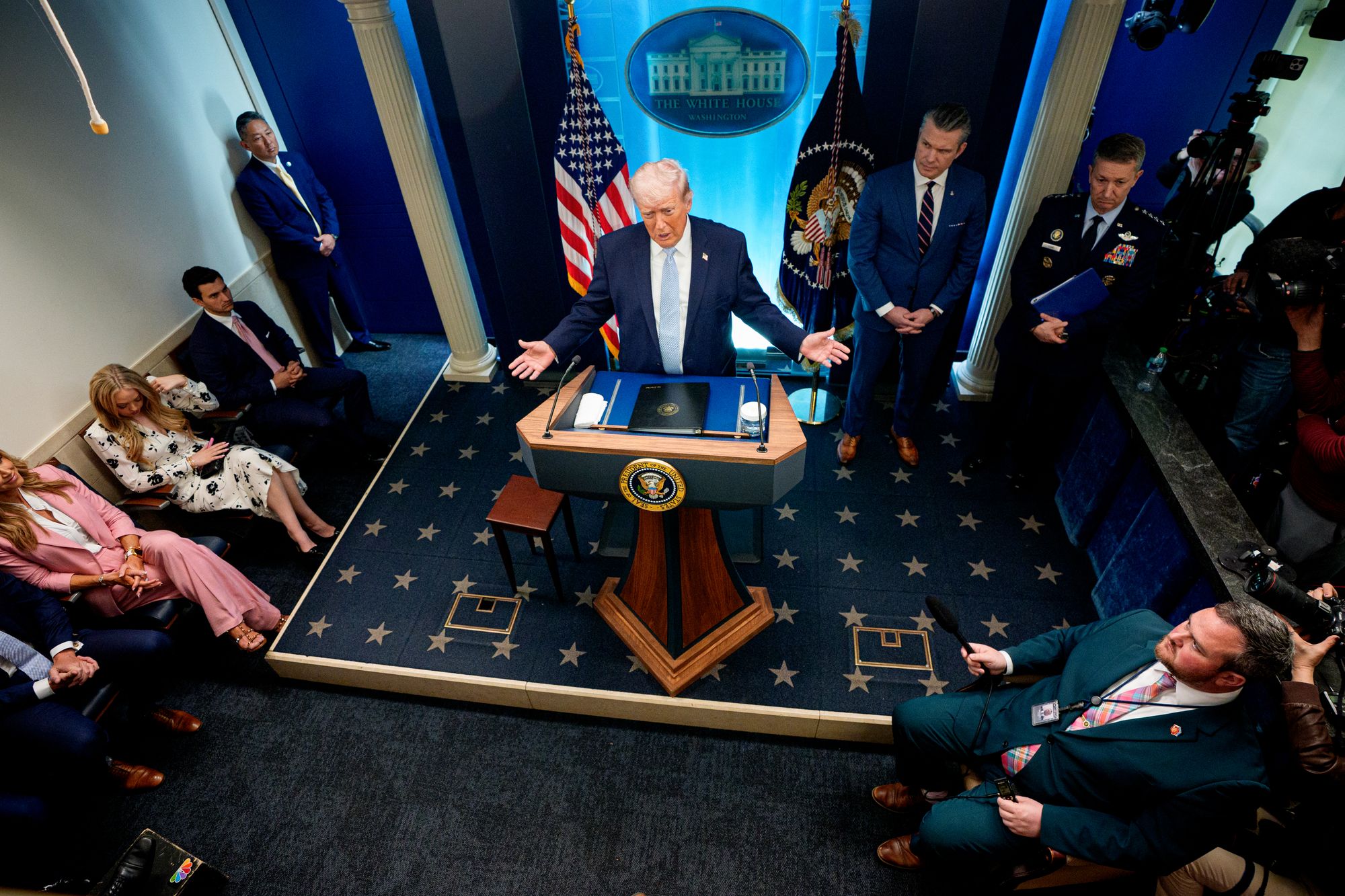
Instead, he vowed that the U.S. military would “decimate” every bridge and power plant within Iran if the Iranian government did not adhere to a deadline he’d already extended at least twice, and allow the world’s oil and natural gas shipping to resume through the Strait of Hormuz.
Sorry, congressional Republicans. The president’s search for an off-ramp seems to have turned up nothing thus far. With Iranian officials once again rejecting a ceasefire and showing no signs of capitulating to Trump’s demand to open the Strait of Hormuz, the White House seems to be in a tough spot with Trump unable to articulate how a strategy that has failed to yield results up until this point will fare any better in the future and unwilling to change course.
Now the problem for the White House becomes even tougher. Already accused by the president’s allies in Congress of not selling the GOP’s record in power to the American people, the president’s team is now confronted with a sizable chunk of Americans who say they don’t believe Trump has a plan to end the war. Monday’s remarks will do little to help that view of Trump’s strategy.
Once a means of ridiculing reporters for suggesting that he’d share attack plans or war strategies ahead of U.S. operations, Trump’s repeated refrain, wherein he balks at questions about his plans, now seems like a dodge to an increasing number of Americans. A CNN/SRSS poll last week found that six in ten U.S. adults doubt that the White House has a coherent plan for winning the war and withdrawing U.S. forces.
“Somebody said, ‘Oh, he doesn’t have a plan.’ I have the best plan of all, but I’m not going to tell you what my plan is,” Trump once again insisted Monday.
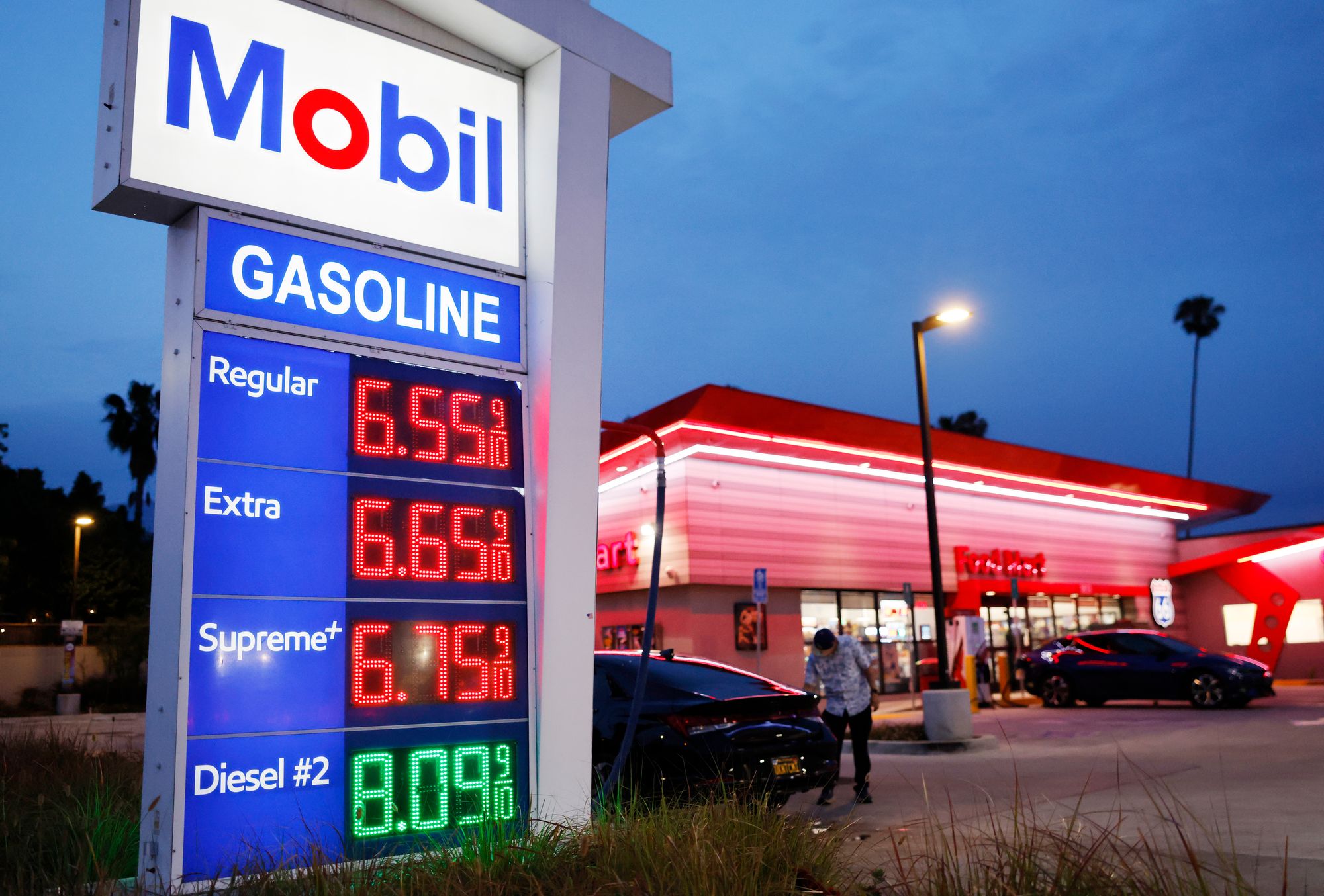
His war with Iran now enters its second month. Gas prices have jumped more than $1 per gallon nationwide in recent months at a moment when congressional Republicans were already facing massive electoral headwinds.
Having argued for months that his administration is cutting prices at a faster rate than Joe Biden’s administration did in the wake of the Covid pandemic, Trump is now stuck with the reality of having jacked up prices for every American, with higher energy prices likely to cause cascading effects across the economy if not resolved soon. Even before the U.S. launched strikes on February 28, the issue of inflation and persistently high food and energy prices remained a nagging issue for Republicans heading into the midterm cycle.
With no end in sight to the war, the president now risks extending that dynamic through primary election season this spring and summer.