


Ukraine is facing a major conscription crisis, just as Volodymyr Zelensky has warned that a protracted conflict in the Middle East will hamper its efforts to combat Russia’s invasion.
Earlier this year, Ukraine’s defence minister, Mykhailo Fedorov, admitted that Ukraine has 2 million draft-dodgers and hundreds of thousands more who are absent without leave (awol).
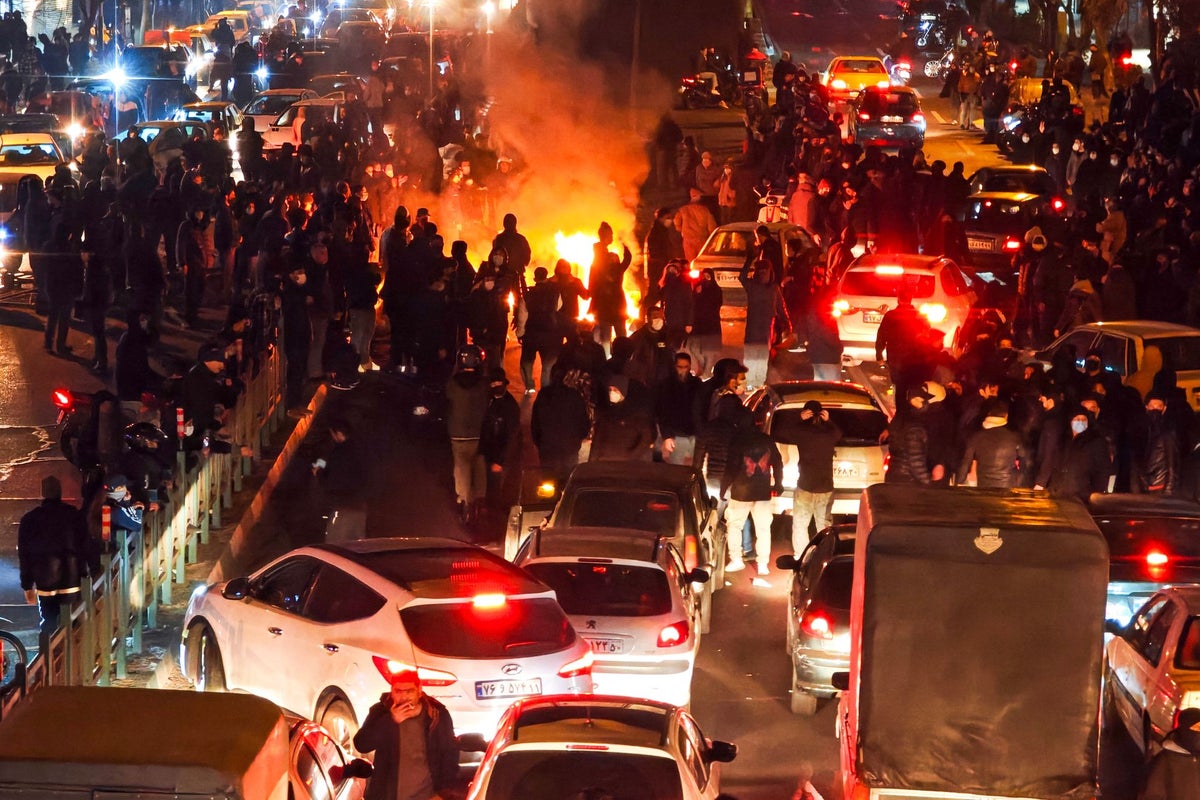
The Independent has spoken to Ukrainians on the ground about the reality of the situation, just as pressure mounts elsewhere for the war-torn country. In recent weeks, the Trump administration has shifted its focus from Ukraine to the conflict with Iran, while peace talks have stalled, and Vladimir Putin has launched his spring offensive.
And Zelensky warned in an interview released on Easter Sunday that a prolonged war in the Middle East could further erode US support for Ukraine, resulting in reduced deliveries of essential Patriot air-defence missiles.
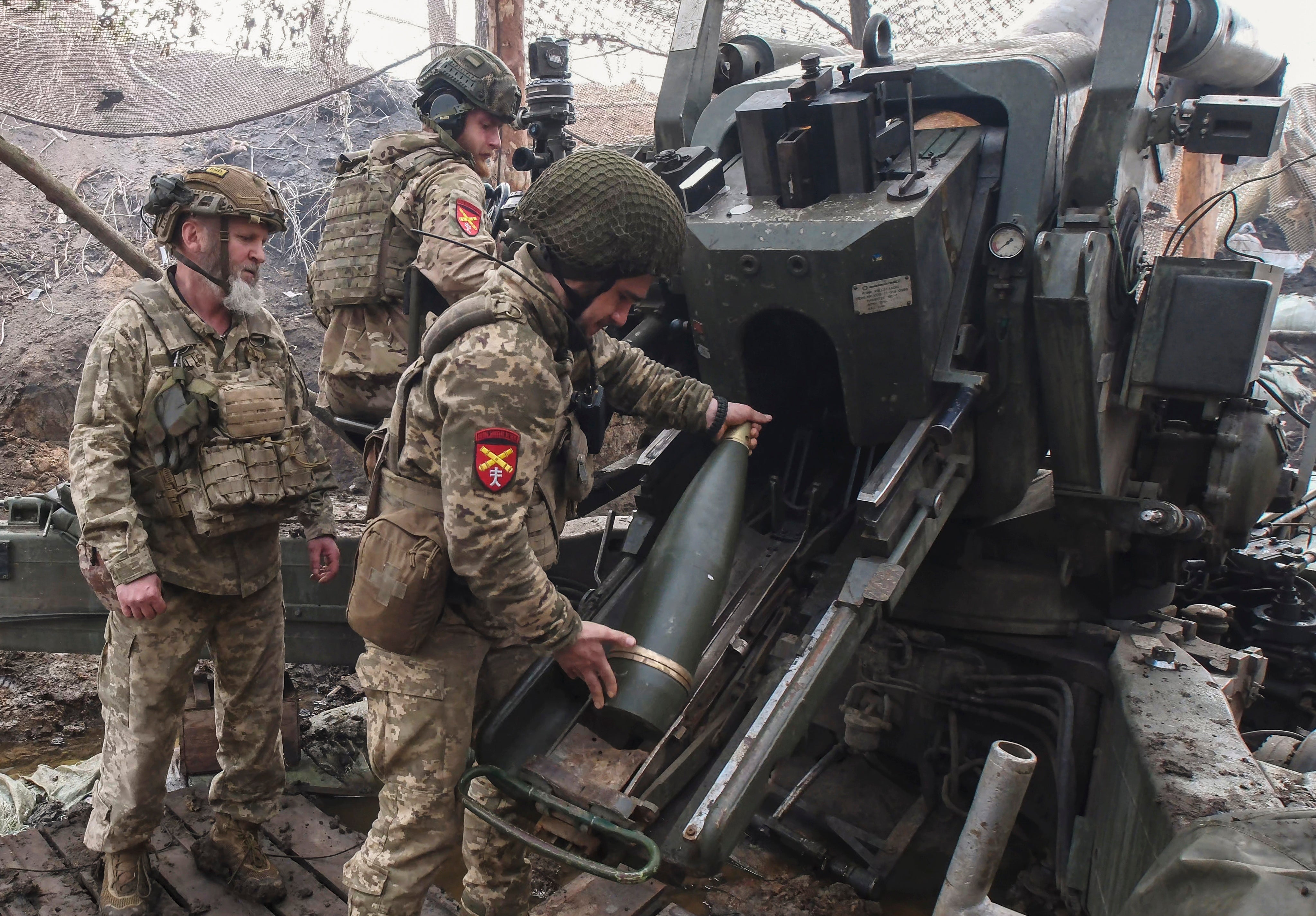
Since the full-scale invasion began four years ago, Ukraine has defied the best estimates of its allies and held Russia’s onslaught back. It is now switching to a war of attrition, and boasting that its forces are killing more Russians than Moscow can recruit per month.
But as the nature of warfare in Ukraine changes – from a spirited defence against the bloody turmoil of early 2022, to a relentless, grinding conflict in which few sent to the front expect to return – minister Fedorov revealed the scale of the conscription problem to parliament in January.
On top of the 2 million Ukrainians wanted for evading mobilisation, the Ukrainian prosecutor’s office says some 290,000 cases have been opened since 2022 against soldiers for abandoning their posts.
Some troops have posted videos of their escape from the draft, or from service, across the Carpathian mountains to exile in neighbouring countries.
Even though the chances of their survival are far better than any Russian soldier could hope for, the “kill ratio” is estimated to be around one Ukrainian dead for every eight or more Russians.
“Denys”, 37, is dodging the draft. “At the beginning of the war, I went to the enlistment office myself. Everyone was going back then, saying, ‘Take us!’ I was the same. They told me, ‘We don’t need you yet, go on home, we’ll call you.’
“Later, I saw everything that was happening – the injustice, plenty of people buying their way out, the untouchables, while others are shoved into a bus despite having illnesses.
“Right now, I have a sick father, and I have to take care of him. If I end up losing an arm or a leg, I won’t be able to help anyone any more. But if the Russians end up outside Kyiv again and everyone is serving – then I’ll go, too,” he adds.
On the front lines, soldiers known to The Independent in reconnaissance units say they are exhausted, but also know they’re too “useful” to be rotated out. Near Zaporizhzhia, a drone pilot speaks of being in action as a foot soldier for three years non-stop before he moved to drones.
“People view joining the military as a one-way ticket, because they don’t see rotations,” says Oleksandr Merezkho, chair of Ukraine’s parliamentary foreign affairs committee.
“If they knew they would fight for one year and that’s it, and they can have a rest, then they will be more inclined to join the military.
“This issue is psychological, because if you look at the quantity of men, we have enough human resources to continue to fight for 10 years and even more. The key problem is how to manage these resources, and how to create psychological incentives, because if you see the army of draft-dodgers, you won’t want to fight yourself.”
Ukraine relied on vast numbers of volunteers at the start of the invasion by Russia, and avoided drafting young men into the war. When conscription was introduced, it was for men over 30, and the lowest age for compulsory service remains 25.
In addition, 18- to 24-year-olds were allowed to leave the country last year, and hundreds of thousands chose to do so.
Zelensky’s ruling Servant of the People party has emphasised that, as the young represent the future of the nation, they should be spared the worst of the war.
A scheme to offer them incentives to join the armed forces, with huge sign-on benefits, has proved a failure, after local press reported high levels of casualties.
Yevhen Karas, commander of the Raid Regiment of drone operators who volunteered to serve when Russia first invaded in 2014, says that “no big war was won by volunteers”.
Two years ago in Sloviansk, a major in an infantry battalion spoke of how his commanding officer was taking bribes to give people time to go on leave, set a higher price for keeping them off the front line, and was selling the rations and other resources allocated to men who had deserted.
“We see many scandals about mobilisation problems,” says Karas. “As a volunteer myself in 2014 and 2022, I understand that no country in the world can produce enough to fight. We need millions of volunteers.”
As a minister, Fedorov, a Yale University management graduate, is leading a project to turn Ukraine’s forces into data-driven centres, where decisions are informed by statistics and strict reporting systems brought in to stamp out corruption.
His staff believe there will be a much greater focus on solving manpower issues – even though Ukraine has stubbornly held the line for the last four years.
Brigadier Andrii Biletskyi, commander of the Third Corps, which controls about 12 per cent of the front line, says that the Third Brigade he formed – now part of the Third Corps – is oversubscribed and is “90 per cent volunteers”.
In the last four years, Ukraine has swung from a Soviet-style military to a world leader in modern drone warfare. But many officers and troops say the approach of some senior leaders has not caught up, and there is still a “Soviet-style” attitude of indifference to soldiers on the ground.
“They go where they trust the principle of the unit, the commanders of the unit. They trust that there will be high education, a high level of management, tight groups, and good equipment,” he adds.
Draft-dodgers in Ukraine risk being hunted down in the streets and sent to the most dangerous areas with little chance of returning. As a result, many live in hiding if they cannot flee, avoiding being in public at all for fear of being tossed into a vehicle if they are identified.
“Give these people confidence that they will get good training and a good commander, and most of them will go [to sign up],” Biletskyi says. “Improve training, improve the quality of sergeants and officers below, and you will receive normal numbers with mobilisation.
“Taking into account the difference in losses between us and the Russians, on average, it is from 8.5 to 11 times. Considering such losses, we do not need such a huge number of mobilised soldiers.
“It is better not to think about the number, but about their quality,” he adds.
That, as Fedorov is expected to demonstrate soon, will include scrutiny of the quality of Ukraine’s top military leadership.
Additional reporting by Oleksandr Chubko