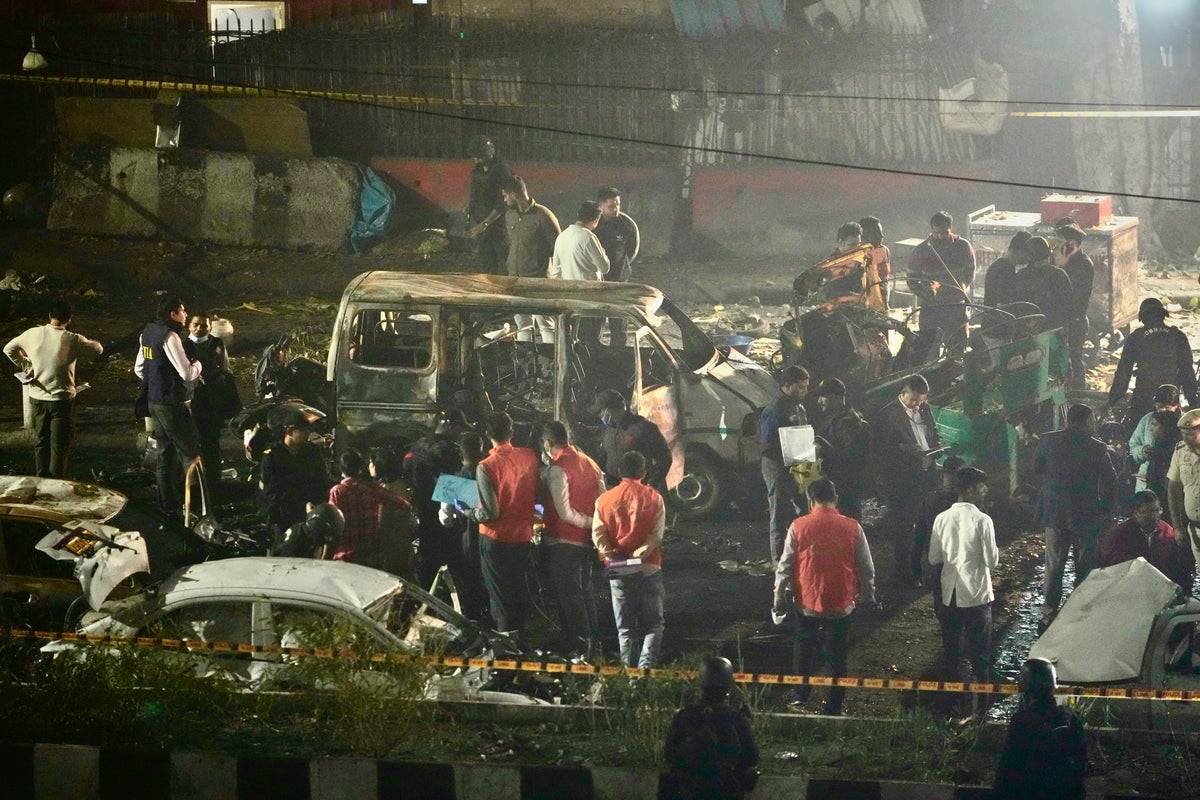
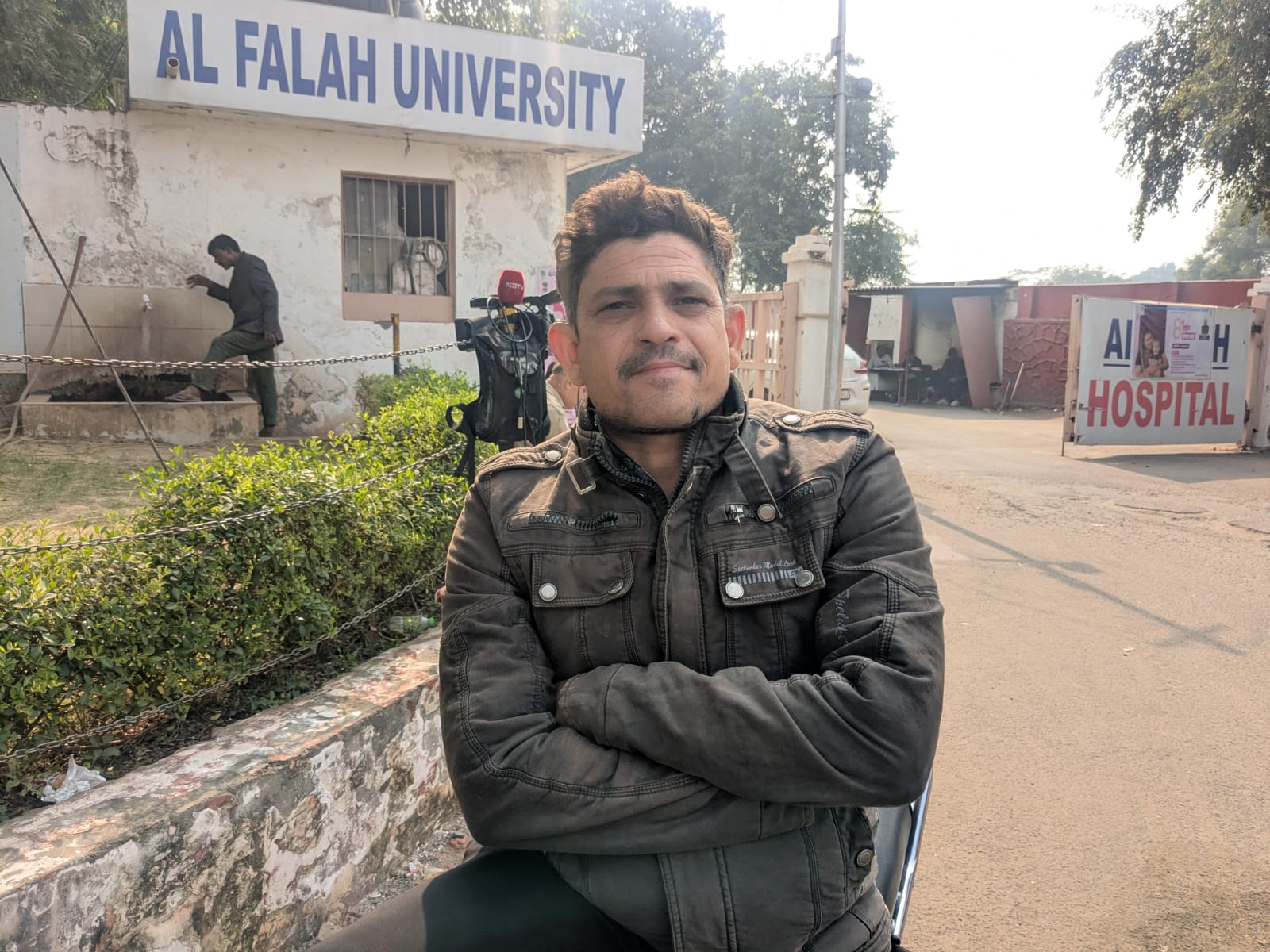
Al Falah University is enveloped in an uneasy calm. Reporters and law enforcement agents buzz about as the university finds itself the focus of the investigation into the explosion that killed at least 13 people in Delhi, some 45km away, last month.
The suspected car bomb attack launched the relatively unknown university in Faridabad, a satellite town of the Indian capital, into international headlines and sparked a media frenzy.
The Indian government declared the car blast near Delhi’s iconic Red Fort monument on 10 November as a “terror incident” perpetrated by “anti-national forces” while the counterterrorism agency NIA identified Umar Un Nabi as the “alleged suicide bomber”.
Nabi, a doctor from the restive Himalayan region of Kashmir, was an assistant professor in general medicine at Al Falah.
The NIA claimed that Nabi was driving the car that blew up, adding that it had forensically established his identity.
Investigators subsequently arrested two other Kashmiri doctors with ties to the university, Muzammil Shakeel and Shaheen Saeed.
Police claimed that they recovered more than 3,000kg of chemicals used for making improvised explosive devices as well as detonators and wires from Shakeel’s rented house in Faridabad.

In the days and weeks since, students, teachers and families in the area have all felt compelled to insist that the tragedy had nothing to do with them.
They want to go about their lives as usual, they say, but the changed atmosphere isn’t making it easy.
As an institution, Al Falah immediately distanced itself from those accused of involvement in the blast. “We wish to make it clear that the university has no connection with the said persons apart from them working in their official capacities with the university,” vice chancellor Bhupinder Kaur Anand said in a statement.
“We’re deeply saddened and anguished by the unfortunate developments that took place and condemn the same. Our thoughts and prayers are with all the innocent people affected by these distressing events.”
But as federal and state investigators descended on the university, news crews in tow, to investigate what they called a “white-collar” terror module, it became clear that the spotlight wasn’t moving away anytime soon.
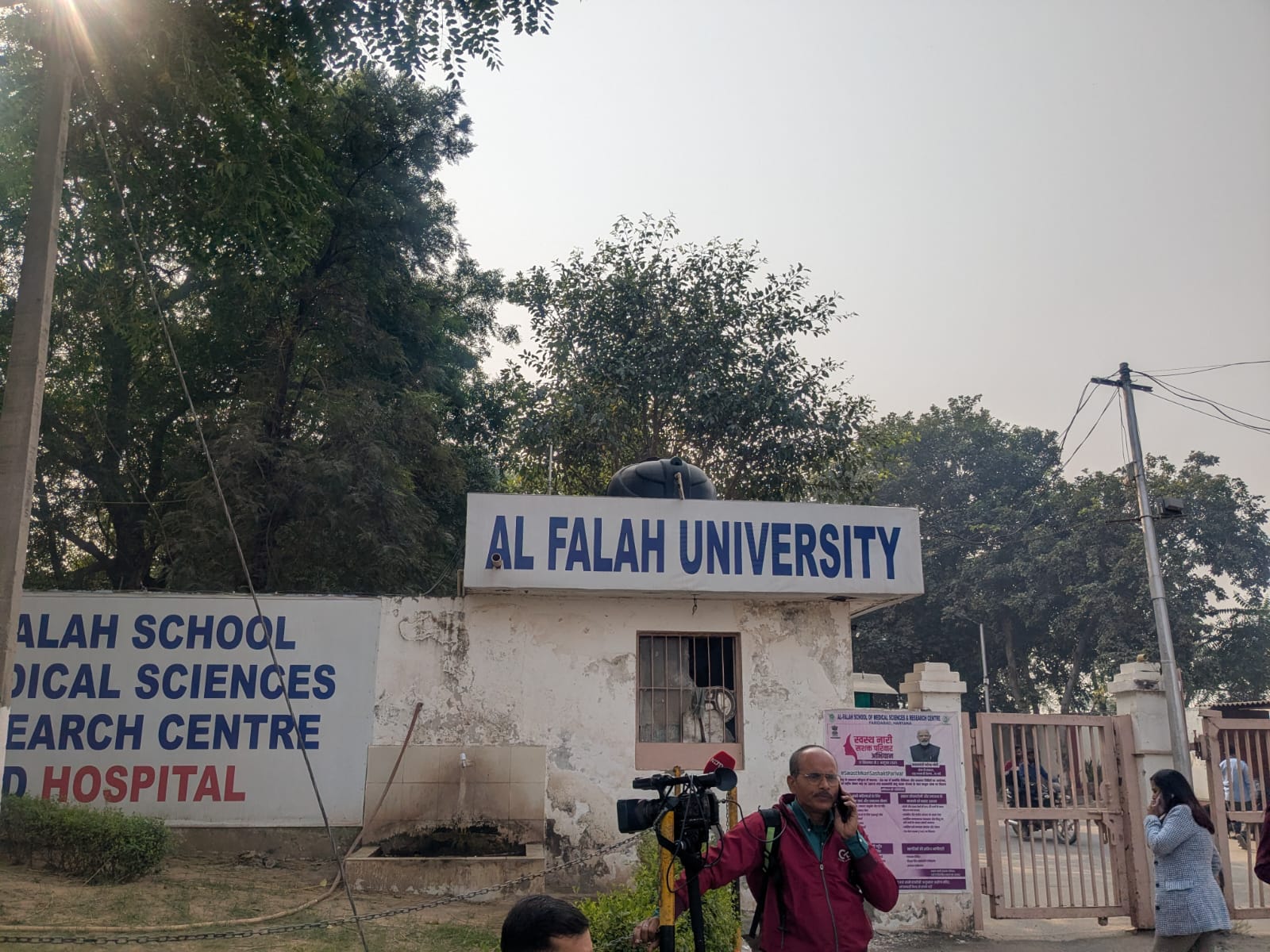
“I was serving food to customers at the shop as I usually do when a number of cars, along with several media vehicles, lined outside the university’s gate,” Israr Ali, who owns a roadside food stall in front of the gate, tells The Independent.
“I did not understand what was happening. Someone from the press told me a doctor from the university was involved in the Delhi blast,” he says.
“Since then, police keep coming everyday, while the media is fixated sitting in front of the gate, running with the mic.”
Inside, students say classes continue as “routine” and “normal”, but acknowledge that the mood has shifted.
Security guards now man the gate, making sure no reporter gets in. Students walk past media crews that have been stationed outside for days, although few are willing to talk. The rare ones that do request anonymity.
The once-crowded market across the road appears largely empty, several of the shops shuttered and locked.

“Though the classes are held normally, we have been fearful since the raids and arrests began,” a third-year medical student from Kashmir says.
“I fear what the future will look like since there is a rumour about the university losing its accreditation,” another third-year student says. “I wonder if anyone will even bother to employ me after I finish my degree, once they see the name of the university.”
“It feels like we are in a limbo. I cannot leave for home, however much I want to,” says a second-year student from Aligarh in neighbouring Uttar Pradesh state. “I have worked so hard to be here and now be caught in this.”
Another second-year student is more angry at the media coverage since the attack, saying the entire university has been painted as a “terror hub”.
“We pay Rs 2m (£16,600) a year in fees to become doctors and surgeons. And these media houses are running stories that students coming are here and ‘being radicalised under the garb of education’. This is what you think we do?” he says. “I don’t know who was involved and not. But this kind of coverage is putting us all at risk.”
Such anxieties sharpened after the National Assessment and Accreditation Council, the quality assurance agency for higher education, asked the university to explain why false accreditation claims had appeared on its website. Students say this alone can affect their credibility with employers, regardless of what investigators ultimately conclude about the Delhi blast.
Professors still reporting for work say they feel as uncertain as their pupils. “We are just getting through the day, amid lack of explanation or clarity of any kind,” a senior physician says.
Another demands a “complete overhaul” of the university and its senior leadership.
The disquiet stretches beyond the campus.
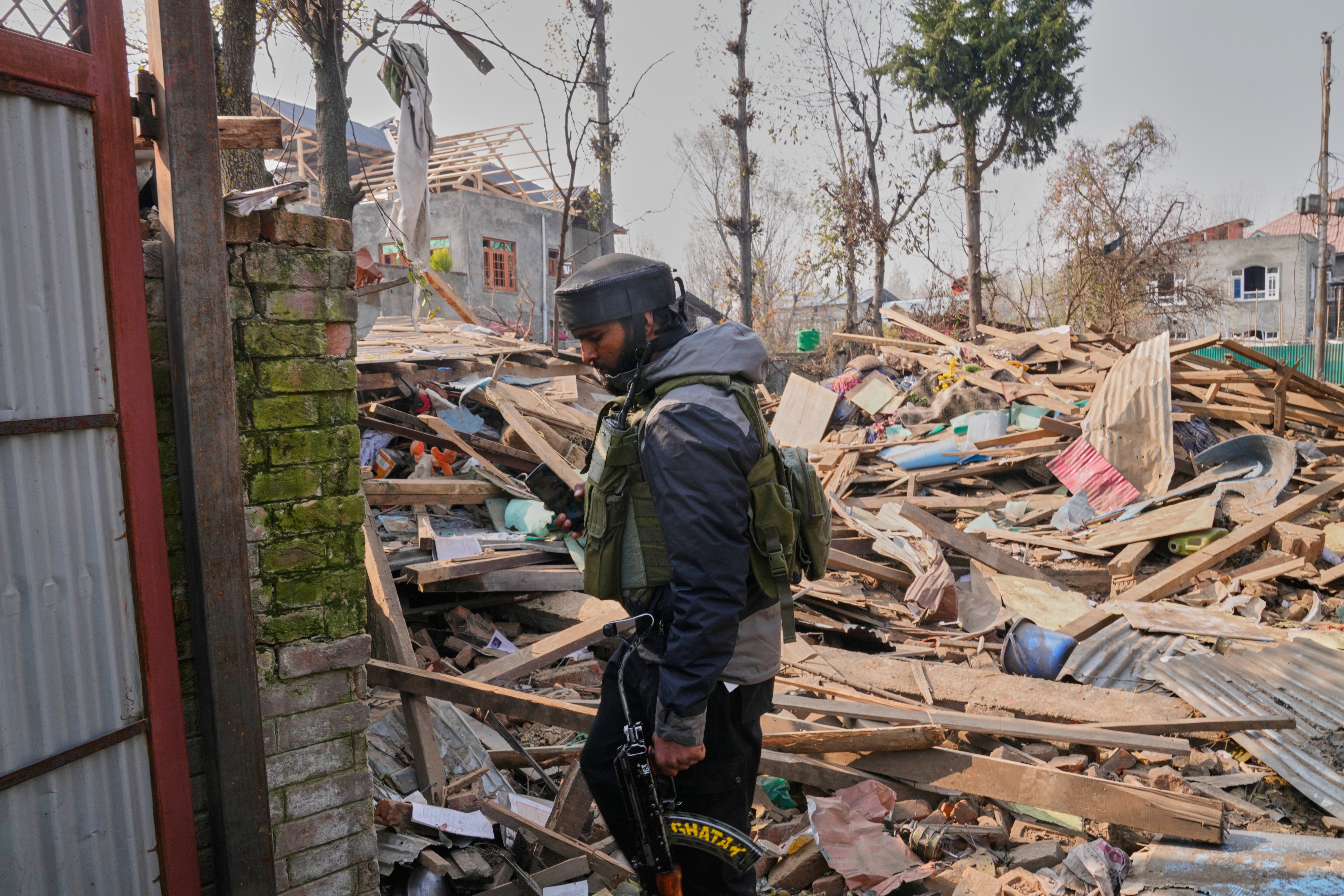
Nearly 4km away, at Fatehpur Taga, stands a worn-out home, its green door locked. This is Shakeel’s rented house, where police claim to have found that large cache of bomb-making materials.
In an adjacent street, a small gathering of women talk in hushed tones about the doctor who lived in the house with the green door.
“Muzammil defamed us and our colony,” one of them says off-handedly, refusing to talk any further.
“The infamy being endured by us is a lot. Our village has never seen any instance of communal rioting or some such in the past. We are a secular village. But this is very painful, all that is being said,” says resident Javed Khan, 35.
He has heard rumours about the university losing its accreditation. “The hospital gave free treatment to poor people like us. This is really unfortunate and is going to deeply impact us all,” he says.
“I have been coming here for treatment since 2014, when this campus opened. But the situation now is such that top doctors who would treat us have quit or left. There are fewer patients as well. We are not able to get medicines inside. The hospital used to give us medicines free of cost, greatly helping poor people like me. But not anymore.”
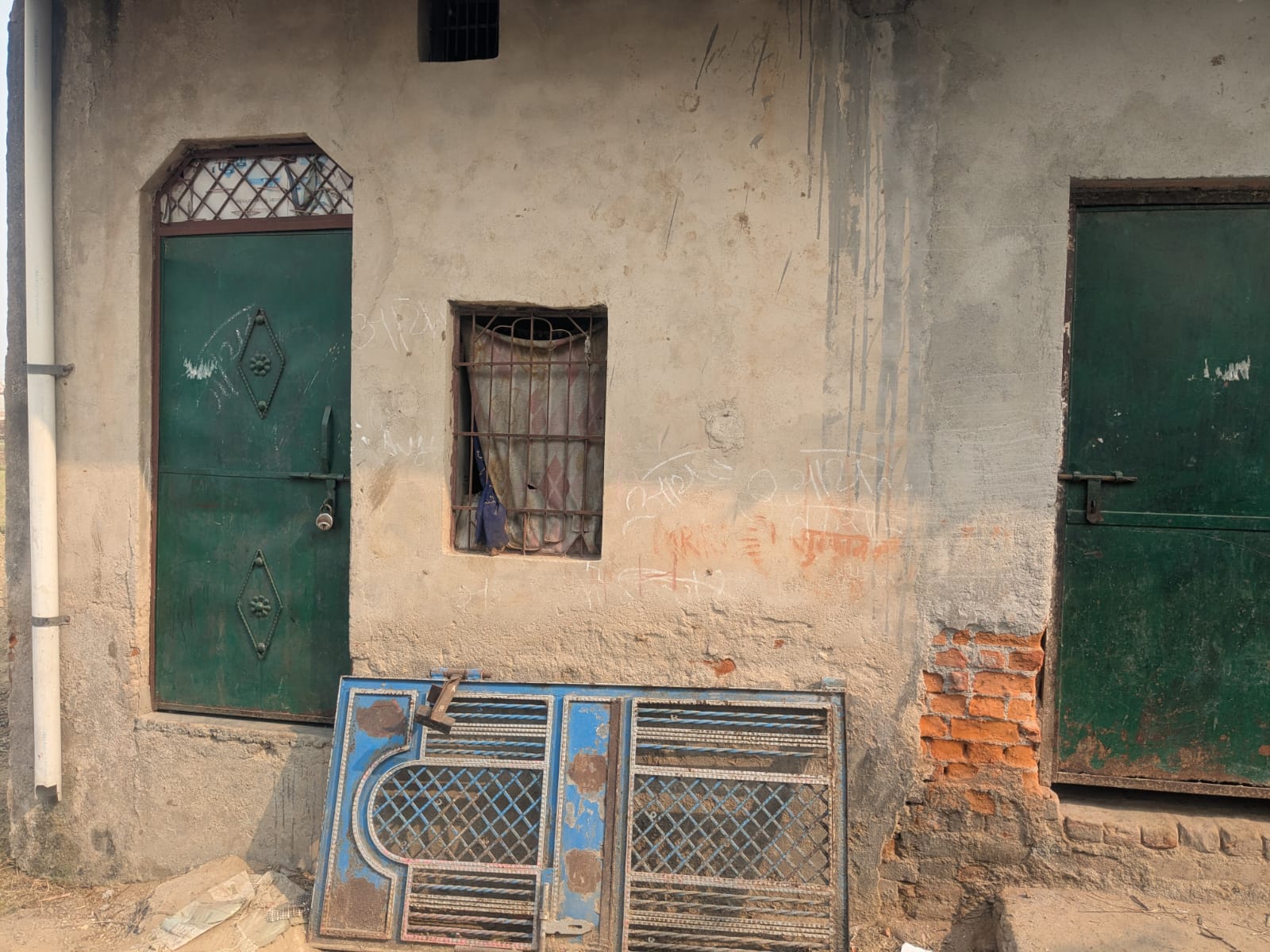
In Faridabad, police have conducted exhaustive searches of almost every place linked to the university’s more than 1,300 students and 400 employees.
Officers claimed they were looking for hidden explosive materials, though they didn’t find any.
Students living off campus say their rented houses were thoroughly inspected. “They checked every corner of my accommodation and my ID card,” a first-year paramedical student told the Hindustan Times. “They were searching for hidden explosives.”
Police say hostels on campus were searched first, then rooms rented by students and staff in nearby villages.
Civic authorities, meanwhile, have launched a separate inquiry into whether construction on the university’s 78-acre campus adhered to sanctioned plans.
Officials say they will recommend demolition of any structure that violates regulations. Revenue officials have been measuring the entire facility and checking every land deed going back to 1997.
The Enforcement Directorate, a central agency for combatting financial crimes, has arrested university founder Jawad Ahmed Siddiqui for allegedly taking “proceeds of crime” by misleading students about the institution’s accreditation and recognition.
The agency claims to have traced over Rs 4.1bn (£38m) in tainted funds linked to the university.
On 19 November, a local court sent Siddiqui to police custody for 13 days in a money laundering case.
Questions from The Independent to the university’s vice chancellor went unanswered, while the registrar declined to comment.
The university’s administration had earlier said that they were fully cooperating with the investigation, and denied any wrongdoing.
Outside the university’s gate, the investigation has throttled the small economy built around students and staff.
“Things were really pleasant. Everyone used to visit here. But as the university’s name became attached to the incident, business was hit,” Salaubbin, 22, who owns a butcher shop in the neighbourhood, says.
“The media is doing Hindu-Muslim a lot, while people here live peacefully,” Salaubbin complains, referring to media reports emphasising the religion of the alleged culprits.
“And the university has given us a lot. The treatment that would otherwise cost us Rs 150,000 (£1,227), we get for Rs 30,000 (£255).”
Manish, 31, who runs a small eatery on the campus, says footfall is down. “Mostly it was patients who used to visit my shop but their number has come down. So has the number of the students, by 50 per cent at least,” he says.
Construction activity on the campus has stopped as contractors claim they have not been paid. Painters and other workers have left, uncertain if they would ever be paid for their recent labour.
Slowly, it seems, life is getting sucked out of an institution that, until not very long ago, was thriving.