

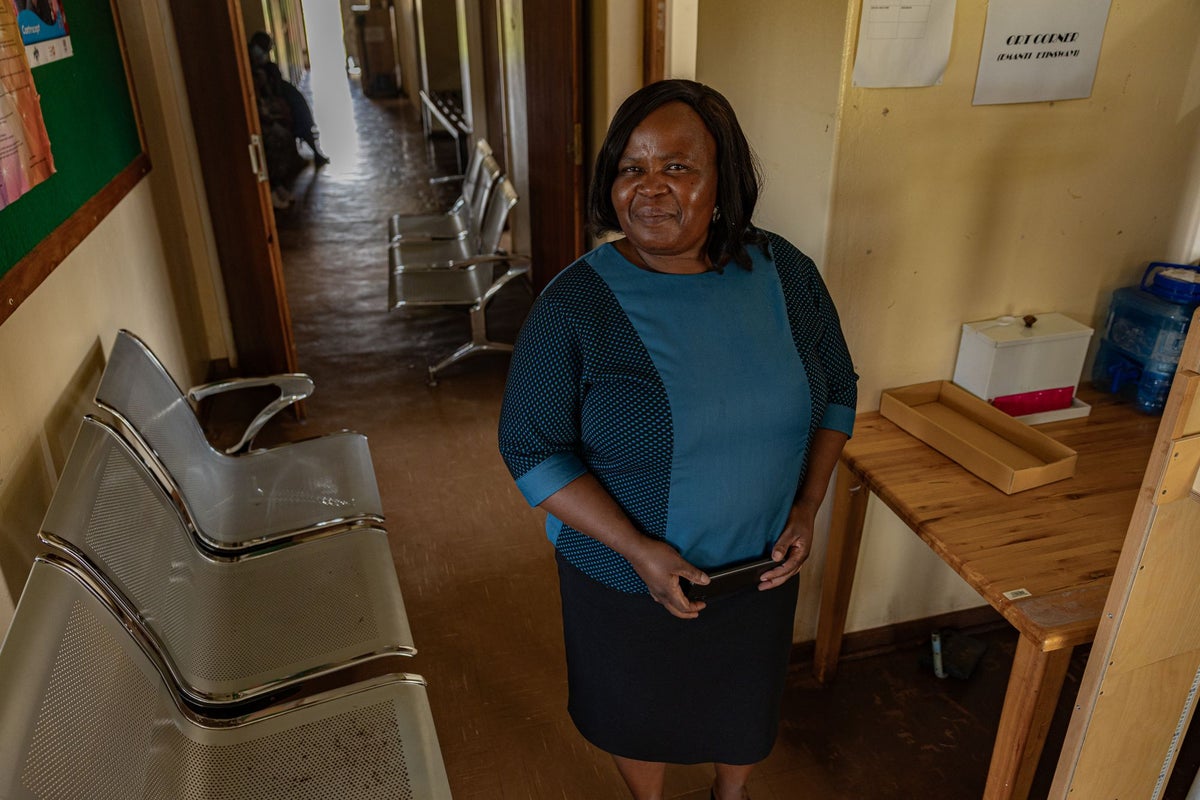
As a woman living with HIV, I need no reminders of the life-changing importance of accessing HIV prevention and treatment services or indeed of the devastation caused by their absence. I know personally the fear and anxiety when struggling to access clinics and medicines.
I know too the hope that comes with scientific and medical breakthroughs and the despair when they remain out of reach for those who need it most. This is why I find myself mourning all the lost opportunities that will come in the wake of the UK’s devastating cut of £900m in bilateral aid to Africa.
Before these announcements, previous cuts from donor countries were already taking effect. Reports from friends and family across South Africa told of people struggling to access HIV medicines, medical appointments being cancelled, and vulnerable communities absorbing the heaviest blows. At the same time, HIV testing and prevention services have been stripped back – community testing sites are closing, prevention outreach is faltering, and people are losing access to the tools that stop new infections before they occur.
As testing declines, more people are left unaware of their status, infections go undetected, and transmission risks rise. These cuts are not abstract policy choices; they are actively dismantling decades of hard won progress in HIV treatment, testing, and prevention, and they place lives at immediate risk, especially among those with the fewest alternatives. All this even as from a medical science perspective – we are closer than ever to end AIDS as a pandemic.
It is a confusing paradox to behold: while financial aid is being slashed, we are also in the middle of a transformative medical breakthrough. Lenacapavir, a long-acting injectable HIV prevention drug, is the closest we have come to creating an HIV vaccine. Administered only twice a year, this discreet and sustained protection not only eliminates reliance on daily pills and the accompanying stigma but also reduces the mental burden for high-risk key populations, such as women and girls, who need preventative protection. In groundbreaking trials in South Africa and Uganda, women who received lenacapavir had no new HIV infections. African women and girls were not just participants in these studies, they were central to their success. This is a clear demonstration that inclusive, locally grounded science works.
But despite their central role in the development and success of lenacapavir – women and girls risk being shut out of from the benefits. In sub-Saharan Africa, women and girls bear a disproportionate burden of HIV, accounting for roughly two-thirds of all new HIV infections in the region. These women and girls have compounding factors that increase their risk – overlapping issues such as economic insecurity and gender-based discrimination and violence mean that they are not only more at risk of acquiring HIV but that the negative impacts are exacerbated.
A scientific breakthrough alone is of course not enough. For lenacapavir to be confined to laboratories or high-income markets out of reach for the women and girls who need them is a failure of its very purpose. To allow this to happen when those same women and girls participated in trials to make the drug viable is a profound betrayal of justice and equity.
This is where political choices matter. UK Official Development Assistance (ODA) cuts risk jeopardising a historic opportunity to prevent women and girls across sub-Saharan Africa from acquiring HIV. Lenacapavir has the medicinal function to save countless lives, but its impact will only be realised if the funding and partnerships that support its delivery are sustained.
Lenacapavir has been made more accessible, affordable and scalable thanks to Unitaid, a multilateral organisation that has received significant funding from the UK. UK investment has supported Unitaid’s efforts with the South African government to produce generic lenacapavir locally which is essential to sustainability. Producing medicines closer to the communities that need them ensures a reliable supply, reduces reliance on distant markets, lowers costs, and builds resilient health systems. Combined with strong delivery systems and stigma-free services, this approach does more than prevent HIV: it strengthens health infrastructure, nurtures local expertise, and positions countries like South Africa as regional hubs for life-saving innovation.
The UK has a choice to make. After years of championing global health, supporting scientific innovation it now risks retreating at a pivotal moment. Decisions taken by the UK will determine whether this breakthrough reaches the women and girls who need it most. Science has delivered. African women made it possible. Now, political leadership must ensure that women benefit. Supporting continued UK investment in Unitaid and its partnerships is not just an act of generosity, it is a smart investment in global health, regional resilience, and the lives of millions. It is a choice between action and inaction, between leaving innovation on the shelf and putting it into the arms of the women who need it.
History will remember this moment not for the breakthrough itself, but for whether we allowed it to reach those it was designed to protect. The UK can ensure that lenacapavir fulfills its promise, or it can step back and risk letting countless lives be lost while science waits.
Yvette Raphael is the co-founder and executive director of Advocacy for Prevention of HIV and AIDS (APHA) in South Africa
This article has been produced as part of The Independent’s Rethinking Global Aid project