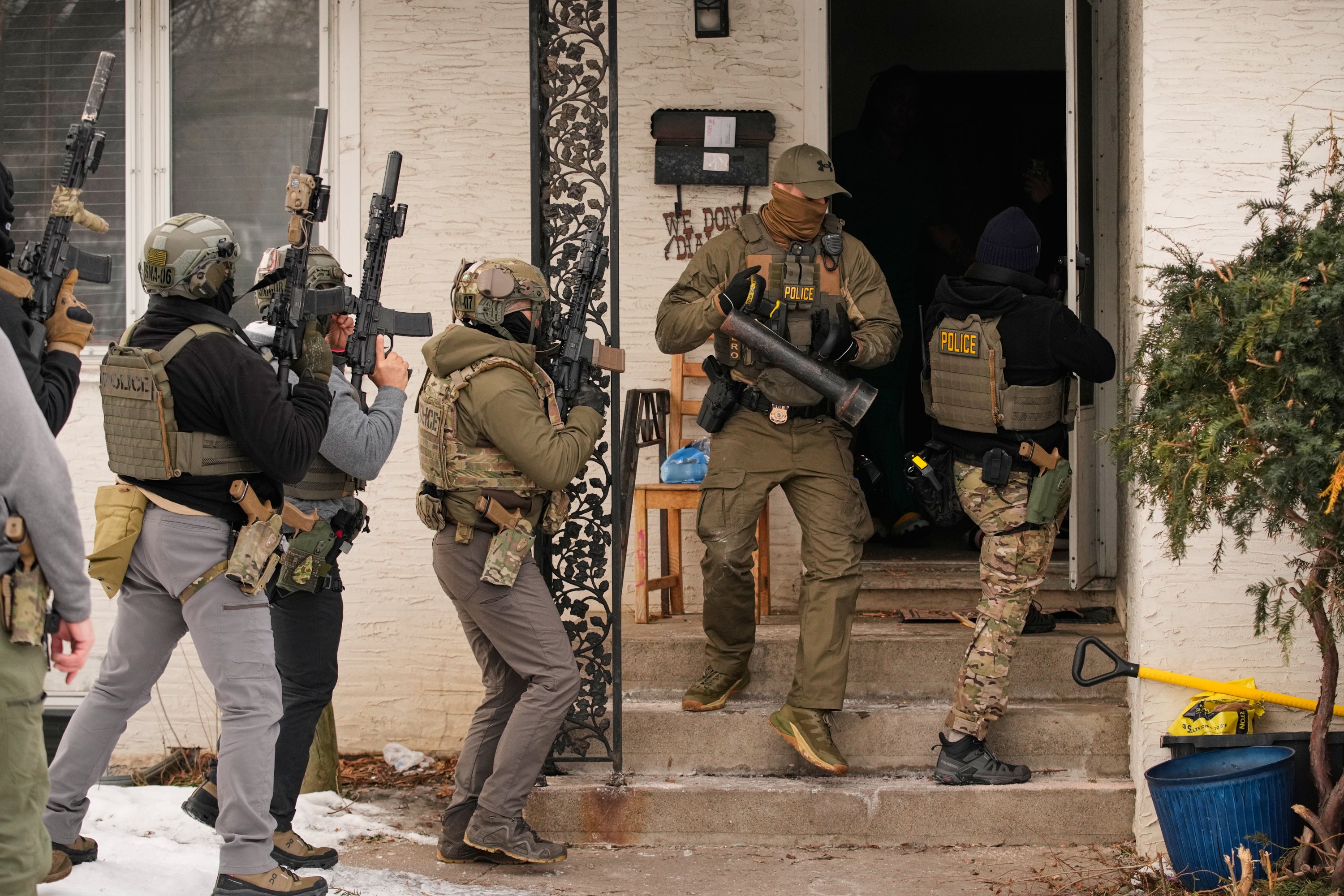
A Liberian man arrested after armed immigration agents broke down his door with a battering ram had been checking in with federal authorities for years, his attorney says.
Garrison Gibson, 37, was arrested during an immigration crackdown in Minnesota which the Department of Homeland Security has called its biggest enforcement operation ever.
But it was a “blatant constitutional violation” as the agents did not have a proper warrant, attorney Mark Prokosch said.
“This was an illegal search, absolutely.”
Prokosch said that agents had brought only an administrative warrant, which authorizes someone’s arrest but does not allow officers to forcibly enter private homes. Forced entry requires a criminal warrant signed by a judge.
The Sunday arrest came amid waves of angry protests over the fatal shooting of Renee Good by an immigration agent in Minneapolis last week.
Gibson had fled the Liberian civil war as a child. He had been ordered removed from the U.S., apparently because of a 2008 drug conviction that was later dismissed by the courts. But he had remained in the country legally under what is known as an order of supervision, with the requirement that he meet regularly with immigration authorities.
Only days before his arrest, Gibson had checked in with immigration authorities at regional immigration offices — the same building where agents have been staging enforcement raids in recent weeks.
“He would have had another check-in in a couple of months,” Prokosch said. “So if he’s this dangerous person, then, why are they letting him walk around?
Tricia McLaughlin, a spokeswoman for the Homeland Security Department, said earlier this week that Gibson has “a lengthy rap sheet (that) includes robbery, drug possession with intent to sell, possession of a deadly weapon, malicious destruction and theft.” She did not indicate if those were arrests, charges or convictions.
McLaughlin did not respond to questions about whether the agents’ use of force was justified.
But court records indicate Gibson’s legal history — dominated by a few traffic violations, minor drug arrests and an arrest for riding public transportation without paying the fare — shows only one felony, the 2008 conviction for third-degree narcotics sales that was later dismissed.
Prokosch said Gibson had been flown to Texas by immigration authorities in the hours after his arrest, then quickly flown back to Minnesota on a judge’s order after the lawyer filed a habeas corpus petition, used by courts to determine if an imprisonment is legal. The courts have not yet ruled on the petition.
Gibson is currently being held at an immigration detention center in Albert Lea, Minnesota, after being held at a large camp on the Fort Bliss Army base in El Paso, Texas. according to ICE’s detainee locator.
The Department of Homeland Security did not respond to an email with follow-up questions about Gibson’s case.
Gibson’s wife, Teyana Gibson Brown, a nurse who was inside the home with the couple’s 9-year-old child during the raid, was deeply shaken by the arrest, Prokosch said.
During their conversations, she “was having a hard time just completing sentences because she’s just been so distraught,” he said.

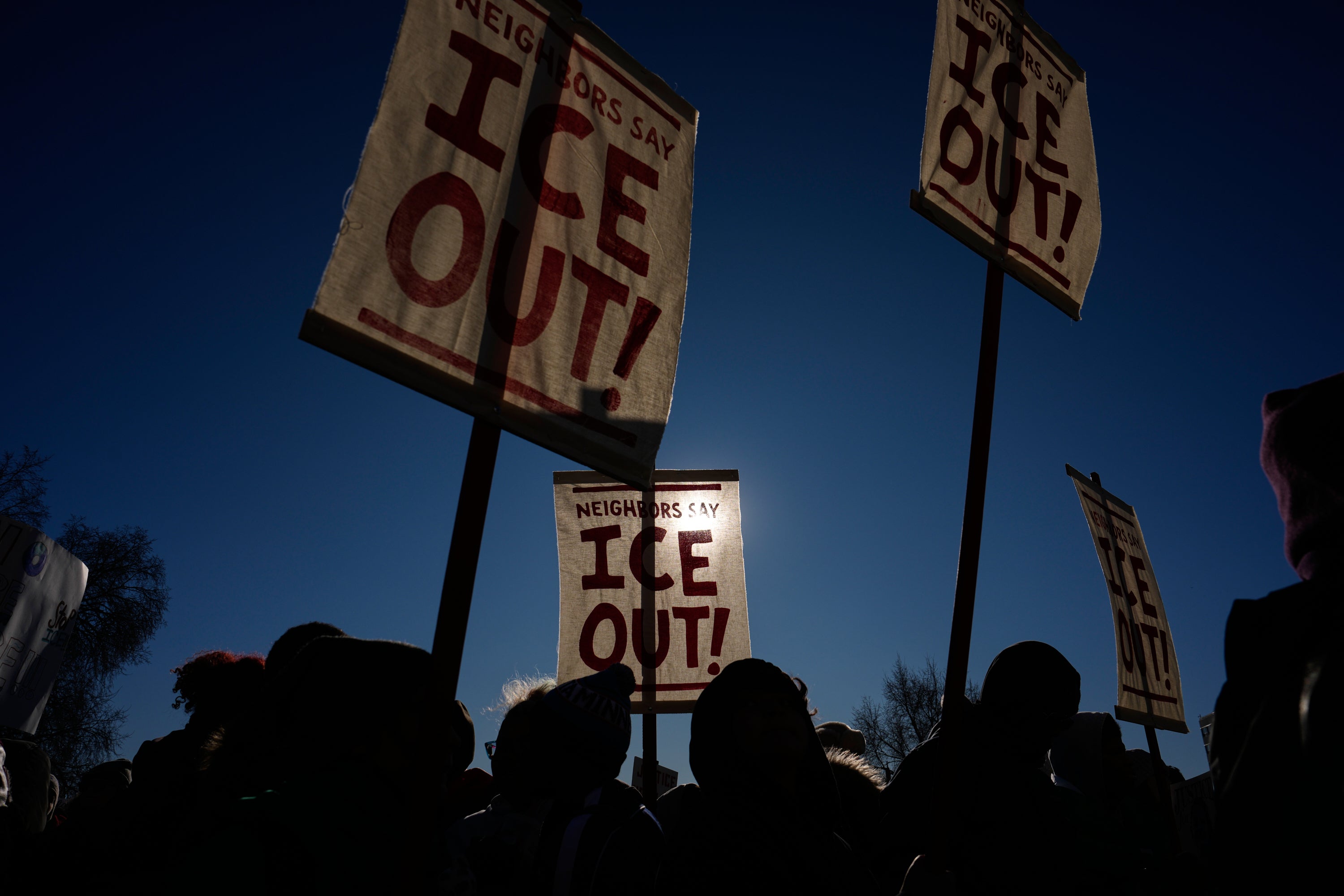
Activists who had been keeping watch on the immigration agents before Gibson’s arrest banged on drums, blew whistles and honked car horns in attempts to disrupt the operation and warn neighbors, some of whom poured into the streets.
Video taken at the scene shows agents pushing and pepper-spraying demonstrators.
The Twin Cities — the latest target in President Donald Trump’s immigration enforcement campaign — has been convulsed by the killing of Good, who was shot Jan. 7 during a confrontation with agents.
The Trump administration has defended the officer who shot Good in her car, saying he was protecting himself and fellow agents and that Good had “weaponized” her vehicle.
City and state officials have dismissed those explanations based on videos of the confrontation.
State and local authorities are urging the public to share video and any other evidence as they seek to investigate Good’s death after federal authorities insisted they would work on their own and not share information.
More than 2,000 immigration arrests have been made in Minnesota since the enforcement operation began at the beginning of December, according to the Department of Homeland Security.
Homeland Security Secretary Kristi Noem told Fox News over the weekend that the administration would send additional federal agents to the state to protect immigration officers and continue enforcement.