

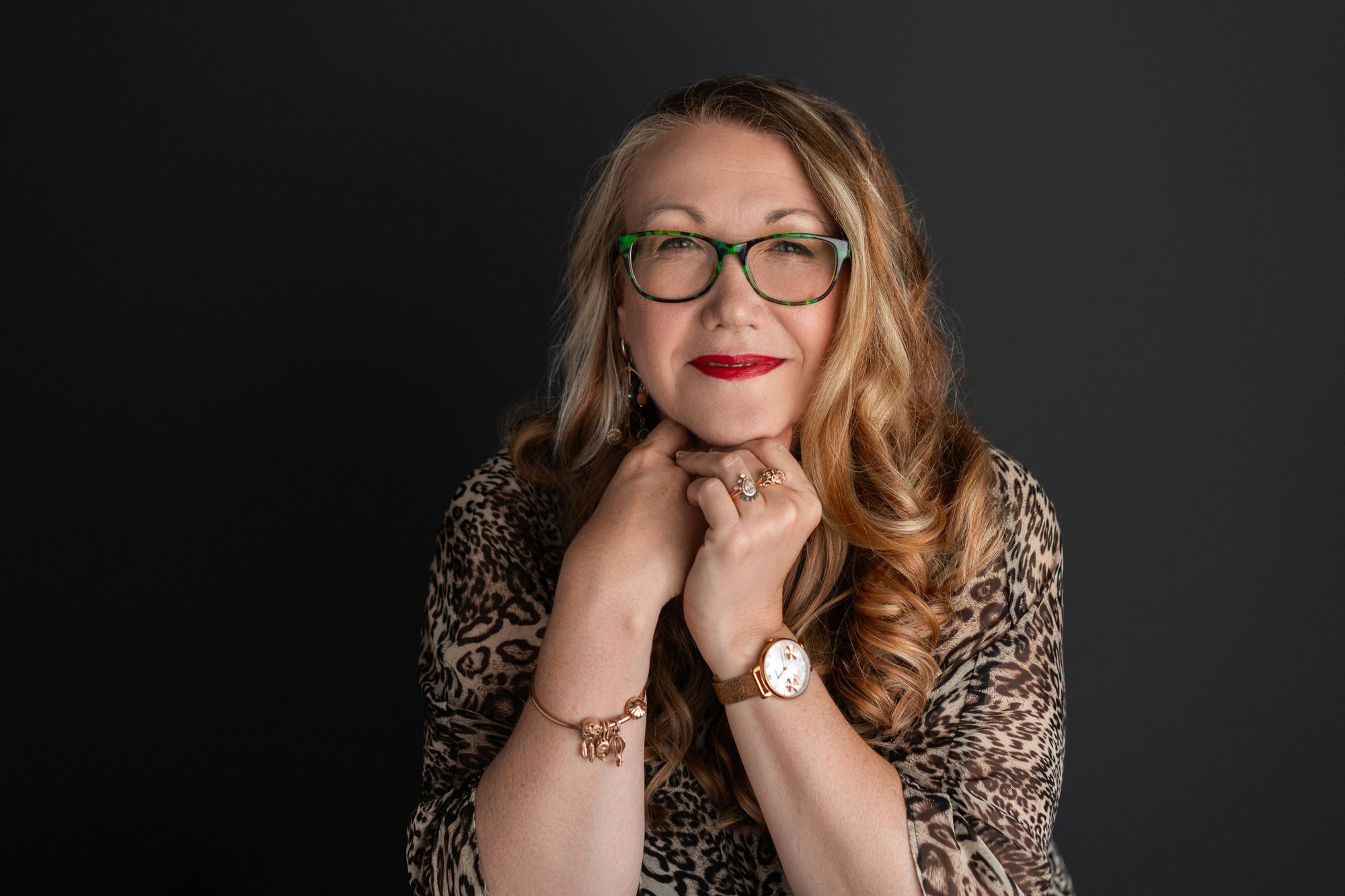
Debi Richens and her daughter had always had a close relationship.
“She was the sweetest loveliest girl you could ever wish to have in your world,” Debi says. She still has fond memories of summer holidays spent with relatives down in Devon, and her daughter had had great relationships with Debi’s parents and siblings.
But things changed overnight when she separated from her husband and left the family home when her daughter was 14 years old.
“For the first few years I walked eggshells desperately trying to have a relationship with her,” she says. “I was grieving, I was in a poor emotional state, it literally was like climbing Everest and continually sliding backwards.
“There was no safeguarding issues, no police involvement, no mental health issues, no social services – I was just cut out of my daughter’s world.”
While the pair were still occasionally in contact and Debi supported her daughter through her pregnancy in 2014, and had visited her in hospital, there remained a distance between them.
Having struggled with a strained relationship for several years, a comment over a wedding dress led her daughter to publicly criticise her on social media and, eventually, to uninvite her mother from the ceremony.
“I was so emotionally distressed that I cried for three solid days,” she tells The Independent. It has now been a decade since they last properly spoke.
The breakdown of the relationship between mothers and daughters is not uncommon – in fact, family estrangement appears to be dramatically on the rise in both the UK and the US.
In August last year, a YouGov poll found that 38 per cent of American adults were estranged from a family member – most commonly, 24 per cent from a sibling, 16 per cent from a parent and 10 per cent from a child. While more than two-thirds of people estranged from their child or grandchild said they would be open to reconciliation, just 35 per cent of children said they would be willing to re-engage with their parent.
Key reasons for division emerging between family members can include difficult divorces, conflict over financial issues, favouritism, differing political beliefs and issues around blended families, as well as alcoholism or sexual abuse.
The UK charity Stand Alone, which supports estranged adults, found that over a quarter of the British public know someone who no longer has a relationship with a family member.
Yet specialists have warned that the increase in family alienation can be pinpointed to social media, and people’s inability to engage in difficult conversations.
Dr Sam Barcham, a family estrangement expert and a UK Chartered Counselling Psychologist, said the number of younger people cutting ties with family members appears to be “disproportionate”.
“The younger generation are probably more open, and there is more dialogue about issues of toxicity, narcissism and ‘cut off’ culture,” she said. “To some extent, we can’t minimise people’s traumatic experiences, but I do think social media becomes an echo chamber for certain things.
“It can perpetuate unhelpful messages and ways of thinking, and I would encourage people to seek professional support in a healthy and supportive way. We obviously have people who have had difficult experiences, but I think social media can complicate things and can create a false reality,” she said.
A search on social media platforms such as TikTok with the phrase ‘cut off family’ will highlight hundreds of videos of young adults and teenagers sharing their stories of ending contact with “toxic” relatives, with many detailing their own tales in the comments section.
The topic of family estrangements has also been heightened by the public’s interest in celebrity drama. In January, Brooklyn Beckham made global headlines after launching a very public attack on his parents David and Victoria, stating he did not wish to reconcile with his family who he accused of giving a distorted version of events regarding his marriage to Nicola Peltz-Beckham.

In recent years, the estranged relationship between Prince William and Prince Harry has also fuelled public discourse, with the latter releasing details about their feuding in his memoir Spare. His wife, Meghan Markle is also famously estranged from her father Thomas Markle, after he staged paparazzi photographs in the lead up to the royal wedding in 2018.
However, some well-known feuds have ended in a reconciliation, most notably with Oasis brothers Liam and Noel Gallagher, who reunited for a worldwide tour in 2025 after an acrimonious split in 2009.
For Debi, however, reconciliation still feels like a long way off. After communication with her daughter finally broke down, she dedicated herself to supporting other families going through similar situations and is now a trauma coach specialising in family alienation.
“I mainly work with mothers and grandmothers, and we’ve massively seen a rise. There is a huge flippancy that exists in society and this ‘cut off culture’ that has risen on the internet.
“There are thousands of people experiencing this, mothers and fathers and grandmothers, being excommunicated from their adult children’s lives for some of the most spurious, ridiculous reasons.”
Despite the difficulties of the last 20 years, Debi said: “The door is always open for my daughter, and always will be.”