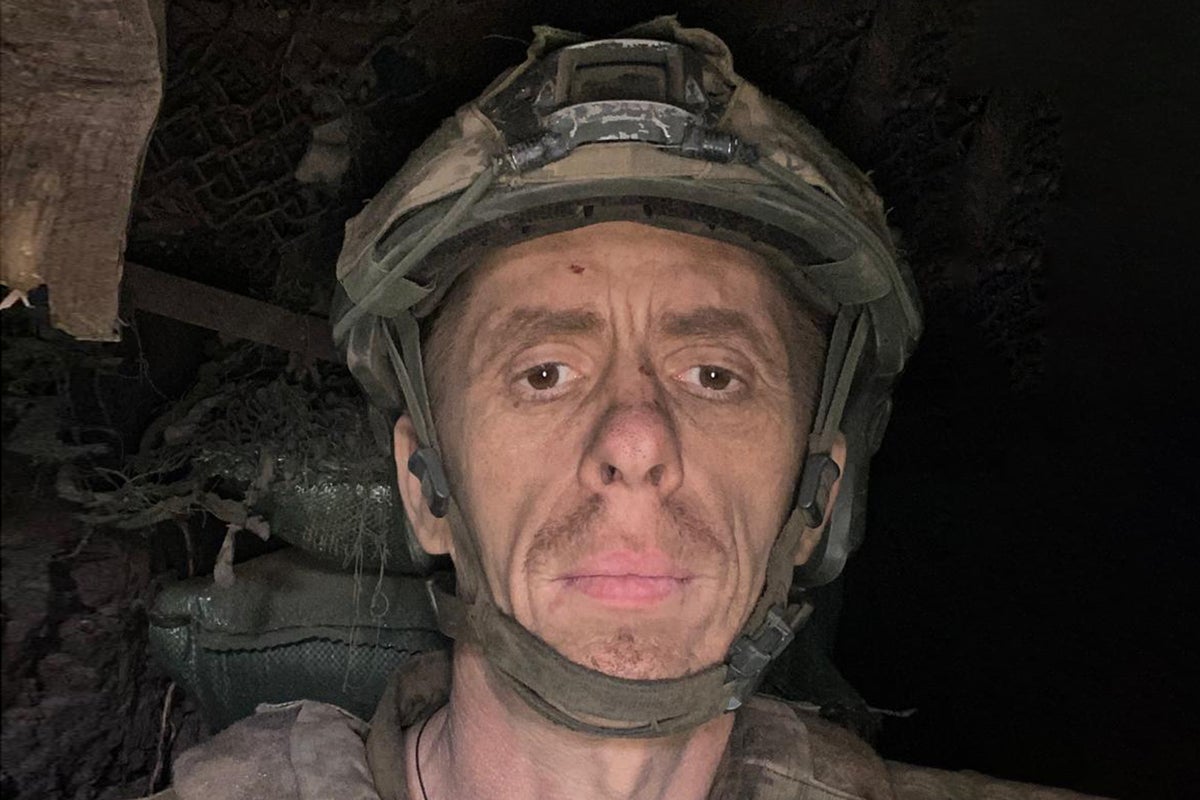
When Serhiy Tyshchenko arrived at the tiny underground mud bunker near Bakhmut, on the front line in eastern Ukraine, Joe Biden was president.
By the time he left, a new US leader was in charge and had largely taken Vladimir Putin’s side. Not only that, Donald Trump was trying to persuade Ukraine to give up the land Serhi had defended for 471 days.
In an extraordinary feat of endurance, Tyshchenko spent more than 16 months underground, close to suffocation, under constant Russian bombardment, suffering hunger, and extreme thirst.
He survived multiple underground mud collapses – yet he emerged and continues to serve close to the front line.
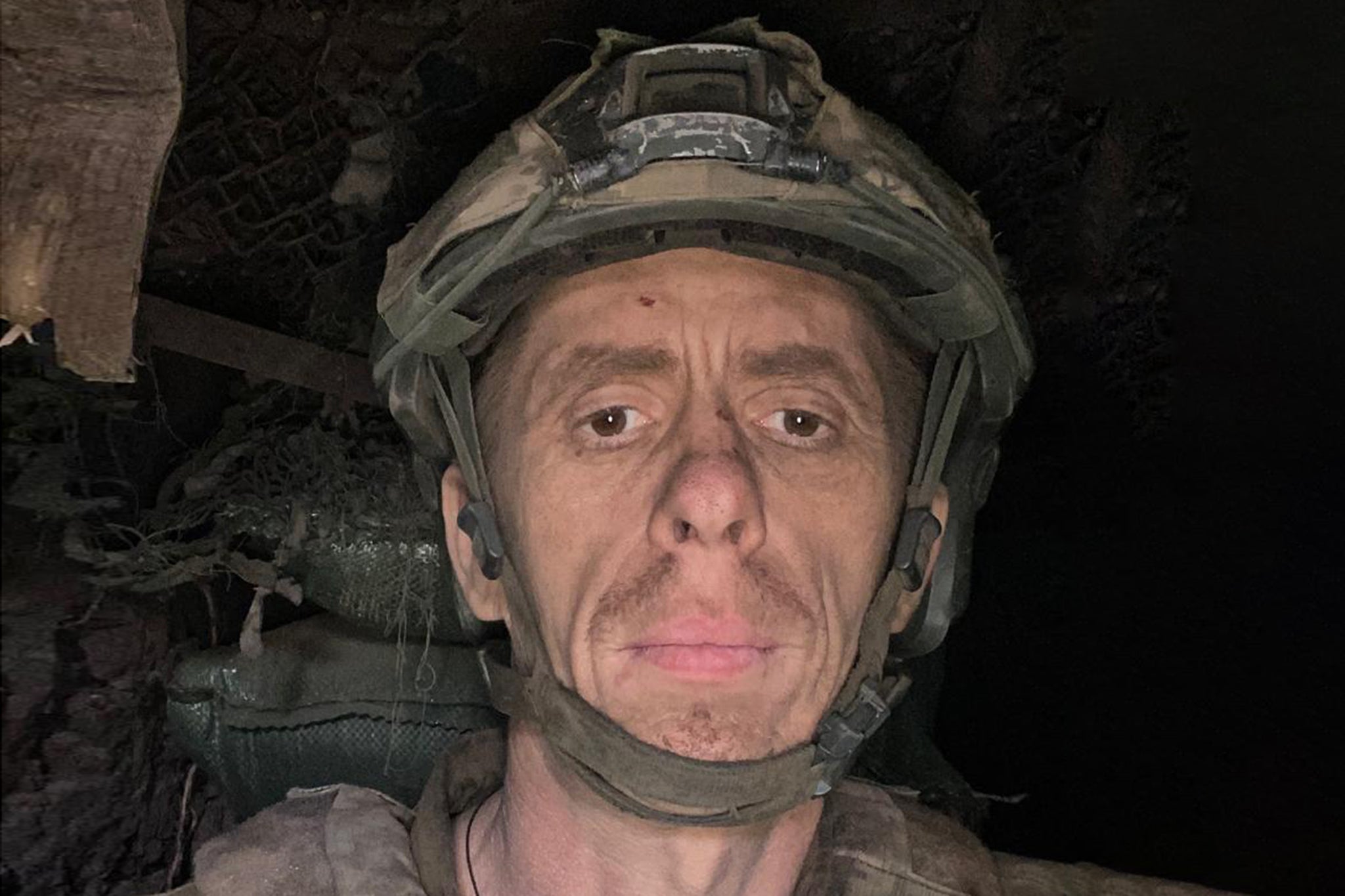
Now 46, he missed two birthdays and all the landmarks in the lives of his five children while, from 13 July 2023 to 28 October 2025, he and his diminishing team dug an underground well for water.
They frantically used homemade sandbags to plug breaches in their bunker day and night as drones fought to get into their cave and kill them.
“Everything is underground. Everything was dug out. There was a trench at the entrance, then a section covered with logs and camouflaged with dirt and sand,” Tyshchenko tells The Independent in Sloviansk.
“Our position was dug right under an asphalt road. So we were limited by the width of the road, but we kept expanding it in length. So it was all underground. We did observation, at first, while it was still possible to go out, and hold the defence.”
His extraordinary stint underground started when, early on in that summer of 2023, he and a comrade were collecting rations from a nearby bunker when they were spotted by a drone, which chased them into a ditch.

They hid behind tall grass. His friend bade him farewell, convinced they were going to die as the drone circled back on them.
Tyshchenko – who goes by the callsign Viter, meaning “wind” – told him to make a dash for the bunker. They both made it. Much worse was to come.
Holding the line in modern drone combat has taken infantry soldiers to new levels of personal endurance. Tyshchenko, a former veterinarian, is the most extreme case of what has become a grinding truth of modern warfare.
Military terms like Forward Line of Enemy Troops, (Flet) and the Forward Lines of Own Troops, (Flot), have been understood for generations. When war goes static and the two sides face off, there’s a contested no man’s land between them.
Now there’s no obvious Flot or Flet, but a zone – often 15km deep – where tiny groups of men on each side flit about a shattered landscape, or more often simply hide from the sight of hunter-killer drones. Old-fashioned fighting is minimal – survival is victory.
At first, it was all too personal when a Russian assault team attacked his bunker in Tyshchenko’s first week. One attacker killed three of his comrades after ambushing them in the entrance to the dugout.

He also would have killed an unarmed Tyshchenko who had rushed him without a weapon – but the enemy’s gun jammed. Before he could clear it, another Ukrainian had killed the Russian.
A few days later, the team of five lost another soldier, leaving four men to hold the hole under the road for more than a year.
The first sign they knew they would be there so long was when reinforcements were not sent – it was too dangerous to get men in or out.
“The breaking point was when the guys died in that assault, and I saw that there is no one to change for the dead guys,” he recalls. “Five, then four of us remained. I realised that we will sit here for a long time after that first assault”.
He did not guess that he’d be there for more than a year, through summer, winter, spring and then summer again.
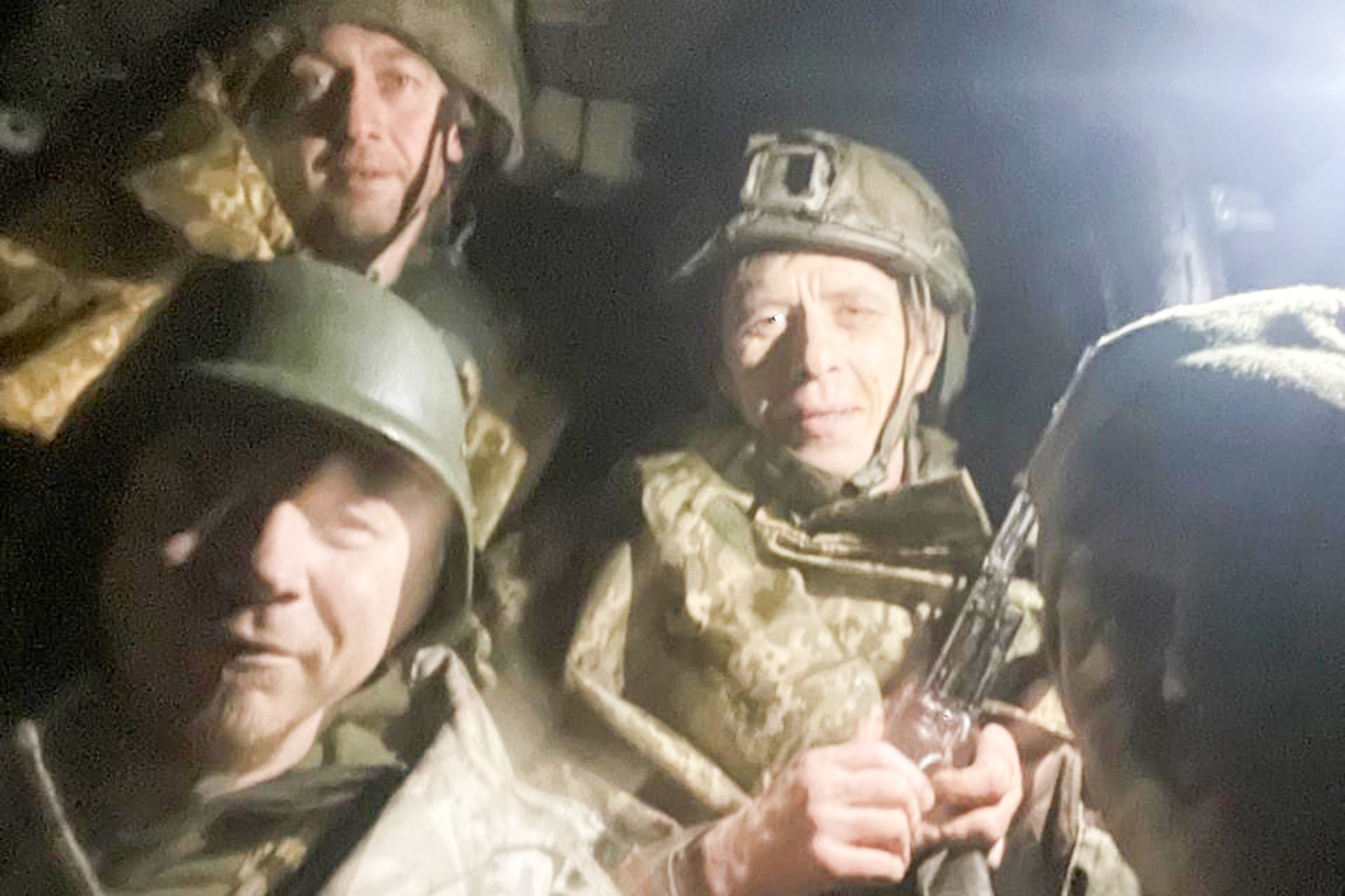
Evacuating bodies was hard. Living with the unburied Russian dead that had built up around the entrance to the hideout was grotesque.
“We climbed over them and had to throw soil on them to get rid of the stink. But that stink never goes,” Tyshchenko says, speaking in a basement of a hospital in Sloviansk.
The thump of artillery or drone explosions could be heard but not felt in the concrete safety of the hospital.
It was less than 10km from where Tyshchenko and his fellow soldiers had buried themselves alive in an effort to hold the line on the road to nearby Bakhmut.
Weeks turned into months. Now down to five men with him in charge, as a sergeant, the group carved coffin-sized beds for themselves under the tarmac of the road.

He says the drone attacks were relentless – too many to count and arriving day and night.
A small observation window in their sandbags used to watch for enemy assaults was a bullseye for the Russian FPV pilots. So it was blocked.
Resupply came via small “bomber drones” able to drop a maximum of 10kg of water and food, which was a rare occurrence. Often they were down to 50cl – barely a sip, of water every four-hour shift.
Day and night were indistinguishable in the darkness of the bunker. Boredom only relieved by the runs into the open to retrieve rations, a mortal risk.
Or the sprints to a halfway point on the way to a better served bunker that could charge batteries, which was conducted at night every two weeks, at most.
The loss of the window meant a loss of oxygen. Breathing was laboured, asthmatic, and all the time the drones pounded the bunker trying to force explosions through the tarmac.

When small breaches emerged in the bunker they were plugged with bags of soil, which were subsequently blown up, throwing earth around and covering the target, Tyshchenko explains.
They recorded messages for their families on flash drives that were swapped with dead batteries on the nighttime dashes for supplies and then sent via Starlink connection home.
Their loved ones sent messages back.
“The support from the children helped; it gave me strength because I thought if I die, I don’t want to leave them alone. It gave me strength to keep going. I didn’t expect that I would be strong enough to survive it.”
The shortage of water meant that the team dug their own well, underground.
Hiding the soil from their work meant dangerous moments scattering the mess around their bunker – but they had no choice – they would have died of thirst otherwise.
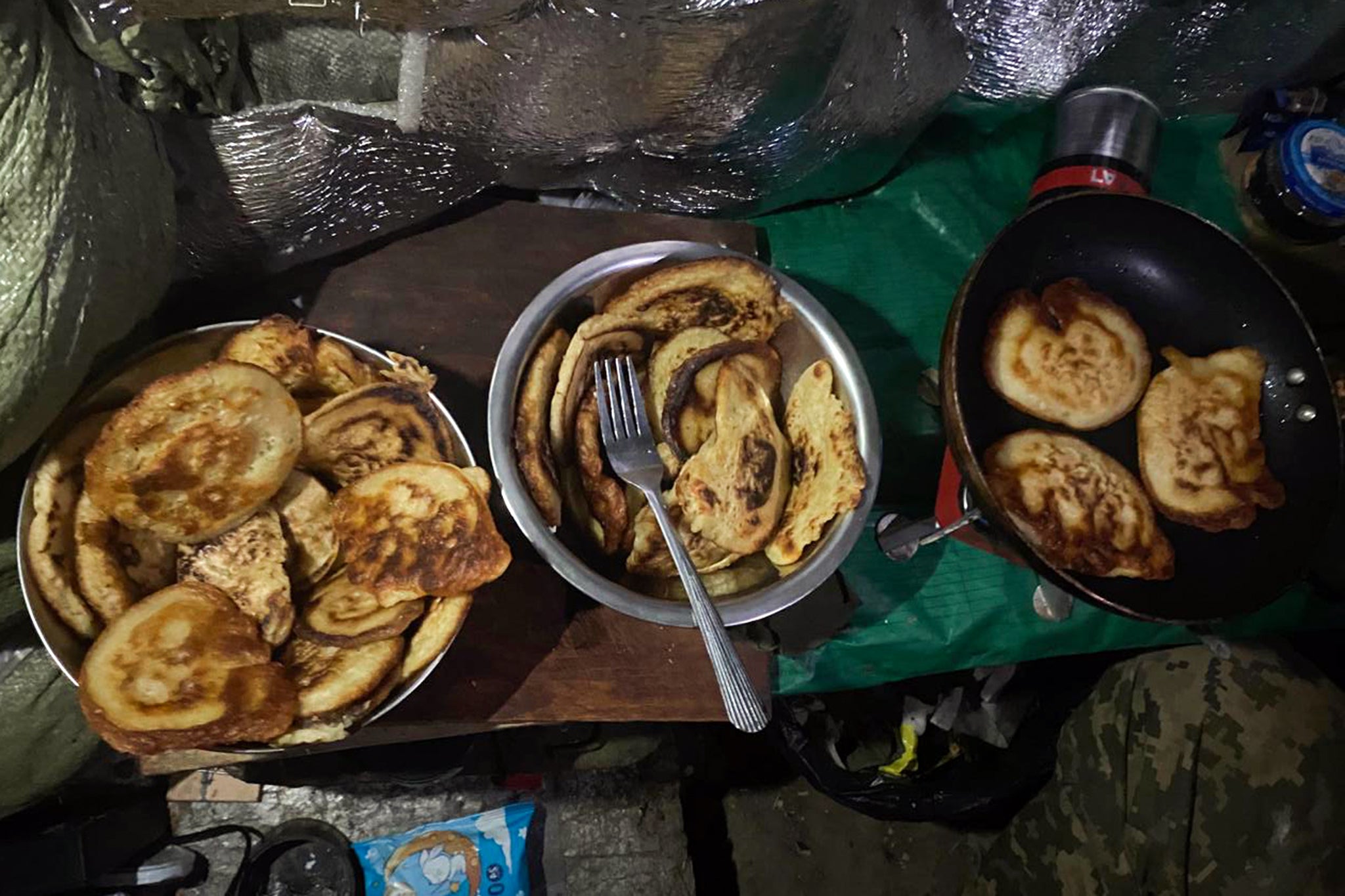
His Ukrainian headquarters never understood the gravity of their situation – not least because the asphalt above them appeared intact, even when blasts caused parts of the bunker to collapse and the team were left concussed, ears ringing, and forced to re-dig their cave.
His family lobbied to get him out and when his commander was changed, the attitude towards the bunker changed.
He got orders to prepare to leave, but the first attempt was abandoned under Russian air assaults from drones. He had a three-week wait for the next attempt.
“Everyone had their own duties: Mishka was cooking, Briks was running for power banks, and Kruger was digging and managing the sandbags.
“Since I had been there the longest and knew the area, I was worried about how they would find the supply drops, as they weren’t always in the same spot. As they couldn’t walk around, they didn’t know the landmarks.
“I was also concerned about the various improvised explosive devices we and the enemy had planted.
“I wanted to make sure they knew everything before I left. Because they entered the position at night, and didn’t know the surroundings.
“Ironically, the delay from the first failed attempt gave me those extra three weeks to show them the ropes and make sure they were prepared.
“Because, at first, I was worried, how would the first supply pick-up happen without me. But the delay gave time to explain it to them.”
His dash for freedom was only over 3km long – and helped by bad weather that kept Russian drones away.
But his muscles were so atrophied and his body so unused to clean air and oxygen that he was dizzy and weak.
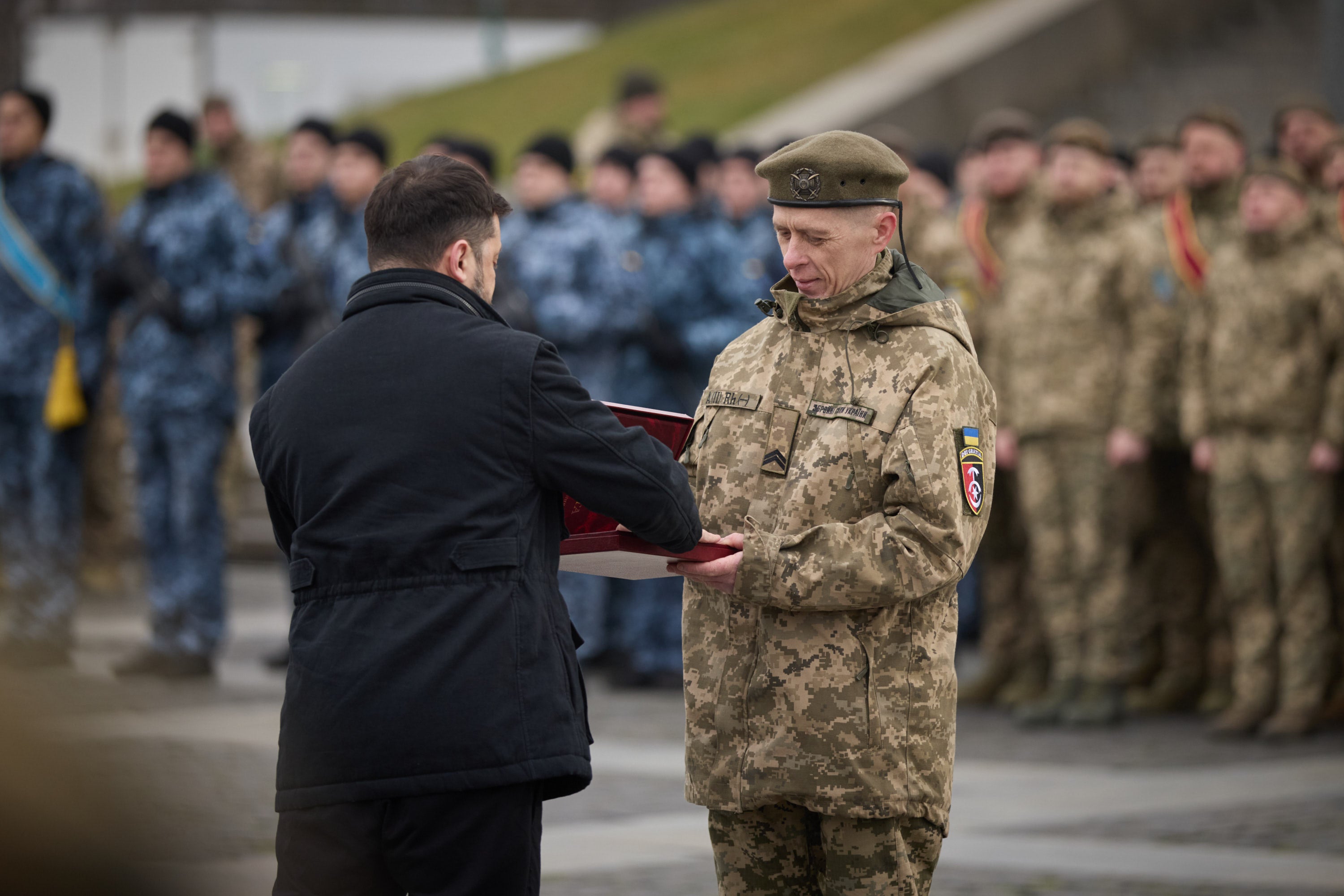
Awarded the nation’s highest gallantry award, Hero of Ukraine, he is planning to open a veterinary clinic when the war is over.
Briks left with him, Misha came soon after. Kruger is still there, in the hole, on the front line.