

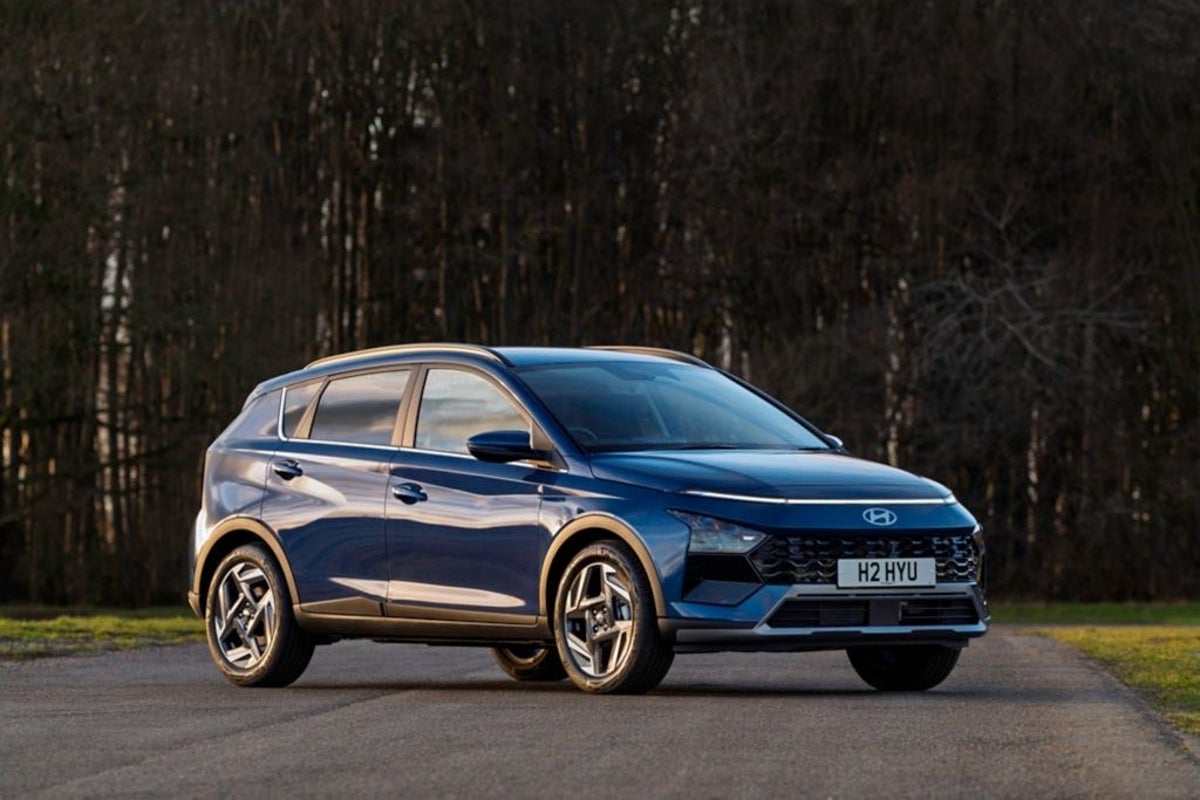
Apologies. I have to admit that, tragic car spotter as I am, the very existence of the Hyundai Bayon had passed me by until very recently. It’s had a refresh and some interesting mechanical adjustments, which drew my attention, but, frankly, it’s still keeping a lower profile than Andrew Mountbatten-Windsor these days, which, in the case of the decidedly non-arrogant little Hyundai, is a bit of a shame. Naturally, at this point, however incongruously, I must add that the aforesaid man in his sixties from Norfolk, as he’s also known, denies all wrongdoing.
The Bayon has no need to be shy, however, aside from its basic sin of not being a fully green modern battery electric vehicle. I guess it didn’t help that it was launched in 2021, an inopportune moment for obvious reasons, and, like Hyundai’s other soon-to-be-obsolescent internal combustion engine models, it has been overshadowed by the company’s extremely bold range of electrics. These, by the way, include the stonking Hyundai Ioniq 5 N, and the truly massive Ioniq 9, a vehicle that seats nine and dwarfs a Range Rover. Both are proof that BEVs (battery electric vehicles) need not be dull.
In any case, the Bayon and its petrol-powered siblings are overshadowed by their electric half-siblings. In the case of the Bayon, that would be the cute Inster.
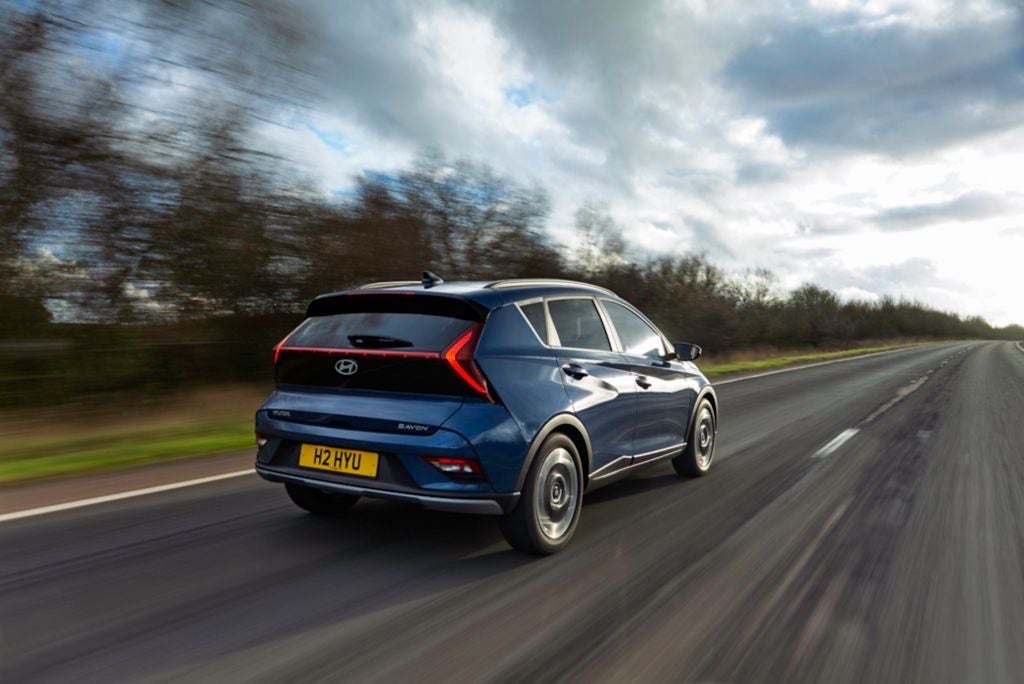
For now, the Bayon is still going, and it’s been treated to some modernisation in its styling, inside and out, the most striking being the trendy “light bar”, supplementing the headlight at the front, and the zig-zag lights. Slightly more perplexingly, and going against the general industry process of electrification, they’ve deleted the mild hybrid version. I imagine that the extra cost and weight of the extra battery and electric motor outweighed the marginal improvement in fuel economy and greenhouse gas emissions – both pretty respectable by fossil fuel standards.
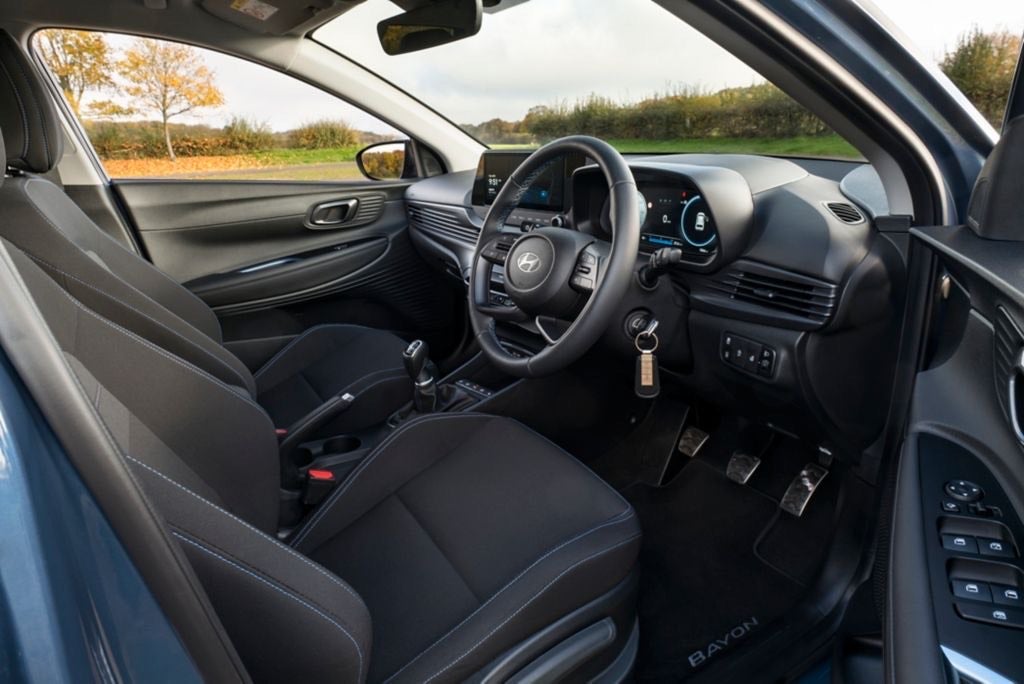
So the Bayon only comes with a three-cylinder 1-litre petrol unit, and a choice of a manual or “dual clutch” clever auto transmission, and two trim levels. The “Black Pack” (available with all paint jobs) is the base model and – remarkably for 2026 – needs a proper ignition key to get in and start. It also boasts smart black 16in alloy wheels, darkened windows, two 10.25in displays, a rear-view camera, heated seats, a heated steering wheel, and (wired) Apple CarPlay and Android Auto.
The higher “Tech Line” gets even fancier 17in diamond-cut alloys, ambient lighting for the cabin and wireless Apple CarPlay (and Android Auto), plus keyless ignition and – the only reason I’d spend the extra cash – front parking sensors. The cost of bodywork repairs these days makes any and every aid to parking well worth the outlay, irrespective of vehicle.
The Bayon drives nicely, with steering on the light side, brakes nicely weighted and decent grip, ride and handling. Strange to say, it probably has one too many manual gears, because 5th and 6th are both virtually overdrives, and you have to make good use of the gearbox to get the best out of the thrummy, slightly coarse and stressed little engine. Like most smaller cars, it seems quicker than it really is. The key to its drivability and economy is its light weight – a tonne or so, which is admirable in a world where two or even three-tonne high-performance SUVs seem perfectly acceptable (until they hit something or someone – force, you may recall, being mass times acceleration).
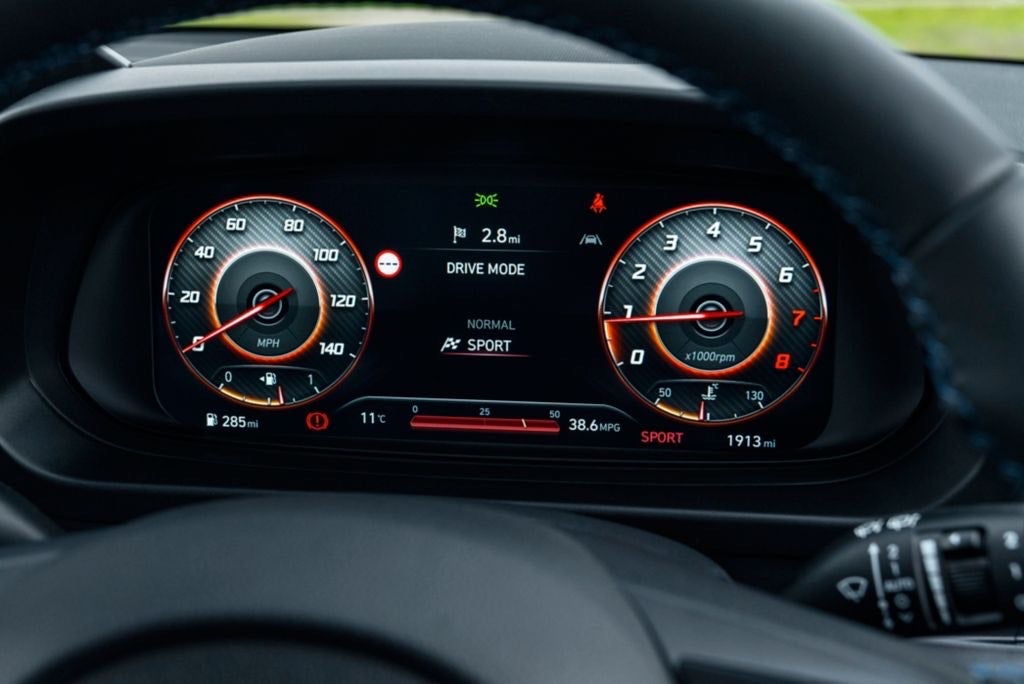
As for the interior, I liked the bright digitised dials and the prevalence of old-school buttons, knobs and dials for the principal functions. Being a teeny car, the driver sits relatively close to the small touchscreen, and that makes it easier and safer to use. There’s a great deal to be said for that. The only tech feature I really missed on the Bayon that is commonplace now is a blind-spot alert on the door mirrors – just in case you miss something when you glance over your shoulder. That is one driver’s assistance aid that would be worth making compulsory, and would complement the Bayon’s basic and intuitive cruise and lane control system.
I’m glad I made the acquaintance of the Bayon at last, and if you’re thinking of a compact “crossover SUV”, such as a VW T-Roc, Ford Puma or Kia Stonic, say, it shouldn’t be overlooked. Fair’s fair, after all.