


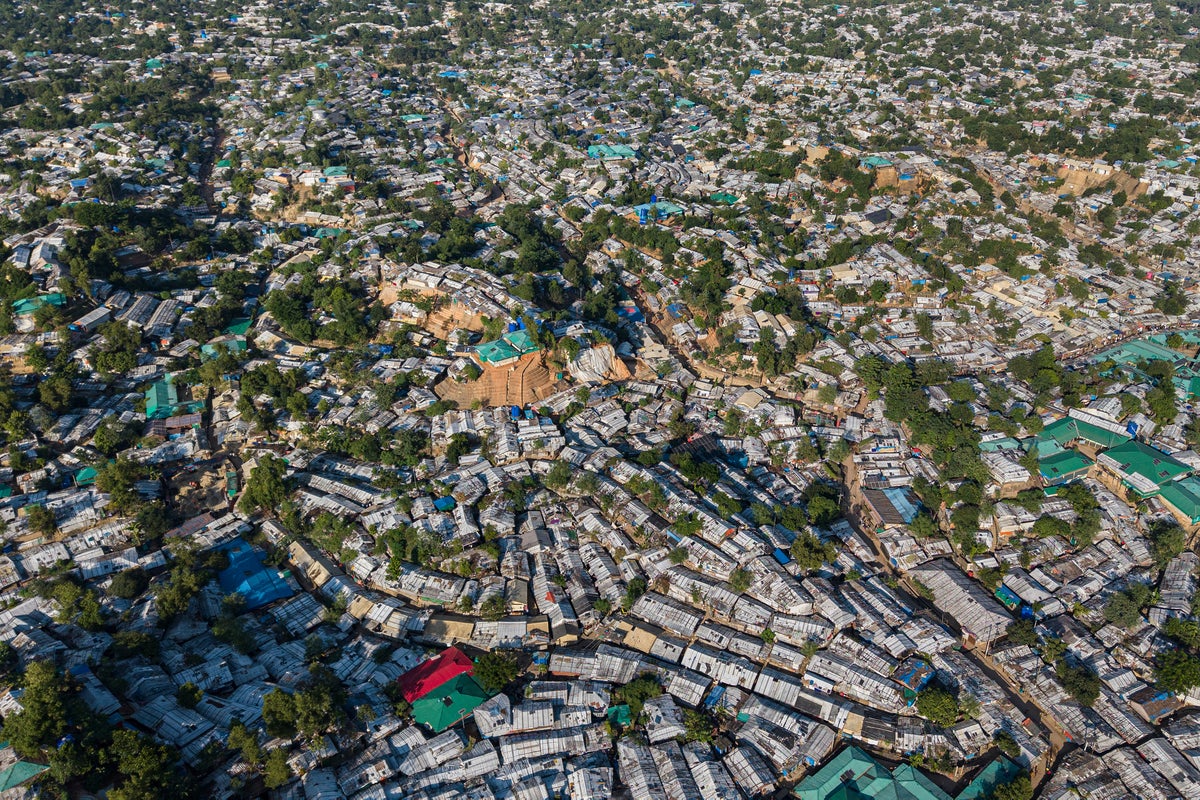
Hundreds of thousands of Rohingya refugees struggling to survive in Bangladesh’s overcrowded camps will see their food assistance slashed starting on Wednesday, raising alarm throughout the increasingly desperate community.
Currently, the 1.2 million Rohingya trapped in the squalid camps receive $12 per month per person, an amount that the persecuted minority from Myanmar has long warned is barely sustainable. Most of the Rohingya in the camps fled brutal attacks by Myanmar’s military in 2017 and they are legally barred from working in Bangladesh, leaving them largely reliant upon humanitarian aid to survive.
Under the UN World Food Programme’s new tiered system, the amount each person receives will vary based on the severity of their family’s needs, with around 17 per cent of the population getting as little as $7 per month. A third of the population that has been classified as “extremely food insecure”, such as households headed by children, will continue receiving $12.
“It is very difficult to understand how we will survive now with only $7. Our children will suffer the most,” said camp resident Mohammed Rahim, who said he and his wife were already struggling to feed their three children before the reduction.
“I am deeply concerned that people may face severe hunger and some may even die due to lack of food.”
The WFP has repeatedly warned that rations in the camps could be slashed as a result of last year’s steep foreign aid cuts by the United States and other countries which saw the agency lose a third of its funding.
But WFP spokesperson Kun Li said Wednesday’s change in food distribution was unrelated to the funding cuts, and it should not be described as a “ration cut”, despite two-thirds of the population receiving fewer rations as a result.
The agency said a ration cut implies food assistance is being reduced below 2,100 calories per day, the recommended minimum standard for emergency food aid. But the WFP said even those who will now receive just $7 per month will still be able to meet that threshold.
The plan “ensures that even with differentiated ration sizes, all Rohingya continue meeting their minimum food needs, strengthening fairness, transparency, and equity in food assistance”, the agency said in a statement.
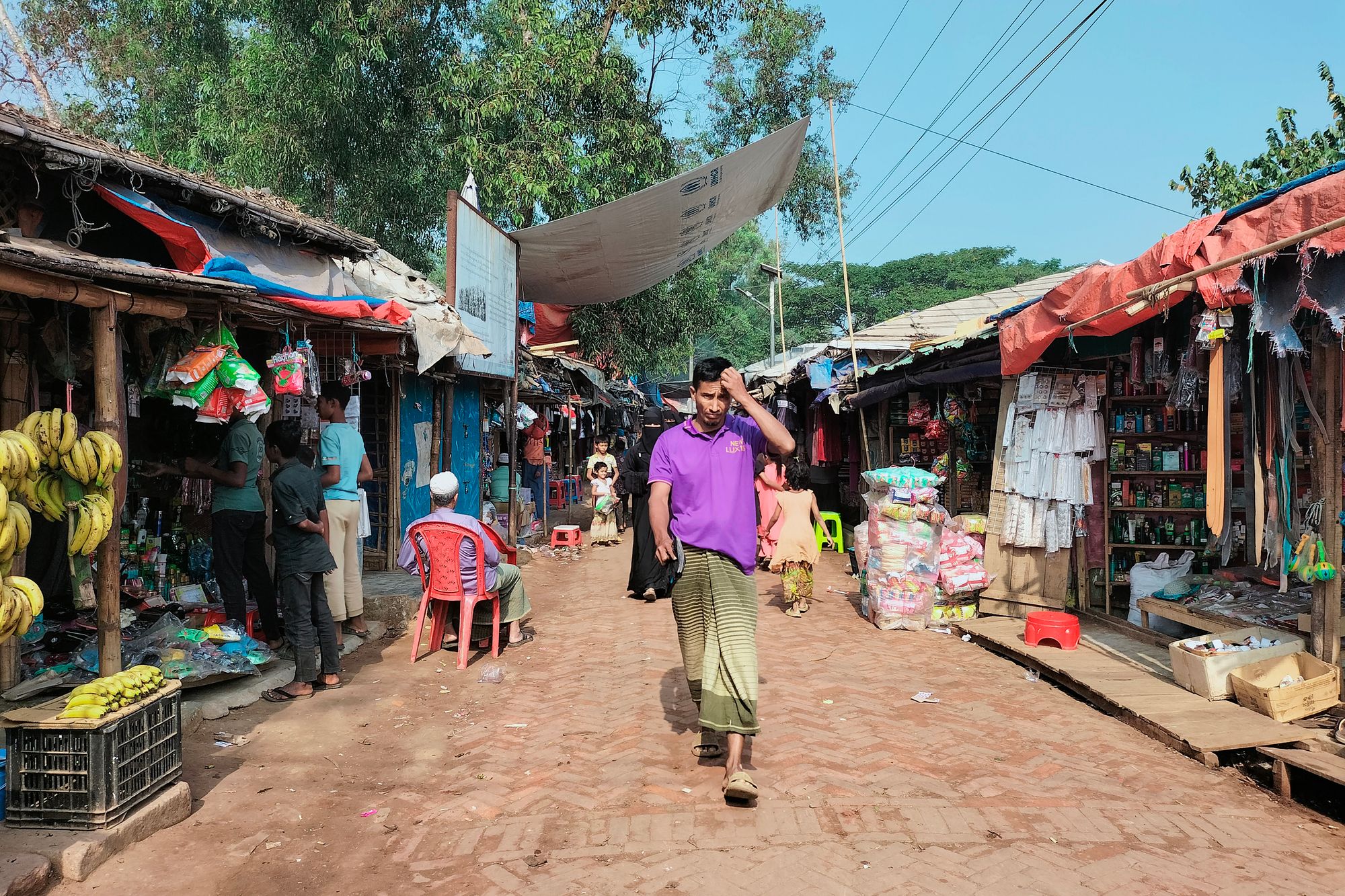
But a ration cut is precisely what the change means for the Rohingya, said Bangladesh’s Refugee Relief and Repatriation Commissioner Mohammad Mizanur Rahman.
With desperation already running high, Rahman told the Associated Press that the Rohingya will attempt to flee in search of food and work.
“Law and order will be deteriorated,” he said.
The same military that attacked the Rohingya in 2017 during what the US declared a genocide overthrew Myanmar’s government in 2021 and remains in control of the country. That has made it virtually impossible for the Rohingya to return home safely.
Last year’s foreign aid cuts deepened misery across the camps, particularly for children, with the closure of schools contributing to a surge in kidnapping, child marriage and child labour. Programmes to support the Rohingya were only around half funded in 2025, and are only 19 percent funded this year.
In 2023, the WFP was forced to cut rations to $8 a month due to a drop in donations. By November of that year, the agency said that 90 per cent of camp residents couldn’t afford an adequate diet and 15 percent of children were suffering from acute malnutrition, the highest rate ever recorded in the camps. Rations were restored to $12 a month in 2024.
Hungry, exhausted and increasingly hopeless camp residents who lived through that ration cut wonder how they will cope moving forward. Dozens of Rohingya staged protests against the new system on Tuesday, calling for the restoration of full rations. Many held signs warning of starvation and declaring “Food is a right, not a choice”.
Rahim, the father of three whose food aid has been reduced to $7 a month, said he is sick, and his children cannot safely leave the camps to earn money due to the increasing risk of kidnapping, violence and trafficking.
Rahim said several people he knows are already considering returning to Myanmar because of the reduced rations, despite the severe risks. Many others, he said, are considering fleeing to Malaysia on rickety fishing boats, an incredibly dangerous journey that results in hundreds of Rohingya children, women and men dying or vanishing each year.
“Ration cuts are pushing people toward life-threatening risks, leaving them with no safe choices,” he said. “I am very worried about the future of our children.”
