

UK TimesUK Times
  • Home
  • News
  • TV & Showbiz
  • Money
  • Health
  • Science
  • Sports
  • Travel
  • More
    • Web Stories
    • Trending
    • Press Release
What's Hot

A500 northbound at a minor junction between A34 near Stoke-on-Trent (north) and M6 | Northbound | Congestion

4 March 2026
The unusual trend defining Arsenal and Man City’s Premier League title battle – UK Times

The unusual trend defining Arsenal and Man City’s Premier League title battle – UK Times

4 March 2026

M25 anti-clockwise within J11 | Anti-Clockwise | Road Works

4 March 2026
Facebook X (Twitter) Instagram
UK TimesUK Times
Subscribe
  • Home
  • News
  • TV & Showbiz
  • Money
  • Health
  • Science
  • Sports
  • Travel
  • More
    • Web Stories
    • Trending
    • Press Release
UK TimesUK Times
Home » Human remains from ancient mass grave reveal how people responded to world’s first pandemic – UK Times
News

Human remains from ancient mass grave reveal how people responded to world’s first pandemic – UK Times

By uk-times.com21 January 2026No Comments3 Mins Read
Facebook Twitter LinkedIn Telegram Pinterest Tumblr Reddit WhatsApp Email
Human remains from ancient mass grave reveal how people responded to world’s first pandemic – UK Times
Share
Facebook Twitter LinkedIn Pinterest Email

Sign up for our free Health Check email to receive exclusive analysis on the week in health

Get our free Health Check email

Get our free Health Check email

Health Check

At the height of the world’s first pandemic, the people of the ancient Roman city of Jerash buried hundreds of bodies on top of each other within days, a new archaeological study of a mass grave revealed.

Until now, most research on the Plague of Justinian between 541 and 750AD has focused mainly on the flea-borne bacterium Yersinia pestis, which caused the deadly disease.

But exactly how societies responded to the spreading disease and deaths had remained unclear.

Now, skeletons unearthed from a mass grave in Jordan have revealed special insights into people’s response in the ancient city of Jerash.

“The earlier stories identified the plague organism. The Jerash site turns that genetic signal into a human story about who died and how a city experienced a crisis,” says Rays Jiang, a systems biologist from the University of South Florida.

“We wanted to move beyond identifying the pathogen and focus on the people it affected, who they were, how they lived and what pandemic death looked like inside a real city,” said Dr Jiang, an author of the study published in the Journal of Archaeological Science.
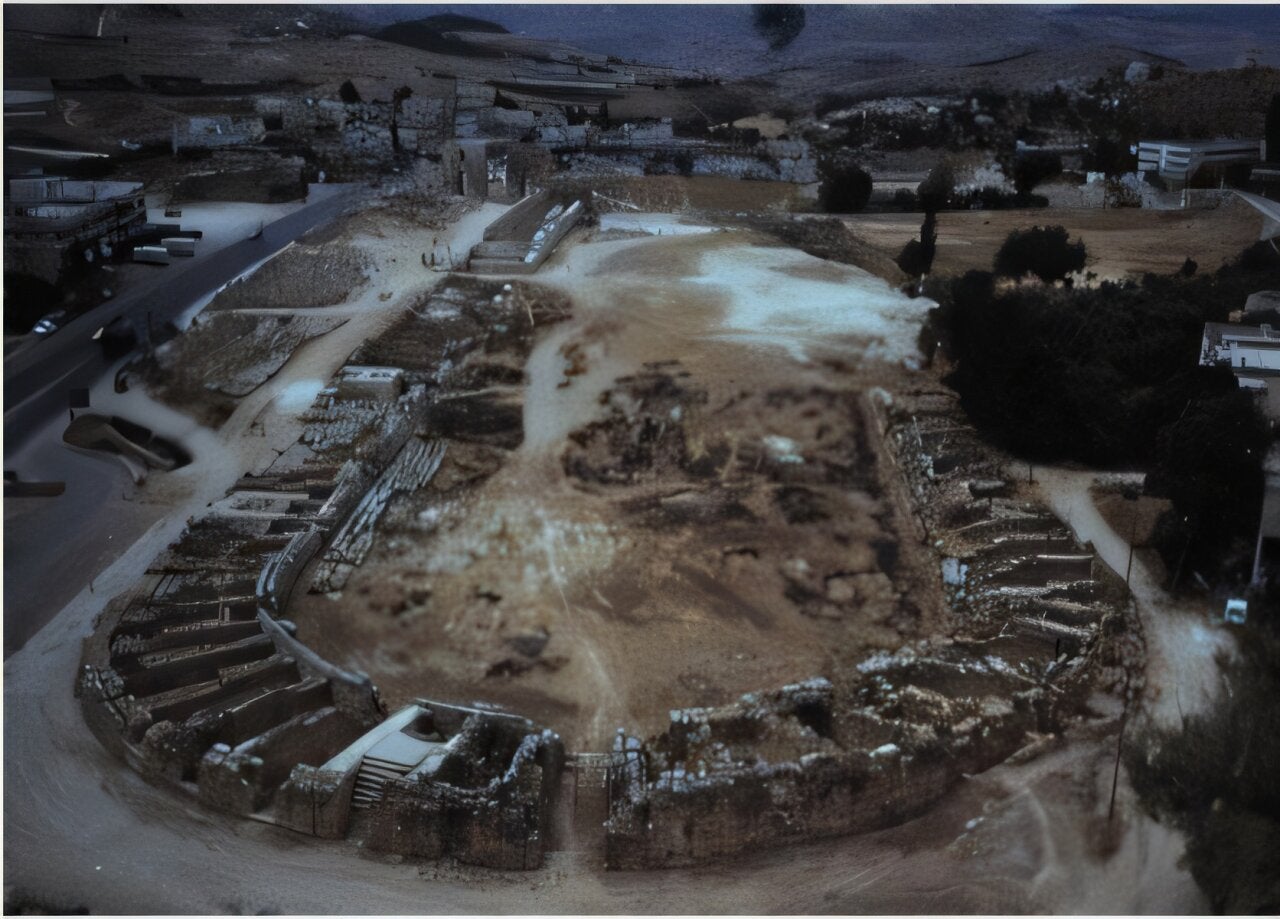
Ancient hippodrome at Jerash, the site of a mass grave from the plague

Ancient hippodrome at Jerash, the site of a mass grave from the plague (Karen Hendrix, University of Sydney)

Researchers unearthed over 200 bodies deposited rapidly in succession on top of each other in an abandoned civic space of Jerash city, which had a population of about 15,000 people at its height.

That is an estimated 1.5 per cent of the city buried within days in a single burial episode.

In comparison, that would be similar to burying 15,000 people in a single burial episode in a modern city of about a million people.

The findings indicate the Plague of Justinian pushed the ancient city of Jerash to its limits, far beyond normal burial capacity even today.

Researchers also sampled and analysed teeth from multiple buried individuals and recovered the DNA of the plague bacterium, Yersinia pestis, from at least five of them, indicating they succumbed to the pandemic.

While historical sources describe widespread plague in the Byzantine world between the mid-6th to early 7th century AD, many of the proposed mass burials have remained speculative.

Jerash now remains the first site where a plague mass grave has been confirmed both archaeologically and genetically.
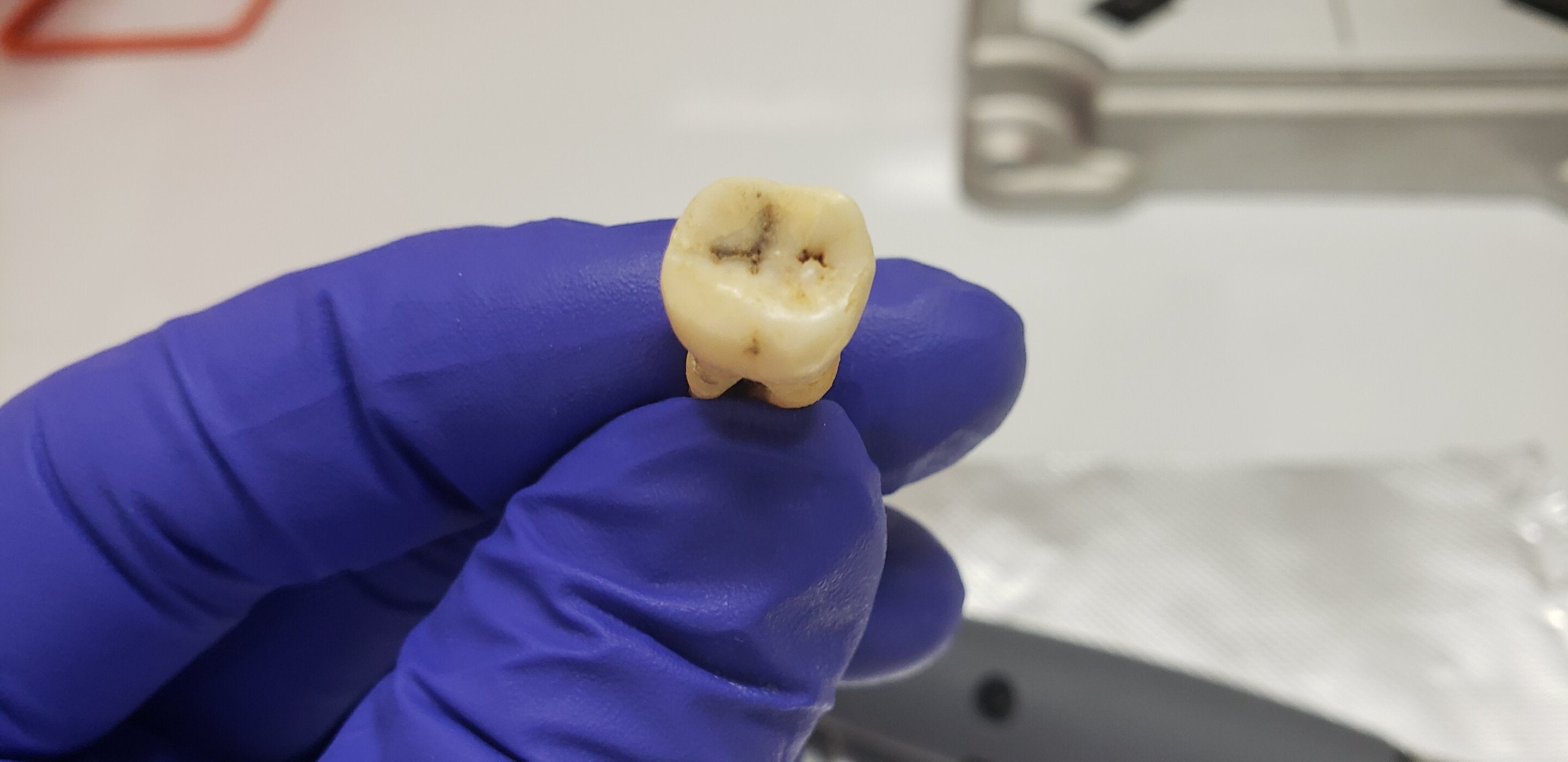
Tooth from the Jerash architectural site

Tooth from the Jerash architectural site (Greg O’Corry Crowe FAU)

The latest find provides the first direct evidence of deaths on a large scale during the time, and offers insight into how people moved, lived and became vulnerable within ancient cities.

It also resolves a long-standing mystery behind burials in ancient cities.

While populations have long moved and mixed over time, most burial evidence indicates people grew up where they were buried.

In Jerash, researchers confirm that this is because evidence of migration is diluted within everyday communities, making it hard to detect in normal cemeteries.

When the plague struck, scientists found that mobile populations suddenly became concentrated together, allowing long-term patterns of movement to become visible in a single moment.

At the Jerash mass burial, many buried individuals were part of a mobile population embedded within the broader urban community of ancient Jordan.

“By linking biological evidence from the bodies to the archaeological setting, we can see how disease affected real people within their social and environmental context,” Dr Jiang said.

“Pandemics aren’t just biological events, they’re social events, and this study shows how disease intersects with daily life, movement and vulnerability,” he said.

Share. Facebook Twitter Pinterest LinkedIn Tumblr Telegram Email

Related News

A500 northbound at a minor junction between A34 near Stoke-on-Trent (north) and M6 | Northbound | Congestion

4 March 2026
The unusual trend defining Arsenal and Man City’s Premier League title battle – UK Times

The unusual trend defining Arsenal and Man City’s Premier League title battle – UK Times

4 March 2026

M25 anti-clockwise within J11 | Anti-Clockwise | Road Works

4 March 2026

A38 northbound between A513 and B5016 | Northbound | Congestion

4 March 2026

‘Blood rain’ and fiery sunsets as Saharan dust sweeps UK | UK News

4 March 2026
Catherine Opie: To Be Seen review – So fresh it’s hard to believe some of this work is 30 years old – UK Times

Catherine Opie: To Be Seen review – So fresh it’s hard to believe some of this work is 30 years old – UK Times

4 March 2026
Top News

A500 northbound at a minor junction between A34 near Stoke-on-Trent (north) and M6 | Northbound | Congestion

4 March 2026
The unusual trend defining Arsenal and Man City’s Premier League title battle – UK Times

The unusual trend defining Arsenal and Man City’s Premier League title battle – UK Times

4 March 2026

M25 anti-clockwise within J11 | Anti-Clockwise | Road Works

4 March 2026

Subscribe to Updates

Get the latest UK news and updates directly to your inbox.

Recent Posts

  • A500 northbound at a minor junction between A34 near Stoke-on-Trent (north) and M6 | Northbound | Congestion
  • The unusual trend defining Arsenal and Man City’s Premier League title battle – UK Times
  • M25 anti-clockwise within J11 | Anti-Clockwise | Road Works
  • Aberdeen are a club in freefall and their hunt for a new manager has been an unmitigated disaster… Dave Cormack, Alan Burrows and Lutz Pfannenstiel should hang their heads in shame
  • A38 northbound between A513 and B5016 | Northbound | Congestion

Recent Comments

No comments to show.
© 2026 UK Times. All Rights Reserved.
  • Privacy Policy
  • Terms of use
  • Advertise
  • Contact Us

Type above and press Enter to search. Press Esc to cancel.

Go to mobile version