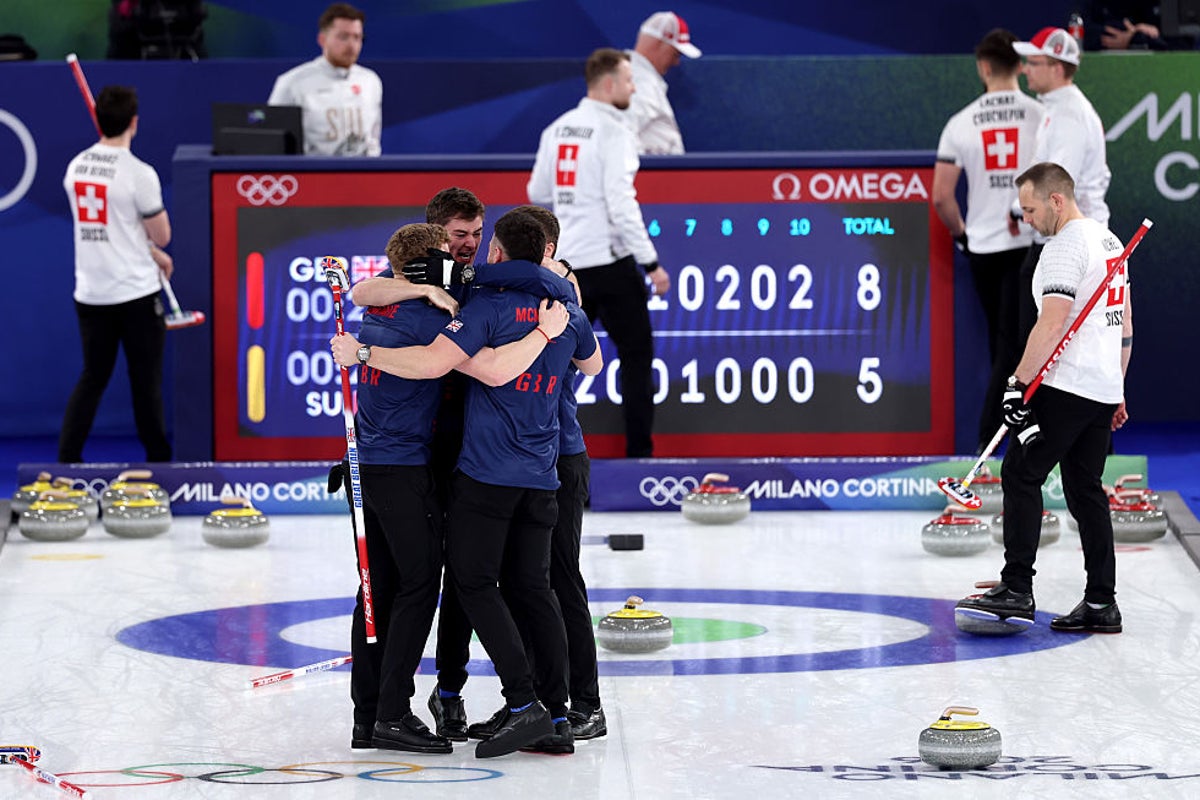
After what feels like a thousand days of curling, here we are. Team GB’s men are in the final. A medal, either gold or silver, awaits. For Bruce Mouat’s rink – the dominant force in curling, the reigning world champions, the four-time European champions, and Olympic silver medallists four years ago – it has to be gold.
It could so easily have been no medal at all. Mouat has been the busiest man in Cortina, having played for 16 days in a row, beginning even before the Opening Ceremony. A loss in the mixed doubles bronze medal match meant everything was riding on the men’s event.
But Team Mouat distinctly underperformed, to the bafflement of all concerned, and ended up reliant on other results going their way in order to make the semi-finals.
Hosts Italy obliged by losing to the top two qualifiers, Switzerland and Canada, in their final two matches. Having made a narrow escape, the sleeping giant of GB woke up: they sent the heartbroken Swiss, who had been so dominant in the round robin, packing.
Mouat condemned Switzerland to the same fate he and mixed doubles partner Jennifer Dodds suffered last week. The pair had swept through the group stage, only losing one match, before losing their edge in the knockouts and walking away empty-handed, denied a medal for the second Games in a row.
But having scraped into the last four by the skin of their teeth, Mouat’s rink did what he and Dodds didn’t: they stepped up a gear.
It is a formula that has won Team GB Olympic glory before. Rhona Howie – then known as Rhona Martin – and her rink needed to win two successive tie-break matches to make the semi-finals in 2002, having slipped up in the round robin; they went on to beat Canada in the last four and upset heavy favourites Switzerland – winning through Martin’s final stone – in the gold medal match.
Eve Muirhead’s team of champions in 2022 squeaked into the last four with the same record as Mouat’s, 5-4, and won in an extra end to progress to the final.
Britain’s curlers have never done it the easy way.
Howie said: “Having that experience of winning the world championships in Canada [in 2025] will be huge for them and they have played an Olympic final before. They will know what to expect and that helps.
“What we have seen is them improving at the right time. They had their losses, no disasters, and the only thing that mattered was getting through. The round-robin and the knockouts are like separate tournaments and now they are in the final, the rest doesn’t matter. Bruce has the experience to know that.
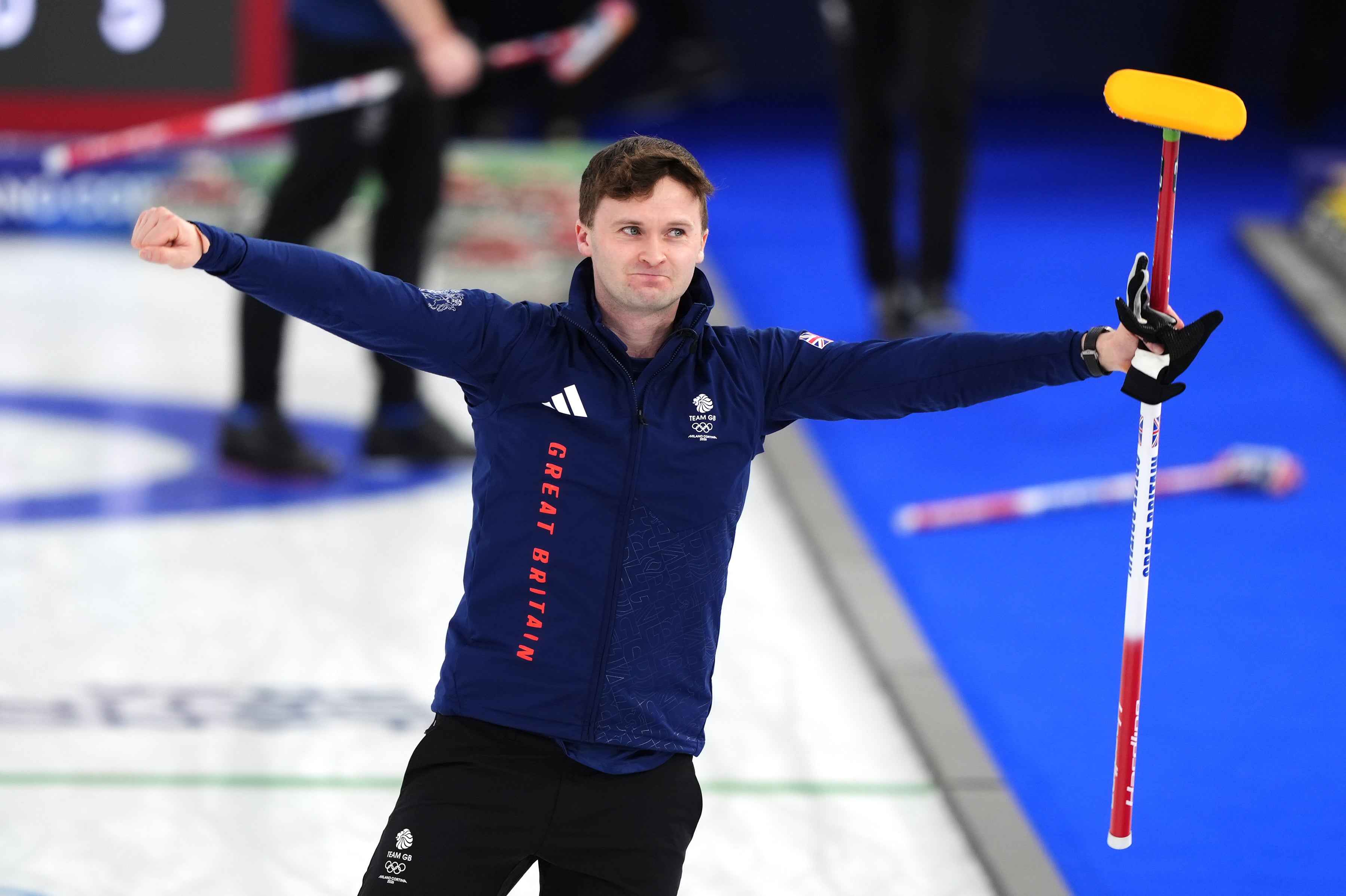
“If he is standing there will be a shot to win, he won’t be thinking of ‘stone of destiny’ or anything like that. He will have laser focus and won’t freeze. Just a clear thought on what he needs to do. It’s why he is so good.”
That last-four victory over Switzerland guaranteed Team Mouat a medal; a gold would be the first for a British men’s squad in 102 years.
On Saturday they will face Canada, the most controversial side of this Winter Olympics, in a bid to upgrade their silver from Beijing 2022. An Olympic gold medal is the only trophy the world champions are missing – but they must overcome foes both past and present to do so.
British curler David Murdoch, who skipped the silver medal-winning team in Sochi 2014, became part of GB’s coaching set-up after retiring as a player. But in 2023 he jumped ship – and is now high performance director for their opponents on Saturday. Greg Drummond, the third in that Sochi team, took his place as GB head coach that same year, and the former teammates will be reunited on opposite sides of the ice on Saturday.
Canada have hit the headlines for all the wrong reasons in this Olympics, a nation famed for fair play and niceness, accused of cheating on the ice. A row erupted when Sweden’s Oskar Eriksson accused Canada’s Marc Kennedy of deliberately double-touching a stone, which the Canadian furiously and explicitly denied.
Secret camera footage, in fact, proved Eriksson right and raised eyebrows over how common this double-touching practice was, if Sweden knew in advance what they had to do to catch their opponents in the act.
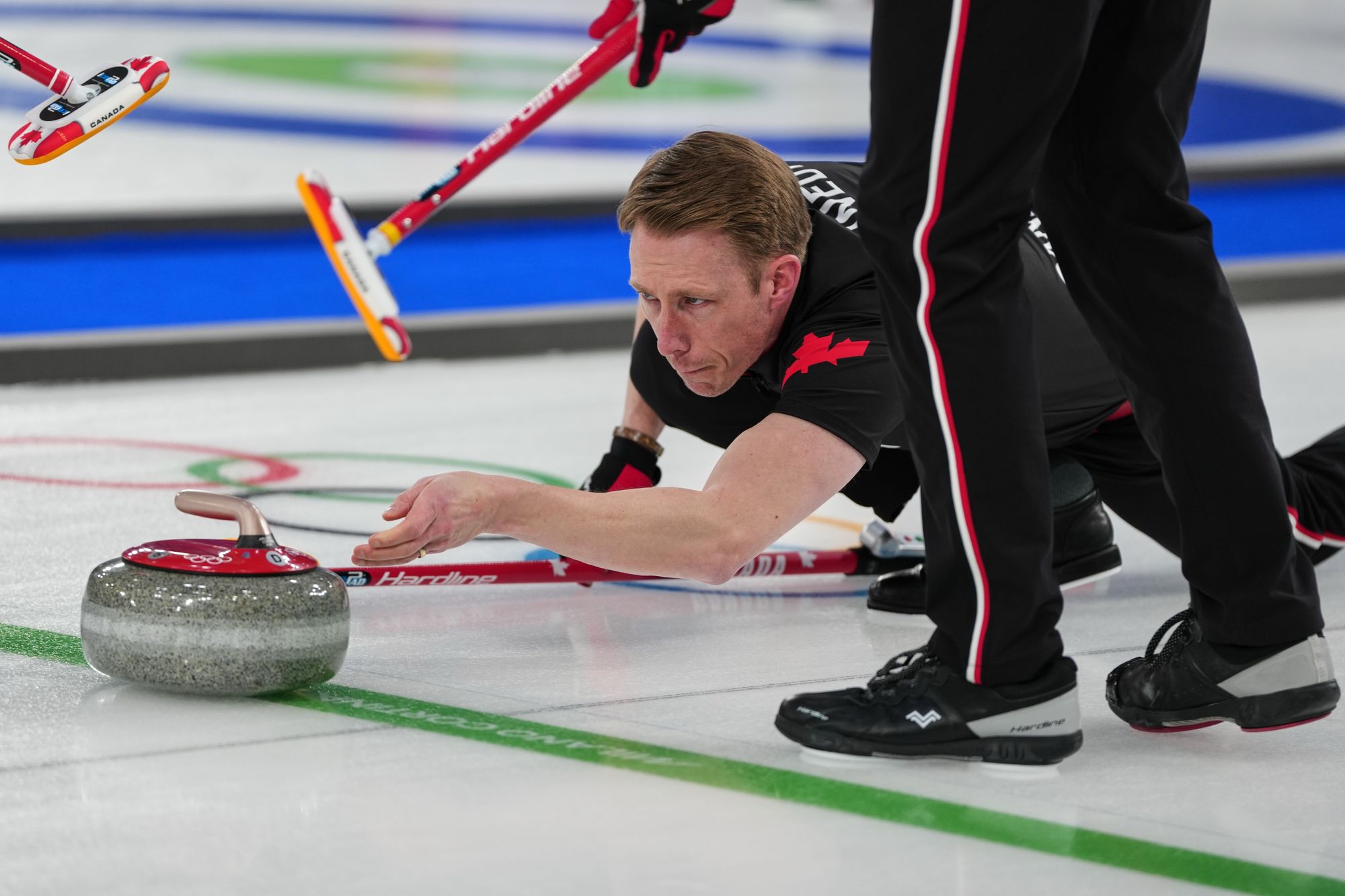
World Curling took no action and after a couple of days of increased surveillance on the sheets, backed away. But the sport’s, and Canada’s, reputations were sullied.
Kennedy responded this week, saying: “People don’t really have an idea what the guys had to go through and myself had to go through this week. So to fight through that, to see the light at the end of the tunnel, to fight as hard as we did, to get through what we did, and then be here now, it’s a pretty incredible story.
“And again, I just can’t say enough about the support group around us that just made this possible. Stuff like that happens, you lean on the people you love, and it helps you get through it. I love these guys, and we were able to do something pretty incredible.”
Both sides will be hoping to avoid a repeat of the Sweden-Canada drama with the stakes higher than ever Saturday. World Curling will not actively referee the final, but will have umpires available to monitor deliveries if teams raise concerns over a throw.
But the drama that has dominated the past fortnight of curling threatens to overshadow Saturday’s fight for glory.
Opponents have learned better than to underestimate Team GB, but Canada swept past them 9-5 in an error-strewn round robin game. Mouat and his teammates will have to block out all the outside noise, and the despair of missing out on gold in Beijing, to continue the long tradition of Britain’s curlers pulling off the greatest heist of all.