


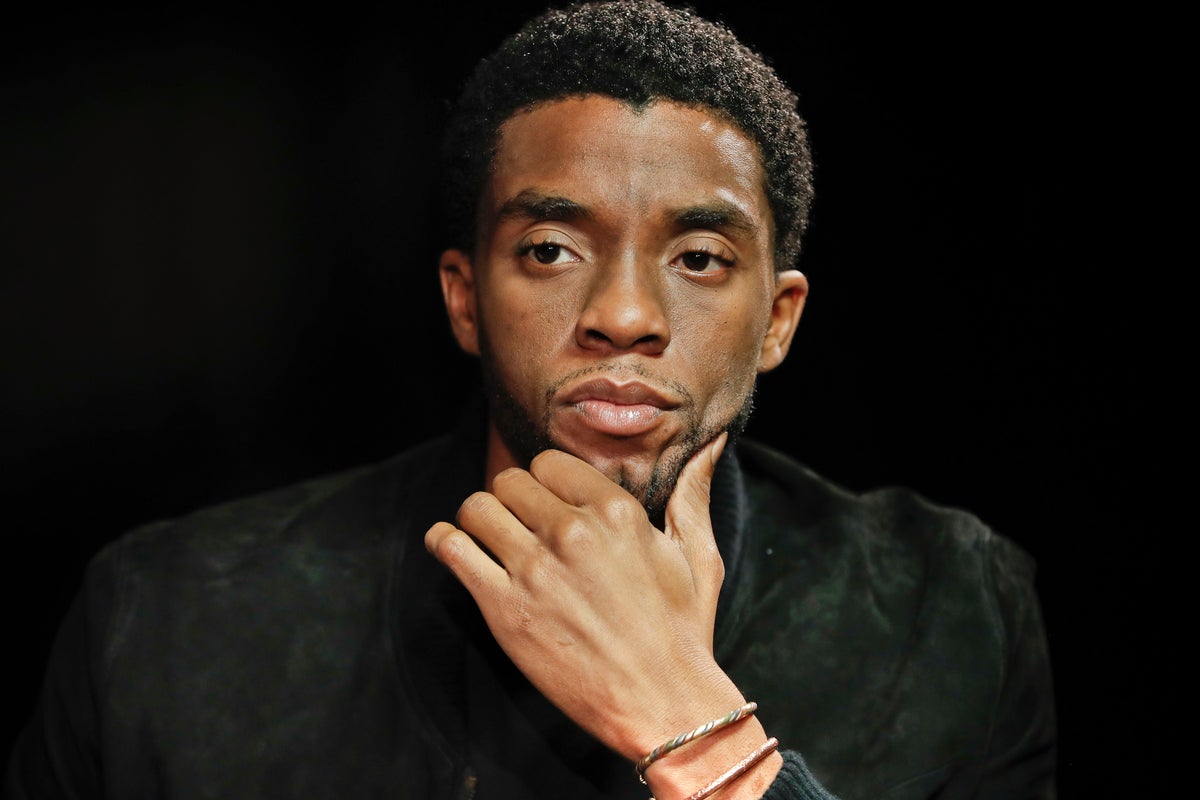
When Chadwick Boseman died in 2020 at the age of 43, four years into a cancer diagnosis that he kept private, he was mourned by many as Black Panther, the noble king of Wakanda: the first Black superhero in a major movie and an icon to millions the world over.
That role cast a long shadow over Boseman’s career, which also spanned directing and playwriting. His CV was full of heroes of the real kind too: he memorably played James Brown in Get On Up, Jackie Robinson in 42, and Thurgood Marshall, the first African-American Supreme Court justice, in Marshall. He bore the weight of those characters, and their responsibilities, with the utmost grace. “I think he was built for it,” says his brother Derrick, who, along with their brother Kevin, has been entrusted with managing Boseman’s estate. “In a way Chad trained and prepared his entire life to step into being ‘Chadwick Boseman’ in the way the world knew him. Those characters he played, he’d read about them and wrote book reports about them at school. He was fulfilling his dream – Blackness was really close to his heart.”
The bright lights of his screen career have meant Boseman’s work as a playwright lives more in the shadows. He had, in fact, enrolled at Howard University with the dream of being a director. After graduating from college, he moved to New York to work in theatre, where he wrote and directed several plays. Now, nearly six years after Boseman’s passing, one of them is being revived for a nine-week run at Shakespeare’s Globe in London.
Written in 2005, Deep Azure follows a community in shock after the murder of an unarmed Black man, Deep, by an undercover police officer. The play, a hip-hop drama that infuses rapping with Shakespearean lyricism, was inspired by Boseman’s friend and fellow Howard University student, Prince Jones, who was killed in 2000 in similar circumstances. It premiered in Chicago in 2005, and was presented last year as a one-night-only reading at Howard Theatre in Washington.
Boseman penned the play when he was living at his brother’s apartment in Prospect Heights in Brooklyn. “It took him a while to write it,” says Kevin, “he was in this process of wrestling with the grief of Prince Jones and also wrestling with the general grief around police brutality and Black bodies, trying to make sense of it. The characters… the romantic partner… there’s a lot of truth in it.”
Boseman would have been honoured to have his work staged at the Globe, his brothers say. “He would have wanted to be engaged in the creative process”. Writing was simply another string in his bow. “He was such a consummate artist,” Kevin says, citing Boseman’s skills as a singer, trumpeter and painter. “He loved language – he was on the high school speech and debate team. He understood the power of words.”
Writing eventually had to take a backseat to his film career, but Deep Azure was critical in his ascent. The play, which Boseman adapted into a screenplay, was picked up by Michael Greene, later his agent.
The play’s themes of police brutality remained depressingly relevant throughout his life – and beyond. “The year Chad died [2020], the killing of Black men by police had almost become theatre and a distraction from what was going on,” recalls Derrick. “In his last couple of weeks, there was a killing and he just looked at me and he said, ‘We have to do something.’” Boseman had been a vocal and passionate supporter of the Black Lives Matter movement, using his celebrity at every turn to further a greater cause – joining hundreds of other Black actors in signing a public letter calling on Hollywood to divest from policing and invest in Black communities.
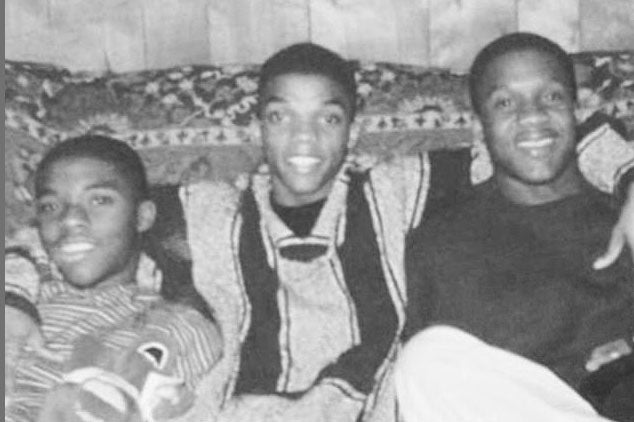
As for the play’s language, a mix of hip-hop and spoken word that has been called a precursor to Lin-Manuel Miranda’s Broadway hit Hamilton, Boseman was a big fan of the Bard, having studied Shakespeare during a summer course at Oxford, a trip funded by Denzel Washington. Deep Azure shows off another side to the actor beyond his on-screen performances. “Chad was the full package,” says Kevin. “He was beautiful. He could deliver a line. But he was also incredibly, incredibly smart.”
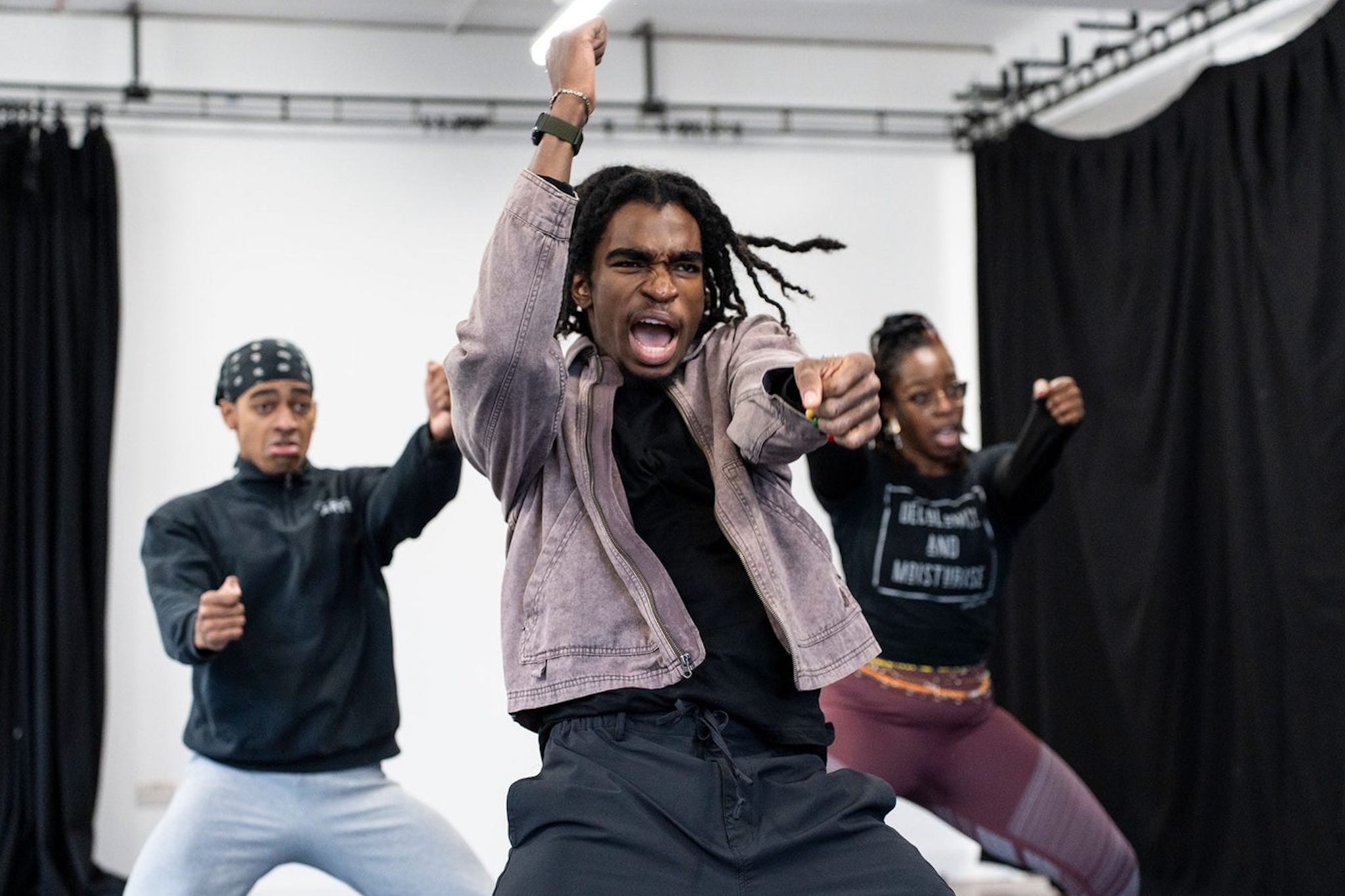
The play, directed by Tristan Fynn-Aiduenu, Olivier-nominated in 2022 for his staggering For Black Boys Who Have Considered Suicide When the Hue Gets Too Heavy, sees a community coming together to heal. It’s easy to draw real-life comparisons with Boseman’s brothers, who were confronted with the strange experience of grieving someone who had become a public figure, bigger than themselves in every way.
It was a blessing that their brother’s death occurred during the pandemic, they say. “Our family could really pull together in isolation, be in community with one another and not deal with the outside world directly,” says Kevin, who learnt he had cancer himself in 2018, two years after Boseman’s diagnosis. “But he was everywhere. We couldn’t walk into a store and not see his face on the cover of a magazine. It was overwhelming.” Derrick recalls being confronted by his late brother’s image constantly, when he’d least expect it: getting new tires put on his car, or scrolling through Netflix at home.
“It was like he wouldn’t go away,” he says. “The whole world was constantly reminding us of what happened. People will message me to this day thinking it’ll make me feel better, but it makes me feel worse. They don’t even know they’re doing it.” It was only recently that Derrick started watching his brother’s movies again. “I see how great an actor Chad was, but I also see his own personality in the way he moves, and the way he talks.”
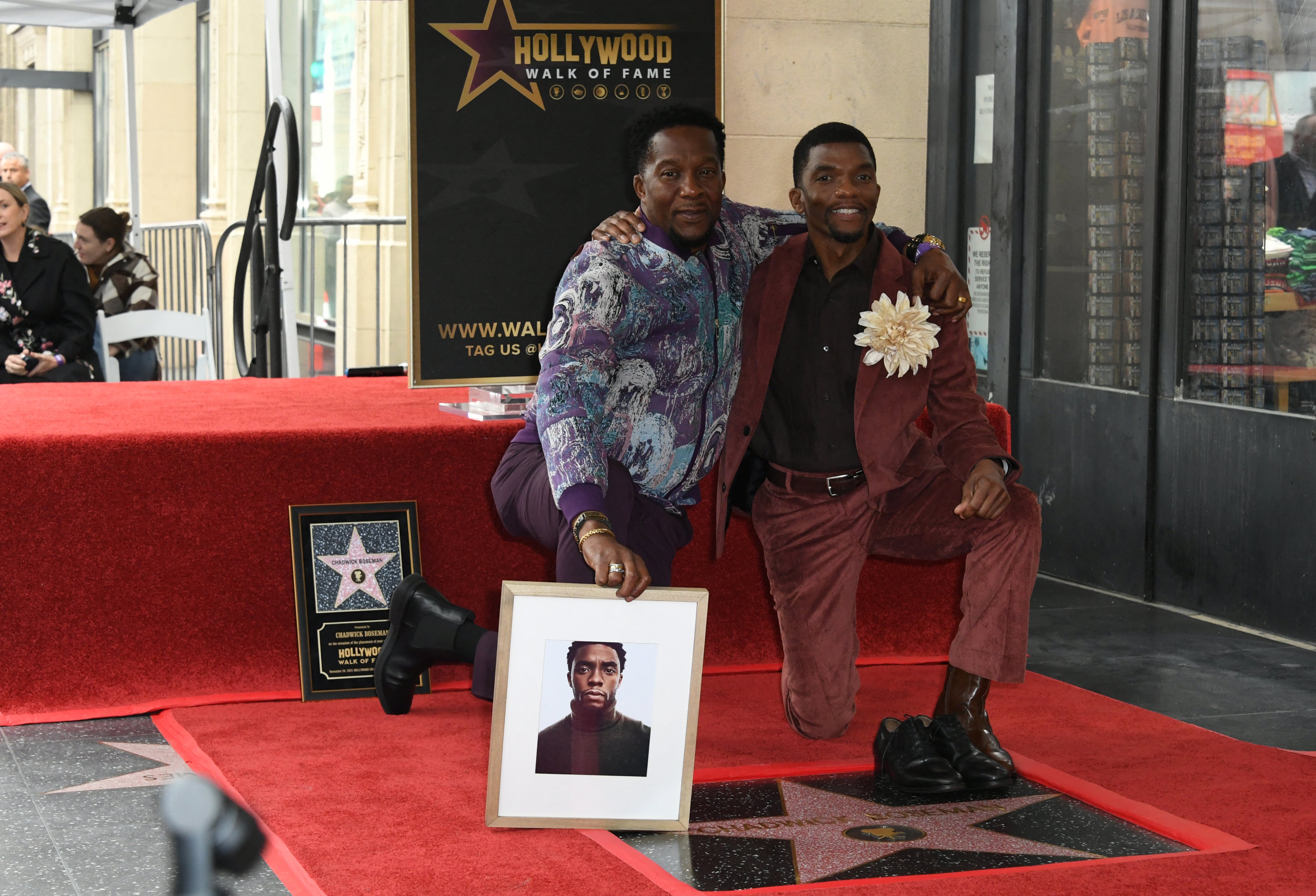
For all the pain of their loss, the brothers are happy they could be there for Boseman in the end. “Those last five months of his life we were in LA with him and our parents, helping to take care of him along with Simone, his widow,” says Kevin. “It really is one of the greatest privileges of my life to witness his transition [to the other side] and to help him through it.”
Boseman’s legacy lives on in his movies and in his plays, like Deep Azure, but also in things less quantifiable. “Chad was someone who loved humanity, who was curious, and a seeker of knowledge,” says Kevin. “He left an indelible mark on people’s hearts and it’s an honour to create opportunities for who he was to continue to inspire people because at the end of the day, Chad rose to superstardom but he rose from very humble beginnings. It’s a reminder that hard work and dedication to a discipline and a craft can take you as far as you want it to take you.”
‘Deep Azure’ is on at Shakespeare’s Globe, London, until 11 April 2026