


Naked but for handcuffs, a waist restraint belt, and a towel to cover his modesty, a man waiting to be deported from the UK is carried by officers to his bed inside his new home – the country’s most notorious immigration detention centre.
Days later, a resident with a history of mental health issues is restrained after smashing up the television in his room and boiling kettles of water in a bid to flood his sleeping area.
On another day, specialist riot squad officers are scrambled to the site after a mentally unwell resident jumps onto the safety netting between the floors in an apparent attempt to take his own life.
These are typical scenes at Brook House, near Gatwick airport where violence, assaults, drug use and incidents of self-harm are an almost daily occurrence.
The controversial site, where conditions are modelled on a category B prison, houses foreign nationals who have served time in prison alongside small boat migrants and those who have overstayed visas, and was the subject of an independent inquiry after G4S guards were filmed abusing detainees in 2017. The inquiry found 19 incidents of credible breaches of human rights laws relating to torture, inhuman or degrading treatment, with officers found to have choked, abused and forced migrants naked from their cells between April and August 2017.
The Independent has now obtained stark written accounts from officers working at the site that lay bare the crises they have witnessed inside and reveal how restraint and force are being used against vulnerable detainees – some of whom will spend months or years living at the site.
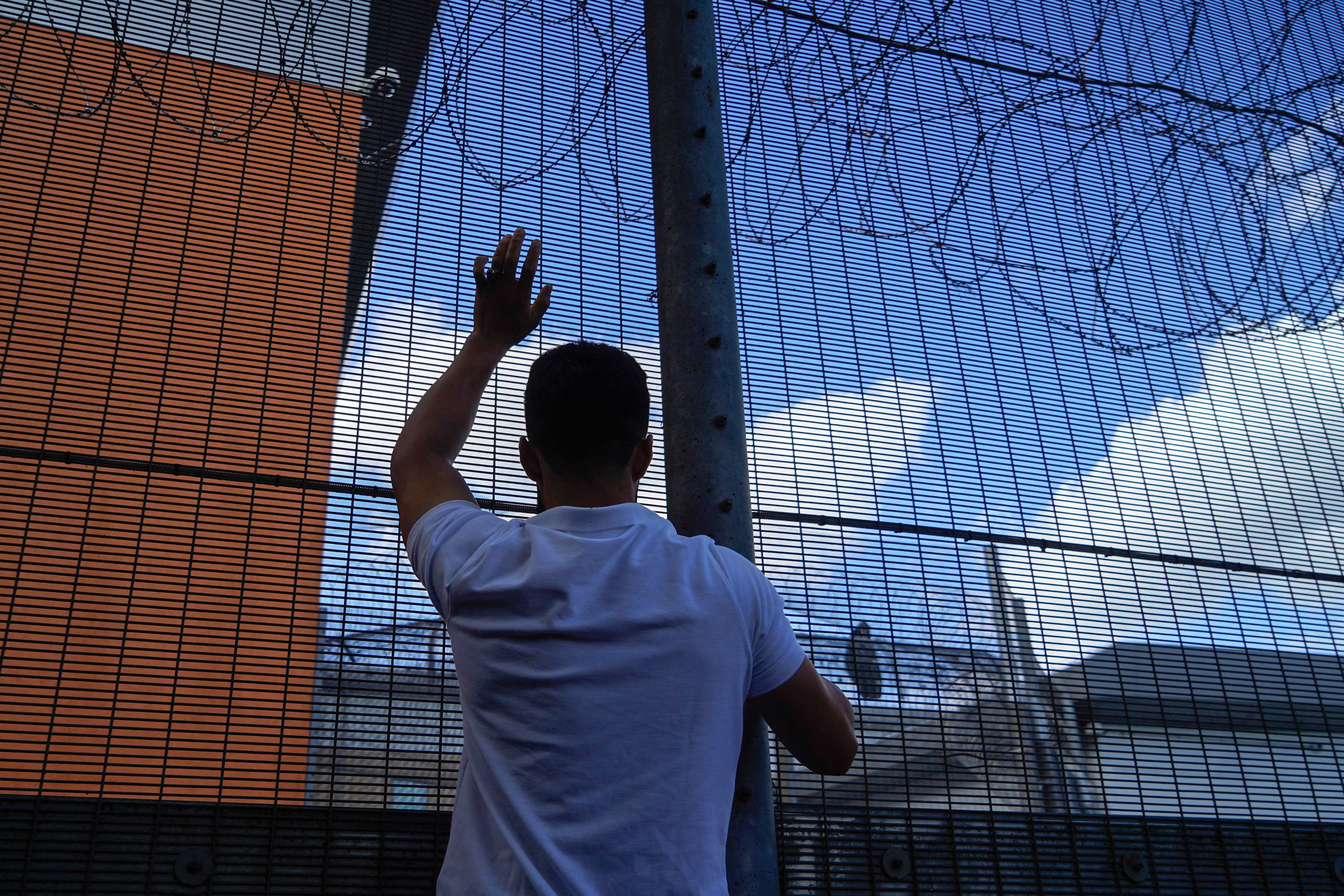
The reports of incidents, obtained through freedom of information (FOI) laws, reveal that force was used against migrants 31 times in July 2025, giving a snapshot of a typical month inside Brook House, where 2,424 were housed in the year to September.
Separate data obtained by The Independent through FOI shows the prison riot squad – the National Tactical Response Group (NTRG) – was called out to Brook House 18 times in 2024 and eight times in 2025. This is significantly higher than any other immigration removal centre, which had seen the squad called out once a year at maximum.
Charities and campaigners have now warned of continued “widespread failures” at the detention centre, with excessive force used on torture survivors and people who have lost mental capacity. Serco, which now runs the site, say they only use restraints as a last resort, and the Home Office say they review each incident.
The incidents include:
- A mentally unwell resident flooding his room repeatedly and others attempting suicide in front of officers
- Residents running at doors, headbutting windows, and one person attempting to bite staff
- Some residents testing positive for the psychoactive drug spice
- A resident shouting “just kill me”, crying and fighting against restraints after being told that he would be removed from the country the next day
- One resident awaiting a bed in a secure hospital being so unwell that he began to apparently hallucinate – babbling, shouting and pointing at parts of his room – while naked
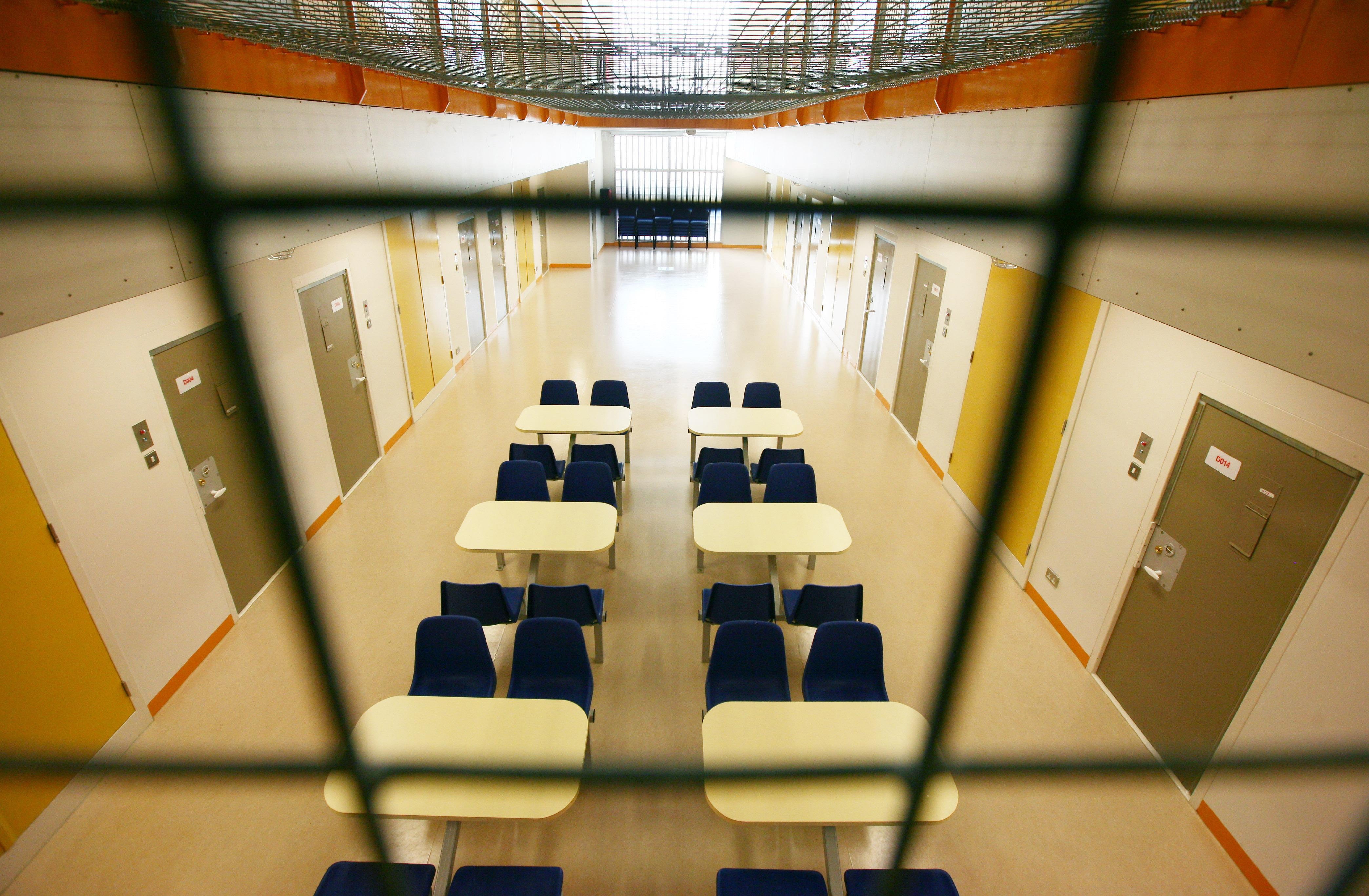
The reports also show regular use of handcuffs and other restraints to manage residents, as well as the common implementation of isolation techniques – known as “Rule 40” – where people are kept away from other migrants for their own and others’ safety.
In one revealing account from Serco officers in July 2025, a new resident was delivered to the centre handcuffed and naked apart from a waist restraint belt and a towel, restrained by two members of staff.
In a report of the incident, officers asked him if he could walk into the centre, and he apparently replied, “I need a translator”. It is not clear if any effort was made to find a translator, but a decision was made to move him into the centre using force, as he was not complying with instructions.
Later in the month, a resident who had been waiting for a bed in a secure hospital was escorted out of Brook House for the hospital transfer. According to the staff reports, he was being kept in isolation and monitored under the Mental Health Act because he was “suffering with severe mental health issues” and had at times refused to take anti-psychotic medication.

While at the centre, he had flooded his room, had a dirty protest and assaulted staff. When it was time to be transferred to hospital, he was in his room, throwing his mattress around, flooding the room, naked and covering himself in water while shouting incoherently, the report said. Staff managed to reason with him – getting him to put on some underwear and start cleaning his room – and used minimal force to stop him running away, the reports said.
In another account, one resident, who had been at Brook House for five months, was placed into isolation because he had tested positive for the drug spice. As a result, he had been unable to receive his routine medication, methadone, for fear of an overdose.
According to one official account of the day, he became combative because he couldn’t get his medication, covering up the viewing panels in his room with food, tissue, toilet paper and using his mattress as a barricade. The water in his room had also been turned off because he was throwing toilet water at officers.
He began shouting and banging, punching and headbutting his door, according to the officers’ accounts, and then started self-harming using parts of his phone before attempting to start a fire by tampering with the battery. A detainee custody officer later spotted him lying on his back, apparently unconscious, with blood apparently coming from his mouth.
When the team tried to enter his room, the resident jumped up and tried to force his hand and foot into the space created by the open door. Believing he was trying to escape, the guards restrained him and applied handcuffs. They removed the restraints once he had calmed down, and he then tried to eat one of the officer’s earpieces.
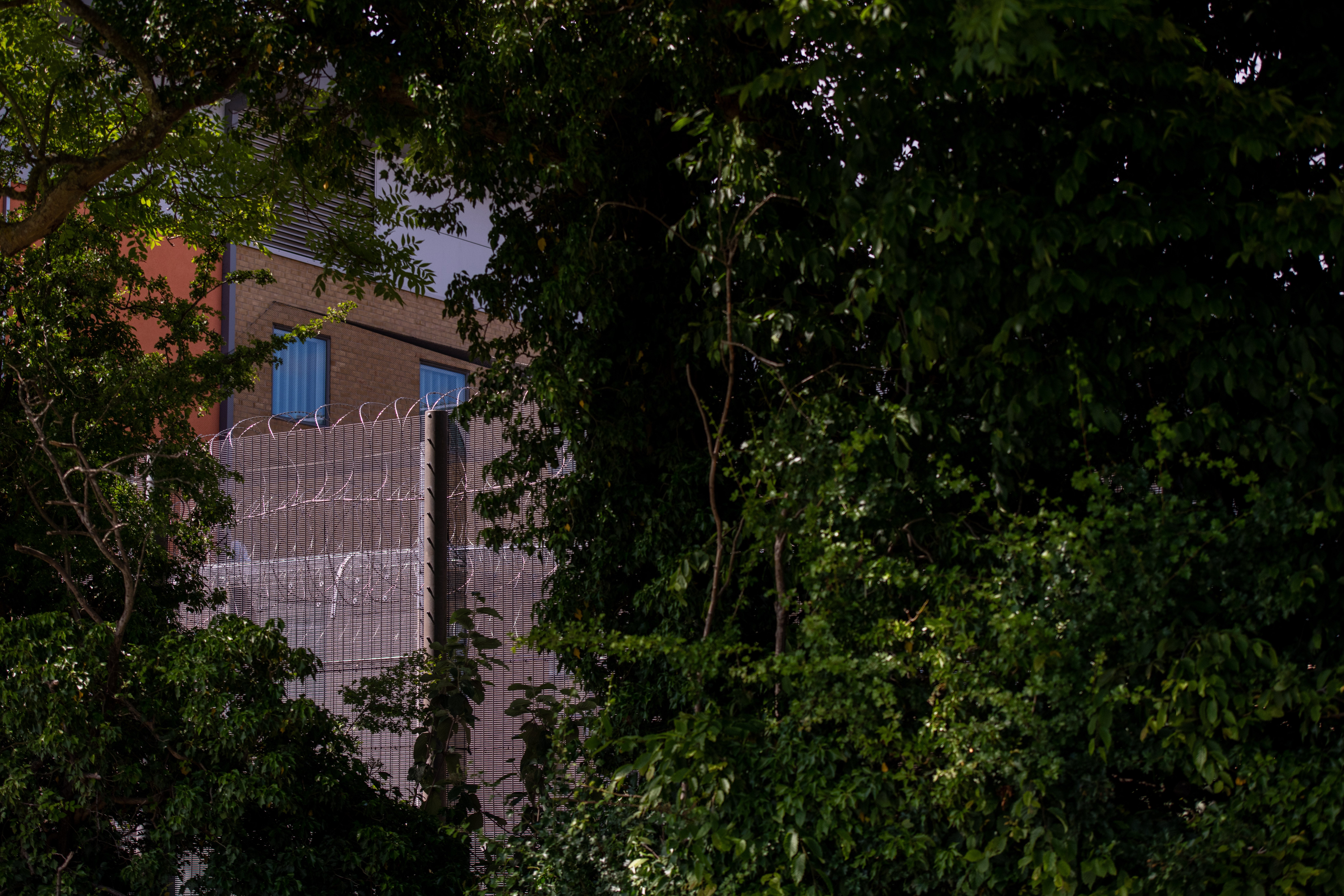
According to the latest figures, use of force by officers at the site is higher than at any of the UK’s other detention centres. Between January and June last year, data from charity Medical Justice, which supports people in immigration removal centres, shows Brook House had 165 per cent more incidents of force used than at the second highest – Harmondsworth detention centre near Heathrow.
There were 76 incidents of force used against a detainee in March last year, 60 in April and 43 in May, the data shows.
Previous inspections of the site have noted the high number of detainees reporting mental health problems, and HM Chief Inspector of Prisons Charlie Taylor warned in his last full inspection in 2024 about a serious deterioration in health care provision at the site.
He was concerned about “disproportionate” routine handcuffing of detainees on external escorts, the availability of drugs and cases where the Home Office had not identified an individual’s significant vulnerabilities before deciding to detain them.
In an updated inspection from July last year, Mr Taylor found progress had been made, with frontline managers more visible on the wings. But he found there was limited improvement in support for the most vulnerable detainees, with too many still held for long periods.

Some 42 per cent of the 192 detainees were assessed as high risk, yet staff were not making necessary notifications to the Home Office when residents’ health was at serious risk, the report found.
At that time, three detainees had been held at Brook House for longer than a year, with one held there for 550 days.
Emma Ginn, director of charity Medical Justice, said they continue to see “widespread failures” at these sites, including “failure of clinical safeguards, inappropriate and indiscriminate use of segregation, inadequate healthcare provision, lack of medication and access to hospital, and unnecessary and excessive use of force on torture survivors and people who have lost mental capacity through deterioration during long periods of detention”.
She warned that staff were continually failing to report a person’s likelihood of carrying out suicide to the Home Office so their detention can be reconsidered.
Hannah Carbery, from the charity Gatwick Detainees Welfare Group, said people “routinely disclose not feeling safe in detention due to witnessing or directly experiencing use of force that they feel has not been adequately risk-assessed or is excessive”.
She added: “As inspectorate reports attest, and as conversations with detained people inform us, there is still routine use of force in incidents where de-escalation or more appropriate measures could be explored first”.
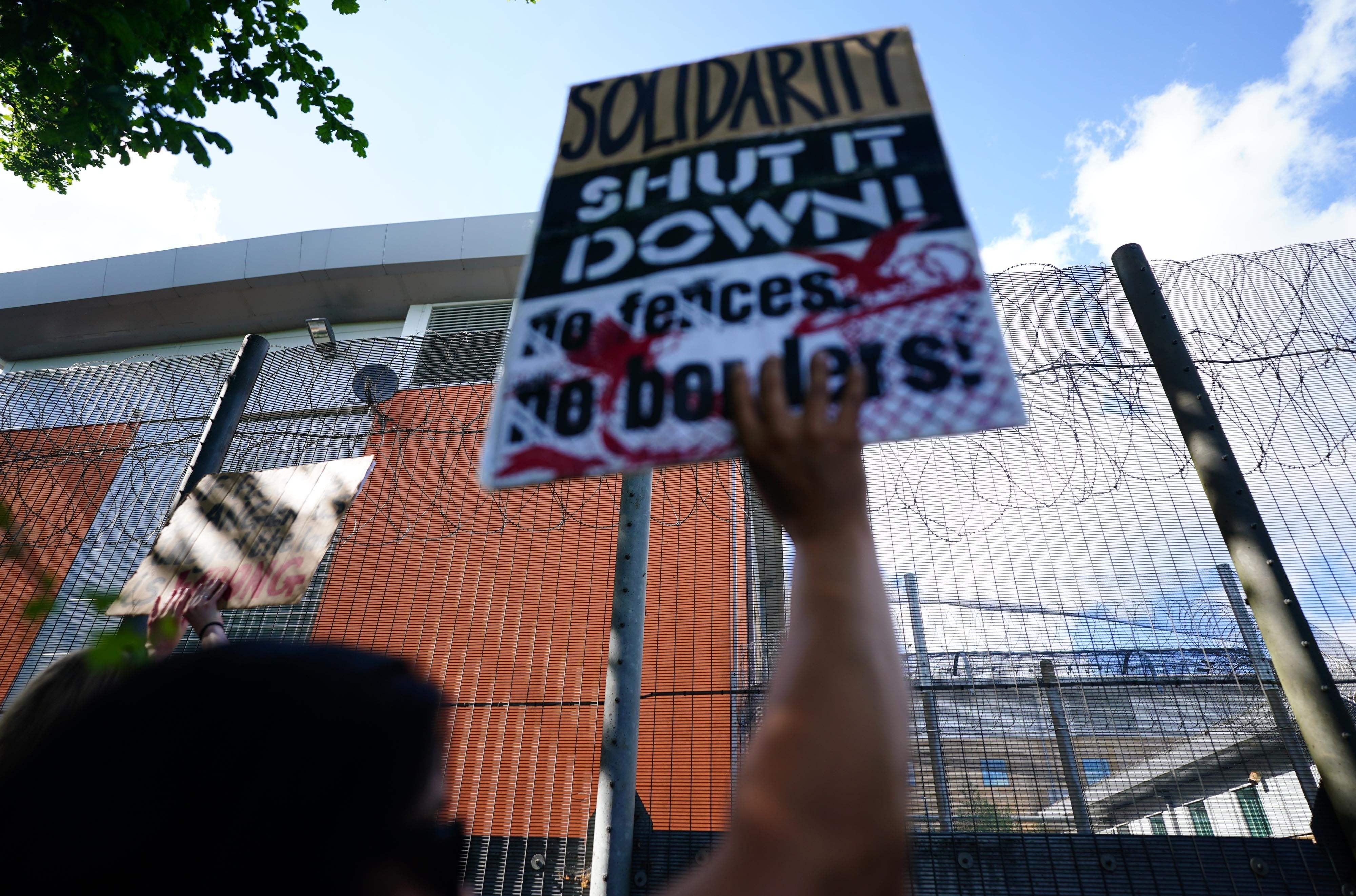
Since the inquiry, the site has been taken over by Serco, and Labour has accepted or partially accepted 30 out of 33 recommendations from the inquiry, including robust monitoring of contract performance and providing regular training on the powers used to put detainees in temporary confinement.
The Home Office said all use-of-force reports were reviewed to identify trends and ensure that techniques are justified.
A spokesperson said: “We have acted decisively on the Brook House Inquiry recommendations, and regard the welfare of people detained in our care as being of utmost importance.”
A Serco spokesperson said: “We have a great team at Brook House IRC who carry out a challenging role with dedication and professionalism.
“Our officers only use appropriate and proportionate force as a last resort and robust governance and assurance is in place to closely monitor it. Under our contract with the Home Office, any use-of-force incidents are reported and investigated.”
If you are experiencing feelings of distress, or are struggling to cope, you can speak to the Samaritans, in confidence, on 116 123 (UK and ROI), email [email protected], or visit the Samaritans website to find details of your nearest branch
If you are based in the USA, and you or someone you know needs mental health assistance right now, call or text 988, or visit 988lifeline.org to access online chat from the 988 Suicide and Crisis Lifeline. This is a free, confidential crisis hotline that is available to everyone 24 hours a day, seven days a week. If you are in another country, you can go to www.befrienders.org to find a helpline near you