

The fall of the Western Roman Empire in 476 AD was a pivotal moment in human history, when Germanic chieftain Odoacer deposed teenage emperor Romulus Augustulus in Italy and set in motion the collapse of centralized authority in much of Europe.
New research based on genome data from inhabitants of the fortified Roman frontier in what is now southern Germany documents how these dramatic political changes affected ordinary people, while contradicting the popular notion of a violent “barbarian invasion” sweeping through the defunct empire’s former domain.
For instance, the researchers found that the abandonment of imperial-era marriage restrictions led to swift intermingling between the garrison and urban population of Romans and low-status locals including some of Northern European descent.
“The temporal alignment between the fall of the Western Roman Empire in Italy and the genetic shift we detect in southern Germany is remarkably precise,” said anthropologist and population geneticist Joachim Burger of Johannes Gutenberg University Mainz in Germany, senior author of the research published on Wednesday in the journal Nature.
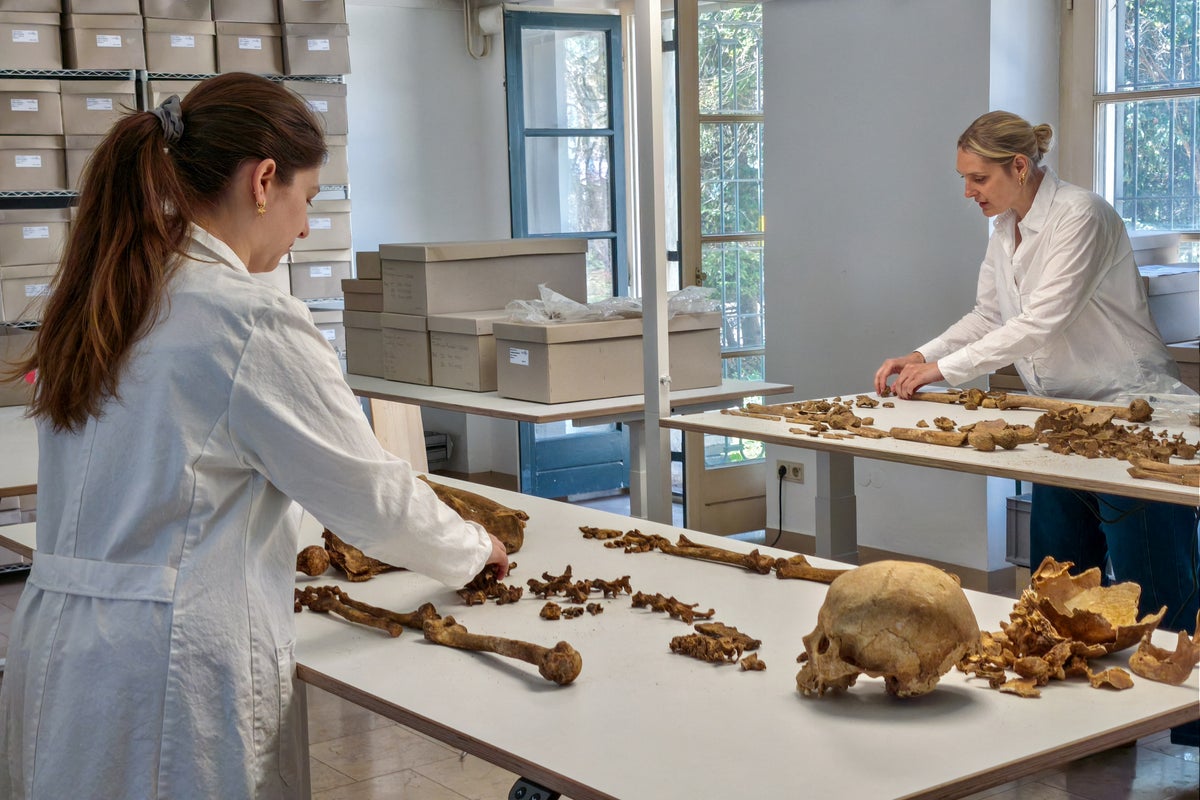
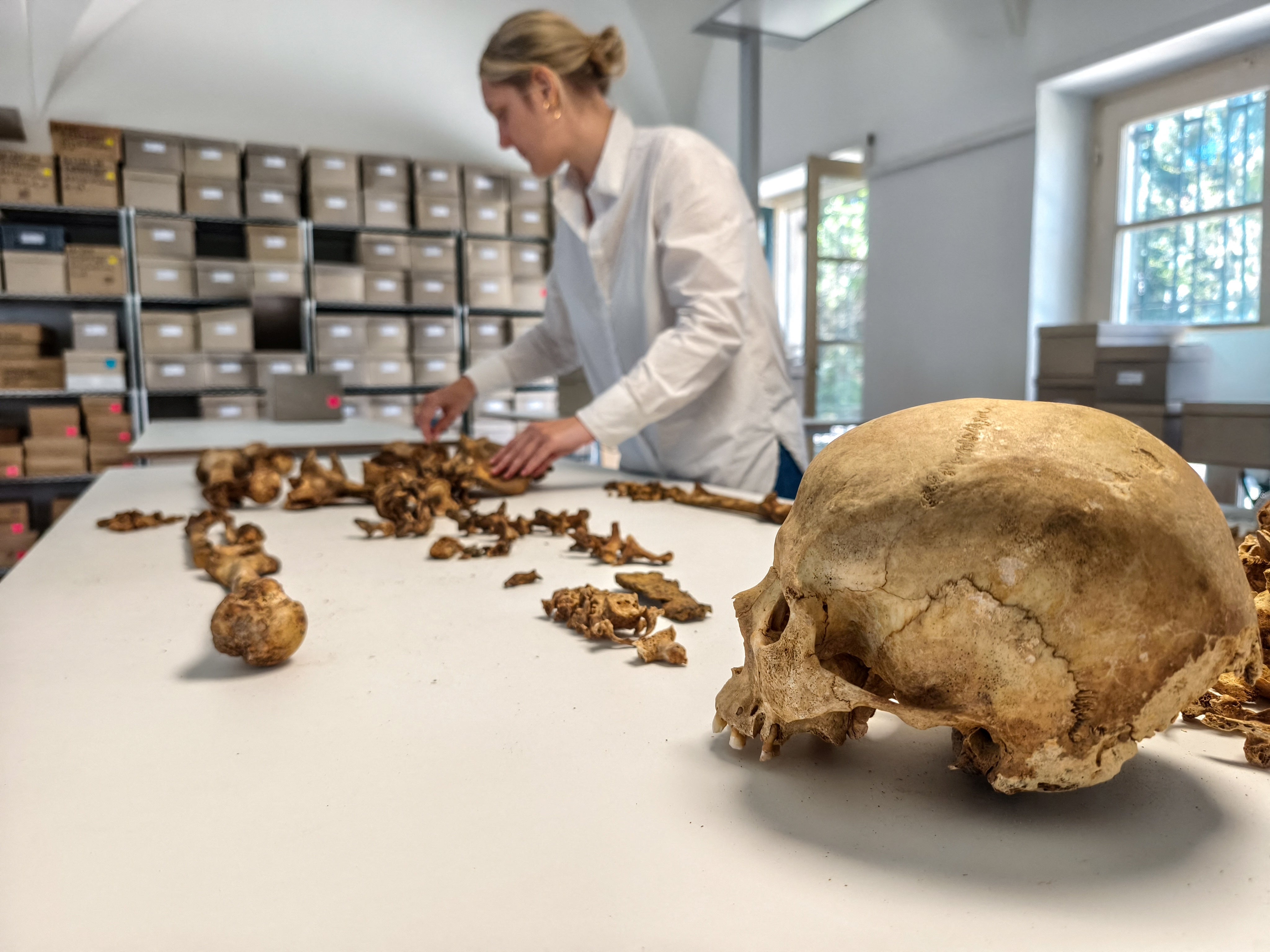
The researchers analyzed the genomes of 258 people who were buried in what are called row graves in the modern-day German states of Bavaria and Hesse, 112 of whom were interred at the Bavarian village of Altheim. Most dated to between 450 and 620 AD.
“Row grave cemeteries were a newly emerging early-medieval burial practice where individuals were buried in rows, often containing grave goods like clothing, jewelry and weapons. These cemeteries stretched across the former Roman frontier from the Netherlands to Hungary,” Johannes Gutenberg University Mainz population geneticist and study lead author Jens Blöcher said.
Roman authorities had established military outposts to guard against invasions and unrest on the German frontier, some evolving into sizable settlements and eventually cities. These included Mainz, Regensburg, Trier and Cologne in the vicinity of the burial sites involved in the research.
The genome data revealed a major demographic shift coinciding with the late-fifth-century disintegration of Roman state structures. It showed that people from Northern Europe already had been moving south into this region in small groups during the long twilight of the imperial period and living separately from the broader Roman population, many perhaps as agricultural laborers. At the time, outsiders could be granted land under conditions such as marriage restrictions with Romans.
“They have lived there for generations, marrying almost exclusively within their own group – preserving their northern genetic heritage,” Burger said.
The Roman military and civilian population was found to be genetically diverse, composed of people with ancestry from various parts of the empire. They were genetically distinct from the outsiders who were trickling into the area from Northern Europe including locales as distant as Britain, as well as from the Balkans and even Asia.
The genomes reflected intermarriage between the two groups after the imperial demise and a peaceful integration of peoples that eventually formed a new early-medieval society.
“While we do detect north-to-south movement of people across the former imperial frontier, the majority of this migration occurred generations before the pivotal horizon” of the empire’s end, Burger said, and began in the third and fourth centuries.
“Crucially, this influx was not driven by large, ethnically homogeneous tribal blocs or major clans, but rather by small kinship groups and even isolated individuals. This pattern directly contradicts the traditional narrative of a ‘mass barbarian invasion’ following Rome’s collapse,” Burger said.
Long before Romulus Augustulus was toppled, the sprawling Roman Empire had been divided into east and west. While the Western Roman Empire dissolved after a protracted period of instability and military setbacks, the Eastern Roman Empire, later called the Byzantine Empire, centered on Constantinople – modern Istanbul – continued to thrive.
The genome data imparted the demographics of the population studied, with life expectancies of about 40 years for women and 43 years for men and high infant mortality in a society in which nearly a quarter of children lost at least one parent by age 10.
Christianity already was entrenched as the Roman state religion. The genome data indicated families were monogamous nuclear units, widows did not remarry within their husband’s family and there was strict avoidance of close-kin marriages like cousin unions.
“All these traits reflect Christian norms from Late Antiquity,” Burger said.
The data suggests additional people from the north arrived in the region in the centuries after the empire fell, with a new genetic profile emerging by about the seventh century – “one that closely resembles the genetic profile we observe today in central Europe,” Burger said.