


A religious father has lost a “heartbreaking” High Court battle over the final resting place of his teenage son, who died by suicide in December after struggling with mental health issues.
The ruling means 17-year-old Gabrielle Barbus, a budding photographer, will be cremated, against the wishes of his Roman Orthodox Christian father, Stefan Barbus.
Mr Barbus had sued his ex-wife, Georgia Opritescu, over the disagreement, believing his son’s “soul” would be in peril and risk missing resurrection at the final judgment if not buried.
However, Ms Opritescu, who shares no such beliefs and insisted Gabrielle did not either, sought cremation, intending to scatter his ashes to “return him to nature” in the Devon countryside that he loved.
Gabrielle, who has remained unburied since his death, was the subject of an injunction obtained by his father in February, preventing his mother from taking steps to dispose of his body.
This week, Judge Jonathan Klein brought the “heartbreaking case” to a close at the High Court.
The judge ruled in favour of Ms Opritescu, ordering that Gabrielle’s body, currently held by the coroner, should be cremated and his ashes scattered according to the wishes of his mother and older brother, Antonio.

Judge Klein noted that the limited information available suggested Gabrielle’s own preference would have been for cremation.
Giving evidence, Mr Barbus had told the court: “The reason why it is so important, the burial, is that he was baptised Christian orthodox.
“A burial respects the sanctity of the human body and soul and it is my belief that we will all one day be resurrected. That is why cremation is not acceptable as it destroys the body and is irreversible.”
But finding against him, the judge said his proposal reflected “his own religious convictions, not those of Gabrielle”.
Ordering a cremation and scattering of ashes, the judge said Gabrielle had been closer to his mum and brother than his dad, and that they were likely to be correct in their belief that “interment of the ashes is inconsistent with his personality”.
“Mr Barbus, having fought for what he sees as Gabrielle’s soul and lost…said that he didn’t want to attend a scattering ceremony as that would be distressing for him,” said the judge.
“It may be that the ashes are scattered in a particular place in Devon that was special to Gabrielle. If that is the case, I can only hope that Mr Barbus can have a measure of comfort if he knows where that happens and can visit that place to mourn.”
During the trial of the case, the court heard that Mr Barbus and Ms Opritescu had split up in 2010 when Gabrielle was just two and divorced in 2013.
Gabrielle, a talented up-and-coming photographer and keen goalkeeper who lived with his mum and family in Hornchurch, east London, took his own life on 30 December 2025 following mental health struggles.
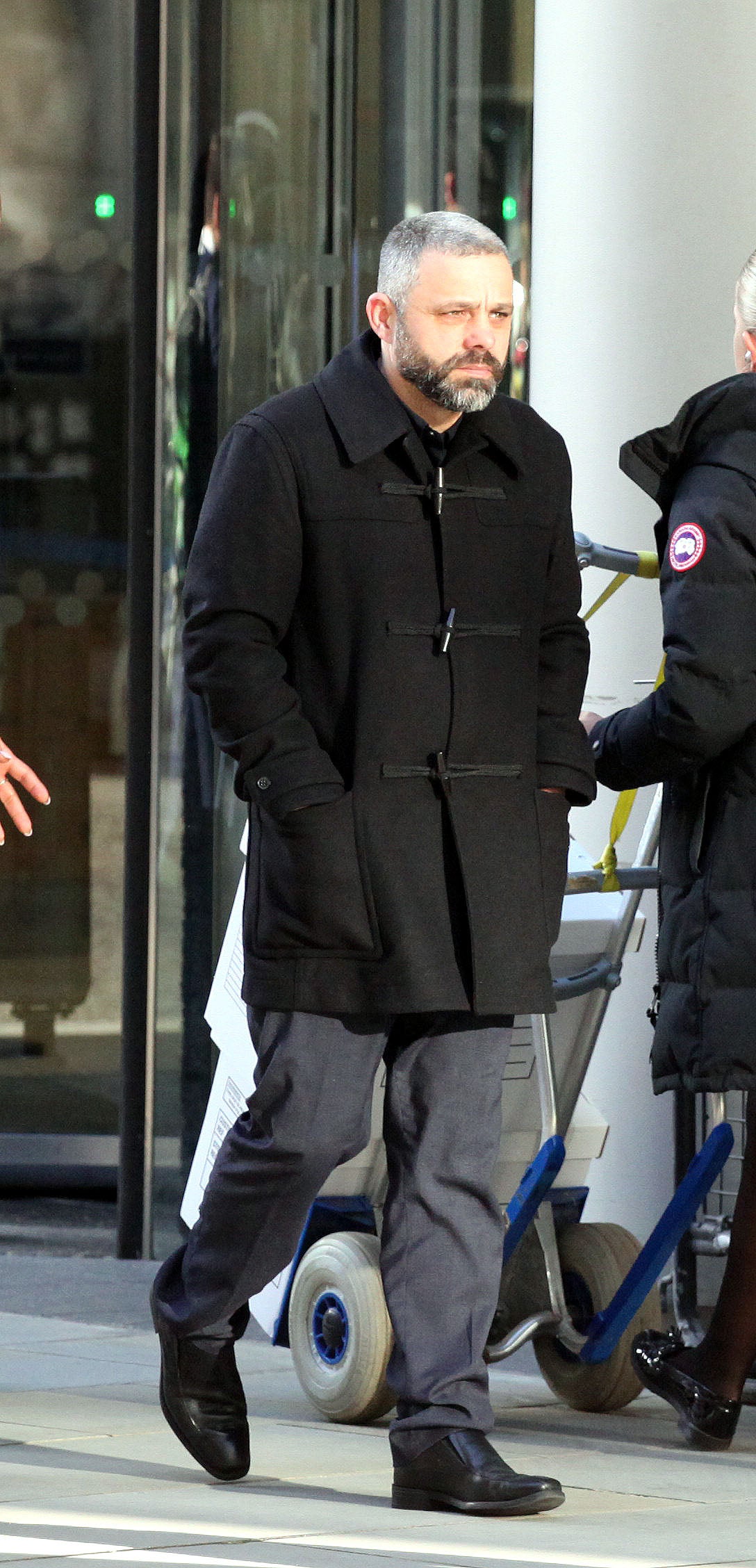
James Poole, for Mr Barbus, told the judge that Gabrielle had been brought up by his mum after the couple split, but that Mr Barbus “remained Gabrielle’s father and involved in his life”.
He added that his untimely death “was and is devastating for all members of the family”.
“This is not a case where there is any clear indication of Gabrielle’s wishes, such as instructions in a will or even diary entry,” he said.
“That is obviously not unusual. Many people do not set out their funerary wishes, especially 17-year-old boys.
“Mr Barbus wishes Gabrielle to be buried. Ms Opritescu wishes that he be cremated.
“Mr Barbus’ wishes regarding burial are heartfelt and rooted in his orthodox Christian faith.
“It is hard to put into words the importance of this issue to him – to Mr Barbus, what is at stake is Gabrielle’s soul.”
The barrister said that, as an alternative position if his request for burial were to fail, Mr Barbus’ wish was that Gabrielle’s ashes “are interred so that there is a place where he and his family can visit…and light a candle”.
But Ms Opritescu told the judge she wanted her son to be free and returned to nature by his ashes being scattered, not “confined” in a coffin or an urn in the ground.
In the witness box, she told the judge: “His father believes, but Gabrielle did not grow up in a religious household.
“My son Gabrielle and the life he lived would not want to be confined by the ground. It would upset me.
“I want him to be returned to the nature he loved, not confined.”
Her barrister, Tom Alkin, told the judge that she says that, during a conversation when he was aged 11 and revisited when he was a teenager, Gabrielle agreed that “cremation was a healthier way of dealing with saying goodbye to a loved one”.
“The wishes of those closest to Gabrielle should carry more weight,” he added.
Gabrielle’s older brother Antonio backed his mum, telling the judge: “I want Gabrielle to be free – for his remains to be part of the whole world, the natural world that he loved.”
Giving his ruling, the judge said the claim was “heartbreaking”.
“I don’t doubt that all involved are heartbroken and grieving for Gabrielle and that their wishes and feelings are deeply held,” he said.
“When deciding how a body is disposed of, the court must make an evaluative judgment.
“Close family and friends may have had the sense of what the person may have wished and the person may also have wanted to be thought of well by them.
“Mr Barbus is a practising Christian of the Roman Orthodox faith. Gabrielle himself was baptised a Roman Orthodox Christian.
“Following the divorce, Mr Barbus was not involved in making life decisions for Gabrielle.
“He said [in evidence] ‘I loved my son very much and my wishes are based on my faith…there is nothing more important to me than to know my son’s soul may enter heaven and we may all one day be resurrected.’
“He said that in his heart he’s never wanted a cremation, but that if he is cremated he wishes his ashes to be interred so that he has somewhere to go to light a candle. He said there would be nowhere to go if his ashes are scattered.
“Ms Opritescu and Gabrielle were close. Gabrielle did not have a religious upbringing.
“They went to Devon on two family holidays. Gabrielle had a very good time, particularly enjoying outdoor activities.
“Gabrielle indicated that cremation was a healthier way of saying goodbye to a loved one.
“Ms Opritescu said that interment wouldn’t suit Gabrielle as a person. She said he wanted to be free and that if he were to be interred he would be confined and that would upset him.
“What Gabrielle said must be given significant weight because he gave some thought to it and expressed the same view over a period of time.
“It seems to me that Mr Barbus’ proposal…in truth reflects his own religious convictions, not those of Gabrielle.
“I don’t believe that a Christian faith was of more than peripheral importance to Gabrielle.
“There is evidence that while he respected the religious convictions of others, he was not observant.
“Gabrielle had a closer relationship with Ms Opritescu than Mr Barbus. It is more likely that, because of the closeness of that relationship, he would have wished to honour Ms Opritescu’s wishes. I have also placed weight on Antonio’s preference for cremation.
“I have concluded that there should be a cremation in this case. The question of whether the ashes should be scattered or interred has been more difficult.”
The judge said he had heard evidence from Gabrielle’s mum and brother that “interment of the ashes is inconsistent with his personality”.
“Ms Opritescu is likely to be right that Gabrielle was somebody who wanted to be free,” he continued. “Also she is likely to know what he would have wanted himself.”
The judge said that Mr Barbus, whilst planning to attend Gabrielle’s funeral, had said he did not feel able to go and see his ashes scattered.
“Mr Barbus, having fought for what he sees as Gabrielle’s soul and lost…said that he didn’t want to attend a scattering ceremony as that would be distressing for him
“It may be that the ashes are scattered in a particular place in Devon that was special to Gabrielle. If that is the case I can only hope that Mr Barbus can have a measure of comfort if he knows where that happens and can visit that place to mourn.
“I cannot conclude this judgement without extending my own condolences to Gabrielle’s family and friends for their very tragic loss,” the judge said.
He made no order in relation to the costs of the case.
If you are experiencing feelings of distress, or are struggling to cope, you can speak to the Samaritans, in confidence, on 116 123 (UK and ROI), email [email protected], or visit the Samaritans website to find details of your nearest branch.
If you are based in the USA, and you or someone you know needs mental health assistance right now, call or text 988, or visit 988lifeline.org to access online chat from the 988 Suicide and Crisis Lifeline.
This is a free, confidential crisis hotline that is available to everyone 24 hours a day, seven days a week. If you are in another country, you can go to www.befrienders.org to find a helpline near you.