


The Federal Aviation Administration has issued a stark warning to air pilots about the dangers of exploding space rockets after a pair of failed SpaceX launches that showered deadly debris over busy passenger airways.
In a bulletin on January 8, the agency said that rising commercial space flights could lead to “catastrophic failures” that would “significantly reduce safety” for air crews and their passengers.
While the bulletin did not mention SpaceX by name, it was published on the same day as new public revelations about the impact of two failed test launches of the company’s gigantic ‘Starship’ rockets.
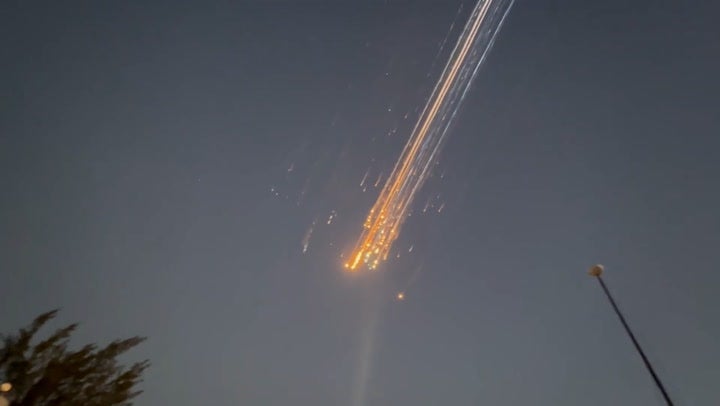
A report by the investigative non-profit Pro Publica revealed how jetliners carrying hundreds of passengers were forced to take evasive action as pieces of Starship rained down over the Caribbean in January and March last year.
“As commercial and government space launch activities increase, it is imperative that airspace users account for potential disruptions due to launch operations,” the FAA notice said.
“[Air industry workers] and flightcrews should ensure that the appropriate operator, pilot, and dispatch personnel are advised and trained on the impact of space launch and reentry operations and should take appropriate actions to mitigate the impact, which could significantly reduce safety.”
The Independent has asked SpaceX for comment.
Billed by SpaceX CEO Elon Musk as “a revolutionary technology” that will open up humankind’s pathway to the stars, Starship is a massive, fully reusable rocket designed to lift enormous payloads into orbit, and from there to the Moon or even Mars.
“If there are historians in the future, they’ll look back at Starship and say it’s one of the most profound things that’s ever happened,” Musk claimed on a podcast in December, comparing it to seismic historical events such as the evolution of multicelled life.
“Also on that scale, probably in the the top ten, is life becoming multi-planetary,” he concluded.
Unlike SpaceX’s successful Falcon rockets, however, the Starship line has struggled to get off the ground without exploding — or undergoing “rapid unscheduled disassembly”, as the company sometimes names such incidents.

According to Pro Publica, multiple planes were flying through projected debris zones when Starships came apart over the Caribbean in both January and March last year, and were forced to scramble out of the zone after receiving warnings from the FAA.
One example was the passenger-packed Frontier Flight 081, whose occupants were able to marvel at and take photos and videos of the cloud of shooting stars before their pilot told them he would need to divert out of their path.
Experts told Pro Publica that it was hard to predict where such debris would land, what impact they would have, and how close we have already come to a tragic accident.
The Wall Street Journal likewise reported in December that three planes had begun to run low on fuel while avoiding the temporary no-fly area, forcing two of them to declare emergencies and cross the danger zone to reach safety.
The Journal further alleged that SpaceX did not inform the FAA about the incident until 19 minutes after it lost contact with the Starship. Instead, FAA officials reportedly learned of it from air traffic controllers, who heard about it from pilots who witnessed it.
In response, SpaceX lambasted the story as “misleading” and laden with “false narratives”, without actually identifying any specific inaccuracies.
“The reporters were clearly spoon-fed incomplete and misleading information from detractors with ulterior motives,” SpaceX said on Musk’s social network X (formerly Twitter).
“No aircraft have been put at risk and any events that generated vehicle debris were contained within pre-coordinated response areas developed by [the U.S. Space Force] and implemented by [the FAA]…
“SpaceX is committed to responsibly using airspace during launches and reentries, prioritizing public safety to protect people on the ground, at sea, and in the air.”
The company is currently seeking FAA approval to fly more Starship tests covering a much wider swathe of territory.