

UK TimesUK Times
  • Home
  • News
  • TV & Showbiz
  • Money
  • Health
  • Science
  • Sports
  • Travel
  • More
    • Web Stories
    • Trending
    • Press Release
What's Hot

A14 westbound between J25 and J24A | Westbound | Road Works

25 June 2026
NFL star, 23, who could face life in jail appears in court in anti-suicide vest after surrendering to police

NFL star, 23, who could face life in jail appears in court in anti-suicide vest after surrendering to police

25 June 2026
More than 30,000 missing and 188 dead after Venezuela’s worst earthquake in a century – UK Times

More than 30,000 missing and 188 dead after Venezuela’s worst earthquake in a century – UK Times

25 June 2026
Facebook X (Twitter) Instagram
UK TimesUK Times
Subscribe
  • Home
  • News
  • TV & Showbiz
  • Money
  • Health
  • Science
  • Sports
  • Travel
  • More
    • Web Stories
    • Trending
    • Press Release
UK TimesUK Times
Home » Experts are one step closer to finding a way to trick your brain into thinking you slept – UK Times
News

Experts are one step closer to finding a way to trick your brain into thinking you slept – UK Times

By uk-times.com25 June 2026No Comments3 Mins Read
Facebook Twitter LinkedIn Telegram Pinterest Tumblr Reddit WhatsApp Email
Experts are one step closer to finding a way to trick your brain into thinking you slept – UK Times
Share
Facebook Twitter LinkedIn Pinterest Email

Sign up for our free Health Check email to receive exclusive analysis on the week in health

Get our free Health Check email

Get our free Health Check email

Health Check

Researchers may have just found a new way to offset the effects of sleep deprivation.

Normally, not getting enough sleep leads to drowsiness, as well as slow physical responses, a lack of focus and mood swings. It can also raise your risk for chronic disease.

But a new study in mice shows scientists can help trick the brain into thinking it’s getting the restoration it needs, triggering a reboot of connections between cells that typically only occurs when sleeping, which in turn helps consolidate our memory.

The scientists implanted tiny fiber-optic cables into the mice’s brains. The cables produce pulses of light over the course of 30 minutes, recreating the rhythm of deep sleep in part of the brain of the animals, who were kept awake to make sure they were extra tired.

“What we’re essentially doing is forcing sleep in a local region of the brain. While that part is solidifying memories and restoring learning capacity, other parts stay aware/vigilant and connected to environment,” Dr. Chiara Cirelli, a professor of psychiatry at the University of Wisconsin-Madison, explained in a statement.
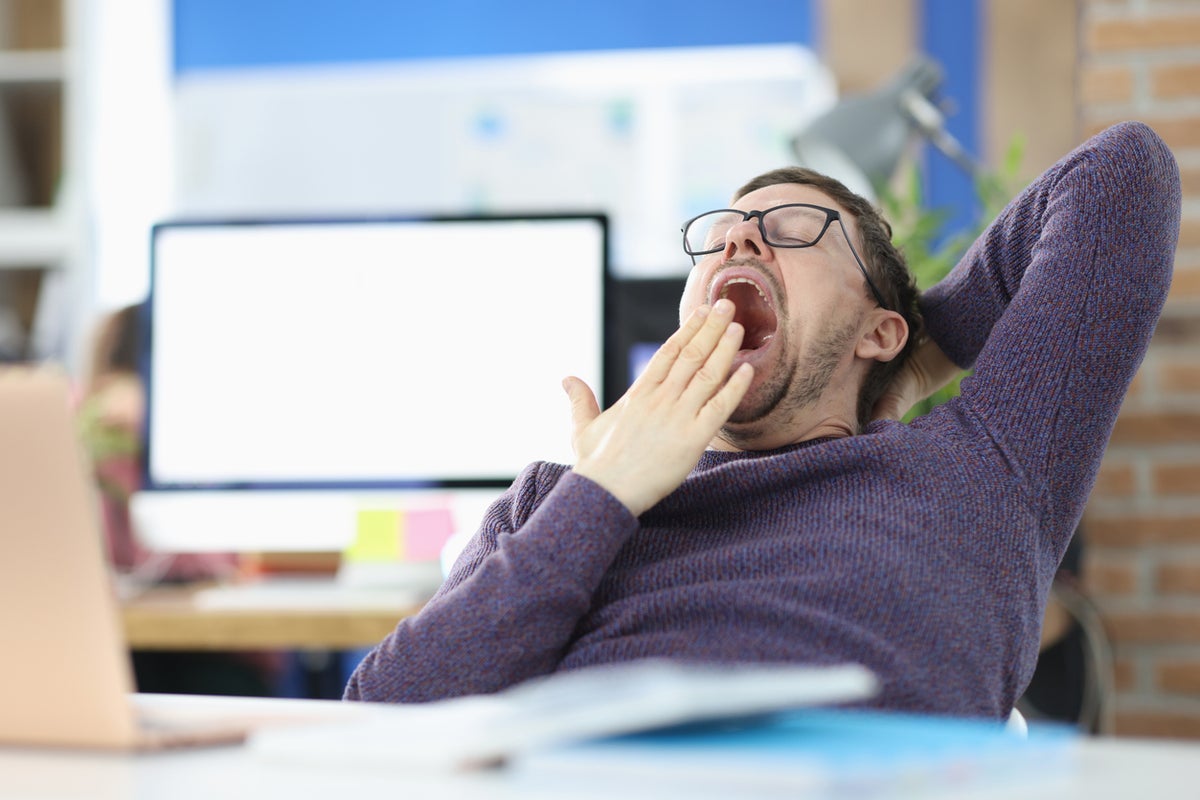
Most Americans don’t get enough sleep. New research on the brains of mice could help fight the effects of sleep deprivation
Most Americans don’t get enough sleep. New research on the brains of mice could help fight the effects of sleep deprivation (Getty Images/iStock)

“Dolphins do something similar, sleeping with only one brain hemisphere at a time,” she noted.

After the mice underwent these tests, they showed signs of needing less sleep. Their slow brain waves, a hallmark of deep sleep, were lower in the regions of the brain that were stimulated.

Brain waves are the electrical pulses produced by brain cells as we sleep and the organ works to restore itself. They can be fast and slow.

The researchers then further tested the benefits of their implants using a memory test.

The mice who were sleep-deprived and had received the stimulation on both sides of their brain performed similarly to well-rested mice.

Sleep-deprived mice who did not receive stimulation performed “significantly worse,” the National Institutes of Health said.

While the technique has not been tested in humans yet, both humans and rats show signs of this deep sleep — slow brain waves — while awake.
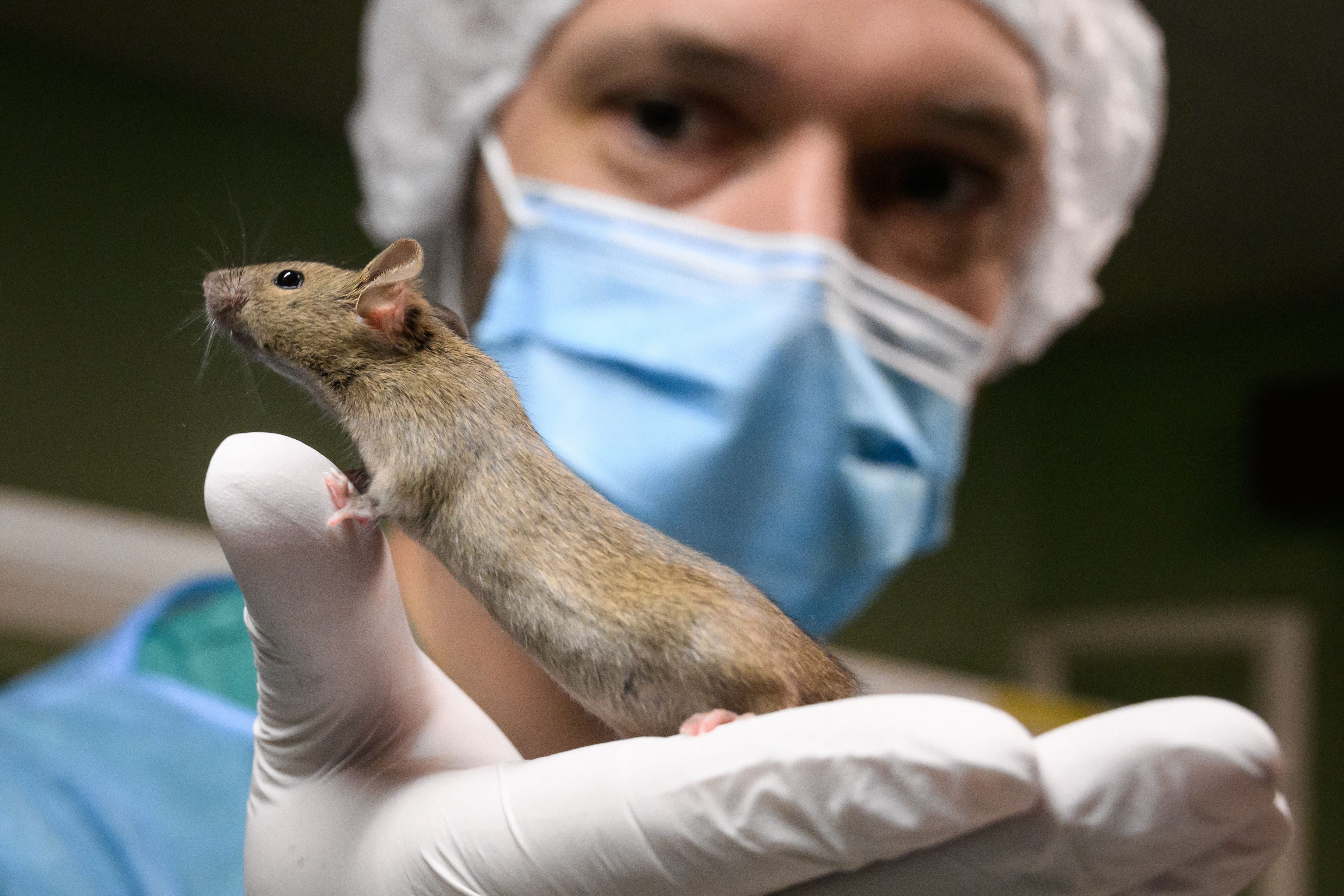
Future research aims to address whether this could be a beneficial implant in humans, too
Future research aims to address whether this could be a beneficial implant in humans, too (AFP via Getty Images)

Future studies will aim to learn whether similar effects could be reproduced in humans, using less invasive technology for the stimulation.

Most U.S. adults aren’t getting the 7-9 hours of sleep that’s federally recommended for optimal health.

Some 25 to 30 million Americans experts say they have insomnia, according to the American Academy of Sleep Medicine.

Insomnia is a sleep disorder that may be caused by stress. However, chronic insomnia can be related to long-term health conditions, such as breathing, gastrointestinal or neurological disorders, UCLA Health says.

Over time, it can raise the risk of heart disease, high blood pressure and Type 2 diabetes, according to the U.S. Centers for Disease Control and Prevention.

“This research further decodes why we sleep and how we learn, which brings us a step closer to understanding how to better prevent and treat cognitive decline,” Amy Bany Adams, acting director of the NIH’s National Institute of Neurological Disorders and Stroke, said in a statement.

The NIH funded the research.

Share. Facebook Twitter Pinterest LinkedIn Tumblr Telegram Email

Related News

A14 westbound between J25 and J24A | Westbound | Road Works

25 June 2026
More than 30,000 missing and 188 dead after Venezuela’s worst earthquake in a century – UK Times

More than 30,000 missing and 188 dead after Venezuela’s worst earthquake in a century – UK Times

25 June 2026

A36 southbound between A3094 and A360 | Southbound | Road Works

25 June 2026

M62 eastbound within J25 | Eastbound | Accident

25 June 2026
The diet that could help lower dementia risk even after early biological changes begin – UK Times

The diet that could help lower dementia risk even after early biological changes begin – UK Times

25 June 2026

A1(M) southbound between J50 and J49 | Southbound | Overturned Vehicle

25 June 2026
Top News

A14 westbound between J25 and J24A | Westbound | Road Works

25 June 2026
NFL star, 23, who could face life in jail appears in court in anti-suicide vest after surrendering to police

NFL star, 23, who could face life in jail appears in court in anti-suicide vest after surrendering to police

25 June 2026
More than 30,000 missing and 188 dead after Venezuela’s worst earthquake in a century – UK Times

More than 30,000 missing and 188 dead after Venezuela’s worst earthquake in a century – UK Times

25 June 2026

Subscribe to Updates

Get the latest UK news and updates directly to your inbox.

Recent Posts

  • A14 westbound between J25 and J24A | Westbound | Road Works
  • NFL star, 23, who could face life in jail appears in court in anti-suicide vest after surrendering to police
  • More than 30,000 missing and 188 dead after Venezuela’s worst earthquake in a century – UK Times
  • A36 southbound between A3094 and A360 | Southbound | Road Works
  • M62 eastbound within J25 | Eastbound | Accident

Recent Comments

No comments to show.
© 2026 UK Times. All Rights Reserved.
  • Privacy Policy
  • Terms of use
  • Advertise
  • Contact Us

Type above and press Enter to search. Press Esc to cancel.

Go to mobile version