



UK TimesUK Times
  • Home
  • News
  • TV & Showbiz
  • Money
  • Health
  • Science
  • Sports
  • Travel
  • More
    • Web Stories
    • Trending
    • Press Release
What's Hot

M25 J3 anti-clockwise exit | Anti-Clockwise | Broken down vehicle

30 March 2026
Russia is unlikely to run out of soldiers anytime soon – here’s why – UK Times

Russia is unlikely to run out of soldiers anytime soon – here’s why – UK Times

30 March 2026
Businessman who remains in Spain despite prison sentence banned as company director

Businessman who remains in Spain despite prison sentence banned as company director

30 March 2026
Facebook X (Twitter) Instagram
UK TimesUK Times
Subscribe
  • Home
  • News
  • TV & Showbiz
  • Money
  • Health
  • Science
  • Sports
  • Travel
  • More
    • Web Stories
    • Trending
    • Press Release
UK TimesUK Times
Home » Doubts cast on microplastic studies as experts float lab glove contamination theory – UK Times
News

Doubts cast on microplastic studies as experts float lab glove contamination theory – UK Times

By uk-times.com30 March 2026No Comments3 Mins Read
Facebook Twitter LinkedIn Telegram Pinterest Tumblr Reddit WhatsApp Email
Doubts cast on microplastic studies as experts float lab glove contamination theory – UK Times
Share
Facebook Twitter LinkedIn Pinterest Email

Sign up for our free Health Check email to receive exclusive analysis on the week in health

Get our free Health Check email

Get our free Health Check email

Health Check

The amount of microplastics thought to be present in nature and human organs may have been exaggerated by a compound in scientists’ labratory gloves, a new study has claimed.

In recent years, alarming reports have emerged that microplastics, particles smaller than five millimetres, have been discovered in rivers, soil, Antarctic ice, blood, urine and breast milk.

One report also implied that human brains had been found to be contaminated with up to a teaspoon’s-worth of plastic.

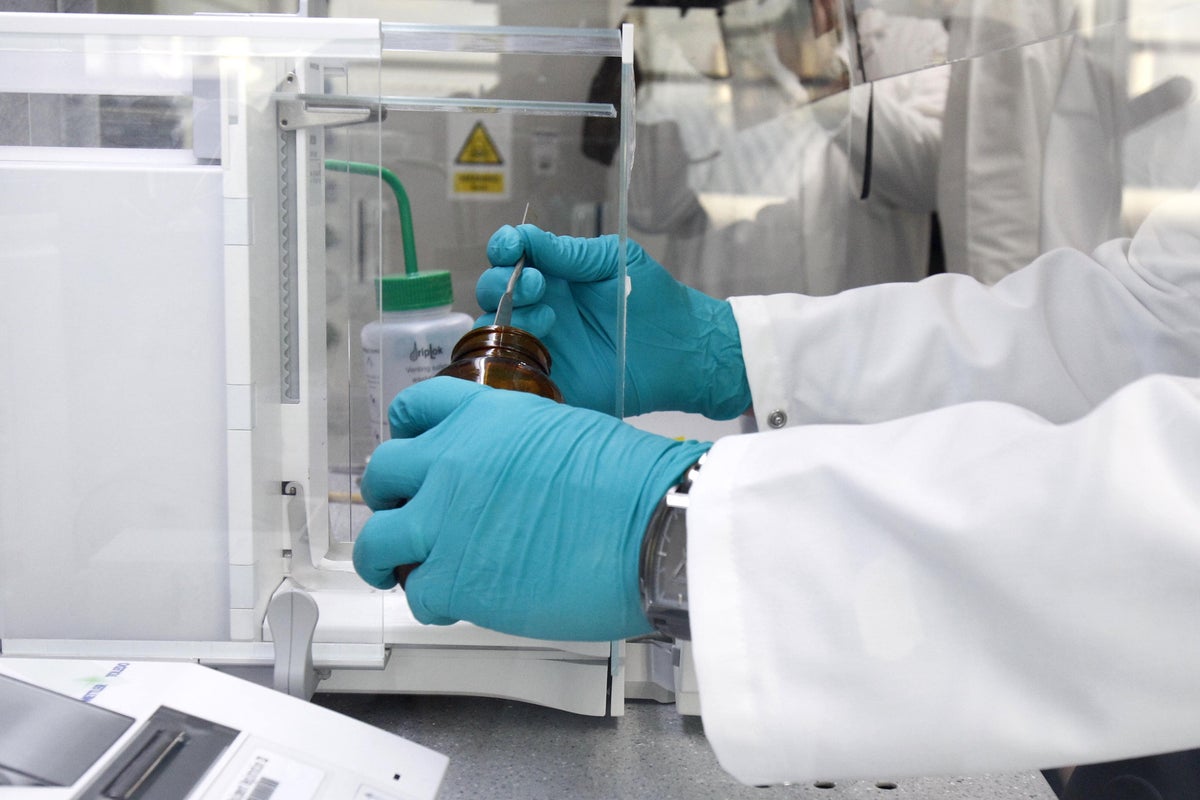
However, scientists from the University of Michigan have raised the possibility that samples may have been contaminated by tiny compounds on laboratory gloves.

The study, which has been published by the Royal Society of Chemistry, shows that tiny residues from the gloves, known as stearate salts, can easily be mistaken for the microplastic polyethylene.

When a laboratory glove comes into contact with a surface, it can leave behind microscopic traces of stearate salts, with common laboratory tests such as infrared struggling to distinguish the difference.
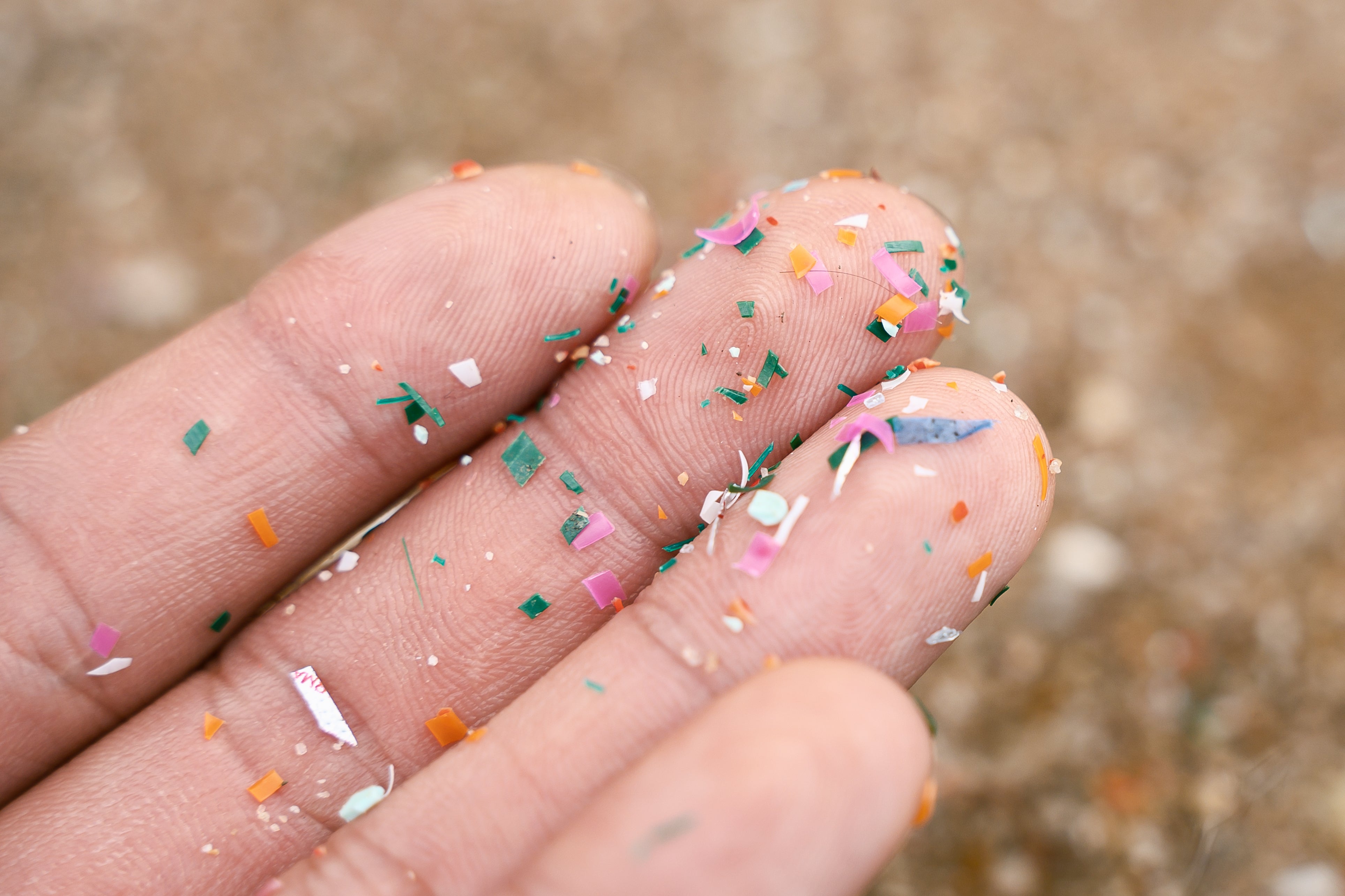
Microplastics have been discovered in nature spots such as rivers and in human urine and stool
Microplastics have been discovered in nature spots such as rivers and in human urine and stool (Getty Images/iStockphoto)

Researchers use vibrational spectroscopy to identify microplastics, which entails measuring how the particle interacts with light to produce what scientists call a chemical fingerprint.

Because polyethylene and stearate salts have very similar structures, they also interact with light in a similar way.

Professor Anne McNeil and Madeline Clough, who carried out the research, wrote on The Conversation website: “Our team found that, even when following established protocols, using certain methods to measure environmental microplastics can potentially contaminate the results.”

They added: “As a result, much of this research may be overestimating the number of microplastics.”

They have both stressed however that the study does not mean that plastic pollution is not widespread and that microplastics are not harmless.

Small plastic particles are everywhere, and so exposure is inevitable.

While these findings do not dispute this fact, it points out that gloves have largely escaped suspicion and may be contributing to high percentage of microplastics discovered in objects.

An experiment found that simple contact with gloves produced “false positives” at a rate of 2,000 particles per square millimetre, meaning a surface can appear polluted with plastic when it has merely been handled.

Laboratories are becoming more aware of contamination risks, with multiple analytical techniques increasingly being used on the same samples to cross-check results.

The study notes that researchers will hopefully be able to develop standard operating procedures for analysing microplastics in human tissues and other biological samples.

Share. Facebook Twitter Pinterest LinkedIn Tumblr Telegram Email

Related News

M25 J3 anti-clockwise exit | Anti-Clockwise | Broken down vehicle

30 March 2026
Russia is unlikely to run out of soldiers anytime soon – here’s why – UK Times

Russia is unlikely to run out of soldiers anytime soon – here’s why – UK Times

30 March 2026

A30 eastbound between B3177 and A375 | Eastbound | Broken down vehicle

30 March 2026

A14 J57 eastbound exit | Eastbound | Congestion

30 March 2026
Beatrice and Eugenie to miss royal family’s Easter church service – UK Times

Beatrice and Eugenie to miss royal family’s Easter church service – UK Times

30 March 2026

M5 southbound at the Sedgemoor services between J21 and J22 | Southbound | Congestion

30 March 2026
Top News

M25 J3 anti-clockwise exit | Anti-Clockwise | Broken down vehicle

30 March 2026
Russia is unlikely to run out of soldiers anytime soon – here’s why – UK Times

Russia is unlikely to run out of soldiers anytime soon – here’s why – UK Times

30 March 2026
Businessman who remains in Spain despite prison sentence banned as company director

Businessman who remains in Spain despite prison sentence banned as company director

30 March 2026

Subscribe to Updates

Get the latest UK news and updates directly to your inbox.

Recent Posts

  • M25 J3 anti-clockwise exit | Anti-Clockwise | Broken down vehicle
  • Russia is unlikely to run out of soldiers anytime soon – here’s why – UK Times
  • Businessman who remains in Spain despite prison sentence banned as company director
  • A30 eastbound between B3177 and A375 | Eastbound | Broken down vehicle
  • Steve Borthwick suffers another blow as key England staff member is poached by rivals South Africa

Recent Comments

No comments to show.
© 2026 UK Times. All Rights Reserved.
  • Privacy Policy
  • Terms of use
  • Advertise
  • Contact Us

Type above and press Enter to search. Press Esc to cancel.

Go to mobile version