


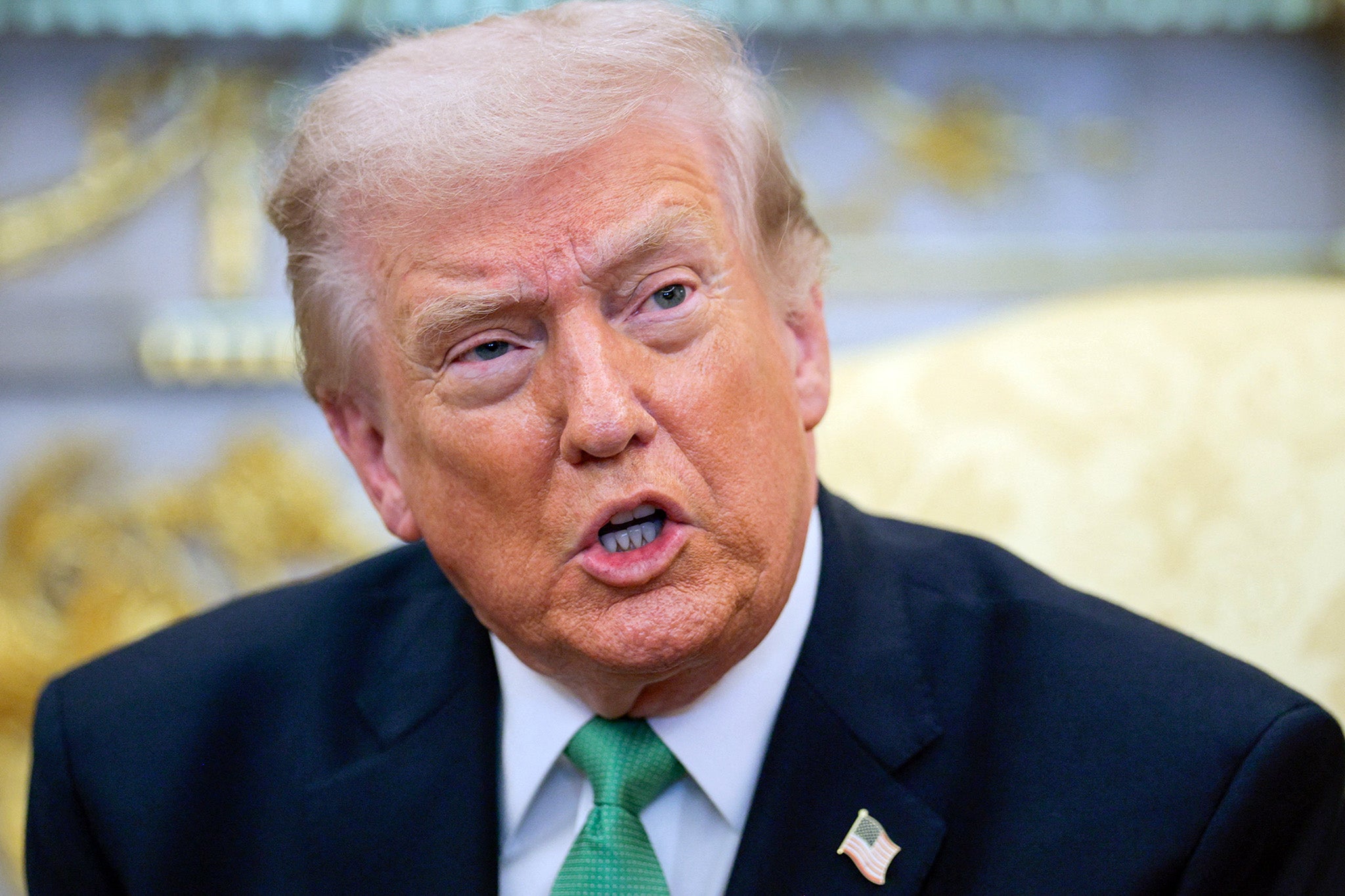
Donald Trump has lashed out at US allies after they rejected his call for help to reopen the Strait of Hormuz and protect global oil supplies.
The rattled president described Nato’s refusal to come his aid as a “foolish mistake”, before insisting: “We do not need the help of anyone!”
His outburst came as questions grew over how and when the chaotic war on Iran might end – concerns that yesterday prompted his key ally and counterterrorism chief Joe Kent to resign in protest, saying Tehran had posed no imminent threat to the US.
And European Union foreign policy chief Kaja Kallas urged America and Israel to stop the war so “everybody saves face”, adding: “The problem with wars is that it’s easier to start than to stop them, and it always gets out of hand.”
Mr Trump has found himself increasingly isolated after several countries including the UK, Germany and France, declined his request to deploy warships to the vital Hormuz shipping route through which around one fifth of the world’s oil passes.
The waterway has remained mostly closed since Islamic Revolutionary Guard Corps forces claimed to have taken “complete control” of it at the start of the war.
“The United States has been informed by most of our Nato ‘Allies’ that they don’t want to get involved with our Military Operation against the Terrorist Regime of Iran, in the Middle East,” Mr Trump wrote in a post on Truth Social.
“This, despite the fact that almost every Country strongly agreed with what we are doing, and that Iran cannot, in any way, shape, or form, be allowed to have a Nuclear Weapon.”
Hitting out at the Nato alliance as one-sided, Mr Trump said: “I always considered Nato, where we spend Hundreds of Billions of Dollars per year protecting these same Countries, to be a one way street. We will protect them, but they will do nothing for us, in particular, in a time of need.”
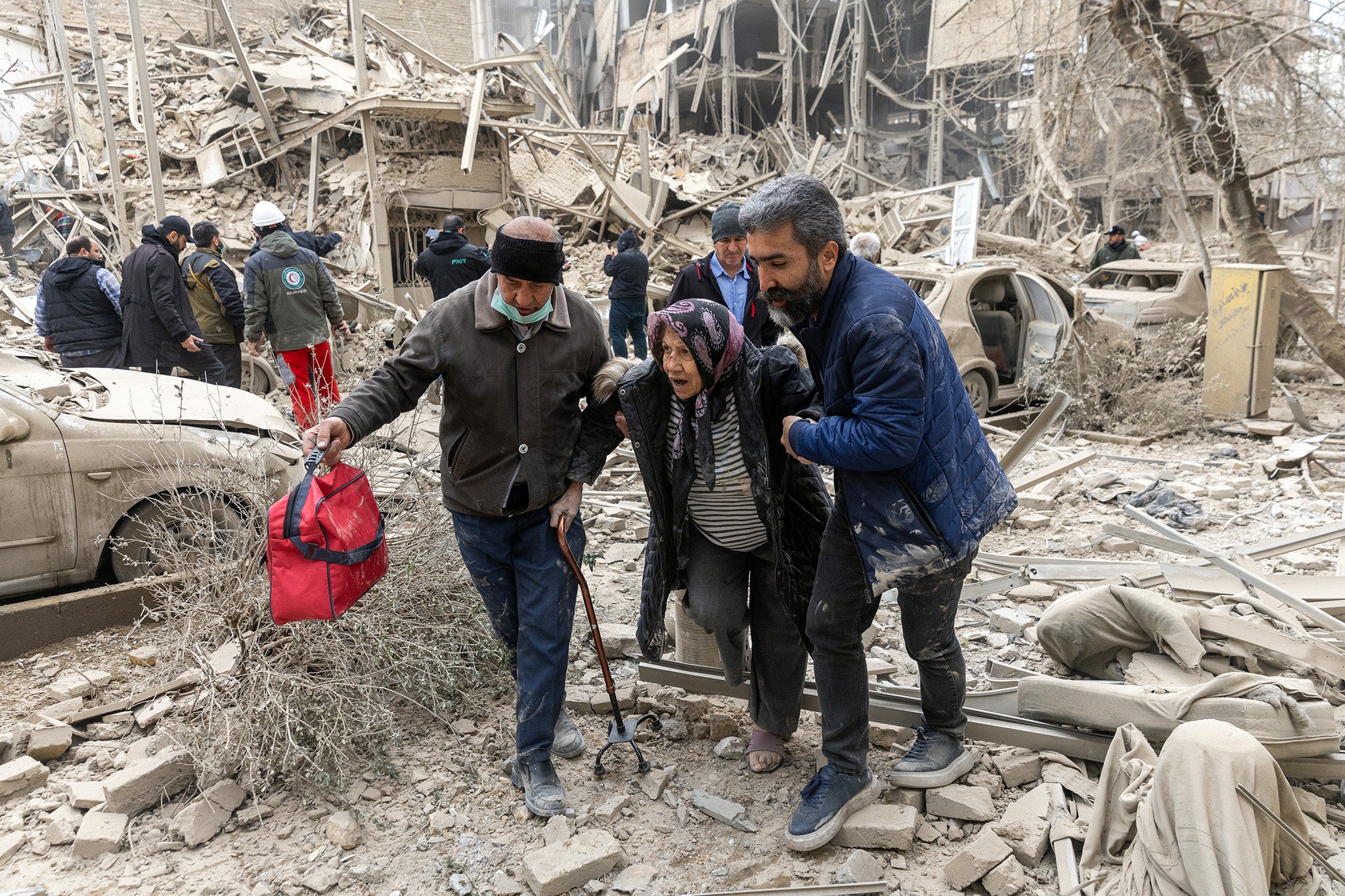
The conflict between the US and Israel and Iran has destabilised the Middle East, drawn in multiple regional powers, and seen oil prices spike with the severe disruption to the world’s oil supply.
Ms Kallas said Europe had been trying to find a solution to the ongoing conflict.
“We have been consulting with regional countries like the Gulf countries, Jordan, Egypt, whether we could also bring forward proposals for Iran, Israel and the US to get out of this situation so that everybody saves face,” she said.
“It would be in the interest of everybody if this war stops.”
Mr Trump has been under increasing pressure to resolve the conflict as the war enters its third week.
US intelligence assessments predict that the Iranian regime will remain intact despite joint US-Israeli operations to topple the Islamic Republic, sources told The Washington Post.
Mr Trump’s defence policy was dealt a further blow when Mr Kent, a previously loyal Maga figure whose own wife was killed by Isis, quit his job as director of the United States National Counterterrorism Center.
In a letter posted on social media, he wrote that he could not “in good conscience support the ongoing war in Iran”, adding: “It is clear that we started this war due to pressure from Israel and its powerful American lobby.”
Negotiations may prove difficult, however, after Israel claimed to have killed Iran’s top security chief, Ali Larijani, on Tuesday, according to defence minister Israel Katz.
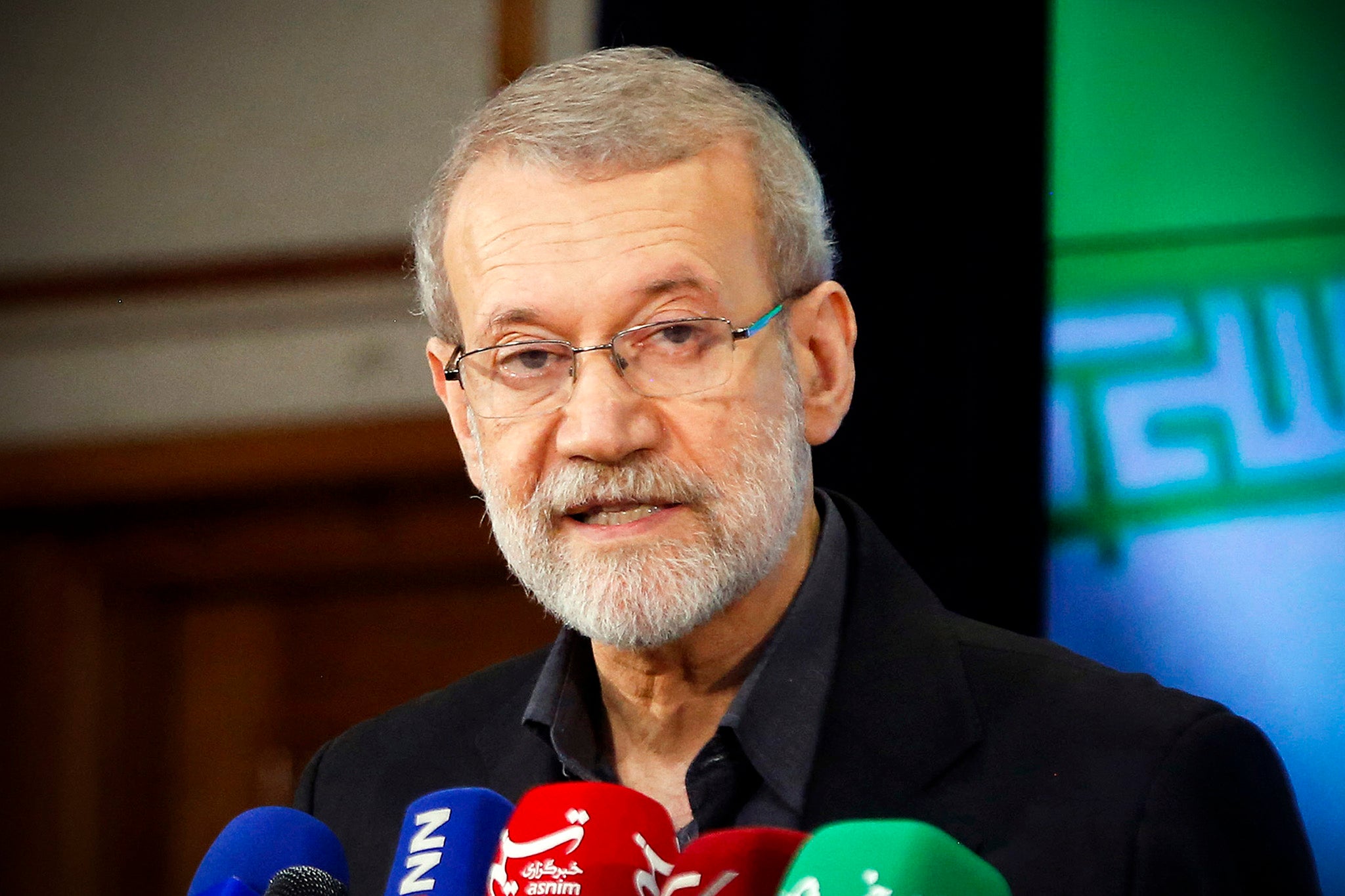
He would be the most senior figure assassinated since supreme leader Ayatollah Ali Khamenei himself, who was killed on the first day of the war in a US-Israeli strike on his compound on 28 February.
Shortly after the reports circulated, Iranian state media published a handwritten note purportedly from Mr Larijani commemorating Iranian sailors killed in a US attack, but there was no immediate comment by Tehran.
Countries across the Gulf, including Qatar and the UAE who host major US military assets, faced a fresh wave of Iranian missile attacks hitting key oil and gas facilities and causing widespread airspace disruption. Most of the strikes were intercepted.
Israel’s campaign in Lebanon continued as humanitarian groups warned that over a million people have now been displaced. At least 886 people have been reported killed, according to the country’s health ministry.
Meanwhile, in Iran over 3.2 million people have been displaced, with more than 1,300 killed.