
The Justice Department’s internal watchdog said Thursday it would review the rollout of the Epstein files after lawmakers accused officials of improperly redacting information about victims and missing deadlines to release materials associated with late convicted sex offender Jeffrey Epstein.
The DOJ’s Office of Inspector General said it was auditing the department’s compliance with the Epstein Files Transparency Act, the legislation passed last year that mandated the release of documents, photos and videos collected during the government’s investigation into Epstein.
Some members of Congress accused Justice Department officials of botching the rollout of the files, which were released in batches over the course of three months – far beyond the congressionally-mandated deadline.
The announcement comes more than a month after the department published a final batch of documents, which were released after NPR accused the Justice Department of withholding documents related to President Donald Trump.
Inspector General William Blier said the audit will evaluate how the department identified, redacted and released records. Blier’s office will issue a public report with the audit’s results when it’s completed.

Congress passed the Epstein Files Transparency Act in November with wide bipartisan support, hoping to reveal new information about high-power people associated with Epstein.
Epstein died in prison in 2019 before his case could go to trial. His co-conspirator Ghislaine Maxwell was convicted of child sex trafficking, among other charges, in 2021 and sentenced to 20 years in prison.
The act required the Justice Department to release all applicable documents within 30 days of its passing, but allowed for redactions to protect the identities of victims, ongoing litigation, national security information and prevent the release of explicit material.
However, due to staffing shortages, the department took weeks to redact necessary information in millions of pages of documents, leading to delays.
Additionally, news outlets noted a slew of improper redactions in released files, some containing nude images, the names of victims and survivors’ personal information.
Democratic Rep. Ro Khanna and Republican Rep. Thomas Massie later accused the Justice Department of over-redacting information, including the names of powerful businessmen.
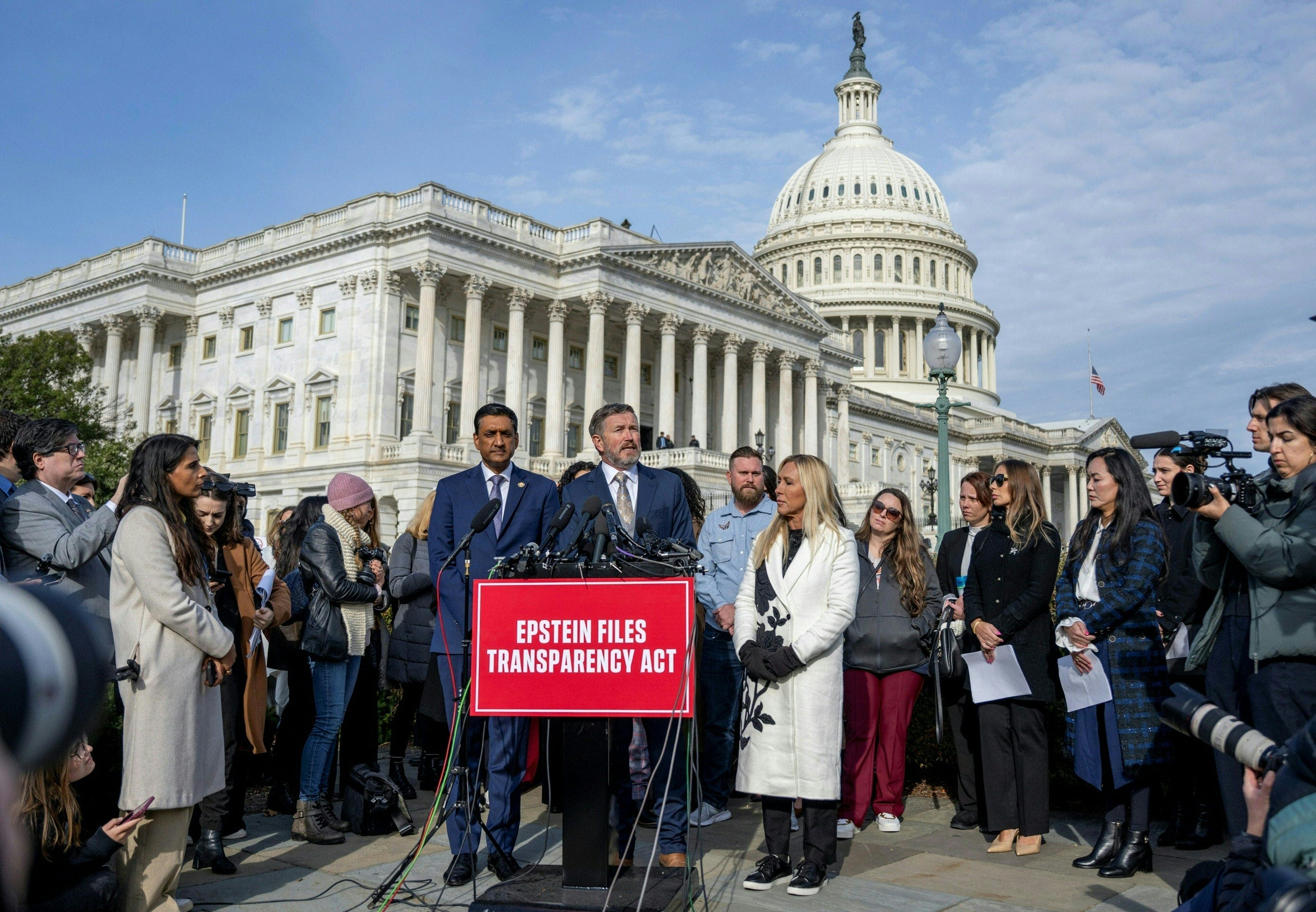
The Epstein files drama unfolded last year after former Attorney General Pam Bondi vowed to make good on Trump’s campaign promise to make the files public, but then suddenly backtracked.
Even members of the president’s MAGA base expressed outrage at Bondi’s refusal to release information about Epstein.
The president ousted Bondi earlier this month.
Public interest in the case reemerged, in part, because Trump was once friends with Epstein in the 1990s and early 2000s. Trump and Epstein had a falling out before Epstein’s first criminal investigation. The president has maintained he did not know about Epstein’s crimes.
But speculation about the extent of Trump and Epstein’s relationship re-emerged in July after the Wall Street Journal published a bawdy birthday card the president reportedly gave Epstein in 2003. Trump denied giving Epstein the card and sued the publication; however, a federal judge dismissed the lawsuit earlier this month.
Some lawmakers accused the Justice Department of withholding or redacting information in the files related to Trump. Acting Attorney General Todd Blanche denied the allegation.
In addition to the Epstein Files Transparency Act, the House Oversight Committee has conducted its own investigation into some of the high-profile individuals named in the files by subpoenaing former President Bill Clinton, former Secretary of State Hillary Clinton, Microsoft co-founder Bill Gates, Bondi and more.
The Independent has asked the Justice Department for comment