


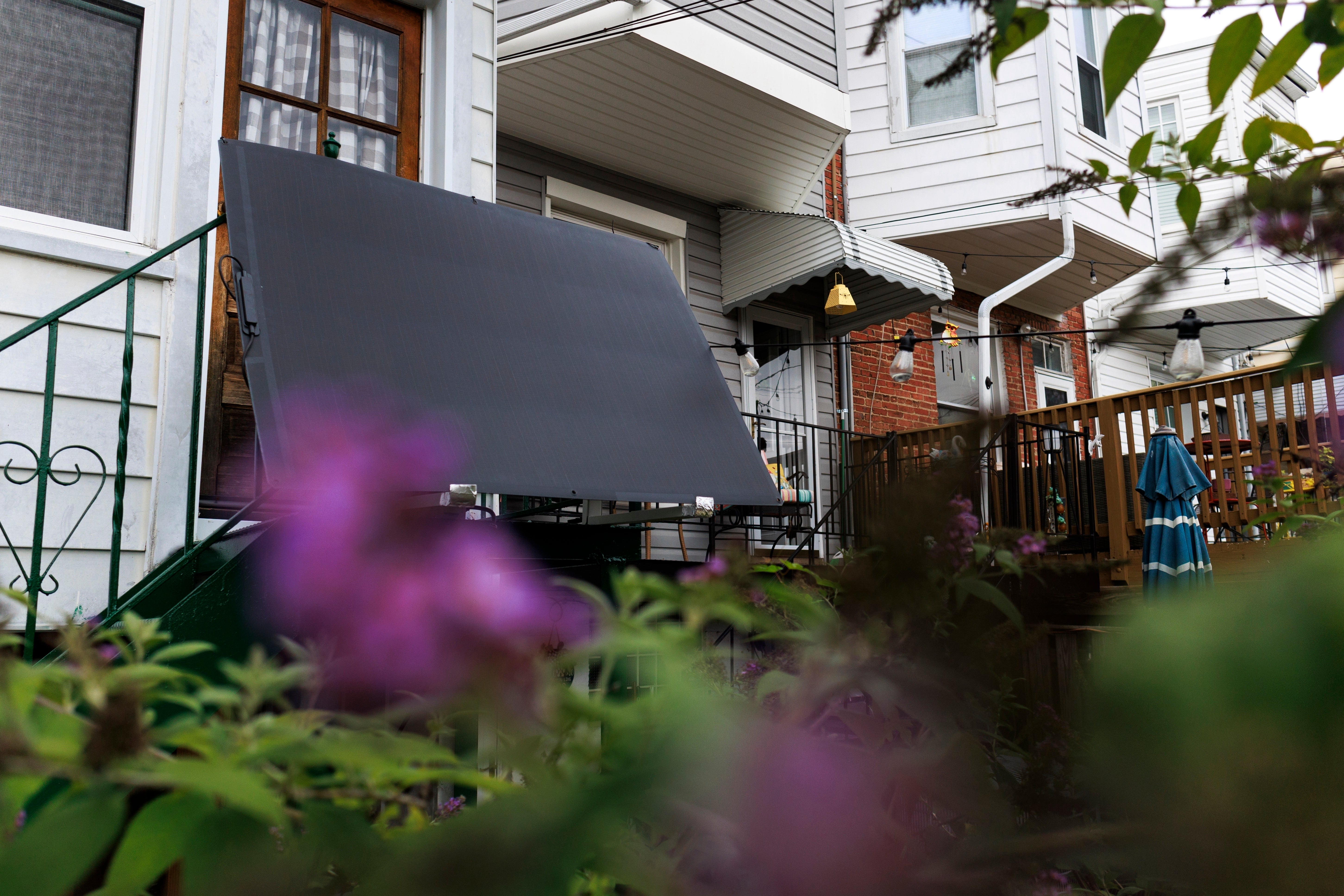
Plug-in solar panels could soon offer a cheaper way to generate electricity at home. Instead of paying thousands of pounds for a rooftop solar system, UK households will be able to follow in the footsteps of their European neighbours and buy a small solar kit off the shelf, mount it on a balcony, wall, shed or garden frame, and plug it into their home electricity supply.
The appeal is obvious. Solar panels can reduce the amount of electricity you buy from the grid, and plug-in systems are expected to cost hundreds of pounds rather than several thousand. For renters, flat owners and people without a suitable roof, solar power could feel more accessible than ever before.
But do plug-in solar panels save you money in the long term? This is the question on everyone’s lips, and the answer is more complicated than the headline price suggests. Plug-in solar panels are smaller than conventional rooftop systems, and they are only likely to save you money on the electricity you use while the panels are generating. If your home is empty during the day, your balcony is shaded, or much of the electricity goes unused, the payback period could quickly stretch out.
The UK government has said it wants plug-in solar panels to be available to buy “within months”, with new safety standards intended to make off-the-shelf systems suitable for British homes. This article looks specifically at the savings and how plug-in solar panels help reduce electricity bills, what a realistic payback might look like, and when a cheap plug-in solar kit could still prove poor value.
Read more: Best solar panels 2026 for UK homes, reviewed by experts
Get a quote for solar panels for your home
Use our comparison tool to get free quotes from leading solar panel installers.
How do plug-in solar panels save you money?
Plug-in solar panels save money in the same basic way as rooftop solar panels: they generate electricity that can be used in your home.
A small solar panel system captures daylight and converts it into electricity. A microinverter then changes that electricity into a form your home can use. When connected safely and correctly, the power generated by the panels can help run appliances and devices in your property, reducing the amount of electricity you need to buy from your supplier.
The important point is that plug-in solar panels save money through avoided electricity costs. They are not likely to be a major income generator.
If your panel produces electricity while your fridge, router, laptop, television, washing machine or dishwasher is using power, some of that demand can be met by solar instead of grid electricity. Every unit you use in the home is one less unit you need to buy from your energy company.
That makes plug-in solar different from many other small energy-saving products. It’s not cutting demand in the way loft insulation, draught-proofing or a more efficient appliance might. Instead, it’s supplying some of your electricity demand from a small, local source.
The financial case, therefore, depends on three main things: how much electricity the system generates, how much of that electricity you use at home, and what you would otherwise have paid for electricity from the grid.
How much could a plug-in solar panel cut your bill?
A simple way to estimate the savings is to multiply the amount of solar electricity you use at home by your electricity unit rate.
For example, if a plug-in solar system generated 300kWh of electricity over a year and you used all of that electricity in your home, a unit rate of 25p per kWh would produce a saving of about £75 a year.
If you used half of that electricity, the saving would fall to around £37.50. The panel may still have generated the same amount of power, but the financial benefit would be lower because less of it displaced electricity you would otherwise have bought from the grid.
This is why any advertised savings should be treated carefully. A plug-in solar kit might have a stated annual output under ideal conditions. But your actual savings will depend on your property, the position of the panel and the way you use electricity.
The basic calculation is:
Annual savings = annual solar generation × percentage used at home × electricity unit rate
So, if a plug-in system generated 400kWh in a year, and you used 70 per cent of that electricity in the home at 25p per kWh, the estimated saving would be:
400kWh × 70% × 25p = £70 a year
That doesn’t mean every household with the same system would save £70. A household that uses most of its electricity in the evening might use a smaller share of the solar power, for example. Likewise, a household where someone works from home during the day might use more.
Why self-consumption matters more than generation
With plug-in solar panels, the biggest financial question isn’t simply how much electricity the panels produce, but how much of that electricity you can use.
This is known as self-consumption. If a solar panel generates power at midday and your home is using electricity at the same time, the solar power can offset electricity from the grid. If the panel generates power when there is very little demand in the home, the financial benefit may be much smaller.
A household where someone works from home is likely to have a stronger case. Daytime electricity use from a laptop, monitor, router, fridge, kettle, washing machine or dishwasher can help absorb some of the solar generation. Appliances can also be timed to run during brighter periods, which may increase the share of power used on-site.
A household that is empty for most of the day may see weaker savings. The fridge and standby appliances will still use some power, but much of the household’s energy demand may happen after sunset, when the panels are no longer generating.
This doesn’t mean plug-in solar only works for people who are at home all day. East-facing panels may be more useful in the morning, while west-facing panels may generate more later in the day. But the closer your electricity use matches the panel’s generation pattern, the better the financial case becomes.
In simple terms, a plug-in solar panel saves the most money when your home is already using electricity during daylight hours.
How long would plug-in solar panels take to pay for themselves?
The payback period is the point at which your cumulative savings equal the upfront cost of the kit.
If a plug-in solar system costs £500 and saves £100 a year, it would pay for itself in about five years. If the same system saves £50 a year, the payback period doubles to 10 years. If it saves only £25 a year, it would take 20 years to break even.
That range is important because plug-in solar is likely to be sold partly on affordability. A lower upfront price helps, but it doesn’t guarantee a short payback period.
|
Kit cost |
Annual saving |
Approximate payback |
|
£400 |
£100 |
4 years |
|
£500 |
£75 |
67 years |
|
£600 |
£50 |
12 years |
|
£700 |
£25 |
20 years |
These figures are illustrative rather than a promise of what any particular household will save. The same panel could perform very differently on a sunny, south-facing balcony than it would on a shaded wall or a north-facing outdoor space.
The product lifespan and warranty also factor into the equation. A seven-year payback looks more attractive if the product is expected to last well beyond that point. A 12- or 20-year payback is much less compelling if the kit has a shorter warranty, needs replacement parts, or is moved between properties.
What could reduce your savings from plug-in solar panels?
Several factors can reduce the amount you save from plug-in solar panels, even if the kit itself is relatively cheap.
Solar panels need daylight, and shading can significantly reduce output. A balcony rail, neighbouring building, tree, chimney, wall or overhang can all limit generation. Even partial shading at key times of day can reduce the amount of electricity available to use at home.
In the UK, south-facing panels usually generate the most electricity overall. East- and west-facing panels can still be useful, especially if they match morning or afternoon usage, but north-facing panels are likely to produce less. The angle of the panel also matters, particularly if it is mounted vertically on a balcony rather than tilted towards the sun.
Plug-in solar is more financially useful when your home has a steady daytime electricity demand. If most of your usage occurs in the evening, you may only use a limited share of the power generated during the day.
With conventional rooftop solar, households may be able to receive payments for unused electricity exported to the grid through the Smart Export Guarantee. The position for plug-in solar systems may not be as straightforward, particularly while the UK market is still developing.
For that reason, it is safer to judge plug-in solar mainly on the electricity it helps you use at home, rather than assuming you will earn meaningful export payments.
The panel may not be the only cost. Mounting equipment, smart plugs, monitoring devices, extension hardware or other accessories could add to the upfront price. If a battery is added, the total cost could rise significantly, which may lengthen the payback period rather than shorten it.
Could you make money from plug-in solar panels?
For most households, plug-in solar panels are better thought of as a way to reduce bills, not as a way to make money.
A small system may produce some surplus electricity at certain times of day, particularly in summer. But unless that electricity can be exported and paid for, the value of the surplus may be limited. Even where export is possible, the payment for exported electricity is usually lower than the cost of buying electricity from the grid.
That means the strongest financial return usually comes from using the power yourself. A unit of electricity used at home can offset your full import rate. A unit exported may be worth less, and for plug-in systems, it may not always be clear whether export payments will apply.
The safest assumption is that plug-in solar panels save money by reducing imports from the grid, rather than generating a meaningful income.
Are plug-in solar panels cheaper than rooftop solar?
Plug-in solar panels are expected to be much cheaper up front than rooftop solar panels. A small plug-in kit may cost hundreds of pounds, while a full rooftop solar PV system typically costs several thousand.
But cheaper does not necessarily mean better value for every household. Plug-in systems are smaller, produce less electricity and are unlikely to cover a large share of a home’s annual power demand. Rooftop solar remains the stronger option for homeowners who have a suitable roof, can afford the higher upfront cost and want a larger reduction in their electricity bills.
Plug-in solar is different. It is a smaller intervention designed to trim daytime electricity use. Its appeal is accessibility rather than scale.
For someone who owns a suitable house and wants the largest long-term savings, rooftop solar is likely to remain the most powerful option. For a renter, flat owner or household without a suitable roof, plug-in solar could offer a lower-cost way to generate a modest amount of electricity.
How to work out if plug-in solar will save you money
Before buying a plug-in solar system, it is worth doing a rough payback calculation.
Start with the upfront cost of the kit. Then estimate how much electricity it is likely to generate each year, what proportion you are likely to use at home, and how much you currently pay per unit of electricity.
As above, the formula is:
Estimated annual saving = annual generation × percentage used at home × electricity unit rate
For example:
400kWh × 70% × 25p = £70 a year
Then you need to work out the payback period:
Payback period = kit cost ÷ annual saving
So, if the kit costs £500 and saves £70 a year, the payback period would be just over seven years.
You should also consider whether the product is approved for UK use, how long the warranty lasts, whether your landlord or freeholder needs to give permission, and whether your home insurance would be affected. These checks do not change the savings calculation directly, but they do affect whether the system is a sensible purchase.
The verdict: Do plug-in solar panels save you money?
Plug-in solar panels can save you money, but the savings are likely to be modest. They make the strongest financial case when the kit is cheap, the panels are unshaded, the household uses electricity during the day and most of the generated power is consumed at home.
They make a weaker case where the panels are shaded, daytime electricity use is low, or the household expects them to perform like a full rooftop solar system. A cheap plug-in solar kit can still be poor value if it saves only a few pounds a month.
For the right household, plug-in solar could pay for itself over several years and then continue to trim electricity bills. For the wrong one, the savings may be so small that the low upfront cost becomes less meaningful.
The best way to think about plug-in solar is as a bill-trimming product, not a whole-home energy solution. It could make solar power more accessible for renters, flat owners and homes without suitable roofs, but whether it saves you money will depend on how much of its electricity you actually use.