The recent rash of deadly accidents and close calls at U.S. airports already struggling with an air traffic controller shortage and hundreds of federal layoffs has many travelers — and even some folks on the ground — worried about the next disaster.
While public awareness of even minor mishaps involving airplanes has never greater, aviation experts tell The Independent that air travel is the still the statistically safest form of transportation.
But they also warn that there’s a flaw in high-tech safety systems used at airfields across the country — one that may have fueled the devastating runway collision that killed two pilots at New York City’s LaGuardia Airport in March.
“It’s an existing gap, and it needs to be closed,” said retired airline captain-turned-safety consultant John Cox,, who’s testified before Congress and the National Transportation Safety Board.
The issue involves relatively inexpensive electronic transponders that let air traffic controllers track the movement of vehicles on the ground, which the Federal Aviation Administration has urged airports to adopt since 2011, but has never made mandatory.
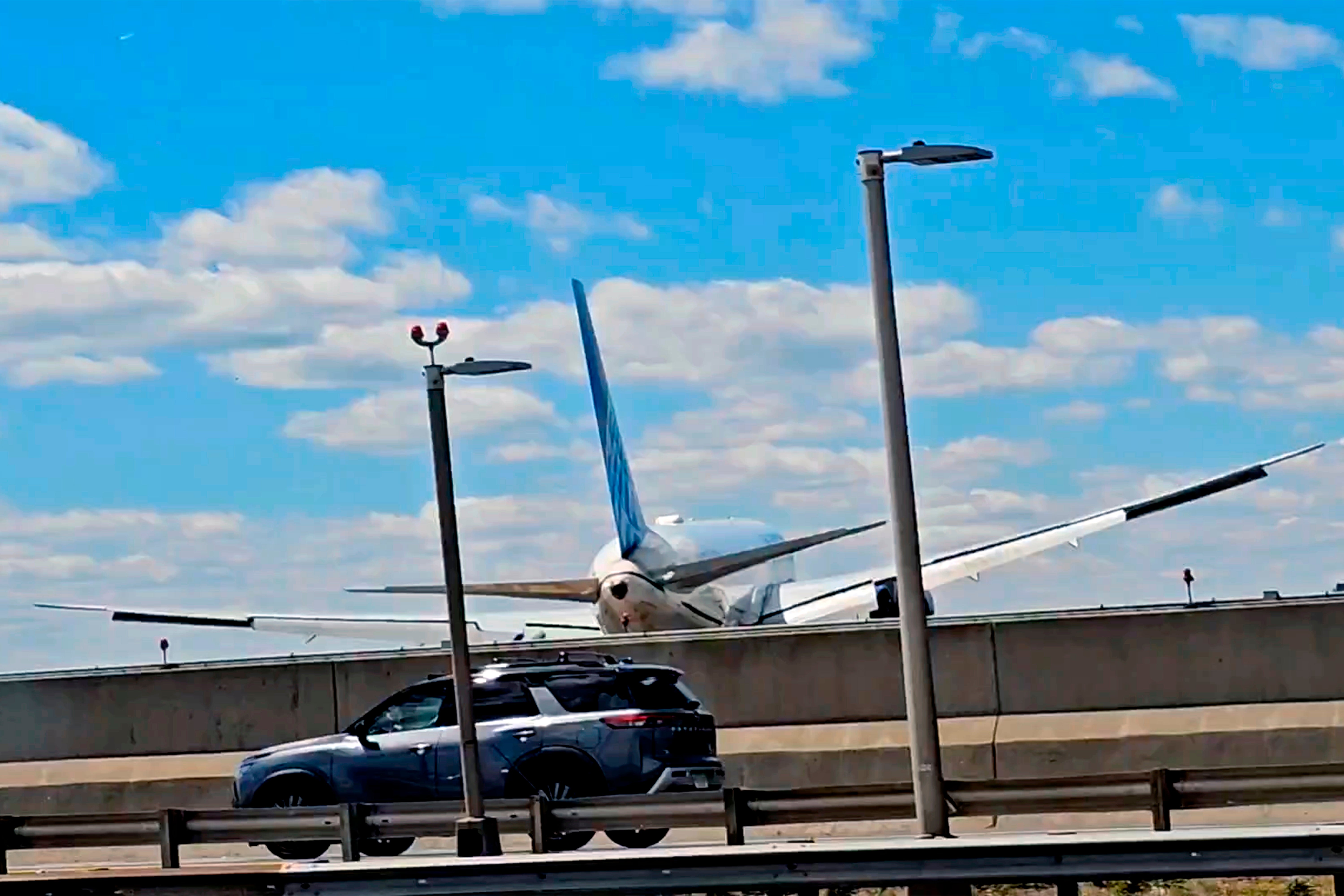
In addition to the LaGuardia collision, the spate of incidents includes the harrowing, caught-on-camera moment when a plane carrying 231 passengers and crew clipped a light pole and bread truck on the New Jersey Turnpike while approaching Newark Airport.
The truck driver, Donald Boardly Jr. of Baltimore, miraculously survived with minor injuries after the Boeing 737’s landing gear apparently smashed into the cab of the bakery delivery truck he was driving on May 3. “He described total fear that he wouldn’t walk away from it,” his father, Donald Boardly Sr., later told reporters, according to nj.com. “He thought he’d be decapitated.”
Retired United Airlines captain Steve Arroyo, who was based in Newark and used the same route to safely land there “dozens of times” during his careers, said the plane was obviously “below the glide path” for a landing with “narrow margins” for safety.
“They came within inches of a major catastrophe,” he said.
The next day, a regional flight from Rochester, New York, came within 500 feet of a single-engine propeller plane flying overhead as they crossed paths while landing at New York City’s Kennedy Airport, according to local TV station WABC.
That near miss came just two weeks after an April 20 incident at Kennedy during which cockpit alarms sounded when a plane that was attempting to land missed its approach and veered into the path of another that was forced to abort its landing and climb 3,000 feet to avoid a midair collision.
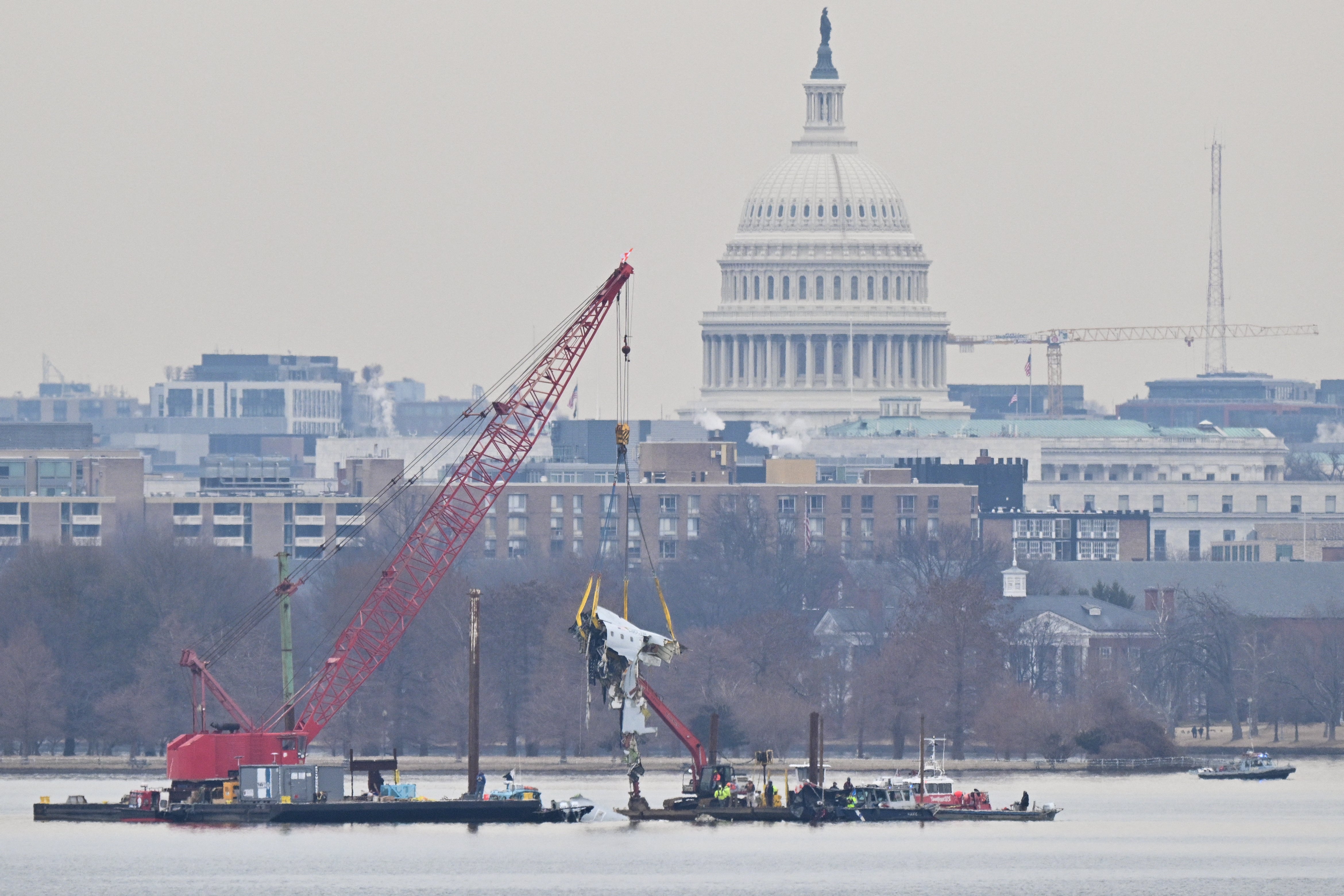
And that followed a similar incident two days earlier at Tennessee’s Nashville Airport, as well as a March 24 close call involving a military Black Hawk helicopter and a Boeing 737 at John Wayne Airport in Santa Ana, California, that evoked memories of the 67 people killed last year when a Black Hawk and a regional jet collided over the Potomac River in Washington, D.C., near Reagan Airport.
More recently, a grisly accident took place at Denver Airport, where a suicidal man climbed over a fence and walked onto a runway where he was fatally sucked into a plane’s engine as it was attempting to take off on May 8, igniting a fire and causing minor injuries to 12 people on board.
The most recent commercial aviation statistics released by the NTSB show that accidents in the U.S. during 2008-2024 ranged from a high of 91 in 2008 to a low of 59 in 2020, when airline traffic declined dramatically due to the COVID-19 pandemic.
In 2024, there were 75 commercial aviation accidents in the U.S., including 34 that involved major airlines, regional carriers and cargo operators, with the latter number up from 32 in 2023. None of those accidents caused any deaths, according the the NTSB.
There were also 41 accidents in 2024 involving smaller, on-demand charter operators and commuter aircraft, including six that killed people, up from 36 accidents in 2023, when there were eight deadly accidents.
The independent Flight Safety Foundation’s Aviation Safety Network, whose tallies differ from the NTSB’s, counted 61 commercial aviation accidents in the U.S. last year, up from 54 in 2024, according to figures posted on the network’s online Global Accident Dashboard.
John Cox said the recent increases didn’t mean the public faced any greater risks because “if you look at the total number of accidents over a five- or 10-year period, the trend line continues to come down.”
“I look at the data daily and I have not seen an erosion in safety,” he said. “The most dangerous part of any flight is the drive to and from the airport — and that is an absolute fact.”
Arroyo likewise said that “when you look at the statistics, 75 to 85 million people fly every month in the USA.”
“A passenger would have to fly 20 million flights to be involved in an accident,” he said. “I feel confident that our air transportation system here in the United States and globally is very safe, notwithstanding those anomalies we’ve seen in the past weeks and months.”
Cox, who serves as an aviation analyst for NBC News, also said that because airline travel is so safe, even near misses can be turned into news.
“I watch the media and see how they have increased their interest in any deviations in aviation safety,” he said. “When you get any deviation, it stands out from the roughly 40 million flights that year.”
A spokesperson for the Flightradar24 website, which tracks air traffic using a global network of 50,000-plus ground receivers, also said technological advances had made it much easier for reporters and the public to learn about accidents and close calls in real time.
“With advent of software to find radios and the ability of a lot of people to build a receiver, that makes these types of incidents more visible,” spokesperson Ian Petchenik said. “Whereas, a few years ago only a few folks who were interested would know.”
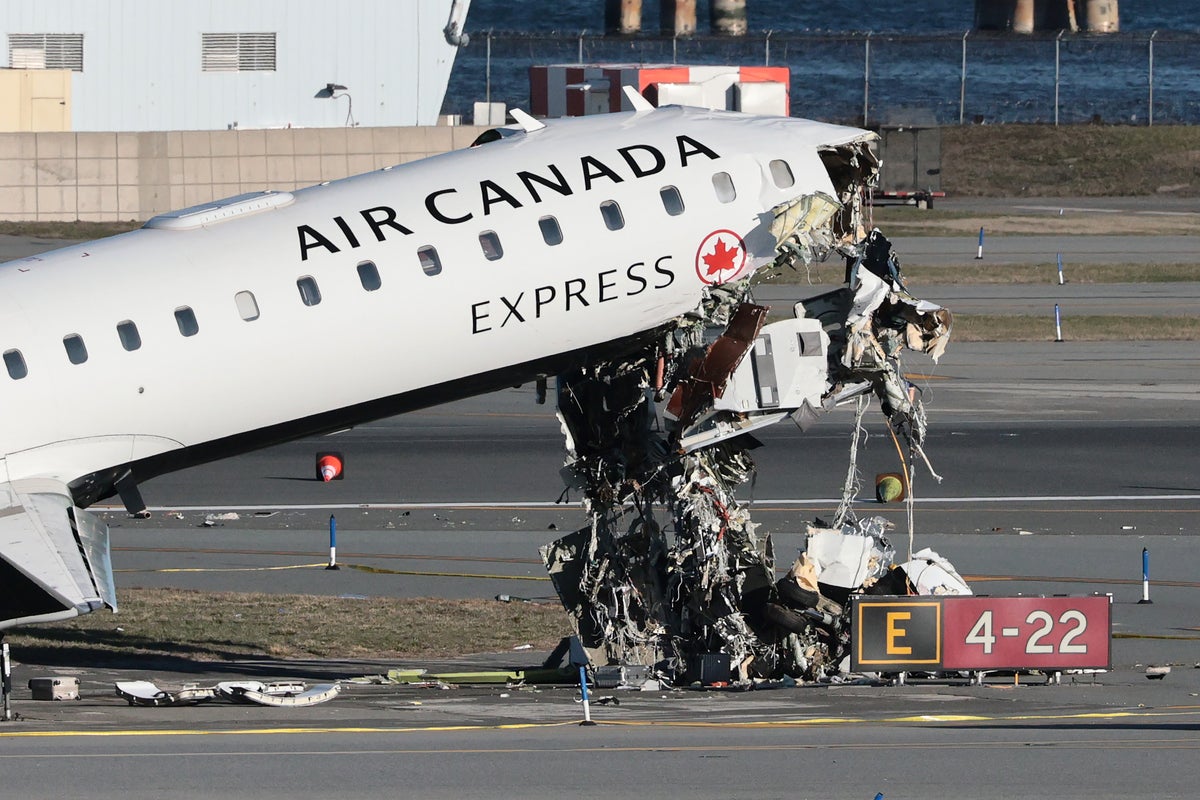
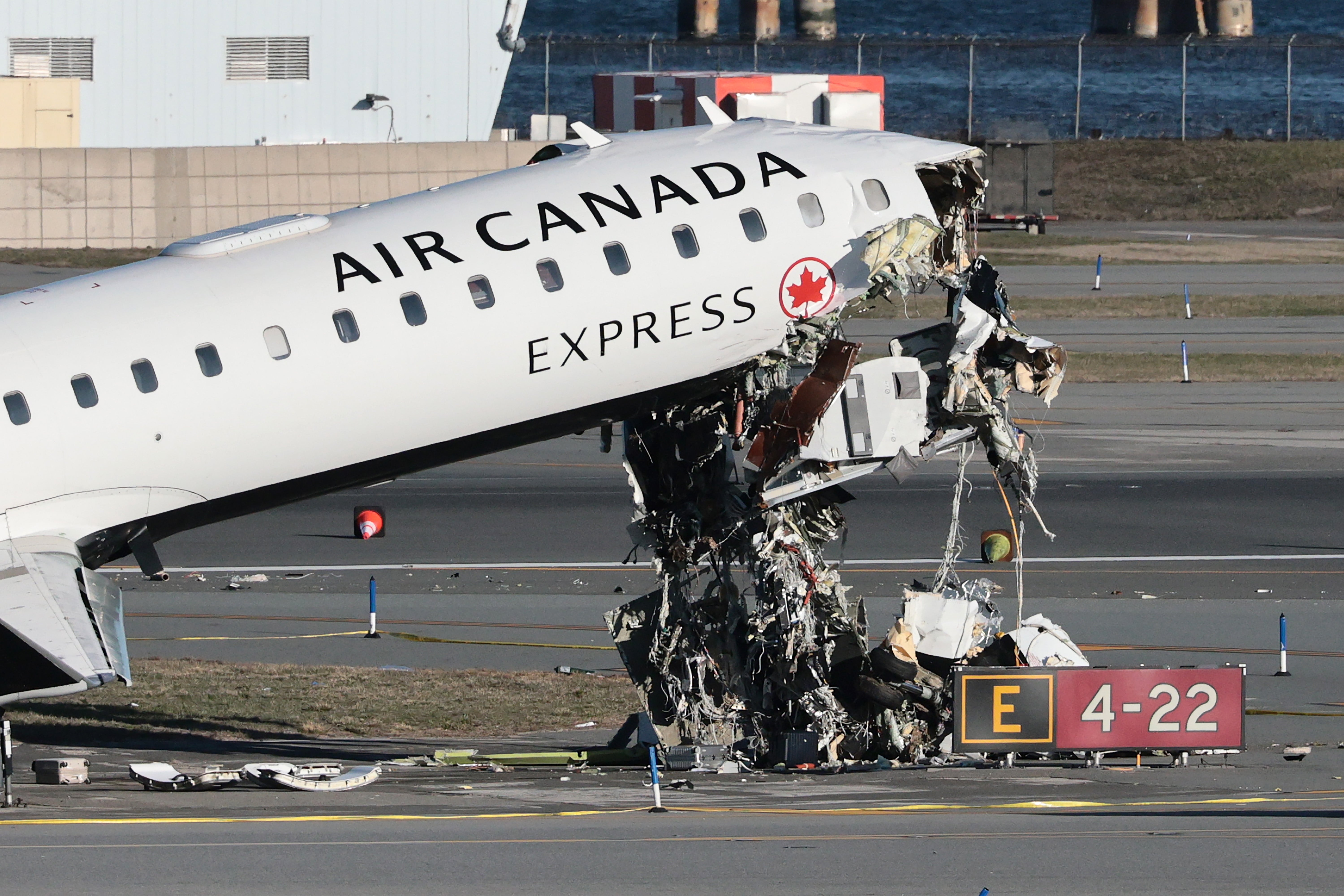
Despite the overall safety of air travel, Arroyo said there were still “flaws” in the aviation safety system and pointed to the absence of a tracking device in the fire truck that was struck by Air Canada Express jet barreling down a runway at 104 mph while landing at LaGuardia Airport around 11:35 p.m. on March 22.
The crash demolished the nose of the Mitsubishi CL-600 and killed both pilots, who were credited with saving their passengers by braking hard immediately upon touchdown.
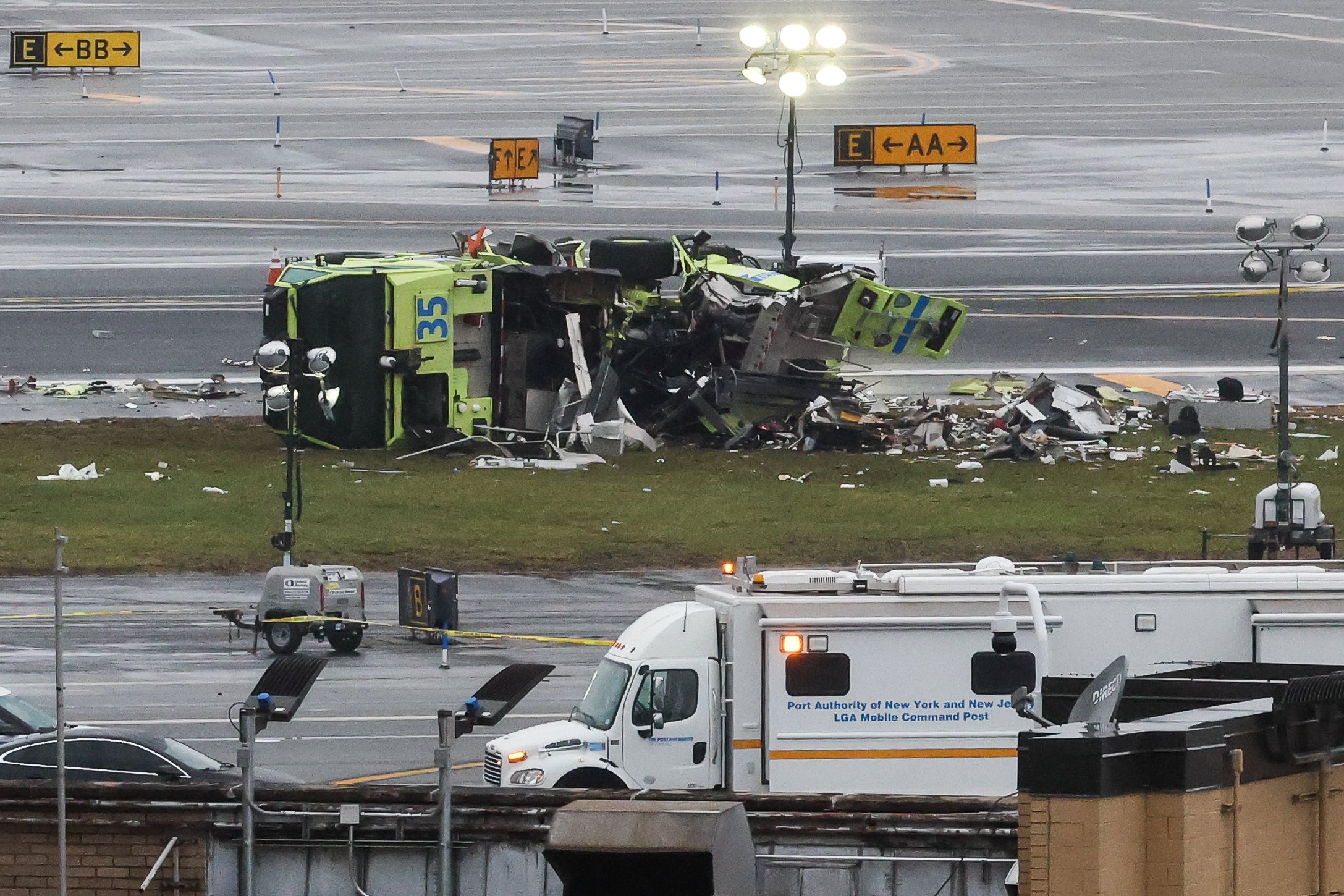
In 2011, the FAA issued an advisory that said it “strongly encourages” airport operators to voluntary equip its ground vehicles with electronic transponders that send out location coordinates so air traffic controllers know where they are, and it announced a a reimbursement program for airports in 2024.
But the agency hasn’t mandated installation of the devices, which reportedly cost less than $10,000 each to purchase and install.
On April 23, a preliminary NTSB investigation report cited the absence of transponders in the LaGuardia fire truck and other ground vehicles and said a screen in the control tower “displayed only two radar targets…rather than all seven of the response vehicles.”
Five days later, the Port Authority of New York and New Jersey — which runs LaGuardia, Kennedy and Newark airports — said it would install transponders in its emergency vehicles at all three locations.
“Fifteen years and it took an accident,” Arroyo said. “The pilots should never have been set up in that way. I want to know why.”
Cox noted that FAA rule-making was “complicated” and “takes years,” adding that the FAA “knew there would be strong pushback from the airports and were lobbied.”
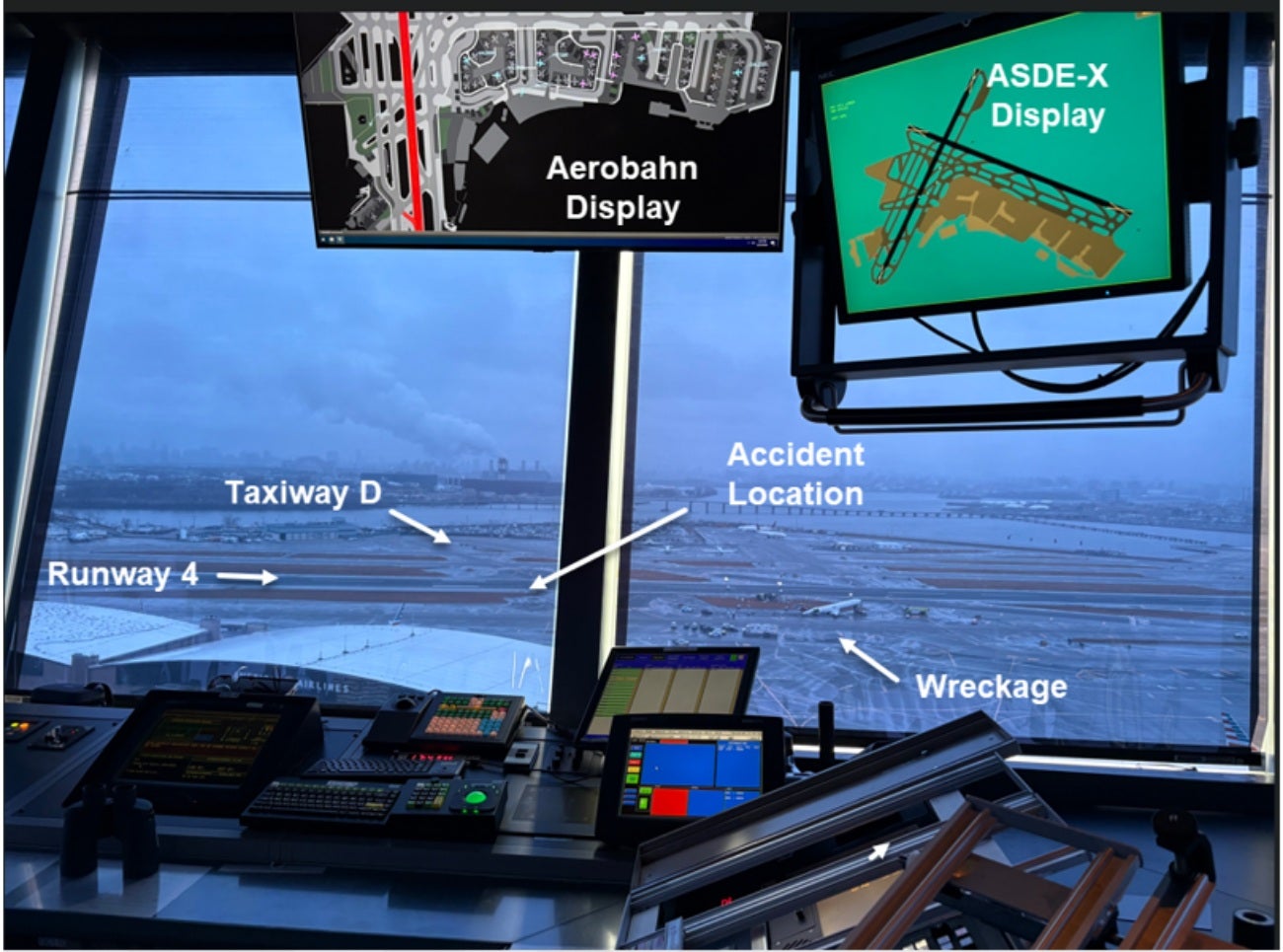
Hassan Shahidi, president and CEO of the Flight Safety Foundation, also said the trackers were only useful at airports with the necessary “automation, displays, alerting capability, procedures and training to process and use that information effectively.”
But he added: “Where those capabilities exist— or where the risk justifies adding them — the FAA should take a more active, risk-based approach to closing this gap rather than relying only on voluntary encouragement.”
In a statement, the FAA said it “encourages airports to equip vehicles with transponders, which enable air traffic controllers to track vehicle movements and detect potential runway conflicts before they occur.”
“Last year we issued an alert encouraging the use of transponders in all airport vehicles and it also noted that federal funding is available for installing this equipment. The FAA also provides guidance on equipping vehicles,” the statement added.
On Wednesday, the FAA announced that it was spending $16.5 million to put transponders in all of its vehicles at 264 airports that have or will be getting the necessary technology to use them.
The FAA said that it “will complete the work as soon as possible based on the availability of transponder units” and that it had been planning the project for several months but “accelerated” it after the LaGuardia collision.
Cox called the move a “positive step” but said “there’s a lot of different vehicles on airport grounds at all times,” including ambulances, construction machines and maintenance trucks.
“I think this is going to be a journey of many steps,” he said.
Arroyo said he was “very surprised” that FAA vehicles weren’t already equipped but was “cautiously optimistic that the nation’s airport operators will follow suit .”
The FAA has also been grappling with a shortage of air traffic controllers, with a December report from the Government Accountability Office saying it found that the despite a 10% increase — to 30.8 million — in the number of yearly U.S. flights between fiscal 2015 and 2024, the number of controllers decreased about 6%, to 13,164, during the same period.
The GAO blamed the situation on reduced hiring and increased attrition caused by lapses in congressional appropriations during the 2010s and the COVID-19 pandemic, even while noting that the FAA had boosted hiring every year since 2021.
Shahidi called the shortage a “real concern” and said many controllers had “extremely demanding schedules — in some cases, 12-hour shifts, six days a week.”
“That creates understandable pressure on the system,” he said.
Shahidi also noted that while that while the FAA was “aggressively hiring” new controllers, their training program typically takes two to three years and not everyone completes it.
“So while progress is being made, this is not an issue that can be solved overnight,” he said.
Cox said controllers he knows have told him about “forced overtime, denied vacations, things like that.”
“But when they’re on duty, they’re moving the traffic safely and efficiently, the best they can,” he said. “We should be training more controllers but the issue resides with Congress to provide stable funding for training, and historically, the funding for training controllers has gone up and down.”
Last month, the Transportation Department launched an online ad campaign to recruit video gamers to work as air traffic controllers, posting a short video titled, “It’s not a Game. It’s a Career,” on YouTube and other websites.

The ad features thumping electronic music, quick cuts and clips from various games, along with messages that say, “Are you up for the challenge?” “You’ve been training for this…” and “Become an air traffic controller,” followed by videos of controllers at work.
It also promises, “You’ll keep millions of people safe every day (and make a lot of money),” and notes that the average annual salary is $155,000 after three years.
In a statement issued at the time, Transportation Secretary Sean Duffy said the FAA was seeking to reach the “growing demographic of young adults who have many of the hard skills it takes to be a successful controller.”
Shahidi called it “smart and innovative approach” because the skills and abilities required for successful gaming can “align well with air traffic control” and provide a “strong foundation for the kinds of cognitive and dexterity skills the profession demands.”
Cox agreed, saying that “the military has done that, too” and that “if we can take advantage of their skills, I’m absolutely up for it.”
In addition to the controller shortage, about 400 FAA personnel were laid off early last year as part of the mass firings engineered by the ad hoc Department of Government Efficiency created by President Donald Trump and led by billionaire supporter Elon Musk.
At the time, The Associated Press reported that at least 130 of those cut included aviation safety assistants, maintenance mechanics and nautical information specialists, but Duffy said no air traffic controllers or “critical safety workers” were among the layoffs of workers who’d been on the job for less than a year.
If you are experiencing feelings of distress or are struggling to cope, you can speak to the Samaritans, in confidence, on 116 123 (UK and ROI), email [email protected], or visit the Samaritans website to find details of your nearest branch. If you are based in the USA, and you or someone you know needs mental health assistance right now, call or text 988, or visit 988lifeline.org to access online chat from the 988 Suicide and Crisis Lifeline. This is a free, confidential crisis hotline that is available to everyone 24 hours a day, seven days a week. If you are in another country, you can go to www.befrienders.org to find a helpline near you.