


Engineers have invented a new type of biodegradable circuit board that could drastically reduce electronic waste.
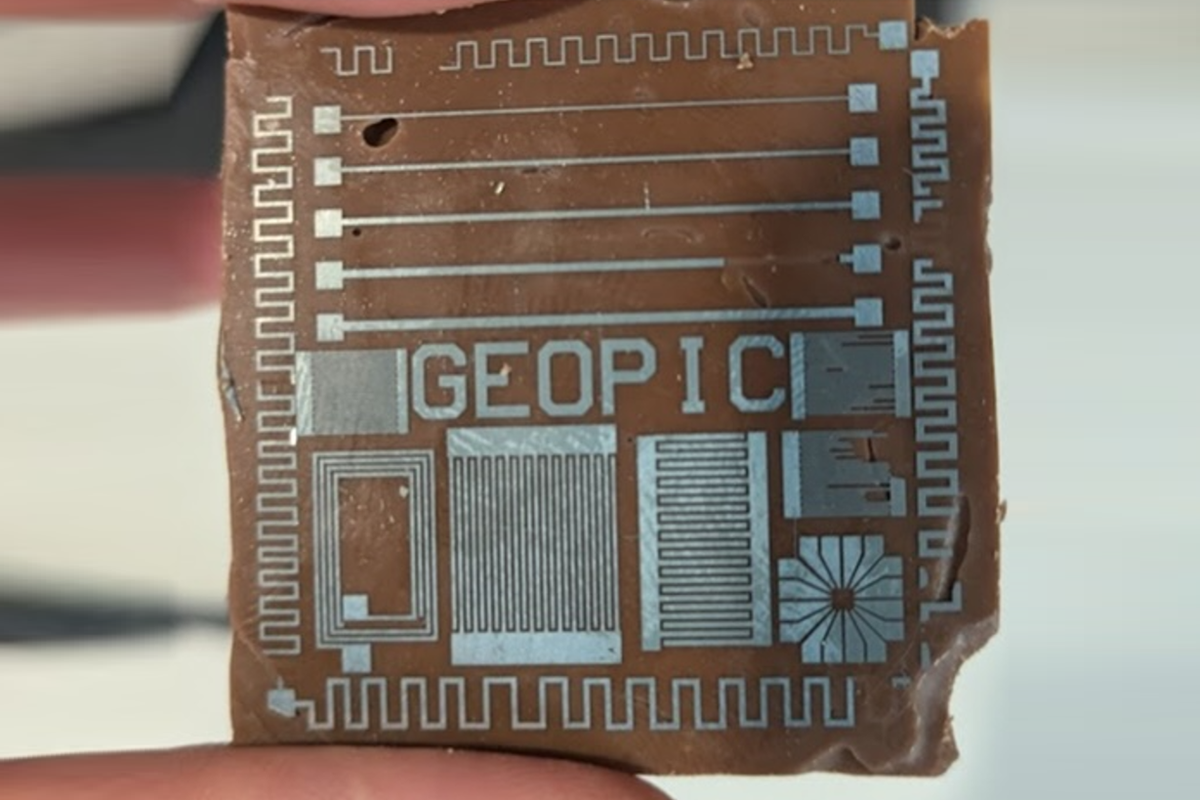
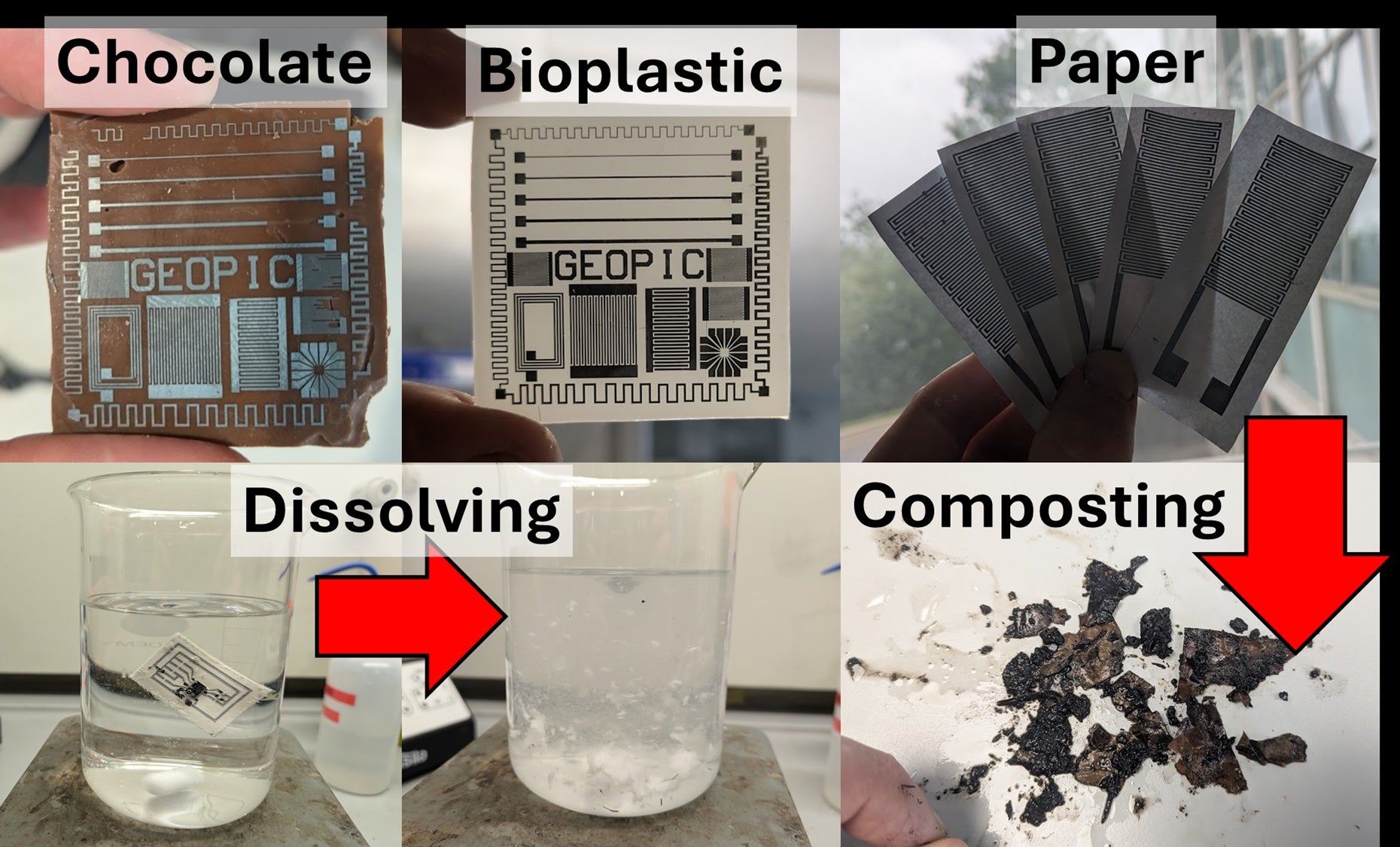
The environmentally-friendly design, developed by a team at the University of Glasgow, can be made with paper, bioplastics, and even chocolate, which can be safely disposed of through ordinary soil composting.
The breakthrough centres on a new method of printing electronic circuits onto biodegradable surfaces using zinc – rather than the copper used in conventional circuit boards.
The new circuit boards perform comparably to traditional boards and have already been tested successfully in various devices, including LED counters and temperature sensors.
“One key aspect of our work is that almost any substrate material can be used in the process, ranging from paper and bioplastics for more realistic applications, to chocolate for tasty but probably not very practical demonstrations,” said Professor Jeff Kettle from the University of Glasgow’s James Watt School of Engineering.
“We are now exploring ways to adapt this technique to other fields such as mouldable electronics or biosensing, which could also benefit from a cheap and versatile way to make high quality circuits with low environmental footprints.”
It provides a novel solution to the growing problem of e-waste, with an estimated 62 million tonnes of electronics discarded in 2024, according to the United Nations Environment Programme.
The research was published in the scientific journal Communications Materials, in a paper titled ‘Additively manufacturing printed circuit boards with low waste footprint by transferring electroplated zinc tracks’.
“The work demonstrates a major step toward circular electronics, where devices are designed from the outset for reuse, recycling, or safe degradation,” said Dr Jonathon Harwell from the University of Glasgow’s James Watt School of Engineering, who led the research.
“Discarded devices already generate tens of millions of tonnes of waste annually, so our research could have far-reaching impacts for consumer electronics, internet-of-things devices and disposable sensors in the future.”