

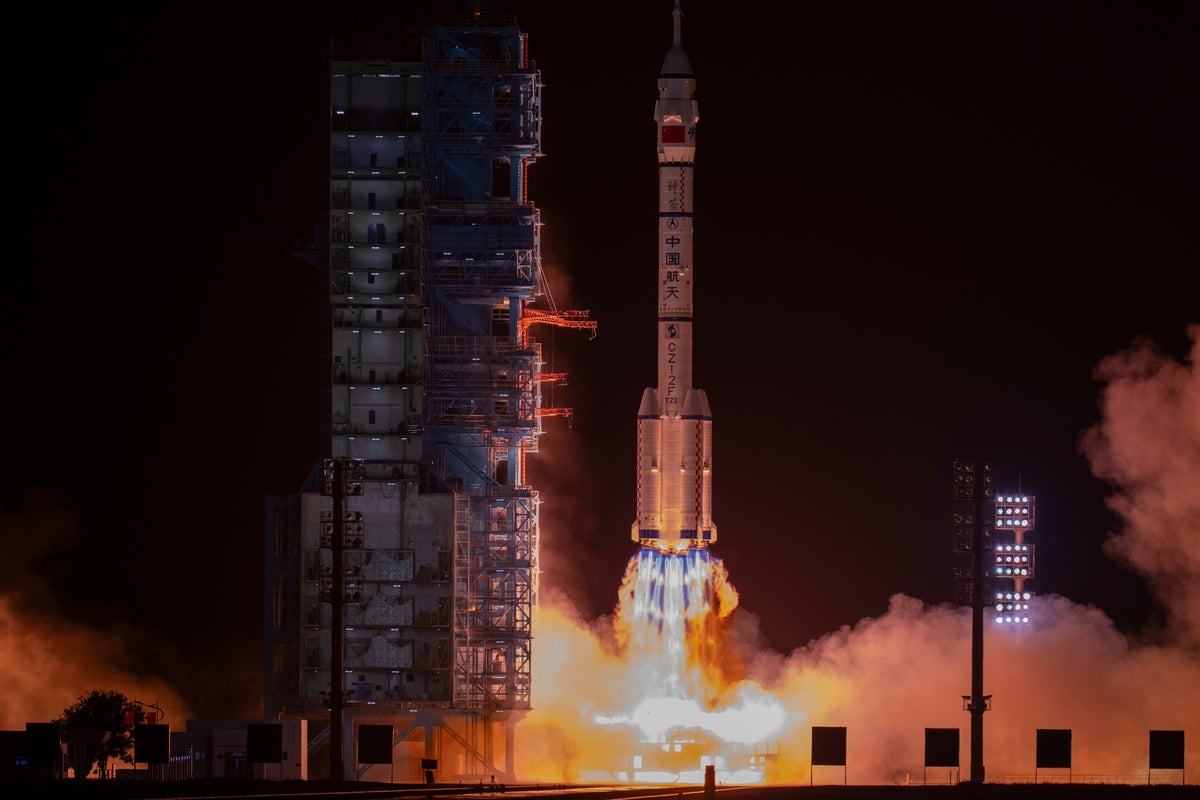
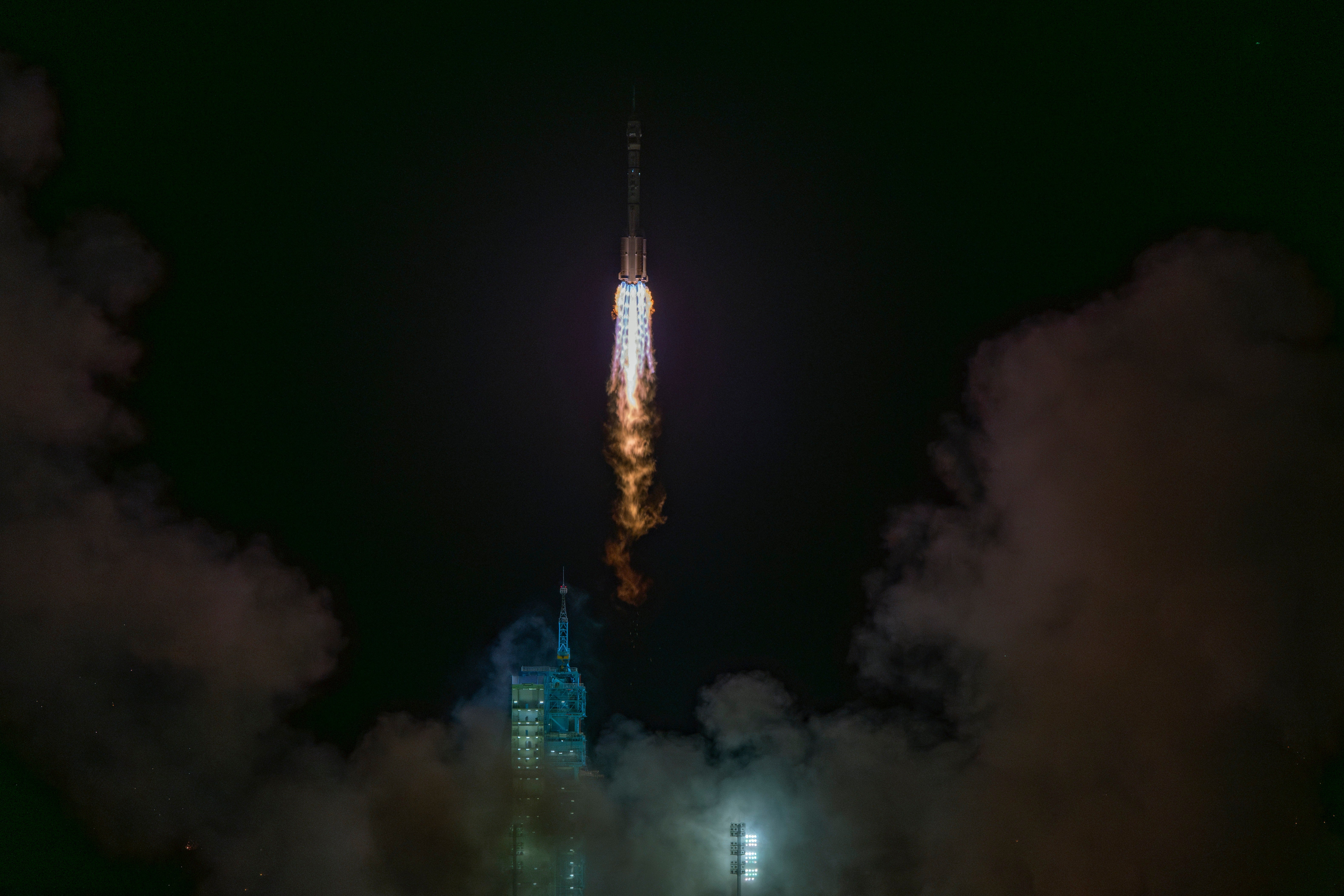
China has launched its Shenzhou 23 spacecraft carrying three astronauts towards its Tiangong space station, with one crew member slated for a year-long stay in orbit.
The mission, which blasted off from the Jiuquan Satellite Launch Centre in northwestern China on Sunday night, underscores Beijing’s accelerating ambitions in space, including its aim for a crewed lunar landing by 2030.
The crew comprises commander Zhu Yangzhu, Zhang Zhiyuan, and Lai Ka-ying, also known by her Mandarin transliteration, Li Jiaying. Ms Lai, a Hong Kong native with a doctorate in computer forensics, marks a significant milestone as the first astronaut from the city to embark on a space mission.
During their time aboard the “Heavenly Palace” station, the astronauts are expected to undertake dozens of scientific and application projects.

They will also perform an in-orbit rotation with the Shenzhou 21 crew, who have been stationed there for over 200 days. The astronaut designated for the year-long mission will “explore human adaptability and performance limits” in extended spaceflight environments, a critical endeavour for future long-duration missions.
This latest launch comes as China continues to ramp up its space programme, having conducted multiple missions to the Tiangong station since its first crewed visit in 2021. The station was developed after China’s effective exclusion from the International Space Station due to US national security concerns, fostering a growing rivalry with NASA, which targets a lunar landing in 2028.
The Shenzhou programme, meaning “Divine Vessel,” previously made headlines last year for an emergency mission that successfully rescued a team of astronauts stranded on the space station following spacecraft damage.
This current mission further solidifies China’s position as a major player in global space exploration.